The best time to fertilise indoor plants is when they’re actively growing — usually spring through summer — because that’s when they can actually use nutrients properly. Feed at the wrong time (or too strongly) and you often get weak growth, leaf burn, or messy salt build-up instead of healthier plants.
Contents
- 0.1 The seasonal rule that works for most homes
- 0.2 Best time to fertilise indoor plants in spring
- 0.3 Best time to fertilise indoor plants in summer
- 0.4 Best time to fertilise indoor plants in autumn
- 0.5 Best time to fertilise indoor plants in winter
- 0.6 A simple seasonal schedule you can actually stick to
- 0.7 Long-tail quick fixes people search for
- 0.8 FAQs About Best Time to Fertilise Indoor Plants
- 0.9 Final Thoughts on Best Time to Fertilise Indoor Plants
- 0.10 Related Articles
- 1 Keep Fertiliser Simple With One Clear Routine
Quick answer: best time to fertilise indoor plants
Start feeding when you see new growth (often early–mid spring).
Peak feeding is late spring through summer (lightly, consistently).
Slow down in early autumn as growth eases.
Pause or greatly reduce in winter unless the plant is actively growing under strong light.
After repotting into fresh mix, wait 3–6 weeks before feeding.
Do this first: Look for new leaves or longer stems — if nothing is growing, don’t feed yet.
If you also want a simple “how often” schedule (not just seasonal timing), How Often to Fertilise Indoor Plants breaks it down by plant type.
The seasonal rule that works for most homes
Indoor plants don’t follow the calendar perfectly — they follow light. When light increases, plants grow, and feeding makes sense. When light drops, growth slows, and feeding becomes riskier.
Use the plant as your guide:
New leaves / fresh growth = feeding season
No growth + compost staying wet longer = slow season
Best time to fertilise indoor plants in spring
Spring is usually when feeding becomes helpful again — but don’t rush it.
When to start
Start feeding when you see clear new growth (not just one tiny leaf).
If you repotted recently, wait — fresh compost often contains nutrients already.
Simple spring approach
Start at half strength for the first 1–2 feeds.
Feed every 3–4 weeks at first, then increase frequency only if growth is strong.
If you’re unsure whether to feed or repot first, it’s often easier to check your roots — Signs Indoor Plant Needs Repotting helps you decide quickly.
Best time to fertilise indoor plants in summer
Summer is usually the “easy mode” season: brighter days, warmer rooms, and faster growth.
Best summer timing
Feed little and often during active growth rather than big doses.
If your plant is pushing new leaves regularly, summer is the best time to fertilise indoor plants consistently.
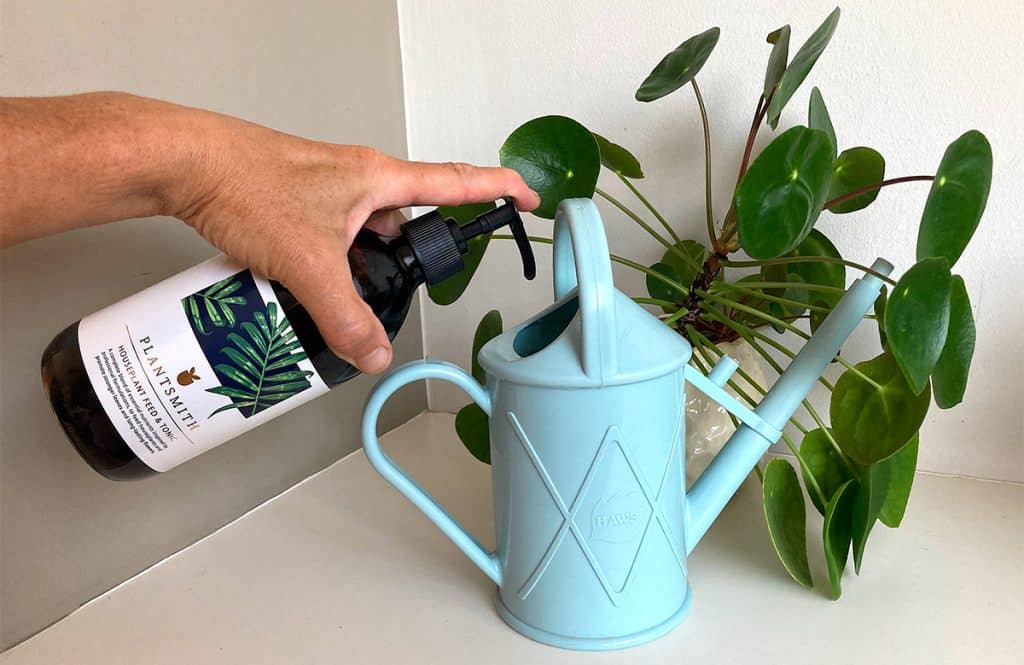
Helpful product (optional): For most houseplants, a balanced liquid houseplant fertiliser is the simplest all-round option for summer feeding.
Best time to fertilise indoor plants in autumn
Autumn is where people accidentally overfeed. Your plant might still look “fine”, but growth often slows as light drops.
What to do in autumn
Reduce feeding to once every 4–6 weeks, or stop if growth has paused.
If your plant is still growing (warm room + bright spot), keep feeds very dilute.
If you notice yellowing leaves in autumn, don’t assume it’s “needs more feed” — watering and light changes can cause the same symptoms. Why Indoor Plants Turn Yellow helps you narrow it down fast.
Best time to fertilise indoor plants in winter
For most homes, winter is the season to pause — unless the plant is actively growing under strong light.
When winter feeding can be OK
You have strong grow lights and the plant is producing new leaves.
The room stays warm and bright enough for steady growth.
When to avoid winter feeding
No new growth for weeks.
Compost stays damp for a long time.
Leaves look stressed or the plant is already struggling.
If you’re using grow lights and your plants keep growing all winter, getting the setup right matters more than pushing fertiliser — Grow Light Placement is useful for avoiding weak, stretchy growth.
A simple seasonal schedule you can actually stick to
Here’s a beginner-friendly plan that works for most indoor plants:
Spring: start feeding once growth begins (every 3–4 weeks, half strength at first)
Summer: feed during active growth (every 2–4 weeks, diluted)
Autumn: reduce (every 4–6 weeks or pause)
Winter: mostly pause (or very light feeding only if growth continues)
If you want a simple routine so you don’t “panic-correct” week to week, Indoor Plant Maintenance Routine helps keep care consistent across seasons.
Long-tail quick fixes people search for
When should you fertilise after repotting?
Usually wait 3–6 weeks. Fresh potting mix often contains nutrients, and feeding too soon can stress roots.
What if you fertilise at the wrong time?
If you fed in winter or during slow growth, the safest move is:
pause feeding
water normally (don’t overwater to “flush” unless needed)
restart lightly in spring once growth returns
If you think you’ve overdone it, Revive Over Fertilized Indoor Plants walks you through the quickest recovery steps.
Why do leaf tips turn brown after feeding?
Often:
fertiliser too strong
feeding dry compost
salt build-up from frequent feeding
If you’re seeing crisp tips, Brown Leaf Tips Indoor Plants helps you tell whether it’s fertiliser, watering, or humidity.
What if the plant isn’t growing but looks “hungry”?
Low light often mimics nutrient issues. Before feeding, improve light and steady watering — you’ll usually get better results than forcing fertiliser.
It’s easy to assume “more food = faster growth,” but strong feeding can damage roots — the American Orchid Society orchid care guidance recommends diluted feeding and occasional flushing rather than heavy fertiliser, which is a good principle for many indoor plants too.
FAQs About Best Time to Fertilise Indoor Plants
Is spring always the best time to fertilise indoor plants?
Spring is usually the safest starting point because light increases and growth resumes. But the real sign is new growth, not the date.
Can you fertilise indoor plants in winter?
Most people shouldn’t. Only consider light feeding if the plant is actively growing under strong light and warm indoor conditions.
Should you fertilise houseplants right after buying them?
Not usually. Let the plant settle for a few weeks, check watering and light first, then feed lightly once it starts growing.
What’s the safest fertiliser routine for beginners?
Use a diluted liquid feed once a month in spring and summer, then reduce in autumn and pause in winter.
Final Thoughts on Best Time to Fertilise Indoor Plants
The best time to fertilise indoor plants is when they’re growing — and most problems come from feeding too strong, too often, or at the wrong season. Start gently in spring, feed more consistently through summer, taper in autumn, and pause in winter unless growth is clearly continuing. If you keep the dose light and the timing sensible, plants respond better with far less risk.
Related Articles
Make feeding decisions feel obvious, not confusing
Keep Fertiliser Simple With One Clear Routine
The easiest way to avoid overfeeding is to treat fertiliser as a “growth season tool,” not an everyday fix. Once light and watering are steady, a simple schedule gives healthier leaves and more reliable growth without burning roots.