
If your indoor plant suddenly develops brown tips, crispy edges, drooping leaves, or a white crust on the soil, over-fertilising could be the problem. Too much feed can build up salts in the pot, stress the roots, and make the plant look worse instead of better.
The good news is that most over-fertilised indoor plants can recover if you act early. The key is to remove excess salts, reduce root stress, and give the plant time to recover without piling on more fertiliser.
Quick answer: how to fix over-fertilised indoor plants
If you think you have over-fertilised an indoor plant, the first step is usually to flush the soil thoroughly with plain water and stop feeding for a while. If the damage is more serious, you may also need to trim unhealthy roots or repot the plant into fresh, airy mix.
Do this first
Check for the clearest warning signs before doing anything else. Brown or yellow leaf tips, crispy edges, a white crust on the soil, wilting even when the compost is still moist, or visible salt build-up around the rim of the pot are all strong signs that over-fertilising may be the problem.
If the plant is badly affected, stop fertilising immediately. Then check whether the pot drains properly and whether the mix feels stale, compacted, or heavily crusted. Trying to “correct” the problem with more plant food usually makes it worse.
Why over-fertilising happens indoors
Indoor plants usually need less feeding than people expect because they grow in small containers and use nutrients more slowly than plants outdoors. When fertiliser is applied too often, too strongly, or onto dry soil, salts can build up in the compost and start pulling moisture away from the roots.
That is why a plant can look dry, scorched, or weak even though the problem is not lack of water at all. The roots are stressed first, and the leaves start showing the damage afterwards.
Overfeeding often starts with good intentions, but it helps to know how often you should fertilise indoor plants before feeding again after recovery.
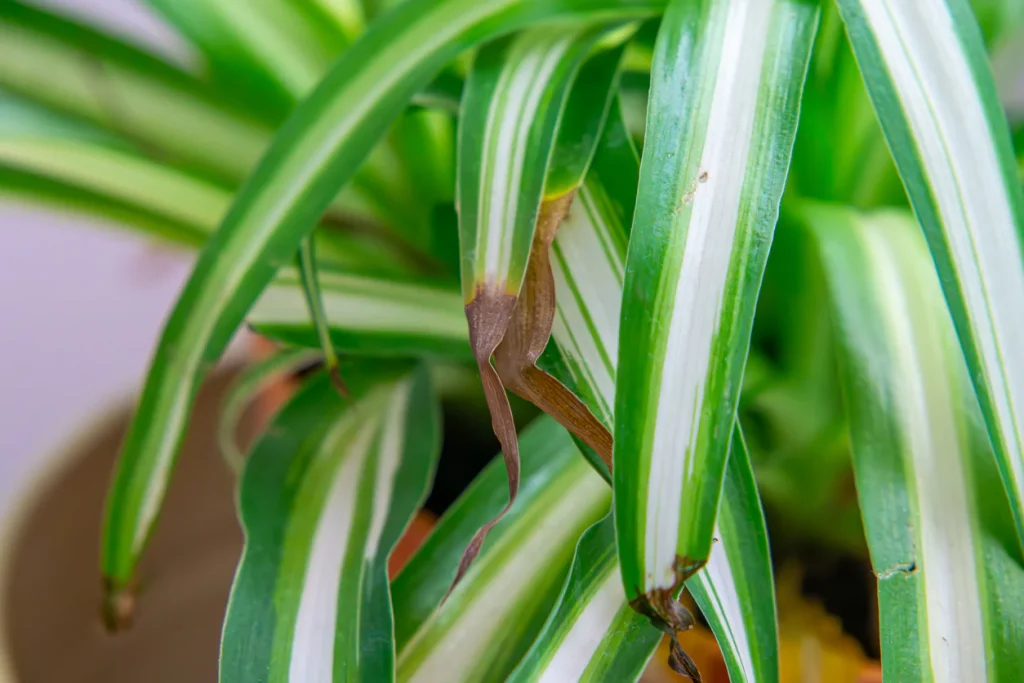
Signs your indoor plant is over-fertilised
Some symptoms show up early, while others appear once the roots are already under stress. The current live page separates these into early and more severe warning signs, which is useful, but this version flows more naturally.
Common signs include:
- brown or yellow leaf tips
- crispy leaf edges
- white powder or crust on the compost
- curling leaves
- wilting even when the soil is still moist
- sudden leaf drop
- a foul smell from the soil in more severe cases
- brown or mushy roots if the damage has gone further
These symptoms can overlap with watering problems, which is why it is worth checking both the soil surface and your recent feeding routine before changing anything.
Fertiliser burn can look surprisingly similar to watering stress, so it is worth brushing up on common indoor plant watering mistakes before assuming the plant needs more water.
How to flush excess fertiliser out of the soil
Flushing the pot is usually the first and most important recovery step. Run plenty of room-temperature water slowly through the compost and let it drain fully, so excess fertiliser salts can wash out instead of staying trapped around the roots.
To do it properly:
- move the plant to a sink, bath, or outdoor draining area
- pour water through the pot slowly rather than all at once
- let it drain fully
- do not leave the pot sitting in runoff
- repeat if the salt build-up is clearly heavy
The aim is to wash excess fertiliser salts out of the root zone without leaving the roots soaked in standing water afterwards.
A simple watering can with a narrow spout makes it much easier to flush the compost slowly and evenly without disturbing the soil too harshly.
When to trim roots or repot
If the plant is still declining after flushing, or the roots look brown, mushy, or badly damaged, it may need more than a rinse. In that case, trim away the worst affected roots, remove badly damaged growth, and repot the plant into fresh mix so it has a better chance to recover.
Trim only the parts that are clearly dead or rotting. Leave as much healthy green growth and healthy root tissue as possible so the plant still has enough energy to recover.
If the compost feels heavily exhausted, salty, or compacted, repotting into fresh airy mix is often the better move than trying to keep working with the old soil.
If the compost feels dense or tired after flushing, moving the plant into a better indoor plant soil mix can make recovery much easier.
What to do after flushing the plant
Recovery does not stop once the salts are washed out. The plant still needs a lower-stress setup while the roots recover.
Keep it in bright, indirect light and water carefully rather than heavily. Avoid strong direct sun while the plant is recovering, and wait until you see healthy new growth before feeding again.
This is the stage where patience matters. A stressed plant often looks the same for a little while before it starts improving, so do not rush to “help” it by feeding again too soon.
How to avoid over-fertilising again
Once the plant starts recovering, the goal is to rebuild a gentler feeding routine. Water first, feed more lightly, and leave longer gaps between feeds so the roots are not pushed too hard again.
A safer routine usually looks like this:
- feed mainly during active growth
- fertilise less often in autumn and winter
- never feed bone-dry soil
- use a lighter dose than the label maximum if needed
- watch the plant’s response instead of feeding on autopilot
The RHS advises that houseplants generally need feeding only while they are actively growing, which is why lighter seasonal feeding usually works better than a year-round routine.
A small plant care journal can help you keep track of feeding dates so you do not accidentally fertilise too often.

Can over-fertilising kill a houseplant
It can, but many houseplants recover well if you catch the problem early. The sooner you stop feeding and remove the excess salts, the better the plant’s chances of bouncing back.
Mild cases usually recover well once the salts are flushed out and feeding stops. Severe cases are harder because the roots may already be damaged, but even then, a repot and careful aftercare can sometimes save the plant.
The biggest mistake is waiting too long while continuing to fertilise.
If the roots are already struggling and the compost stays wet afterwards, it helps to know how to prevent mould and fungus in indoor soil during recovery.
FAQs about over-fertilised indoor plants
Can an over-fertilised plant recover?
Yes, most can recover if you catch the problem early and flush the compost before the roots decline too far. Fast action usually gives the plant a much better chance of recovering well.
How long does recovery take?
It depends on how badly the plant was affected, but recovery often takes a few weeks rather than a few days. The current page estimates around 2 to 4 weeks in many cases.
Should I repot straight away?
Not always. Start by flushing first unless the roots are clearly damaged or the mix is in poor condition. Repot if the soil is heavily affected or the roots need trimming.
Can I reuse the old soil?
Usually not if the salt build-up is heavy. Fresh mix is often the safer option because it gives the roots a cleaner, less stressful environment to recover in.
Final Thoughts on Reviving Over-Fertilised Indoor Plants
Over-fertilising feels like a setback, but it is usually fixable if you move quickly. Once you stop feeding, flush the pot properly, and remove any badly damaged roots or foliage, most plants have a decent chance of bouncing back.
The bigger lesson is that indoor plants often need less feeding than people think. A lighter routine, fresher compost, and better timing usually do more for long-term health than frequent fertiliser ever will.
Related Articles
KEEP YOUR HOUSEPLANTS HEALTHY AFTER FEEDING
Easy Ways to Fix Fertiliser Mistakes Before They Get Worse
If your plant has started showing brown tips, crispy edges, or signs of stress after feeding, learning what healthy roots and fresh compost should look like can make recovery much easier.