
If you’re wondering whether you can use outdoor plant food on indoor plants, the honest answer is sometimes yes, but not always safely. The main issue is not that outdoor plant food is automatically “bad” — it’s that indoor plants usually grow in smaller pots, lower light, and slower conditions, so strong feeding can cause yellow leaves, brown tips, salt build-up, or weak roots much faster indoors.
Quick answer: can you use outdoor plant food on indoor plants
- Use an outdoor plant food indoors only if the product label permits the intended plant and container use. Follow the stated dose and directions rather than inventing a weaker dilution.
- Indoor plants should be fed according to their active growth, growing conditions and the fertiliser label rather than by assuming every outdoor product needs extra dilution.
- Strong outdoor fertilisers can cause brown tips, soft growth, or salt build-up in pots.
- If the product is made for lawns, shrubs, or outdoor flowering borders, it is often too strong or the wrong fit for houseplants.
- A gentler indoor plant fertiliser is usually the safer choice.
Do this first: Check the label. If it does not permit the intended indoor or container use, do not adapt the dose yourself; choose a suitable houseplant or container fertiliser instead.
If you want a broader overview of which feeds make sense indoors before you use anything, Indoor Plant Fertilizers Guide is the best supporting article to read first.
Can outdoor plant food be used on indoor plants at all
Yes, sometimes — but only if you treat it carefully.
The problem is that indoor plants are usually growing in:
- smaller pots
- less intense light
- slower growth conditions
- compost that holds salts more easily
That means a feed that works perfectly outdoors can become too much indoors very quickly.
So the real answer is:
- possible for some products
- unsuitable if the label does not permit the intended plant or container use
- not worth it if the formula is clearly designed for lawns or heavy outdoor growth
This is why houseplant feeding usually works best when it is lighter, slower, and easier to control.

Why outdoor plant food can be too strong for indoor plants
The main risk is applying a fertiliser that does not suit the plant, container or growing conditions.
Outdoor plants usually have:
- more root room
- stronger light
- better airflow
- faster drying soil
- more robust growth conditions overall
Indoor plants usually have the opposite. That makes them much easier to stress with strong fertiliser.
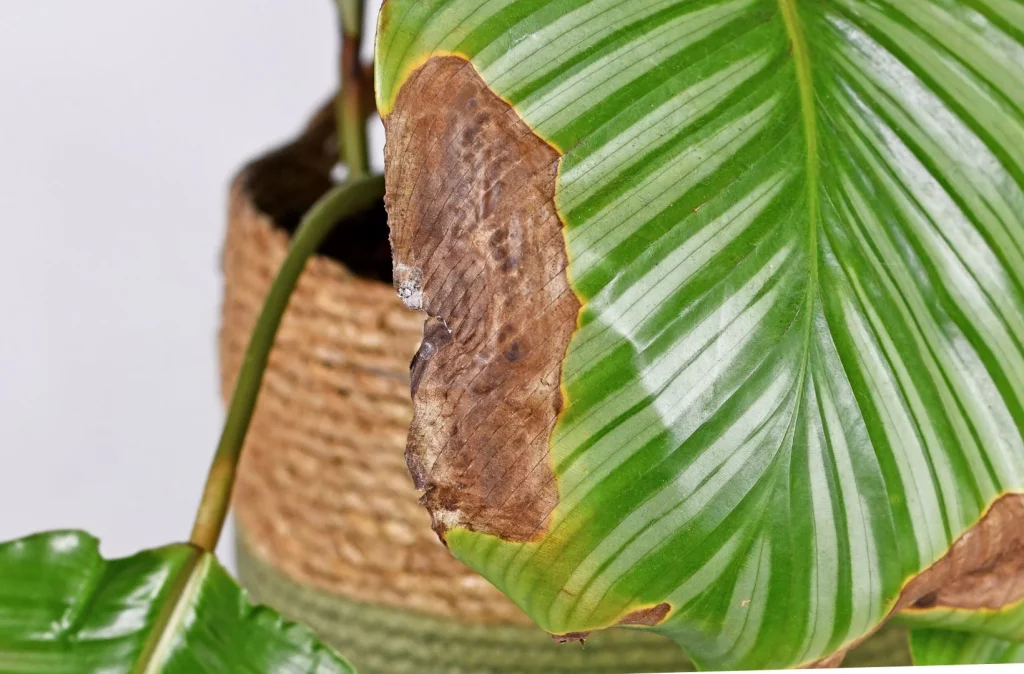
If outdoor plant food is too strong indoors, you may see:
- brown leaf tips
- yellowing leaves
- white crust on the soil
- weak, stretched new growth
- roots struggling in salty compost
If brown tips are already the main problem, Brown Leaf Tips on Indoor Plants pairs very naturally with this article because overfeeding is one of the most common causes.
Which outdoor plant foods are most risky indoors
Not all outdoor feeds are equally risky.
The ones that are most likely to cause problems indoors are:
- lawn feeds
- granular feeds for borders
- high-strength bloom boosters
- feeds made for heavy outdoor flowering or fruiting
- slow-release products you cannot easily dilute or control
These are often designed for much bigger root zones and much stronger growing conditions than an indoor plant in a pot.
The safer outdoor products are usually:
- liquid feeds you can dilute accurately
- balanced formulas intended for the plant and container use shown on the label
- products with clear indoor or container directions you can follow exactly
When it might be okay to use outdoor plant food indoors
There are a few situations where it can work reasonably well:
- the product is a balanced liquid fertiliser
- you can measure it accurately
- the plant is actively growing
- the compost is already moist
- the label specifically permits the intended plant and container use, and you follow its stated dose and directions
It is usually a better idea for:
- fast-growing indoor herbs
- stronger indoor edible plants
- actively growing foliage plants in good light
It is usually a worse idea for:
- cacti and succulents
- slow-growing plants
- weak or struggling houseplants
- plants in winter slowdown
- anything already showing fertiliser stress
If you are feeding during slow growth or winter, Best Time to Fertilise Indoor Plants is a useful related read because timing matters almost as much as product choice.
How to use outdoor plant food on indoor plants more safely
If the label permits the intended indoor or container use, follow that label exactly for dose, frequency and precautions. If it does not, choose a suitable indoor or container fertiliser instead.
A better method:
- Water the plant first or feed only on already-moist compost.
- Use the dose stated on the product label for the intended plant and container use. If the label does not cover that use, choose a suitable indoor or container fertiliser instead.
- Test it on one plant first, not your whole collection.
- Watch for brown tips, yellowing, or unusual soft growth.
- Flush the pot with plain water occasionally if salts may be building up.
The main rule is simple: use a product only where its label permits the intended plant and container use, then follow the stated dose, frequency and precautions.
A small measuring syringe or fertiliser dosing cap can help if you want to dilute stronger liquid products more accurately instead of guessing.
Better alternatives to outdoor plant food for indoor plants
In most cases, it is easier and safer to use something designed for houseplants.
Better indoor options include:
- balanced liquid houseplant fertiliser
- feeds whose label permits the intended indoor plant and container use
- a label-led feeding routine based on the plant’s active growth, conditions and the product directions
That usually gives you:
- better control
- lower risk of burn
- less salt build-up
- fewer “mystery” leaf problems later
A balanced liquid houseplant fertiliser is usually the easiest swap if you want one bottle that works for most indoor foliage plants without overcomplicating the routine.
If you want the cleaner comparison version of this topic, Organic vs Synthetic Fertilisers for Indoor Plants also links well here because it helps readers choose feeding style more confidently.
Signs outdoor plant food is harming your indoor plants
If a plant declines after feeding, stop and check for signs of excess fertiliser before adding anything else.
Watch for:
- leaf tips turning brown soon after feeding
- yellowing that does not improve
- white crust on compost or pot rim
- growth that looks soft and weak
- roots stressed in compost that stays heavy
If you see these signs:
- stop feeding for now
- flush the compost with plain water if drainage is good
- let the plant settle
- switch to a gentler indoor routine later
If the pot already drains badly, Improve Indoor Plant Drainage is the best support article here because flushing and recovery both work better when water can actually leave the pot.
Can outdoor tomato feed be used on indoor plants
Tomato feed needs the same label check as any other fertiliser.
Tomato feed is not automatically wrong indoors, but it still needs care. It is usually better suited to:
- indoor fruiting plants
- edible plants in strong light
- actively growing peppers or tomatoes
It is usually less ideal for:
- slow-growing foliage plants
- low-light houseplants
- small decorative plants that do not need heavy feeding
So yes, it can sometimes work — but only where the product label permits the intended plant and container use. Follow the label’s stated dose, frequency and precautions.
If you are actually feeding edible plants indoors, Growing Bell Peppers Indoors and Grow Indoor Tomatoes are the best related cluster pages because they handle fruiting plant feeding more realistically.
A simple rule that makes this decision easier
The key question is not whether an outdoor feed can be diluted. Check whether the exact product label permits the intended plant and container use, then follow that label for dose, frequency and precautions.
If the product is very strong, granular, designed for lawns or outdoor borders, or difficult to measure accurately, it’s usually better not to use it on houseplants.
A useful reference here is that NC State Extension’s houseplant guidance recommends fertilising houseplants lightly and during active growth, which is exactly why strong outdoor-style feeding often causes more problems indoors than it solves.
FAQs About Using Outdoor Plant Food on Indoor Plants
Can you use outdoor plant food on indoor plants safely?
Sometimes, but only when the exact product label permits the intended indoor or container use. Follow the label rather than creating a weaker dilution than the manufacturer specifies.
What happens if you use outdoor fertiliser on houseplants?
If it is too strong, you can get brown tips, yellow leaves, salt build-up, weak growth, or stressed roots.
Is outdoor tomato feed okay for indoor plants?
It can be for some fruiting indoor plants, but it is usually too much for many normal houseplants if used carelessly.
What is better than outdoor plant food for indoor plants?
A balanced liquid houseplant fertiliser is usually the safer and simpler option.
Final Thoughts on Can You Use Outdoor Plant Food on Indoor Plants
Yes, you can sometimes use outdoor plant food on indoor plants — but that does not mean it is the best option. Indoors, the smaller pots, weaker light, and slower growth make strong feeding riskier. If you want safer results, lighter indoor fertiliser is usually the better long-term choice.
Related Articles
Keep feeding simple and avoid hidden root stress
Choose Indoor Feeding That Is Easier to Control
Indoor plants usually respond better to lighter, more predictable feeding than strong outdoor-style fertiliser. Once you keep the dose gentle and match it to light and growth, leaf problems become much easier to avoid.