
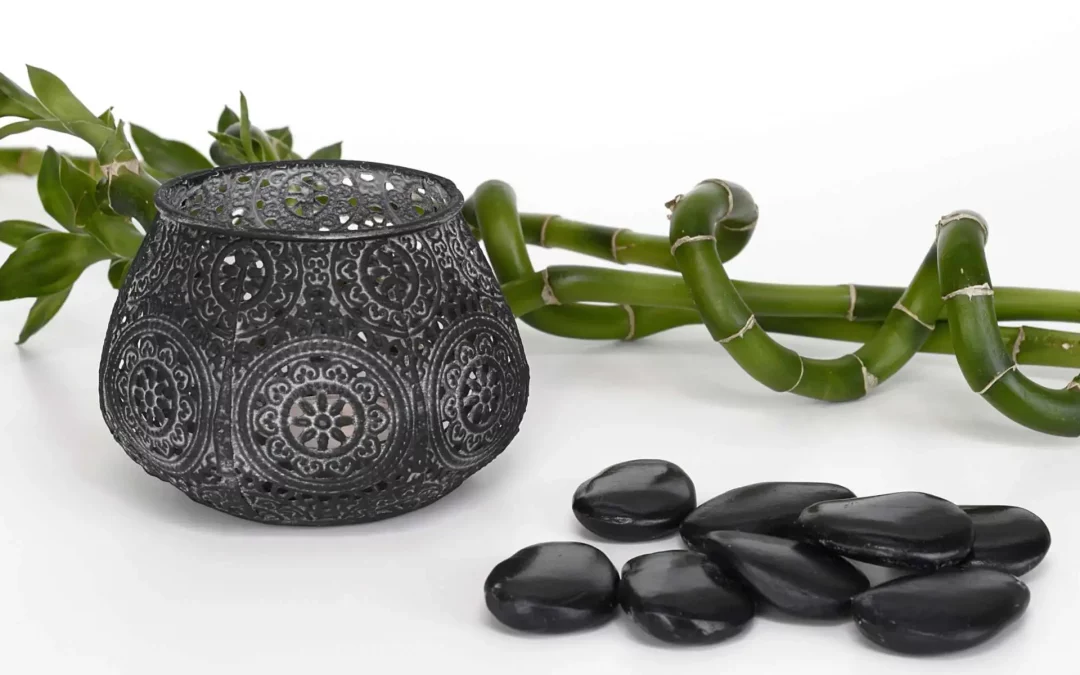
Lucky Bamboo is easy to live with once you match the care to the way it is growing. A plant in a vase needs clean water around its roots, while a plant in compost needs drainage and a moisture check before you reach for the watering can. Both methods can work well indoors.
Despite its common name, Lucky Bamboo is not a true bamboo. It is Dracaena sanderiana, a tropical foliage plant with green, cane-like stems. This guide explains how to care for Lucky Bamboo in water or soil, how to move it from water into compost, and what to check when leaves, stems or roots start to change.
Quick Answer
Keep Lucky Bamboo in bright, indirect light and away from cold draughts or strong heat. If it is growing in water, cover the roots, change the water about weekly and keep the vessel clean. If it is in soil, use a pot with drainage holes and water when the top 2–3 cm of compost begins to dry. Feed lightly, because excess fertiliser can damage roots and contribute to yellowing or brown tips.
Do This First
Before changing anything, identify the growing method and check the plant:
- In water: Is the water clear, fresh-smelling and deep enough to cover the roots? Are the roots firm rather than soft or slimy?
- In soil: Is the compost wet, damp or beginning to dry? Can excess water escape from the pot?
- In either system: Is the cane firm? Are the leaves in harsh sun, deep shade or a cold draught? Can you see webbing, sticky residue or cottony pests?
Change the most likely cause first and watch the plant. A yellow leaf does not prove that the plant needs more water or fertiliser.
What Is Lucky Bamboo?
Lucky Bamboo is the common name for Dracaena sanderiana. Kew’s accepted plant record places it in the asparagus family and gives its native range as west-central tropical Africa to north-eastern Angola.
It is not related to the true bamboos, even though its jointed-looking canes create a similar effect. It is also different from bamboo palm and from other houseplant Dracaena species. The plants sold as straight canes, towers or spirals are usually sections of D. sanderiana that have been rooted and trained.
The plant can grow in moist potting mix or with its roots in water. It rarely flowers as a houseplant, so judge progress by firm stems, healthy leaves and steady new shoots rather than flowers.
Should You Grow Lucky Bamboo in Water or Soil?
Choose the system that suits your plant and the maintenance you can provide. There is no need to move a healthy plant simply because one method is described as “better”.
On smaller screens: scroll sideways to view the full table.
| Care point | In water | In soil |
|---|---|---|
| Ease | Simple to inspect, but the vessel needs regular cleaning | Familiar houseplant care, but drainage and moisture judgement matter |
| Watering | Keep roots covered and top up between changes | Check the compost; water when the top layer begins to dry |
| Feeding | Very dilute and infrequent | Light, label-led feeding during active growth |
| Root management | Roots are visible; remove only rotten tissue | Inspect roots only if symptoms or drainage justify it |
| Long-term stability | Can remain in water when kept clean and fed cautiously | A draining pot anchors the canes and buffers water around the roots |
| Common risks | Cloudy water, algae, stagnant conditions and excess feed | Waterlogged compost, trapped runoff, compaction and excess feed |
Stay with water if the canes are firm, roots are healthy and you are happy to clean the arrangement. Choose soil if you want a conventional pot or are prepared to manage the transition carefully. Never move a spreading yellow or mushy cane into compost and assume repotting will cure it.
How to Care for Lucky Bamboo in Water
Water culture is more than topping up a decorative vase. The roots still need fresh water, oxygen and a very small amount of nutrition.
Water Depth
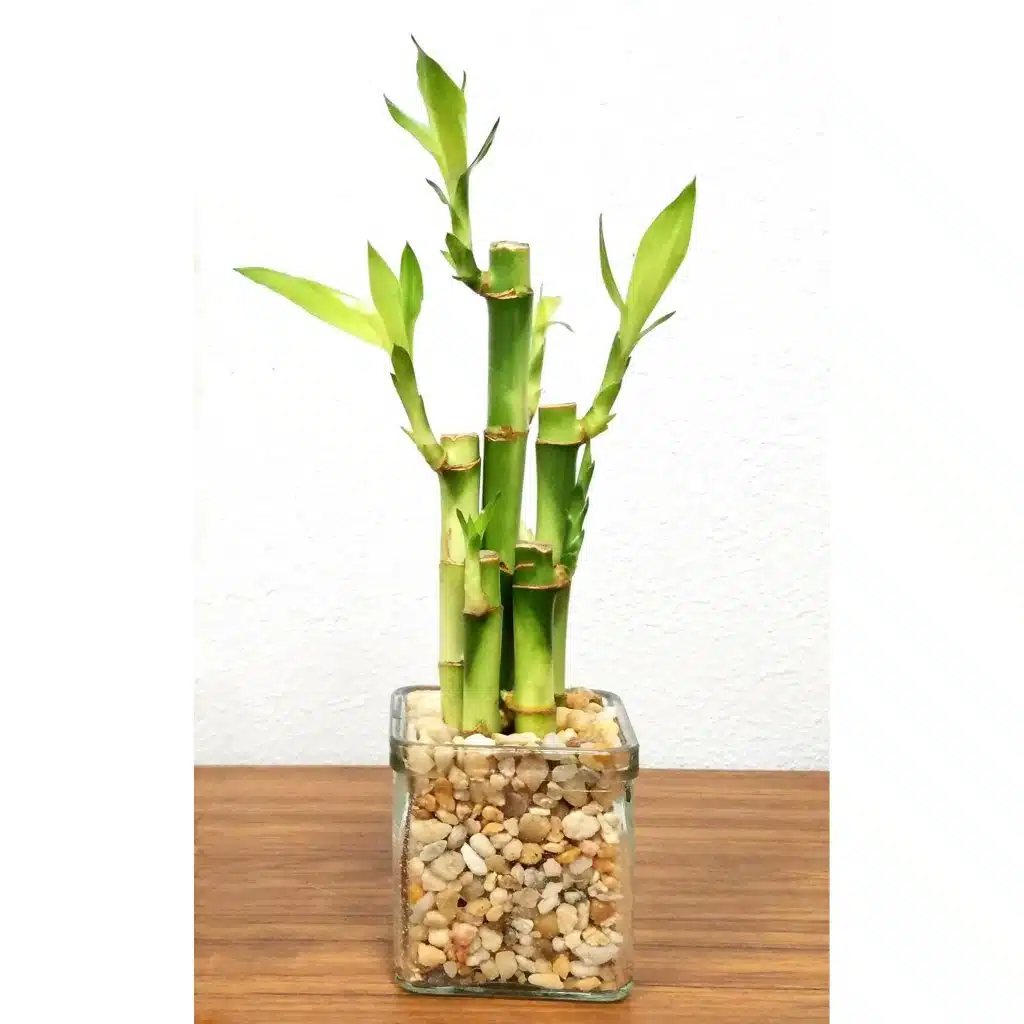
Keep the roots submerged. If a newly supplied cane has not rooted yet, cover only the lower section needed for rooting rather than filling the vessel around a long length of stem. Submerging the whole cane raises the risk of soft, decaying tissue.
Pebbles or glass stones can hold the stems upright. Use enough water to reach the roots through the stones, and choose a stable vessel that will not tip as the leafy shoots grow.
Water Changes
NC State Extension recommends changing the water weekly. Treat that as a useful baseline rather than waiting for a problem:
- Support the canes while you tip away the old water.
- Rinse the vessel and pebbles to remove loose algae or slime.
- Check the roots and lower stems. Healthy tissue should feel firm.
- Refill with fresh water to the root level.
- Change it sooner if the water clouds, smells unpleasant or develops heavy slime.
Between changes, top up evaporation so the roots do not dry out. Do not add small amounts of fertiliser every time you top up, because nutrients and salts can accumulate.
Water Quality
Tap water is not automatically a problem. If your Lucky Bamboo has firm growth and clean leaves, there is no reason to change a working routine.
Water quality becomes worth investigating when brown tips repeatedly return, mineral deposits form quickly, or several compatible signs appear after other causes have been checked. Dracaena can be sensitive to excess dissolved salts and to chemicals such as fluoride. However, Iowa State University Extension also lists low humidity, inconsistent watering and excess fertiliser salts as causes of brown tips.
If water quality is plausible, trial rainwater, distilled water or another genuinely low-mineral source for several changes. Keep the light and feeding routine steady so you can tell whether the change helps. A filter jug may not remove every dissolved mineral or treatment chemical, so do not assume all “filtered water” is equivalent.
Feeding
Lucky Bamboo in water needs far less fertiliser than a plant growing quickly in a pot of compost. If you feed it:
- use a liquid houseplant feed that gives suitable directions for water-grown plants;
- stay at the cautious end of the label—Clemson Extension gives one-quarter strength every other month as a species-specific example;
- add it after a water change, not to old or cloudy water;
- pause during weak growth or cool, low-light periods; and
- do not feed a plant with soft stems, damaged roots or active yellowing until you have checked the cause.
More fertiliser does not produce a healthier cane. It can encourage algae and increase the salt load around the roots.
How to Care for Lucky Bamboo in Soil
Soil-grown Lucky Bamboo prefers an evenly moist but airy root zone. “Moist” does not mean keeping the pot permanently saturated.
Best Soil
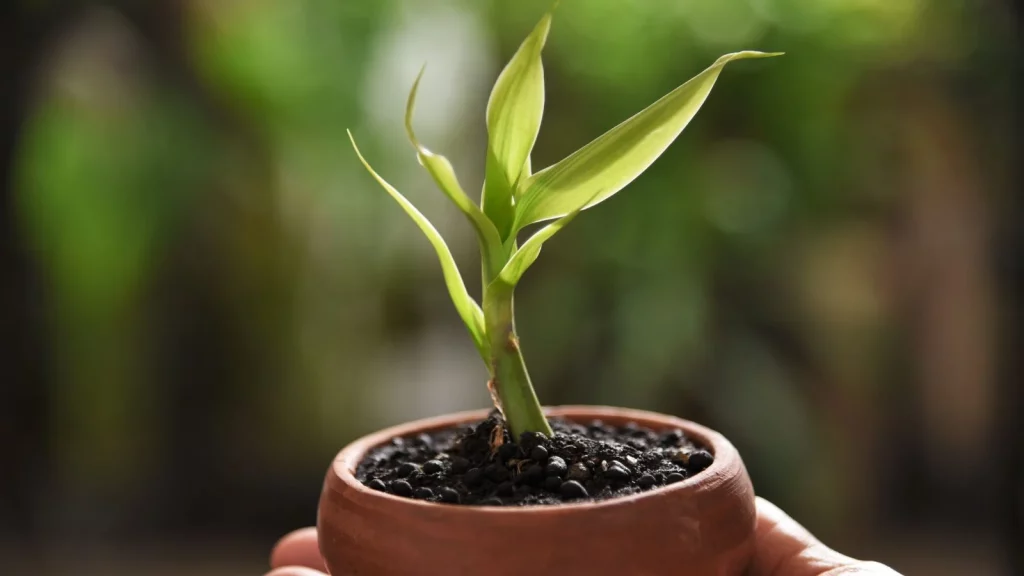
Use a fresh, labelled potting mix for indoor or tropical foliage plants. It should absorb water evenly, then let the excess drain instead of collapsing into a heavy, airless mass.
Avoid garden soil in an indoor pot. If a houseplant mix stays wet for many days, improve its structure with a suitable coarse amendment or replace it with a freer-draining mix. The guide to improving indoor plant drainage explains how to correct slow, soggy compost without guessing at a watering schedule.
Pot and Drainage
Choose a pot only a little wider than the root system. An oversized pot holds more wet compost than the plant can use, while a very small pot may dry too quickly or become unstable.
The pot needs at least one unobstructed drainage hole. A decorative cachepot is fine if you remove the inner pot for watering or tip away all collected runoff. Never leave the roots standing in a hidden pool of water.
Newly transferred tall canes may need a slim stake while roots settle into the mix. Firm the compost gently around the roots, but do not ram it down or bury a long section of cane for support.
How to Water
Check before watering rather than choosing a fixed day:
- Feel the top 2–3 cm of compost.
- If it is beginning to dry, water slowly across the root area.
- Continue until a little water leaves the drainage holes.
- Let the pot drain and empty the saucer or cachepot.
If the top looks dry while the lower pot remains heavy and wet, wait and check again. Light, season, pot size, root mass and room temperature all change drying speed.
Feeding
Feed only when the plant is healthy and actively growing. Use a balanced houseplant fertiliser at the cautious end of its label. Reduce or pause feeding during low-light winter conditions and immediately after repotting or moving from water to soil.
White crust on the compost, browning tips soon after feeding or yellowing after a strong dose can point to accumulated salts. Stop feeding, review the label and make sure plain water can drain fully through the pot. The indoor plant fertiliser guide covers the differences between feed types and the risks of overfeeding.
How to Move Lucky Bamboo From Water to Soil
Moving a healthy Lucky Bamboo into compost can give you a conventional potted plant, but water-formed roots can be fragile and may take time to adjust. Do not transfer it just to solve an unidentified yellowing problem.
When the Transition Makes Sense
Consider the move when the plant has firm green canes, several healthy roots and enough leafy growth to sustain it. Delay the move if the water smells bad, roots are mostly soft, or a cane is yellowing from the base. Deal with rot or take a healthy cutting first.
Use a mild period of indoor growth rather than combining the move with a cold draught, heatwave, house move or sudden change in light.
Step-by-Step Transfer
- Choose the pot. Use a clean pot with drainage holes, only slightly larger than the gathered roots.
- Prepare the mix. Add fresh, freely draining indoor potting mix and moisten it evenly. It should feel damp, not saturated.
- Free the roots. Lift the canes carefully and remove support stones without pulling on individual roots.
- Rinse and inspect. Rinse off loose slime. Keep roots that are firm. With clean scissors, remove only roots that are clearly brown or black, soft, mushy or sloughing; routine root trimming is unnecessary.
- Make a planting hole. Create enough space for the roots before lowering the plant in. Spread them naturally without sharp bending or crushing.
- Set the depth. Cover the roots and keep the cane base near its previous level. Do not bury a long green section of stem.
- Firm and support. Settle the mix gently around the roots. Stake tall canes if needed instead of compacting the compost.
- Water and drain. Water once so the mix settles, then allow every drop of excess to leave the pot.
- Give steady aftercare. Place the plant in bright, indirect light. For the first few weeks, keep the mix evenly, lightly moist while the water-grown roots adjust, but never leave it waterlogged. Do not feed yet.
- Move to normal soil care. Once the plant is stable, begin allowing the top 2–3 cm to approach dryness before watering again.
Temporary Stress or Real Decline?
A brief pause in growth, mild droop or the loss of one older leaf can follow a root disturbance. Keep conditions steady rather than changing water, light and fertiliser together.
Inspect promptly if yellowing continues to spread, the cane base softens, the compost smells sour, the plant collapses despite moist soil, or roots become increasingly dark and mushy. Those are signs of more than simple transition stress.
Light Requirements
Give Lucky Bamboo bright, indirect light. An east- or north-facing room often works, or place it back from a brighter window where direct midday sun does not strike the leaves.
Harsh sun can bleach or scorch leaves. Very weak light can produce pale, stretched shoots and slow growth. If you move the plant to a brighter spot, change the exposure gradually and keep it out of strong direct sun.
Rotate the container occasionally for balanced growth, but do not use rotation as a treatment for an unhealthy root system.
Temperature and Humidity
A steady, warm indoor room suits this tropical plant. Keep it away from cold windows, exterior-door draughts, radiators, fan heaters and air-conditioning outlets. Clemson Extension advises bringing outdoor plants in before nights fall below about 18°C, which is a useful warning against prolonged chill indoors too.
Normal home humidity is often adequate. Dry heated air can contribute to brown tips, but do not keep the roots wetter to compensate. Move the plant away from the heat source, group plants if practical or use a room humidifier when the air is persistently dry. Good root care remains the priority.
How to Prune and Shape Lucky Bamboo
Use clean, sharp scissors or secateurs. Remove a fully yellow leaf at its base without cutting into the healthy cane. To reduce height, shorten a healthy leafy side shoot just above a node; dormant buds lower down may produce new growth.
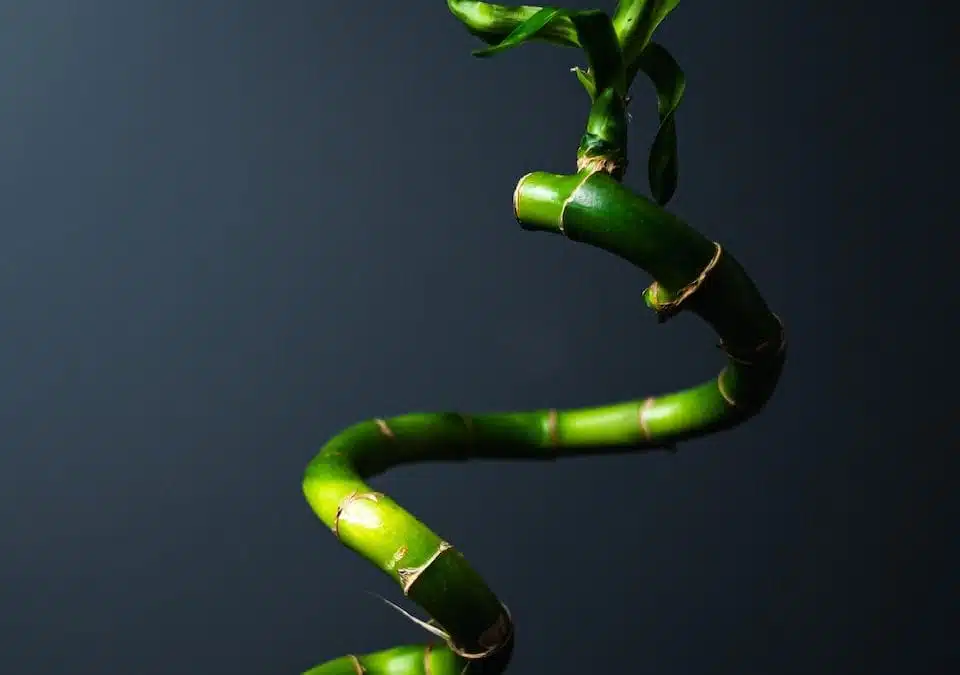
Commercial spirals and curves are trained gradually while the shoots grow. Pruning can tidy the plant and encourage branching, but it will not turn a straight mature cane into a spiral overnight.
For propagation, Clemson Extension recommends cutting a healthy new shoot from the main stem, removing the lowest leaves and placing the shoot in clean water. Roots may appear in roughly two to three weeks, although conditions affect timing. Use healthy green material; do not propagate a section that is already soft, yellow or foul-smelling.
Do not trim roots simply to fit a small decorative vessel. Move the plant to a more suitable container instead. Root cutting is reserved for tissue that is clearly dead or rotten.
Common Lucky Bamboo Problems
Symptoms overlap, so use the pattern and the growing conditions rather than one leaf alone.
Yellow Leaves
Possible causes include waterlogged compost, stagnant water, excessive direct sun, cold stress, damaged roots, overfeeding, pest pressure or the natural loss of one older leaf. Check moisture, roots, light and recent care changes before feeding or watering again. The wider guide to why indoor plants turn yellow can help narrow the pattern.
Yellow Stem
A cane that is yellowing can be suffering from serious stress or decay, particularly when the colour starts at a soft base and moves upwards. Check whether it is firm. Separate a soft cane from healthy canes, discard contaminated water and clean the vessel. If the upper growth is still completely green and firm, a healthy shoot cutting may be the safer way to preserve it.
Yellow stem tissue will not turn green again. Do not bury it deeper or add fertiliser in an attempt to reverse it.
Brown Tips
Check for dry heated air, inconsistent moisture, direct sun, recent strong feeding and mineral or chemical build-up. Trim the dry brown edge for appearance if you wish, but correcting the cause is what prevents new damage. Change the water source only when water quality is a plausible part of the pattern.
Soft or Mushy Stem
Softness, dark wet tissue or an unpleasant smell points to decay. Remove the affected cane from the shared arrangement. Clean tools between cuts and do not place healthy canes back into contaminated water. A healthy green shoot above the damage may be suitable for propagation, but an extensively soft cane is unlikely to recover.
Root Rot
In water, unhealthy roots may be dark, slimy, soft or foul-smelling. In soil, rot may appear as brown or black roots that collapse or lose their outer layer, often alongside wet compost and wilting. Remove only damaged tissue, correct the stale water or poor drainage, and use a clean container or fresh potting mix. See the full guide to root rot in houseplants when the root system is deteriorating.
Weak Growth
Pale, stretched shoots commonly point to insufficient light, but weak growth can also follow root damage, excess water, cold conditions, pests or inadequate nutrition. Check the roots and environment before feeding. Move towards brighter indirect light gradually.
Algae in Water
A little green film is common in a clear vessel exposed to light. Heavy algae competes for oxygen and makes it harder to judge root health. Change the water, rinse the container and stones, remove loose growth and move the vessel out of direct sun. Do not cure algae by adding more fertiliser.
Pests
Lucky Bamboo can host spider mites, mealybugs, scale insects and aphids. Look for fine webbing or stippling, white cottony clusters, fixed brown bumps, sticky residue or clusters of soft-bodied insects. Isolate the plant and identify the pest before treating it. The indoor plant pest guide shows the signs and appropriate first steps.
Common Mistakes
- Treating Lucky Bamboo as true bamboo and copying outdoor bamboo care.
- Keeping a water-grown plant topped up without ever cleaning the vessel.
- Submerging a long section of cane rather than the roots and lower rooting area.
- Watering a soil-grown plant on a fixed weekday without checking the compost.
- Using a pot without drainage or leaving runoff inside a cachepot.
- Feeding a yellowing or rotting plant before checking roots, light and moisture.
- Assuming every brown tip proves tap-water damage.
- Trimming healthy roots to force them into a decorative vase.
- Moving a damaged plant from water to soil while several other conditions change at once.
- Expecting pruning alone to create commercial spirals.
FAQs
Can Lucky Bamboo Live Permanently in Water?
Yes, it can remain in water when the roots are covered, the vessel is cleaned regularly and nutrition is supplied very cautiously. Water culture is not maintenance-free: cloudy water, algae, accumulating salts and decaying roots still need attention.
Is Soil Better Than Water for Lucky Bamboo?
Neither method is universally better. Water makes root inspection easy but needs regular cleaning. Soil provides a conventional root environment and stable pot, but poor drainage can cause serious problems. Keep a healthy plant in the system you can maintain consistently.
Can I Use Tap Water?
Yes, if the plant is healthy. If persistent brown tips or deposits suggest the local water may be contributing, trial rainwater, distilled water or another low-mineral source while keeping other care unchanged. Do not diagnose water quality from one brown tip.
How Often Should I Water Lucky Bamboo in Soil?
Check the compost rather than the calendar. Water when the top 2–3 cm begins to dry, then let excess drain fully. The interval changes with light, temperature, pot size, root mass and season.
Should I Cut Orange or Red Roots?
Colour alone is not enough. Water-grown Lucky Bamboo roots can look different from roots grown in compost. Keep roots that are firm and intact. Remove roots only when they are clearly soft, mushy, hollow, sloughing or foul-smelling.
Is Lucky Bamboo Safe for Cats and Dogs?
No. The ASPCA lists Dracaena as toxic to cats and dogs. Keep the plant out of reach. If a pet chews or swallows it, contact your vet promptly for case-specific advice rather than trying a home remedy.
KEEP YOUR WATERING ROUTINE SIMPLE
Avoid the Watering Mistakes That Stress Houseplants
Use our guide to indoor plant watering mistakes to check moisture, drainage and pot conditions before yellow leaves or root trouble spread.
Final Thoughts
Good Lucky Bamboo care starts with one decision: are the roots in water or in soil? Keep water-grown roots clean and covered, or give soil-grown roots air, drainage and moisture without saturation. Add bright indirect light, steady warmth and restrained feeding.
When the plant changes, inspect before reacting. Firm roots and canes, the moisture pattern, light and recent feeding tell you more than a single yellow leaf. That calm, one-change-at-a-time approach gives Dracaena sanderiana the best chance to stay healthy in either growing system.
Related Articles
CREATE A CALMER CORNER WITH EASY INDOOR PLANTS
Discover Indoor Plants That Reduce Stress
Once you know how to care for lucky bamboo, it’s easy to build a whole relaxing corner around it. Our Indoor Plants Reduce Stress guide highlights soothing, low-maintenance plants you can pair with lucky bamboo to create a peaceful, spa-like atmosphere at home.