

Modern life is noisy, busy and often spent staring at screens. If you’re exploring indoor plants to reduce stress, start with the simple aim of making your home more pleasant. Even a single leafy pot on your desk may make the space feel more relaxed and alive, if you enjoy having plants around.
In this article you’ll learn how plants can become part of an enjoyable home environment, which easy species to choose, and how to arrange and look after them without adding extra hassle. If you’re worried about keeping everything low-effort, you might also like Low-Maintenance Indoor Plants.
How Indoor Plants May Help You Unwind
You don’t need a jungle to enjoy greenery. A handful of well-placed plants can:
- Soften hard lines from furniture and screens
- Add a sense of life to a room
- Give you a reason to take a short break to check compost or tidy leaves
- Create a display you enjoy looking at
The scientific picture is less certain than some plant-wellbeing claims suggest. A peer-reviewed scoping review of indoor plants and mental health found associations with lower stress and other favourable outcomes. However, its included studies were observational and mostly conducted during the COVID-19 pandemic. They cannot establish that plants caused the differences or promise lasting benefits from viewing or tending them. Personal enjoyment, appearance and an engaging routine are useful reasons to grow plants, but people’s responses will differ.
Plants should not be relied on to freshen a stuffy room. A review of potted plants and indoor air quality found that their pollutant removal in laboratory chambers does not amount to meaningful air cleaning by a few pots in ordinary homes. They are not a substitute for ventilation.
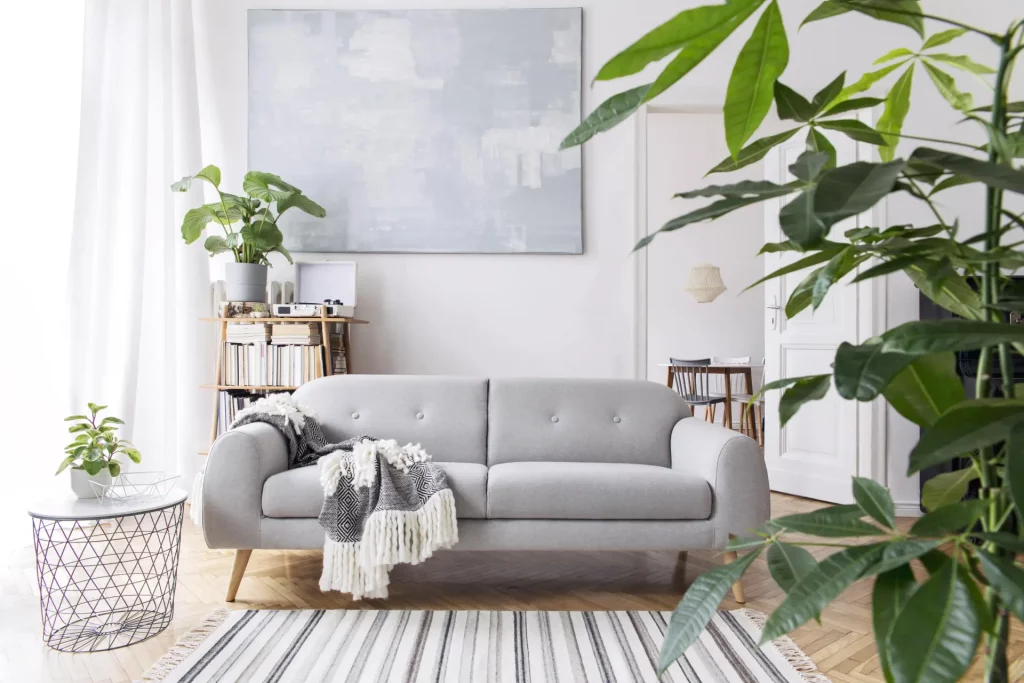
Choosing Indoor Plants for a Calmer Home
When you’re aiming for calm, choose plants you like that suit your home and the care you can offer. These are practical starting points, not species proven to provide greater stress relief.
Pet safety: Peace lilies, snake plants, pothos, philodendrons and ZZ plants can harm cats or dogs if chewed or eaten. Keep these plants securely inaccessible to pets, or choose a confirmed non-toxic alternative if you cannot prevent access. Check botanical names before buying, and contact your vet promptly if you suspect your pet has chewed one.
1. Peace Lily
Peace lilies offer glossy leaves and elegant white flower-like spathes. They’re useful for:
- A spot with indirect light
- Someone happy to check the compost regularly
- Softening corners and adding a more tropical feel
Check the compost rather than waiting for the plant to droop or automatically watering a wilted plant.
The ASPCA lists peace lilies (Spathiphyllum) as toxic to cats and dogs. Keep them inaccessible to pets, or choose another plant if you cannot prevent access. Contact your vet promptly if you suspect your pet has chewed one.
2. Snake Plant
Snake plants are tough, architectural and slow-growing. They’re a useful choice if you:
- Sometimes forget to water
- Want a clean, upright look that works with modern decor
- Need something that can tolerate lower light
They are drought-tolerant rather than moisture-loving. Let the compost dry before watering, and avoid leaving water in the outer pot. The RHS snake-plant growing guide explains their light and watering needs.
3. Pothos and Other Trailing Vines
Pothos (Epipremnum aureum) and heart-leaf philodendron (Philodendron hederaceum) offer trailing greenery for:
- High shelves and bookcases
- Hanging baskets with suitable daylight
- Creating a “green drape” effect that you find cosy
A decorative shelf still needs enough light for the plant. Keep trailing stems clear of walkways.
4. ZZ Plant
ZZ plants (Zamioculcas zamiifolia) have glossy leaves and tolerate drought and lower light. They can suit busy people, but tolerance of neglect does not mean they need no care.
For more about peace lilies, pothos and ZZ plants, see the RHS guide to arum houseplants.
5. Small Tabletop Plants
For desks and bedside tables, choose a plant that fits the available space:
- A compact snake plant
- A compact peace lily such as ‘Bellini’
- A small pothos with room for its stems
Use a pot with drainage holes and a saucer or outer pot to protect the surface. A bedside table is only suitable if it provides the plant with enough daylight.

Where to Place Plants for a Calmer Feel
Choose a position that works for both you and the plant. A pleasing arrangement is only practical if you can reach the pots and provide suitable growing conditions.
Create a Calm Corner
Pick one spot to be your “unwind zone”:
- A chair by a window
- A reading nook
- A quiet corner of your bedroom with suitable daylight
Start with one plant, or group a few of different heights: a taller floor plant, a medium one and a trailing plant. An existing sturdy side table or shelf can help vary the heights; you do not need a dedicated plant stand. Leave room to move around and check each pot.
Soften Hard Work Areas
If you enjoy greenery, try adding a plant to your desk, kitchen counter or worktop:
- Place one plant at the edge of your field of vision, not directly in front of your screen.
- Use simple pots so they don’t visually compete with everything else.
- Keep the plant out of the main “elbow zone” so you’re not constantly knocking it.
Treat Plants Like Little Break Signals
Use checking and leaf-cleaning as small pauses:
- Stand up, walk over to your plants and check whether they need attention.
- Take a moment to wipe a dusty leaf or tidy fallen plant material.
- Use that moment to look away from your phone or laptop.
Easy Care Routine for a Calmer Home
Keep the collection manageable rather than giving yourself more chores. The RHS houseplant growing guide recommends matching plants to the conditions you can provide.
Light
- Bright, indirect light is a useful starting point for many foliage plants; check each plant’s requirements.
- There is no reliable window-distance rule. Available light varies with the window, shading and season.
- Turn pots occasionally to keep the display balanced.
Water
- Check compost rather than watering on a strict schedule.
- Snake plants: allow the compost to dry before watering.
- Peace lilies and trailing vines: check the surface as it dries, then follow the particular plant’s care guidance rather than applying one depth rule to every pot.
- ZZ plants: remember their drought tolerance; do not keep the compost constantly wet.
- When watering is needed, water thoroughly and let excess drain away. Empty the saucer or outer pot.
For more help with watering-related root problems, see Root Rot in Houseplants.
Feeding
- Feed during active growth, following the fertiliser label and the plant’s care guidance.
- Use the stated dilution and frequency, not one schedule for every plant.
- Reduce or pause feeding when growth slows.
Cleaning Leaves
Leaf-cleaning can be a simple way to tidy your display without adding another purchase.
- Wipe broad, smooth leaves gently with a soft, slightly damp cloth, supporting each leaf as you work.
- Do not scrub delicate foliage. Check the plant’s care guidance before washing it.

Turning Plant Care into a Relaxing Ritual
If plant care feels like a chore, reduce the collection or simplify the routine. If you enjoy it, try making it a small weekly check-in.
- Put on a favourite playlist or podcast.
- Work through your plants one by one: check compost, turn pots if needed and tidy fallen leaves.
- Take a few minutes to notice new growth, leaves unfurling or buds forming.
You don’t have to do everything in one day. Check each plant and water only those that need it; a weekly check-in is not a weekly watering instruction. The goal is to make plant time something you genuinely look forward to.
FAQs About Indoor Plants and Stress
Do indoor plants really reduce stress?
Some research reports favourable associations, but it does not establish that plants will reduce everyone’s stress. You may enjoy their appearance and the routine of caring for them. Treat that personal enjoyment separately from a proven or lasting psychological effect.
How many plants do I need to feel a difference?
There is no established number that guarantees stress relief. Start with one plant you like in a suitable spot and add more only if you enjoy caring for them. A small collection is enough to experiment with the look of a room.
Are some plants better than others for stress relief?
There is no reliable therapeutic ranking to use when shopping. Choose shapes, colours and textures you personally enjoy, then check that the plant suits your light and care routine.
What if I’m bad at keeping plants alive?
Start with one forgiving plant such as a snake plant, ZZ plant or pothos, and learn its particular requirements. Suitable light, drainage and checking the compost matter more than buying accessories. Losing a plant occasionally is part of learning, not a reason to give up.
Can indoor plants replace other stress-management habits?
No. Enjoy them as part of a pleasant home environment, not as a treatment for anxiety, depression or other medical conditions. They should not replace your usual support, stress-management habits or professional help when needed.
Final Thoughts on Using Indoor Plants to Reduce Stress
Indoor plants won’t fix every stressful situation, but if you enjoy them, they may make home feel more welcoming. A few well-chosen, easy-care species in suitable spots can soften hard edges, add life to quiet corners and offer something enjoyable to tend.
Start with a plant that suits your home and aim for a routine that feels gentle rather than demanding. You do not need a large collection or specialist accessories to create a display you like.
Related Articles
FEEL BETTER EVERY TIME YOU WALK IN
Discover More Mood-Boosting Indoor Plants
If you enjoy adding greenery to your home, explore more indoor plant ideas with different foliage shapes and flowering habits. Choose plants you like that suit your light, space and everyday care routine.