
A simple indoor plant maintenance routine helps you catch problems before they turn into yellow leaves, pests, root rot or weak growth. You do not need to fuss over your plants every day, but a quick weekly check makes plant care much easier.
This routine shows you what to check first, when to water, how to clean leaves, when to prune, and how to spot early warning signs before your houseplants start struggling.
Quick answer: what is a good indoor plant maintenance routine?
A good indoor plant maintenance routine is a simple weekly check of soil moisture, leaves, stems, pests, drainage, airflow and growth. Start by checking the soil before watering, then remove dead leaves, wipe dusty foliage, inspect leaf undersides, prune damaged growth and check that pots are draining properly.
Do this first: Pick one day each week to check your plants in the same order. Start with soil moisture, then leaves, pests, pruning, drainage and light.
Why a maintenance routine matters for indoor plants
Indoor plants often decline slowly rather than all at once. Leaves fade, pests settle in quietly, soil gets compacted, and watering routines drift off without being noticed straight away.
A regular routine helps you spot those smaller changes early. It also stops plant care becoming reactive, where you only step in once a plant already looks stressed.
A simple routine makes it easier to:
- keep watering more consistent
- catch pests earlier
- remove damaged leaves before they pile up
- notice when a plant needs repotting
- keep the growing space cleaner and healthier
Check the soil before you water anything
This is one of the best habits you can build. Watering on autopilot causes more indoor plant problems than people realise, especially when different pots, plant types, and light levels make them dry at different speeds.
Touch the soil first rather than assuming every plant needs water on the same day. Some will still be damp below the surface, while others may already be drying out faster than expected.
Checking the compost before you water is one of the easiest ways to avoid common indoor plant watering mistakes that gradually stress houseplants.
A analogue moisture meter for houseplants can make it much easier to check deeper compost moisture instead of relying only on the surface.
Remove dead leaves and damaged growth
Dead or badly damaged leaves do not help the plant, and leaving them in place can make the whole pot look neglected. A quick clean-up also makes it easier to spot real problems underneath, such as pests, mould, or fresh damage.
You do not need to over-prune. Just remove:
- fully dead leaves
- mushy or badly yellowed growth
- broken stems
- spent flowers where relevant
This keeps the plant looking tidier and helps you focus on healthy new growth instead.
A pair of small pruning scissors for indoor plants makes it easier to trim dead growth cleanly without damaging nearby stems.
If the whole plant looks weak, limp or close to dying, follow a step-by-step houseplant rescue routine before cutting too much away.
Wipe dusty leaves and inspect the undersides
Dusty leaves do more than make a plant look dull. Heavy dust can make it harder for the plant to use the light it gets, and it also makes pest checks much easier to miss.
Use a soft damp cloth or gently wipe larger leaves during your routine. While doing that, check underneath for:
- sticky residue
- fine webbing
- tiny moving pests
- odd spots or distortion
If you notice sticky leaves, webbing, tiny flies or moving insects, use an indoor plant pest guide to identify the problem before treating it.
That quick inspection can save you from discovering a bigger infestation later.
Dust, crowding, and stale air often build up together, which is why improving air circulation for indoor plants can help the whole space stay healthier.

Look for pest problems before they spread
Pests are much easier to deal with early. A weekly check gives you a much better chance of catching aphids, spider mites, scale, or fungus gnats before they move through more of your collection.
Pay extra attention if:
- a plant looks weaker than usual
- leaves are curling strangely
- you notice sticky patches
- there is webbing near stems or leaves
- the plant sits in a warm, still corner
A regular maintenance routine is one of the simplest ways to stop small pest issues becoming full-blown plant problems.
The University of California IPM recommends checking plants regularly so pest problems can be caught early before they spread further.
Check the light and plant position
Sometimes the plant itself is not the issue. The position is. A houseplant that was happy a month ago may now be struggling because the season changed, curtains stay closed more often, or surrounding plants have grown enough to block the light.
During your routine, ask:
- is this plant still getting enough light?
- is it leaning heavily toward one side?
- is it too close to a radiator or draught?
- does it need rotating slightly?
These are easy things to miss when you see your plants every day, but they often explain why a plant suddenly starts looking less healthy.
Keep airflow and humidity in balance
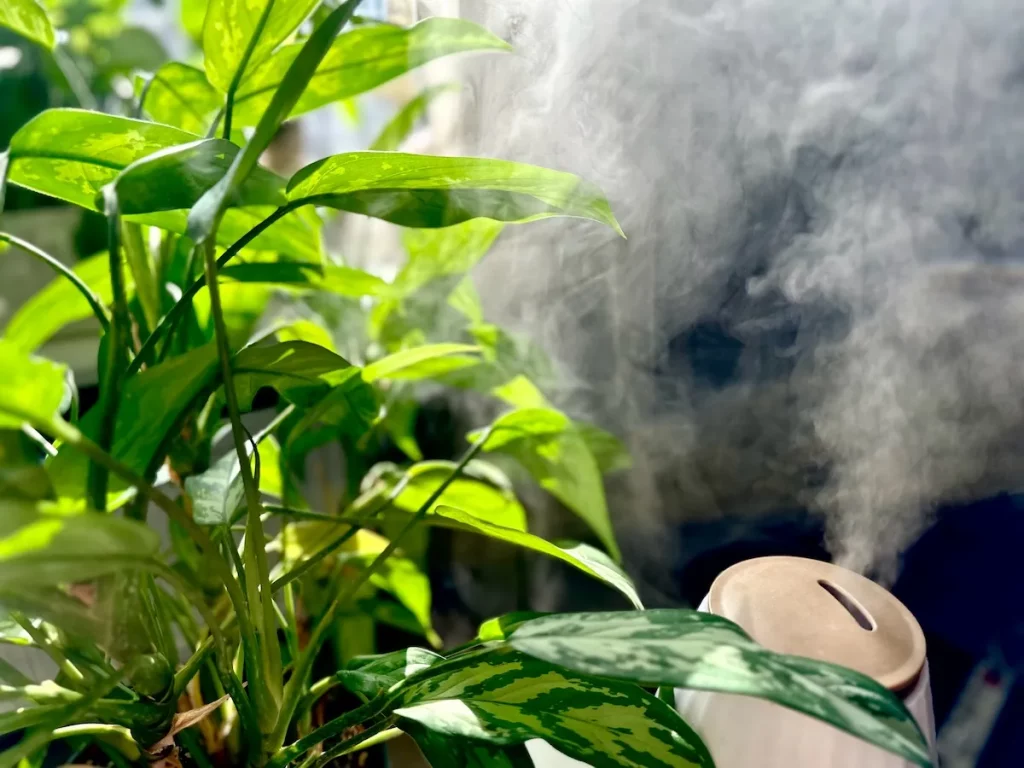
A healthy plant setup is not just about watering. If the air is too still, damp, or dry, problems can build up quietly around the foliage and soil.
Check whether:
- leaves stay wet too long after watering
- plants are packed too close together
- the room feels stuffy
- dry edges are appearing on sensitive plants
- mould keeps returning around the pots
Dry indoor air can stress some plants, but it is worth checking common indoor plant problems before assuming humidity is the only issue.
If leaves keep crisping or the room air feels dry, improving how you balance humidity for indoor plants can make your weekly routine much more effective.
If damp conditions keep building up around the pots, it is worth learning how to prevent mould and fungus in indoor soil before it becomes a repeating problem.
Check whether the potting mix still feels healthy
Good maintenance is not only about what happens above the soil. Old compost can compact, crust over, or start draining badly, and that changes how the whole plant behaves.
Watch for signs like:
- water sitting on top of the soil
- a sour smell from the pot
- white crusting on the surface
- roots pushing up or out
- slower growth without another obvious cause
If the mix feels tired, the routine should include deciding whether the plant needs a soil refresh or a full repot rather than just more feed or more water.
If roots are crowded or watering has started behaving strangely, it helps to know the clearest signs your indoor plant needs repotting.
If the compost only feels tired rather than completely spent, refreshing old potting mix without replacing it may be enough.
Feed carefully, not automatically
Feeding can support healthy growth, but not every plant needs fertiliser all the time. A maintenance routine should help you feed more sensibly, not just more often.
Feed with more care if:
- the plant is in active growth
- the soil is still in decent condition
- the roots are healthy
- the season supports growth
Be more cautious if:
- the plant is stressed
- the compost is staying soggy
- there is salt crust on the surface
- it is the slower part of the year
If growth looks pale or weak, compare the signs of nutrient deficiency in indoor plants before assuming the answer is simply more fertiliser.
If the soil surface looks crusty or the leaf tips are burning, it is worth checking how to revive over-fertilised indoor plants before feeding again.
A simple weekly indoor plant maintenance checklist
If you want the routine to stay easy, use the same order each week:
- Check the soil moisture
- Remove dead or damaged growth
- Wipe dusty leaves
- Inspect for pests
- Check light and position
- Look at airflow and humidity
- Assess whether the soil still feels healthy
That is usually enough to keep most houseplants in much better shape without spending ages on each one.

FAQs about an indoor plant maintenance routine
How often should I do indoor plant maintenance?
A quick weekly check is usually enough for most houseplants. Some plants may need extra attention more often, but a weekly routine catches most common issues early.
Do I need to water every plant on the same day?
No. Plants dry at different speeds, so it is better to check the soil first rather than water everything automatically.
What is the most important part of plant maintenance?
Checking the soil and spotting changes early are usually the biggest wins. That is often where watering problems, soil issues, and pests first show up.
Should I wipe all houseplant leaves?
Not every plant needs frequent wiping, but larger smooth leaves often benefit from it. It helps the plant look cleaner and makes pest checks easier.
Final Thoughts on a Simple Indoor Plant Maintenance Routine
A good indoor plant maintenance routine does not need to be complicated to work well. A few regular checks each week can prevent a lot of the problems that make houseplants harder to care for later.
The real benefit is consistency. When you keep an eye on moisture, leaves, pests, airflow, and soil condition, your plants are much more likely to stay healthy and far less likely to surprise you with bigger problems.
Related Articles
MAKE WEEKLY PLANT CARE FEEL MORE MANAGEABLE
Indoor Plant Watering Mistakes
If your routine still feels inconsistent, watering is often the first place to tighten up. Understanding the most common mistakes can make the rest of your plant care much easier and help you avoid problems before they start.