

Most people focus on watering, light, and soil first, but airflow is one of the easiest indoor plant factors to overlook. If the air around your plants stays still for too long, moisture lingers on leaves, humidity becomes uneven, and problems like fungal growth, weak stems, and pests can show up faster than you expect.
Good air circulation does not mean blasting plants with strong wind. It means keeping the air gently moving so leaves dry properly, stems stay stronger, and the growing space feels more balanced overall.
Quick answer: why air circulation matters for indoor plants
Air circulation helps indoor plants by reducing stagnant moisture, supporting stronger stems, improving gas exchange around the leaves, and making it harder for fungal problems and pests to settle in. Gentle airflow is usually best, because too little movement can leave plants sitting in damp, stale conditions, while too much direct airflow can dry leaves and soil too quickly.
Do this first
Before buying anything, look at how your plants are arranged and where they sit. If they are packed too closely together, pressed into a corner, or sitting in a room that rarely gets fresh air, that is usually the first thing to fix.
Start by checking:
- whether the leaves stay damp for too long after watering
- whether plants are crowded too tightly together
- whether the room feels stuffy or still
- whether fans, heaters, or vents are hitting the plants too directly
Small layout changes often improve airflow more than people expect.
Why indoor plants need air movement
Plants do not just need water and light. They also rely on healthy air movement around the leaves. When the air stays too still, heat and moisture can build up around the foliage, making it easier for fungal issues, pests, and weaker growth to develop.
Good airflow helps:
- reduce stale, damp pockets around leaves
- support sturdier stem growth
- keep temperatures more even around the plant
- lower the chance of mould and mildew building up
- make life harder for some common indoor pests

Signs poor air circulation is affecting your plants
You may notice leaves taking longer to dry, a musty smell around the pots, weak floppy growth, powdery mildew on indoor plants, or pests appearing more often in one part of the room.
Poor airflow becomes even more likely when:
- plants are grouped too tightly
- humidity stays trapped around the leaves
- the room gets little natural ventilation
- the area near the plants stays warm and stale
If damp conditions keep building around the pots, learning how to prevent mould and fungus in indoor soil can help before the problem spreads further.
Stagnant air can lead to several quiet problems indoors, including fungal growth, weaker stems, uneven conditions around the plant, and a higher chance of pests settling into the same area.
That matters because still, humid pockets around foliage are exactly the kind of conditions many indoor plant problems like. Leaves stay wetter, stems do not toughen up as well, and the space around the plant becomes less balanced overall.
A few of the biggest risks are:
- fungal growth spreading more easily
- weak or stretched stems
- damp leaf surfaces that stay wet too long
- pests finding calmer, more sheltered zones
- uneven heat around windows or grow lights
Easy ways to improve air circulation indoors
You do not need a complicated setup to improve airflow. Most indoor spaces respond well to a few practical changes.
Space plants out properly
This is one of the simplest fixes. When plants are packed too closely, they trap moisture between the leaves and make it harder for air to move through the group.
Giving each plant a bit more room helps:
- leaves dry more evenly
- air move more freely
- light reach more of the plant
- moisture stop collecting in one dense patch
Open windows when you can
Even short bursts of ventilation can help refresh a room. Opening a window for a little while can improve airflow, reduce stale humidity, and make the space feel better balanced for indoor plants.
You do not need to leave windows open for long. A short period of fresh air can help reset a stale room, especially if the plants have been sitting in a closed space for days.
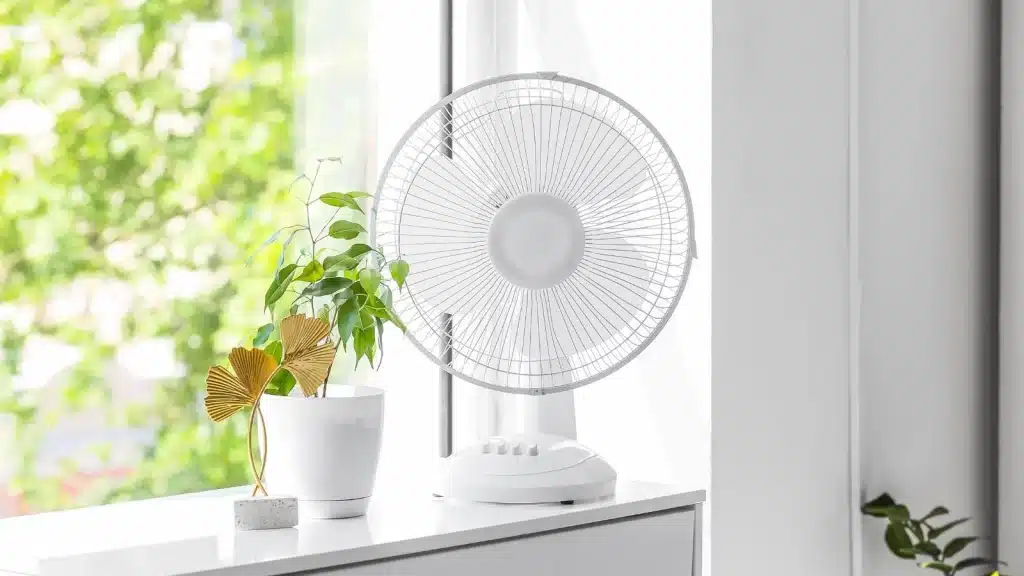
Use a small fan on a gentle setting
A low fan can help if the room naturally stays still. The goal is gentle movement around the plants, not strong direct wind onto the leaves.
A small oscillating fan for indoor plants can help keep air moving gently around the leaves without blasting the pots directly.
Use the room’s existing airflow better
Ceiling fans, extractor fans, and normal background room circulation can all help if used sensibly. What matters is avoiding areas where plants sit in trapped heat, trapped humidity, or one dead corner of air.
Rotate plants and clear crowded shelves
Rotating plants and thinning out clutter around them can make a surprising difference. It helps prevent one side of the plant staying too shaded, too moist, or too cut off from airflow.
How much airflow is too much?
Air movement helps, but too much direct wind can cause its own problems. If the airflow is too strong, leaves can dry out faster, edges may start to curl, and the compost can begin drying much more quickly than usual.
If the airflow is too strong, you may notice:
- leaves curling or crisping
- pots drying out much faster than usual
- one side of the plant looking more stressed
- lighter, thinner foliage struggling near the fan
Gentle movement around the plant is what you want. Direct blasting is not.
The Missouri Botanical Garden recommends improving air circulation around the plants, which is one of the simplest ways to reduce stale, damp conditions indoors.
Air circulation and humidity need to work together
Airflow and humidity affect each other more than many people realise. Still air can leave moisture sitting on the leaves for too long, while airflow that is too strong can dry the plant out faster and contribute to brown tips or crisp edges.
The goal is balance:
- enough airflow to stop damp leaf surfaces lingering
- enough humidity to stop leaves drying too hard
- a room that feels fresh rather than windy
If the room stays dry or the leaves keep crisping, learning how to balance humidity for indoor plants can help because humidity and airflow work best together.
Seasonal airflow changes matter too
Indoor airflow changes with the seasons, so the setup that works well in summer may need adjusting once winter arrives. Warmer weather often makes ventilation easier, while colder months can leave rooms more closed up and airflow much less balanced.
In winter
Homes are often more closed up, heaters run more often, and the air becomes drier or more uneven. Plants may still need airflow, but they usually do best with shorter, gentler movement rather than strong forced air.
Avoid placing them too close to:
- radiators
- heating vents
- draughty doors
- hot or dry window zones
In summer
Natural ventilation is usually easier, but hot windows, strong fans, and air conditioning can still stress indoor plants. A gentle background breeze is much better than a harsh direct blast.
Natural low-cost ways to improve airflow
Not every airflow fix needs equipment. Simple changes like rearranging plants, clearing crowded windowsills, wiping dusty leaves, and giving each plant a bit more space can all help the air move more freely around your indoor setup.
Low-cost ideas include:
- spacing out crowded pots
- clearing clutter from around plant shelves
- wiping dusty leaves so they can function better
- opening windows for short periods
- avoiding packed corners where air barely moves
These kinds of changes are often enough for small indoor collections.
FAQs about air circulation for indoor plants
Do indoor plants really need air circulation?
Yes. Good airflow helps reduce stagnant moisture, supports stronger growth, and makes it harder for mould, mildew, and some pests to settle in.
Is a fan safe for houseplants?
Yes, if it is used gently. A low indirect setting is usually best. Strong direct airflow can dry plants out too quickly.
Can poor airflow cause fungal problems?
Yes. Still, damp air around the leaves can make fungal issues more likely, especially when humidity stays trapped in crowded areas.
Should I keep windows open for my indoor plants?
Short periods of ventilation can help, as long as the plants are not sitting in cold harsh draughts or very hot direct blasts of air.
Final Thoughts on Air Circulation for Indoor Plants
Air circulation is one of the easiest indoor plant care upgrades to overlook, but it can make a real difference. When the air around your plants moves gently and consistently, leaves dry better, stems grow stronger, and fungal or pest problems often become easier to avoid.
You do not need a complicated setup. A bit more spacing, better room airflow, and a gentler approach to humidity and ventilation are often enough to improve the whole growing space.
Related Articles
KEEP DAMP GROWING CONDITIONS UNDER CONTROL
How to Prevent Mold and Fungus in Indoor Soil
If stale air and trapped moisture are starting to cause problems around your plants, learning how to stop mould and fungus early can help protect both the soil and the foliage before the damage spreads.