
Home composting does not require a huge garden or one perfect system. The best composting technique is the one that fits your space, the materials you regularly have and the amount of maintenance you are willing to do. A garden bin can handle mixed plant waste, a tumbler keeps a small patio tidy, a wormery suits regular vegetable scraps, bokashi accepts a wider range of food, and leaf mould gives autumn leaves a useful second life.
This guide compares those methods and explains how to start, maintain and use them successfully. If you need a detailed setup designed specifically for a flat or balcony, the separate indoor guide is the better next step.
Quick Answer
For most beginners with outdoor space, a lidded compost bin is the simplest all-round choice. Choose a tumbler if easy mixing and a contained footprint matter more than capacity. A wormery works well for modest amounts of fruit and vegetable scraps in a sheltered small space. Bokashi is useful when you want to collect cooked food and some meat or dairy, but it ferments waste rather than producing finished compost in the bucket. Keep fallen leaves separate to make leaf mould.
Do This First
Before buying a bin or saving scraps, decide:
- how much indoor or outdoor space you can give the system;
- which waste you produce most often;
- whether you have soil or an outdoor compost bin for finishing bokashi;
- how much turning, draining or feeding you will realistically do;
- whether you want compost for beds, a soil conditioner, worm castings or another specific output.
That decision prevents a common mistake: choosing a system that cannot handle your usual waste or that produces material you have nowhere to use.
Composting Techniques Compared
On smaller screens: scroll sideways to view the full table.
| Method | Best for | Space needed | Main inputs | Maintenance | Finished material | Main drawback |
|---|---|---|---|---|---|---|
| Traditional bin or heap | Gardens with mixed kitchen and plant waste | Small to large outdoor area | Fruit and veg scraps, soft garden waste, dry leaves and cardboard | Add varied material; check moisture; turn when compacted or when faster results matter | Mixed garden compost | Needs outdoor space and enough varied material |
| Compost tumbler | Patios and small gardens where tidy containment matters | Compact outdoor footprint | Chopped greens and browns | Rotate as the maker advises; monitor wetness and clumping | Mixed garden compost | Limited capacity; awkward to add continuously if it has one chamber |
| Wormery | Flats, balconies and sheltered small spaces with modest food scraps | Small, sheltered area | Mostly fruit and veg scraps plus some paper/card bedding | Feed gradually; protect from temperature extremes; drain excess liquid | Worm castings | Worms can be overloaded and are sensitive to poor conditions |
| Bokashi | Households wanting to collect a wider range of food scraps | One or two airtight buckets plus a finishing destination | Food scraps, including cooked food and some meat/dairy, following system instructions | Add bran, compress, seal and drain as instructed | Fermented pre-compost | Needs consumable bran and a further finishing stage |
| Leaf mould | Gardens with autumn leaves | Bag, cage or contained outdoor pile | Fallen leaves and moisture | Keep leaves damp; little or no turning | Leaf mould soil conditioner | Slow and does not handle kitchen waste |
Traditional Compost Bin or Heap
A traditional bin or heap is the most flexible method when you have outdoor space and a mixture of garden material and uncooked fruit and vegetable scraps. A lidded bin is tidy and helps moderate rain; an open heap or wooden bay suits larger volumes.
Choose an accessible, sheltered position in partial or full shade where the contents can drain. Bare soil is useful beneath an open-bottomed bin, but it is not essential to decomposition: the microbes needed are already present on plant material. Avoid a position that becomes waterlogged or dries out completely.
Add a varied mixture of soft, nitrogen-rich greens and dry, carbon-rich browns. Chop tough stems and tear cardboard so they mix rather than forming dense layers. The goal is not a laboratory-perfect ratio; it is a loose blend that stays evenly damp and does not become a wet mass of grass or food scraps. The RHS composting guide gives a rough green/brown range and explains why no single ingredient should dominate.
Turning introduces air and can speed decomposition, especially when the centre is compacted, cold and wet. It is not compulsory on one fixed timetable. A well-balanced passive heap will still break down, only more slowly.
Compost Tumbler
A tumbler is a sealed or ventilated barrel raised on a frame so the contents can be mixed by rotating it. It works well on a patio or in a small garden where a contained system and easy mixing matter.
Add chopped greens and browns together rather than filling the chamber with wet food waste. Rotate it according to the maker’s instructions and check the contents instead of turning it automatically every day. If material forms heavy wet balls, add torn dry cardboard and break up the clumps. If it looks dry and unchanged, add a little water or fresh green material.
Capacity is the main limitation. A single full chamber needs time to finish without a constant supply of fresh scraps, so a dual-chamber model or a separate holding caddy can make batch management easier. A tumbler can make mixing quicker, but it does not guarantee finished compost in a particular number of weeks.
Worm Composting
A wormery uses composting worms to turn small, regular additions of organic waste into fine castings. It can suit a sheltered balcony, shed, utility area or other place protected from strong sun, frost and large temperature swings. For detailed indoor placement and setup, use the Indoor Composting Guide.

Start with the bedding and worm species recommended for the system. Feed small amounts of chopped fruit and vegetable scraps, coffee grounds and limited paper or cardboard, then wait until the worms are processing the food before adding much more. Limit acidic scraps such as citrus and avoid meat, fish, dairy, fats and large amounts of woody garden waste. The RHS worm-composting advice recommends avoiding overload and adding water only when the wormery actually appears dry.
Keep the bedding moist but not waterlogged and disturb it gently rather than turning it like a hot heap. Drain liquid if it accumulates. That liquid varies in composition and should not be treated as an automatically safe or complete houseplant feed; follow reliable system guidance before using it.
Bokashi
Bokashi is an airtight fermentation process, not ordinary aerobic composting. Food is pressed into a sealed bucket with inoculated bran. This makes it useful for a wider range of scraps than a garden heap, including cooked food and some meat or dairy when the system instructions allow them.
Add food in manageable pieces, exclude as much air as practical, apply bran as directed and keep the lid sealed. Drain liquid according to the bucket instructions. A sharp, pickle-like smell can be normal; a putrid smell or extensive dark mould suggests the material is rotting rather than fermenting.
The bucket does not produce normal finished compost. It produces acidic pre-compost that still resembles the original food. The RHS bokashi guide explains that it needs a further stage in a compost bin or soil and should not be placed directly against living roots immediately. Before choosing bokashi, make sure you have a reliable finishing destination and are comfortable buying bran regularly.
Leaf Mould
Leaf mould is made from fallen leaves and moisture, mainly through fungal decomposition. It is not the same as mixed garden compost and does not need a green/brown blend. The finished material is valued chiefly as a soil conditioner, mulch ingredient or component of a suitable growing mix.
Collect damp leaves in a wire cage or reusable sack with air and drainage holes. If the leaves are dry, moisten them; then leave them in a sheltered outdoor position. Shredding leaves, for example by mowing over them first, can shorten the process. Tough, waxy leaves take longer than thin deciduous leaves.
There is no need to turn leaf mould on a fixed schedule. Whole leaves can take a couple of years to become fine material, while shredded leaves may become usable sooner. The RHS leaf-mould guide explains the different conditions it needs from a mixed compost heap.
What Can and Cannot Go in Home Compost?
For an ordinary garden bin, aim for a varied mix rather than large amounts of one ingredient.
Useful Greens
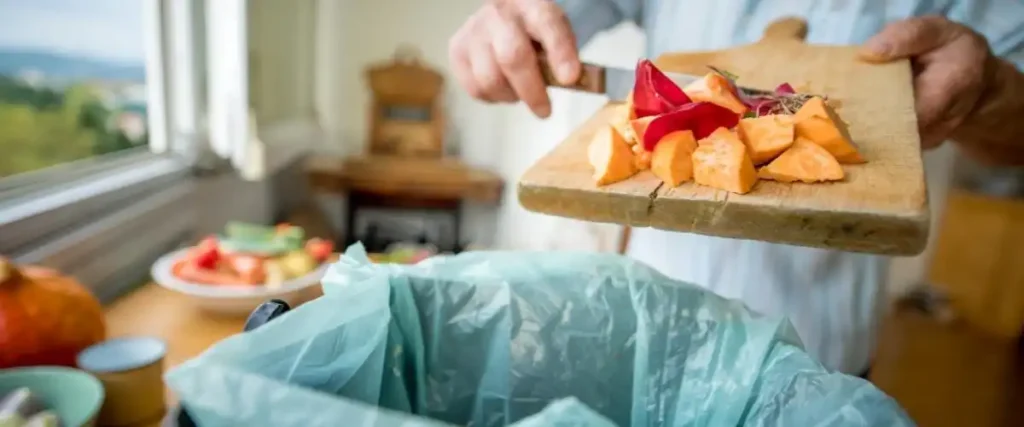
- fruit and vegetable peelings;
- coffee grounds and paper filters;
- plastic-free tea leaves or tea bags;
- fresh grass clippings mixed with drier material;
- soft green prunings and spent annual plants;
- cut flowers that are free from plastic ties or floral foam.
Useful Browns
- torn plain cardboard and paper;
- dry leaves and straw;
- chopped woody prunings;
- cardboard egg boxes and tubes;
- small amounts of sawdust or shavings from untreated wood.
Keep Out of an Ordinary Home Heap
- meat, fish, bones, dairy, fats and oily cooked food, which can attract pests;
- dog or cat waste and litter;
- glossy, plastic-coated or heavily treated paper and packaging;
- coal ash, cigarette waste and treated timber dust;
- persistent weeds, weeds carrying seed and roots that may survive a cool heap;
- badly diseased or insect-infested plants unless you operate a reliably managed hot-composting process that can deal with them.
These rules are method-specific. Bokashi can accept a wider range of food under its instructions, while a wormery needs gentler inputs in smaller amounts. Packaging labelled “compostable” may require industrial conditions, so check the label and local collection advice rather than assuming it will break down at home.
How to Start a Compost System
1. Match the Method to the Waste
Use a bin, heap or tumbler for a blend of garden waste and plant-based kitchen scraps. Choose a wormery for modest, regular vegetable scraps. Choose bokashi only if you can complete the finishing stage. Keep autumn leaves separately when leaf mould is the output you want.
2. Choose a Workable Location
An outdoor bin should be easy to reach, able to drain and protected from extreme wet, heat and drying winds. A wormery needs a sheltered, stable environment. Bokashi needs an indoor or sheltered spot where its airtight lid and drain can be used conveniently. Leaf sacks or cages belong in a cool outdoor place where they can remain damp.
3. Prepare the First Materials
For an aerobic bin or tumbler, begin with a loose mixture of greens and browns. Chop coarse material, mix wet grass with dry cardboard or leaves, and cover fresh food scraps with drier material. You do not need an activator when the ingredients, air and moisture are suitable.
Set up worm bedding and introduce food gradually. In bokashi, compress each addition and reseal the bucket rather than adding aerating layers. For leaf mould, collect leaves alone and moisten them if necessary.
4. Maintain the Conditions, Not the Calendar
Check an aerobic pile when you add material. It should be evenly damp, not dusty or dripping. Add dry browns and mix if it is wet or sour; add a little water and fresh greens if it is dry and inactive. Turn when compaction, smell or desired speed makes more air useful.
Do not apply that routine to every method. Feed worms only as fast as they work, keep bokashi sealed, and leave leaf mould largely undisturbed.
Common Composting Problems
It Smells Rotten
An aerobic heap is often too wet, compacted or overloaded with greens. Mix in dry brown material and introduce air. In a wormery, stop feeding, remove obviously rotting excess and check drainage. In bokashi, a putrid rather than pickle-like smell can mean the airtight fermentation has failed.
It Is Too Wet or Compacted
Protect an outdoor system from excessive rain, break up matted grass or food, and mix in torn cardboard, dry leaves or another absorbent brown. Drain a wormery if liquid is collecting. Do not “fix” bokashi by aerating it; follow the system’s troubleshooting instructions while keeping the process anaerobic.
It Is Too Dry
Add water sparingly to an aerobic bin while mixing, or add wetter green material. Dry material often decomposes slowly around the edges first. A wormery may need a small amount of water only when its bedding is genuinely drying. Moisten leaf mould if the leaves have become crisp.
Decomposition Is Slow
Cold weather, large pieces, too little moisture, poor mixing or a small volume can all slow an aerobic system. Chop future additions, correct obvious moisture problems and turn if the pile is compacted. A small heap is not a failure; it simply may not retain enough heat for rapid composting.
Flies or Other Pests Appear
Bury fresh fruit and vegetable scraps beneath brown material, avoid meat and dairy in ordinary bins, close lids and do not overfeed a wormery. A few small flies around a wormery can occur, but large numbers usually mean exposed or excessive food. Never add poisons or insecticides to an active compost system.
How to Tell When Compost Is Ready
Finished garden compost should be dark, crumbly and earthy-smelling, with most original ingredients no longer recognisable. The heap will have reduced substantially and should no longer heat up after mixing. Return obvious sticks or partly decomposed pieces to the next batch.
Time varies with the method, season, particle size, moisture, air and maintenance. A managed warm pile may finish in a few months; a passive cool bin can take a year or longer. Worm castings are harvested when the system’s finished tray is full. Bokashi pre-compost is not finished when it leaves the bucket. Leaf mould has its own slower timetable and texture.
If material smells sour, is hot, contains obvious fresh food or continues changing rapidly, let it mature before putting it around roots or into containers.
Using Finished Compost Around Indoor and Outdoor Plants
Mature garden compost is primarily a soil improver. Spread it as mulch around established plants, add it to beds, or combine it with existing soil when planting. Its organic matter can improve moisture retention in sandy soil and structure in heavier soil.
Container use needs more care because roots depend entirely on a limited volume of material. Screen out coarse pieces and use mature compost as one ingredient in a mix suited to the plant’s drainage and nutrient needs. Do not assume one percentage works for every houseplant, seedling or vegetable. The RHS potting-mix guide shows why growing media combine materials for structure, moisture and drainage.
For indoor pots, avoid material from a diseased heap or a batch containing persistent weeds. If you are refreshing an existing container, see how to reuse potting soil safely before adding anything. Compost and worm castings contribute variable nutrients, but demanding crops may still need suitable feeding based on the plant and growing medium.
Is Composting Really More Sustainable?
Composting keeps suitable garden material and unavoidable scraps in use and returns organic matter to soil. It can reduce the volume sent through residual-waste routes and may reduce purchases of soil conditioner when the finished material is useful at home.
Prevention comes first, though. Edible food has already used land, water, energy and money, so buying and eating it is better than composting it. WRAP’s UK food-waste evidence covers the cost and greenhouse-gas impact of wasted food. Compost peelings and unavoidable scraps, but plan meals and store food well so edible food is not treated as compost feedstock.
The method also matters. A neglected wet heap can smell and produce poor material; bokashi needs manufactured bran and a finishing route; purchased systems use resources. Composting is most useful when the system matches the household, is maintained well and produces material you will actually use. For more ways to reduce waste without buying unnecessary kit, see these eco-friendly indoor gardening tips.
FAQs About Composting Techniques
What Is the Easiest Composting Method for Beginners?
A lidded outdoor bin is usually the easiest all-round option if you have a garden and a mixture of plant-based kitchen and garden waste. It is forgiving, needs no specialist consumables and can work passively when speed is not important. In a flat, a wormery may be simpler if you have a sheltered place and only modest vegetable scraps.
Can I Compost If I Live in a Flat?
Yes, but choose the output route before the system. A wormery can process suitable scraps into castings. Bokashi can collect a wider range of food, but its pre-compost still needs soil or another compost system to finish. If you cannot use the output, a council food-waste collection may be more practical.
What Is the Difference Between Composting and Bokashi?
Traditional composting uses oxygen and microbes to break mixed organic material into stable compost. Bokashi excludes oxygen and ferments food with inoculated bran. The fermented output is pre-compost and needs a further stage before it behaves like finished garden compost.
How Long Does Home Compost Take?
There is no universal time. A well-managed warm batch can finish in a few months, while a small passive or cold system may take a year or more. Judge readiness by a stable, dark, crumbly, earthy result rather than a promised date.
Can I Use Homemade Compost for Houseplants?
Mature, clean, screened compost can be one ingredient in some houseplant mixes, but it varies and may hold too much water for plants needing very free drainage. Match the full mix to the plant and avoid using unfinished material or assuming pure garden compost suits every indoor pot.
Need a Smaller-Space Setup?
Take Your Composting Indoors
If a wormery or bokashi bucket suits your home, use the Indoor Composting Guide for the detailed indoor setup and maintenance steps.
Final Thoughts on Composting Techniques
Successful composting starts with fit rather than speed. Choose a method for the waste and space you actually have, keep its specific conditions stable, and use maturity signs instead of a fixed calendar. A modest system that you maintain and use is more valuable than a large one that becomes wet, overloaded or forgotten.
Related Articles
MAKE YOUR WHOLE GARDEN MORE PLANET-FRIENDLY
Learn Simple Eco Friendly Gardening Ideas for Everyday Use
Once you’ve got the hang of basic composting techniques, it’s easy to build on that momentum. Your Eco-Friendly Gardening Tips guide shows you practical ways to save water, reduce plastic, and choose greener products so your garden – indoors and out – has a lighter footprint.