

Short on outdoor space? You can collect kitchen scraps in a flat, and some small-scale systems can turn suitable scraps into a soil improver. First decide whether you need a place to store food waste for collection or have space and time to manage a worm bin or bokashi bucket. None is guaranteed to be odour-free: the right choice depends on what you can feed it, where its contents will go and how regularly you can check it.
This indoor composting guide explains the differences, how to prevent common problems and when the finished material may be suitable for pots. If you plan to refresh an existing potting mix, see our guide to reusing potting soil safely for indoor plants.
Quick Answer: Which Method Fits Your Space?
- Kitchen caddy: Collects scraps for a council food-waste service or another composting site. It does not make compost at home.
- Worm bin: Processes modest amounts of suitable food waste with composting worms. It needs ventilation, bedding, drainage and regular checks.
- Bokashi bucket: Ferments a wider range of food waste in a sealed container. Its contents still need somewhere to finish breaking down.
If you have no suitable place to finish bokashi and do not want to maintain worms, a collection caddy is a practical starting point.
What Is Indoor Composting?
Indoor composting means managing the breakdown of organic waste in a compact system inside the home. A worm bin does this with composting worms and other organisms. Bokashi is different: it ferments scraps rather than producing finished compost in the bucket. A kitchen caddy simply holds waste until you take it elsewhere.
The contents depend on the method. Vegetable peelings, modest amounts of coffee grounds and torn paper or cardboard can be suitable for a wormery, but meat, fish, dairy and greasy food should stay out. Bokashi can take some cooked leftovers, meat and dairy when used according to its instructions. For a council caddy, follow your local service’s list instead of home-composting rules.

Indoor Composting Methods for Small Spaces
Kitchen Caddy and Food-Waste Collection
A washable, lidded caddy keeps scraps in one place until you empty them into a council food-waste bin, an outdoor compost bin or an accepting community scheme. Empty and clean it regularly rather than leaving food to decay in the kitchen. A filter may help with odours, but it does not replace emptying the caddy.
Check what the receiving service accepts, including its rules for liners. For example, council food-waste collections may accept meat and dairy that you would not put in a home worm bin. Do not assume a community heap has the same rules as a council collection.
Worm Bins (Vermicomposting)
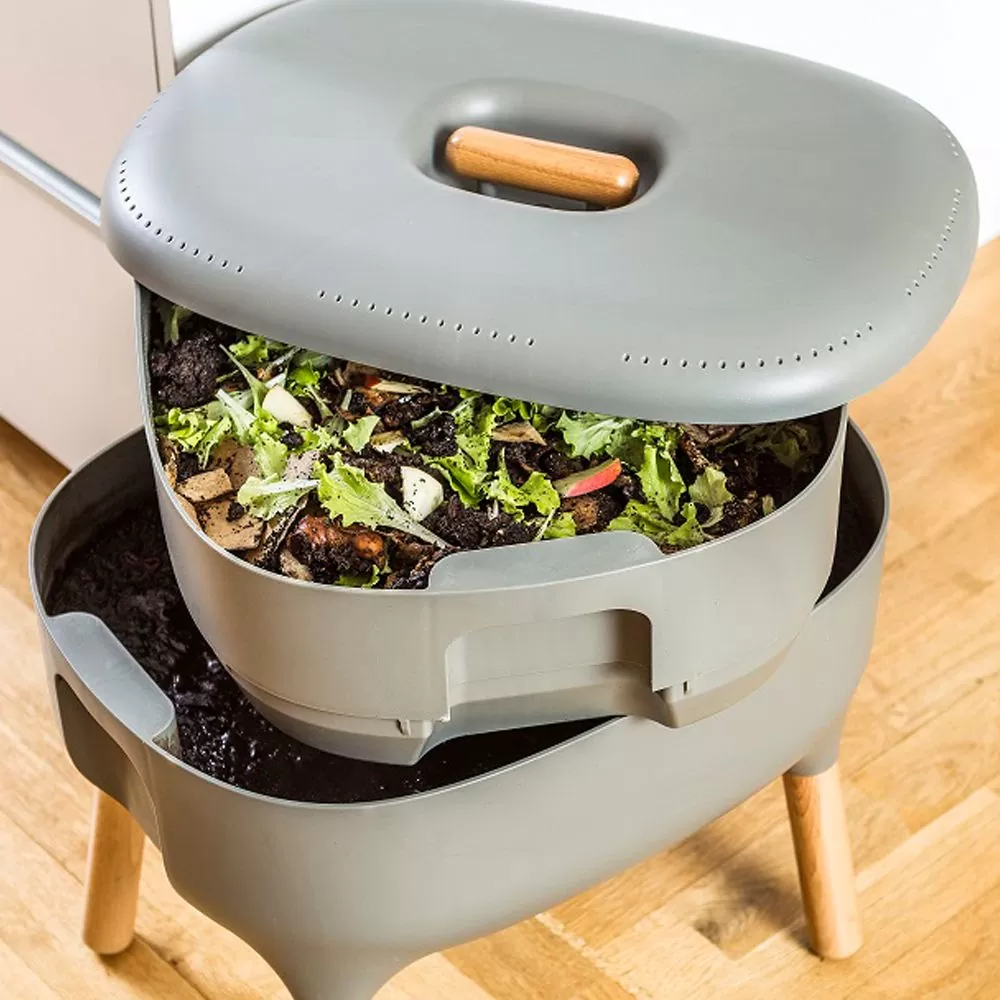
A worm bin uses composting worms to process small, repeated additions of food waste into worm compost, often called castings. It can work in a kitchen or utility room if there is a suitable place for a ventilated bin and any drainage can be contained. It is not a sealed food-waste bucket.
- Start with bedding: Set up the bin as its instructions describe, using suitable damp bedding and composting worms rather than ordinary garden earthworms.
- Feed gradually: Add small pieces of suitable scraps. If food is accumulating, pause feeding until the worms catch up.
- Protect the conditions: Keep the bin out of direct sun and away from radiators and cold draughts. Check that bedding is moist but not waterlogged and that drainage and ventilation are working.
- Exclude unsuitable foods: Avoid meat, fish, dairy, fats and grease. Limit acidic scraps such as citrus.
A managed bin should not have a strong rotten smell, but overfeeding, excess moisture or neglected drainage can cause odours and flies. Harvest the processed material according to the bin’s design, keeping worms and recognisable fresh scraps in the system. See the RHS worm-composting guidance for setup and maintenance details.
Bokashi Bins
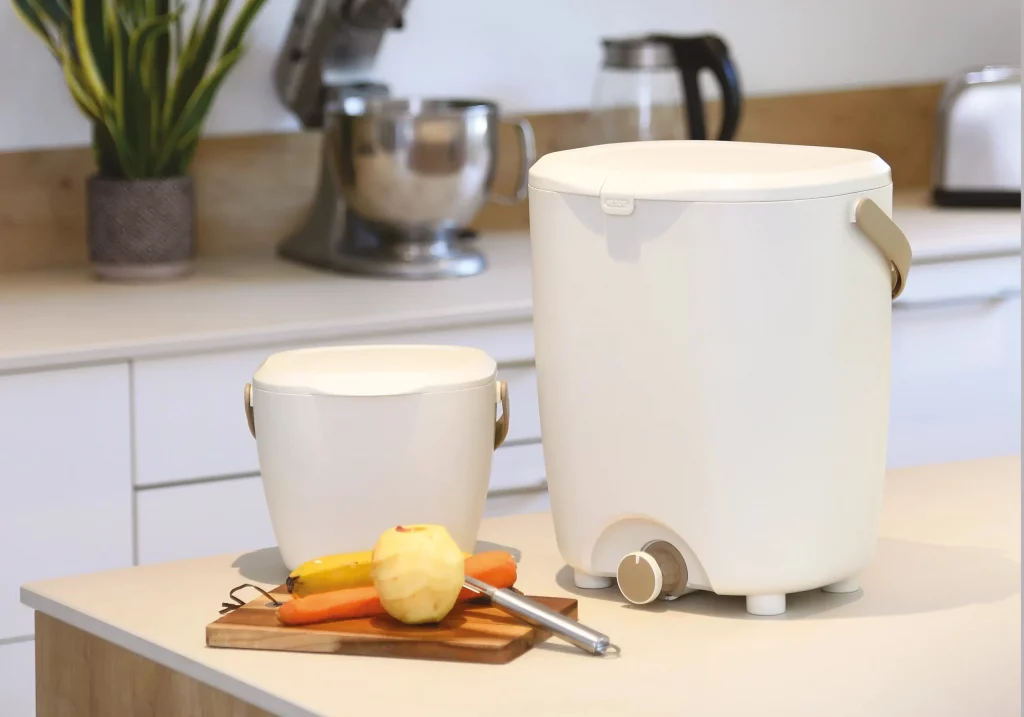
Bokashi uses an inoculated bran and an airtight bucket to ferment food scraps. Follow the bran and bucket instructions, press down the contents and close the lid securely. Unlike a worm bin or aerobic compost heap, it is meant to exclude air; do not add browns or stir it to improve airflow.
A bokashi system can handle a wider range of food waste, including some cooked food, meat and dairy. Avoid adding large amounts of liquid or grease. A sour, pickled smell can be expected when the bucket is opened; a strong rotting smell or extensive dark mould suggests a problem.
Plan the finishing step before starting. The food will still be recognisable after fermentation and is not ready to put around houseplant roots. The RHS advises adding it to a compost bin or burying it in outdoor ground to break down further, keeping the fresh, acidic material away from plants initially. A small indoor pot is not a substitute for that finishing space. Read the RHS guide to bokashi if this is the method you choose.
Setting Up and Caring for Your System
Choose a Suitable Location
Put the container where you can use and inspect it, out of direct sun and away from heat sources. A washable surface or tray makes spills easier to manage. For a worm bin, allow for ventilation and safe drainage; for bokashi, make sure the lid seals and you can reach the tap if the model has one. If you rent or share a home, check any relevant rules and agree on a location before setting up.
Balance Materials Only Where It Applies
In an aerobic compost bin, vegetable scraps and other soft ‘greens’ are combined with dry ‘browns’, such as torn cardboard. The mix needs air as well as moisture; too much wet food can become compacted and smelly. Small aerobic bins may process waste slowly, so they are not automatically a convenient solution for a room with no outdoor finishing space. The RHS composting guide explains these principles.
In a worm bin, use suitable bedding and small feeds; add a little torn paper or card if conditions become too wet, following the bin’s instructions. In a bokashi bucket, use its bran and keep it sealed. Greens-and-browns advice and turning do not apply to bokashi.
Using the Results on Houseplants and Containers
Finished Compost and Worm Castings
Only use material that has finished breaking down: it should be dark and crumbly, smell earthy rather than rotten, and contain no obvious fresh food. Return unfinished pieces to the composting system. Bokashi solids need their separate finishing stage before they can be considered for plants.
For an established houseplant, consider trying a small amount of finished, sifted worm compost as one ingredient in a suitable potting mix. Keep the mix well draining and observe how the plant responds; homemade materials vary, and a rich or persistently wet mix will not suit every species. Do not replace a plant’s usual potting mix with pure homemade compost. Use an appropriate potting mix for seedlings rather than assuming homemade compost is suitable for seed sowing. For more on drainage and mix choice, see choosing soil for indoor plants.
Liquid from Worm Bins or Bokashi
Liquid collected from a worm bin or bokashi bucket is not the same as finished compost, and its composition can vary. Do not pour it undiluted into houseplant pots or treat it as a standard fertiliser. If you intend to use a system’s liquid, consult its instructions and guidance specific to that method first; disposing of it is also an option if you cannot use it appropriately. Drain collection chambers as directed so liquid does not leave worm bedding waterlogged.
Troubleshooting Indoor Composting Problems
It Smells Rotten
For a worm bin, stop feeding temporarily, remove excess uneaten food and check drainage. If bedding is soggy, add some dry shredded paper or card and check that air can enter. For bokashi, check the seal, bran use and whether too much liquid has built up; do not try to fix it by aerating the bucket. Empty and wash a collection caddy more often if scraps are decaying in it.
Fruit Flies or Gnats Appear
In a worm bin, bury new scraps beneath processed material or cover them with suitable bedding, and reduce feeding if scraps remain exposed. Keep the caddy or bokashi lid properly closed and wipe food residue from rims. Do not use an insecticide in a worm bin.
There Is Mould
A little mould on decomposing material is not, by itself, a reason to discard a worm bin; check for excess food, wetness and unpleasant odours. Bokashi is different: extensive black or green mould can indicate that contents are rotting rather than fermenting. Consult the system instructions before deciding whether a batch can be saved.
Nothing Seems to Be Breaking Down
In a worm bin, check whether the worms are present, whether uneaten food is building up and whether the bedding is too wet, too dry or exposed to temperature extremes. Chop future scraps smaller and feed less until the bin catches up. Bokashi scraps will not turn into crumbly compost inside the sealed bucket: fermentation must be followed by a separate decomposition stage.
FAQs About Indoor Composting
Does indoor composting smell?
A worm bin should not smell strongly rotten when conditions suit the worms, but any neglected system can cause odours. Bokashi may smell sour when opened. A collection caddy needs regular emptying and cleaning; no container guarantees an odour-free kitchen.
Can I compost meat and dairy indoors?
Keep meat, fish and dairy out of a worm bin. Bokashi can process some of these foods if you follow its instructions and have a suitable place to finish the fermented contents. Check your local council’s separate rules for a food-waste caddy.
How long does indoor composting take?
It depends on the system, feeding rate and conditions. A worm bin produces material gradually; harvesting does not happen on a fixed schedule. A full bokashi bucket is commonly left sealed for around two weeks before its contents move to a separate finishing stage. A caddy is only for collection.
Is indoor composting suitable for a flat?
It can be, but consider space, spills, pests, household or tenancy rules and what you will do with the output. A caddy is often the simplest choice if you cannot maintain a worm bin or finish bokashi material elsewhere.
Can I use indoor compost on all houseplants?
No single homemade amendment suits every houseplant. Use only fully processed material, start with a small amount in an appropriate potting mix and take extra care with plants that need particularly free-draining conditions. Never add unfinished bokashi scraps directly to a planted pot.
Related Articles
- Composting Techniques: 5 Methods for Home Gardeners
- Reuse Potting Soil: How to Do It Safely for Indoor Plants
- Why Indoor Plant Soil Smells Bad and How to Fix It
Final Thoughts on Indoor Composting
Choose the method by working backwards from the waste you have and where it can go. A caddy helps you collect it; a worm bin needs ongoing care but can produce finished worm compost; bokashi needs a finishing destination. Start with a manageable amount, check the system regularly and use only fully processed material in plant pots.
TURN KITCHEN SCRAPS INTO PLANT POWER
Using Indoor Compost for Healthier Houseplants
Use your home-made compost where it counts most – mixing small amounts into fresh potting soil, top dressing tired pots and boosting hungry containers through the growing season. With a few simple tweaks to your repotting and feeding routine, you can stretch each batch of compost further and keep your indoor plants thriving longer.