
Bonsai tree care starts with knowing which plant you have. A ficus on a bright windowsill, a succulent jade bonsai and a maple grown outdoors do not need the same watering or winter conditions. Identify your tree first, then use light, soil moisture and new growth—not a fixed calendar—to guide its care.
Quick Answer: Can Your Bonsai Live Indoors?
Some bonsai can grow indoors, but many traditional bonsai trees are outdoor plants. Ficus is a common choice for a bright indoor position. Jade plants can also be trained as bonsai, though they need a drier watering routine. Chinese elm is sometimes sold for indoor growing, but its care depends partly on how it has been grown and acclimatised. Juniper, pine and maple should not be treated as year-round houseplants. The RHS guide to bonsai distinguishes between indoor and outdoor care.
Understanding Indoor Bonsai Basics
“Bonsai” describes a cultivation and training method, not a particular species. Before choosing a shelf or buying supplies, check the plant label or ask the seller for its botanical name. If you cannot identify it, avoid major pruning or root work until you can.
For a suitable indoor tree, focus on:
- Enough light for the species, especially during short winter days.
- Checking the soil before watering and allowing excess water to drain.
- A suitable, free-draining growing mix and a pot with drainage holes.
- Light maintenance pruning during healthy growth; more extensive work only when you know the species’ needs.
Light Requirements for Indoor Bonsai
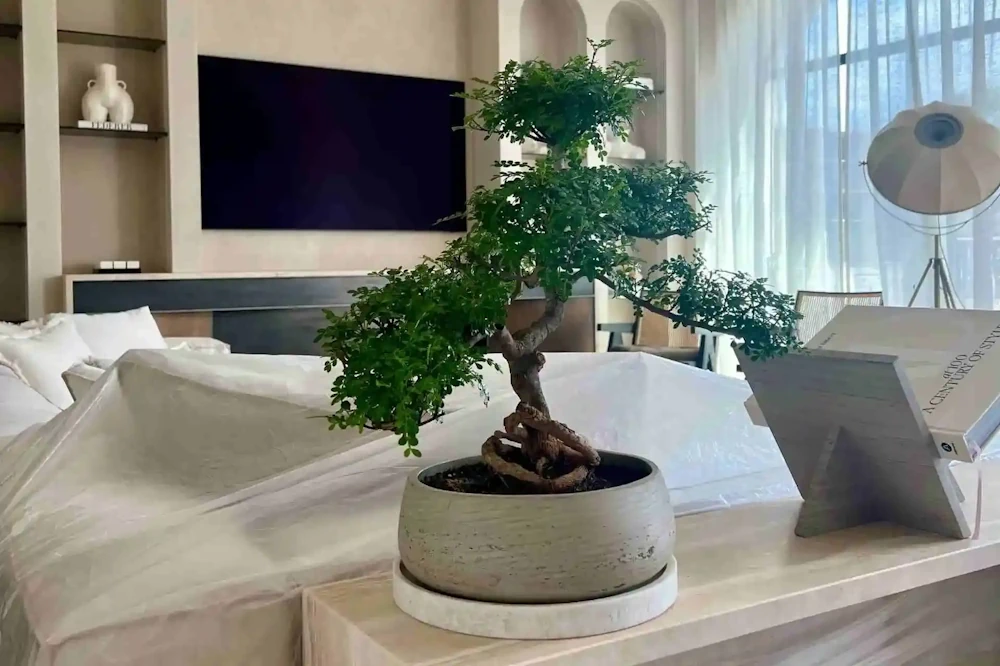
Indoor bonsai generally need a bright position. A bright windowsill is a useful starting point for ficus or jade, but watch how the individual plant responds: weak, stretched growth can indicate too little light, while scorched leaves may mean it needs protection from intense sun. Keep plants away from radiators and cold draughts.
If available daylight is insufficient, particularly in a UK winter, a suitable horticultural grow light may help. Make the most of natural light first, and follow the light manufacturer’s positioning guidance rather than assuming any small lamp will be adequate. The RHS guide to artificial lighting explains the options.
Watering Bonsai Trees Indoors
How Often to Water
There is no reliable weekly schedule. Check beneath the surface of the growing mix and consider the species, pot size, room temperature and season. A ficus should not be left dry for a prolonged period, but it also should not sit in waterlogged compost. A jade bonsai is a succulent: allow its mix to dry between waterings, and expect to water less often when growth slows.
A shallow pot may dry quickly in a warm, bright room, but a dense mix can remain wet beneath a dry-looking surface. If you are unsure, check a little deeper rather than watering solely because the top looks pale. See our guide to watering an indoor bonsai for a closer look at the routine.
How to Water Properly
- When the plant needs water, apply it gently across the soil surface until water drains from the holes.
- Let the pot drain, then empty any saucer or outer container holding excess water.
- If an extremely dry mix sheds water, wet it gradually and check that moisture has reached the root ball. Do not rely on a fixed soaking time for every tree.
Signs of Watering Problems
Dry, crisp foliage and a mix pulling away from the pot can accompany severe dryness. Persistently wet soil, a sour smell or soft roots can indicate poor drainage or root damage. Yellowing or leaf drop alone does not identify the cause: light changes, pests and normal leaf replacement can also play a part. Check the soil and roots before changing your routine.
Soil and Pots for Bonsai
Bonsai Soil
A suitable bonsai mix needs to hold some moisture while allowing air and water to move through the root zone. There is no single recipe for every species: a jade plant’s succulent mix will differ from the mix chosen for a ficus. Look for a mix suited to your identified tree rather than assuming that any product labelled “bonsai soil” is ideal.
Bonsai Pots
Bonsai are often grown in relatively shallow pots, so the amount of growing mix available to roots is limited. Choose a stable pot with drainage holes and enough space for the existing root system. Mesh can help retain coarse mix over large holes, provided it does not block drainage. For more on size and shape, see how to choose a bonsai pot.
Pruning and Shaping Indoor Bonsai
Maintenance Pruning
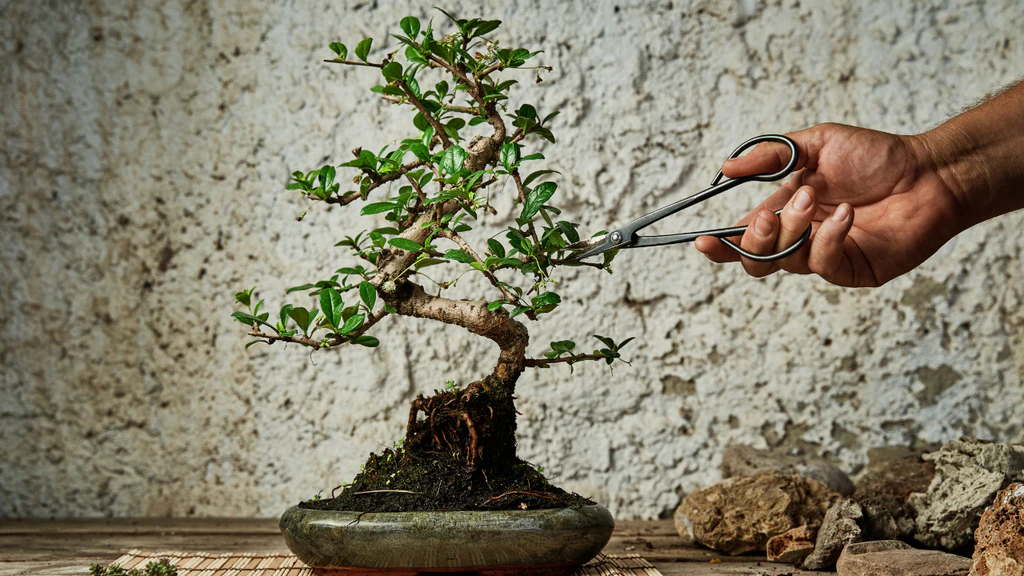
Once a healthy tree is growing actively, small trims can help maintain its outline. Use clean, sharp tools, remove dead twigs and check where a new shoot emerges before cutting it back. How much to remove, and when, depends on the species. Avoid repeated trimming of a tree that is weak, losing leaves or struggling for light.
Structural Pruning and Wiring
Removing major branches or bending them with wire is more demanding than maintenance trimming. Check species-specific guidance before starting, and inspect any wire regularly so it does not cut into expanding bark. You can leave major shaping until you are confident that the tree is healthy and growing well. Our bonsai shaping guide covers the next steps.
Feeding and Repotting Bonsai Trees
Feeding
Limited soil volume means nutrients need attention, but feeding should match the plant’s growth rather than an automatic year-round timetable. Follow the fertiliser label and species guidance; avoid feeding a tree that has stopped growing or appears unwell until you have investigated the cause. A jade plant and a ficus need not share the same feeding schedule.
Repotting
Repot when the roots and growing mix indicate a need, not simply because a set number of years has passed. Check for a congested root ball, roots growing through drainage holes or a mix that has broken down and drains poorly. For many container plants, repotting as growth resumes in spring is appropriate, but confirm timing for your species.
When repotting, remove the tree carefully, inspect its roots and replace tired mix with a suitable fresh one. Work the mix gently around the roots, water according to the plant’s needs and protect it from additional stress while it settles. Do not routinely cut away a third of the roots: whether root pruning is needed, and how much is safe, varies with the tree. Read species-specific instructions before making substantial cuts; our root-pruning guide explains what to assess first.
Common Indoor Bonsai Problems
Dry, Crispy Leaves
Check the mix for dryness and the tree’s position for strong heat or draughts. Water thoroughly if the plant needs it, let the pot drain, and move it away from a radiator. Do not assume dry leaves always mean the roots are dry.
Yellowing or Dropping Leaves
Check soil moisture, drainage, light and any recent move before acting. If the mix remains wet and roots are soft, root health needs attention; simply adding more water will not help. Some species also shed older leaves as new ones appear. For more clues, see common bonsai leaf problems.
Weak, Leggy Growth
Review the available light before pruning. Moving a suitable indoor species nearer a bright window or providing appropriate supplementary lighting may help new growth become stronger. Pruning cannot compensate for persistently inadequate light.
Moss and Algae Taking Over
Moss is not automatically a problem, but a persistently wet surface is a reason to check the mix below it and confirm that the pot drains freely. Remove excess moss if it prevents you from checking moisture; adjust watering based on the root zone, not on appearance alone.
FAQs About Bonsai Tree Care Indoors
Are all bonsai suitable for growing indoors?
No. Ficus and jade are examples that can be grown indoors in suitable light. Juniper, pine and maple generally belong outdoors. Chinese elm needs more careful assessment: an indoor-grown elm should not be moved abruptly into winter weather.
How often should I water my indoor bonsai?
Check the growing mix rather than following a fixed interval. Watering frequency changes with species, light, temperature, season and pot size. In particular, allow a jade bonsai to dry between waterings instead of treating it like a ficus.
Do bonsai trees need humidity trays?
Not as a general rule. Some indoor species benefit from more humid conditions, while jade does not need special humidity measures. A pebble tray is optional, not a substitute for suitable light and watering; keep the base of the pot above any standing water.
Can I keep bonsai in very low light?
Low light is a poor long-term position for the indoor species discussed here. Choose the brightest suitable spot you have and consider an appropriate grow light if daylight remains inadequate.
How do I know if my bonsai needs repotting?
Inspect the roots and mix. Congested roots or a compacted mix that no longer drains well are more useful clues than a fixed repotting interval. Check species-specific timing before disturbing the roots.
Final Thoughts on Bonsai Tree Care
Identify your bonsai, find a position that suits that species and check the growing mix before watering. Start with those fundamentals and leave major pruning or root work until the tree is healthy and you know what it needs.
Related Articles
GET WATERING RIGHT FOR SMALL TREES
Perfect Your Indoor Watering Routine
-
Bonsai are far easier to care for when watering isn’t guesswork. Learn how often to water different indoor plants, what “dry” should actually feel like in the pot, and how to tweak your routine through the seasons so shallow bonsai pots and deeper houseplant containers both stay in the healthy zone.