
Common bonsai leaf problems usually show through yellow leaves, leaf drop, curling, brown tips, faded colour or white coatings on the leaves. Most of these issues come back to watering, light, humidity, pests or soil conditions.
The good news is that bonsai leaf problems are not random. Once you know which symptom points to which problem, it becomes much easier to fix the tree before the damage spreads.
Quick fix: common bonsai leaf problems
Most bonsai leaf problems indoors are caused by inconsistent watering, low light, dry air or stress after moving the plant. Check the soil moisture, light levels and recent changes before feeding or pruning heavily.
- Check if the soil is too wet or bone dry.
- Move the bonsai to bright, indirect light.
- Keep it away from radiators, cold draughts and sudden temperature changes.
- Inspect leaves and stems for pests.
- Avoid fertilising a stressed bonsai until it starts to recover.
Do this first
Check the soil moisture, light levels and leaf undersides before treating anything. If your bonsai is too wet, too dry, sitting in weak light or carrying pests, fixing that root cause will help more than reacting to the leaf damage alone.
If the plant has been moved recently, give it a stable spot with bright, indirect light and avoid feeding or heavy pruning until it starts to recover.
Because bonsai pots are small, a simple moisture meter can help you avoid watering too soon or letting the compost dry out completely.
Yellow leaves on bonsai trees
Yellow leaves are one of the clearest bonsai warning signs. They often show up when the roots stay too wet, when the tree dries out too often, when the soil is running low on nutrients, or when the bonsai is not getting enough light to support healthy green growth.
This is why yellowing can be easy to misread. A bonsai can turn yellow because the roots are staying too wet, because they are drying too often, or because the tree is simply not getting enough light to support healthy green growth.
A good way to narrow it down is to ask:
- Is the soil staying soggy for too long?
- Is the tree sitting in weak light?
- Has the bonsai gone a long time without fresh soil or feed?
Yellow bonsai leaves can come from several causes, so it helps to compare the pattern with other indoor plant yellowing problems before changing your watering, light or feeding routine.
If your bonsai has stopped growing as well as showing leaf problems, the issue may be deeper than the leaves. Light, soil, watering, roots and seasonal timing can all slow new growth.
Bonsai leaves curling or going crispy
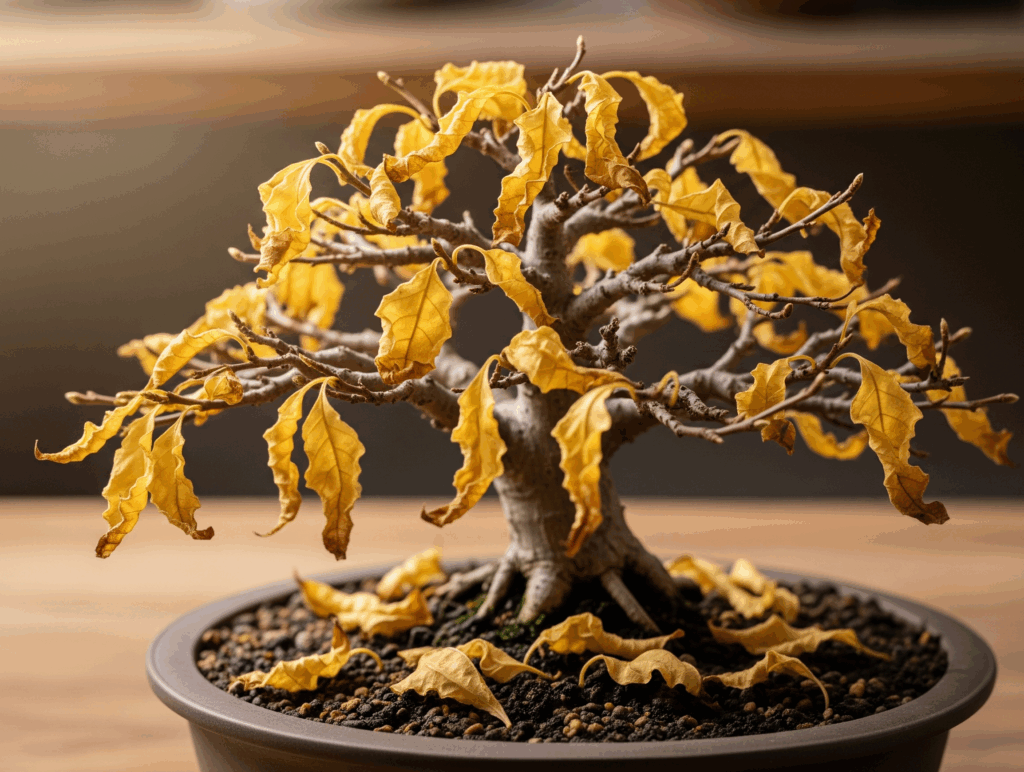
Curling or crispy bonsai leaves usually point to dryness, heat stress, or air that is too harsh around the tree. This often happens when the bonsai is sitting too close to a radiator, getting hit by strong sun through glass, or drying out too quickly between waterings.If your bonsai tree leaves are curling up, check the soil moisture first, then look at heat, light and dry air. Curling leaves often mean the root ball has dried too much, the tree is too close to a radiator or sunny window, or the air around the bonsai is too dry.
This is especially common indoors, where bonsai can sit closer to radiators, windows, or dry airflow than people realise. Small leaves lose moisture quickly, so even a tree that looks fine overall can start crisping at the edges first.
A better response is usually:
- move it away from direct heat
- improve humidity around the tree
- keep watering more even
- avoid letting the root ball swing from very wet to very dry
If the problem keeps coming back, check how to water a bonsai tree indoors before changing the whole care routine.
If the room feels dry or the leaf edges keep crisping, learning how to balance humidity for indoor plants can make a noticeable difference.
The RHS explains that bonsai needs careful control of its growing conditions because the tree is restricted to a small container, which is one reason dry air and uneven watering show up so quickly through the leaves.
Leaf drop on bonsai
Leaf drop always looks alarming, but it is not always a disaster. Some bonsai naturally shed a few leaves when adjusting to new conditions, but heavier or ongoing leaf drop is more likely to point to stress from watering problems, sudden temperature changes, weak light, pests, or root trouble.
That distinction matters. A bonsai that drops a few leaves after a move may simply be adjusting. A bonsai that keeps shedding heavily while the soil stays soggy or the light changes sharply is more likely to be stressed.
Start by thinking about what changed recently:
- Did you move it?
- Has the room temperature shifted?
- Did the watering pattern change?
- Has it recently been pruned or repotted?
If leaf drop is happening alongside soggy or unpredictable soil, it is worth revisiting how to water a bonsai tree indoors before changing anything else.
Brown or black leaf tips
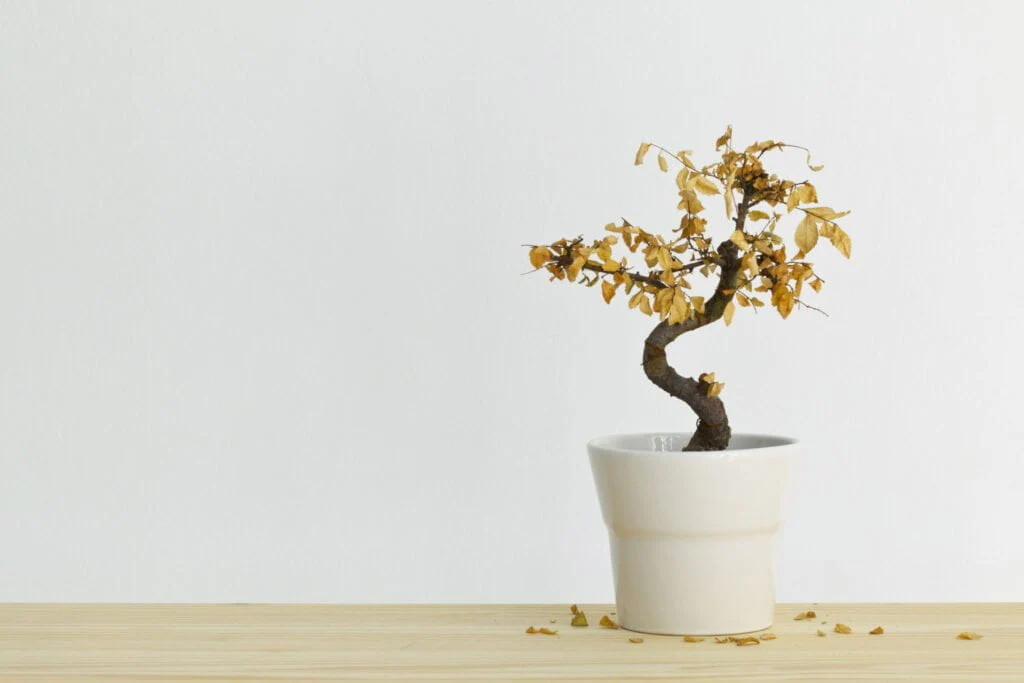
Brown or black leaf tips usually mean the bonsai is under stress and the problem is starting to show at the edges first. This can happen when fertiliser salts build up in the soil, when water quality is poor, or when the roots are struggling in stale, soggy, or damaged compost.
This is one of those symptoms that often points below the soil line rather than above it. If roots are stressed, salts are building up, or the mix is staying wet and stale, the leaves often show it at the tips first.
A sensible response is:
- flush the soil if salt build-up looks likely
- reduce or pause feeding
- check drainage
- inspect roots if the problem is getting worse
Many bonsai leaf problems start with watering habits, so it is worth checking the most common indoor plant watering mistakes before assuming the tree needs more fertiliser.
If the tips are darkening after feeding and the soil has a crusty surface, it helps to know how to revive over-fertilised indoor plants before the roots get worse.
A bonsai-safe liquid fertiliser is usually easier to control than stronger feeds if you are trying to avoid burnt tips and salt build-up.
Pale or faded bonsai leaves
If the leaves lose their colour and start looking washed out, the problem is often weak light, low nutrients, or both. A bonsai may still look stable overall, but faded leaves usually mean it is not getting enough energy or support to maintain strong, healthy growth.
This symptom tends to build more slowly than leaf scorch or sudden drop. The tree may still look alive and stable, but the leaves lose vibrancy and new growth can start looking weak.
Check whether:
- the tree gets enough daily light
- the feeding routine is too weak or too inconsistent
- the soil has become tired or compacted
Pale leaves and weak colour can overlap with nutrient deficiency in indoor plants, especially if the bonsai has been in the same soil for a long time.
White or powdery coating on bonsai leaves
A white or powdery layer on bonsai leaves often points to a fungal issue rather than a harmless surface mark. This is more likely when the tree is sitting in stale air, staying damp for too long, or not getting enough airflow around the foliage.
This is more likely to show up when the tree sits in stale air, stays damp for too long, or has poor spacing around the foliage. Bonsai can be especially vulnerable because the canopy is compact and the indoor environment is not always very airy.
A better fix usually includes:
- removing affected leaves
- improving airflow around the tree
- avoiding unnecessary overhead wetting
- checking whether the room stays cool and damp
The Missouri Botanical Garden notes that powdery mildew is encouraged by conditions that favour the fungus, which is why better airflow and removing affected foliage makes more sense than just spraying randomly.
Pests on bonsai leaves
Small pests can weaken a bonsai quickly because there are fewer leaves to absorb the damage. Aphids, scale and spider mites are common problems, so check stems, leaf undersides and new growth closely. Wipe affected leaves, treat the plant with neem oil or insecticidal soap if needed, and keep care conditions steady to reduce the chance of pests coming back.
Check under the leaves and along the stems rather than only looking from above. Sticky residue, tiny webs, speckled leaves, or distorted new growth all make pests more likely.
A simple routine helps:
- inspect weekly
- wipe dusty foliage
- isolate the tree if pests appear
- treat early before the problem spreads
A gentle insecticidal soap for houseplants can be useful if pests keep showing up on bonsai leaves and you want a simple treatment option.

How to prevent future bonsai leaf problems
The best way to prevent future bonsai leaf problems is to keep the overall care routine steady. Consistent watering, good light, proper airflow, careful feeding, and healthy soil all make it much easier to stop small leaf issues from turning into bigger problems.
The best prevention routine is not complicated, but it does need consistency:
- water according to the soil, not a fixed routine
- keep light as steady as possible
- avoid extreme indoor dryness
- feed carefully during active growth
- inspect leaves before small problems turn into bigger ones
- refresh poor soil before roots start suffering
Most bonsai leaf issues show up when one of those basics drifts too far.
FAQs about common bonsai leaf problems
Why are my bonsai leaves turning yellow?
Yellow leaves usually point to watering problems, weak light, tired soil, or low nutrients. The best way to narrow it down is to check whether the roots are staying too wet, drying out too hard, or sitting in worn-out compost that is no longer supporting healthy growth.
Why are my bonsai leaves curling?
Bonsai leaves usually curl because the tree is drying out, sitting in hot or harsh light, or struggling with dry indoor air. Check whether the soil is bone dry, the pot is near a radiator, or the leaves are getting scorched through glass. If the soil is wet but the leaves are still curling, check the roots and look for pests before watering again.
Is bonsai leaf drop always bad?
No. A small amount of leaf drop can happen when a bonsai is adjusting to new conditions or moving through a seasonal change, but heavier or ongoing leaf drop is more likely to point to stress somewhere in the setup.
What does white powder on bonsai leaves mean?
White or dusty patches on bonsai leaves often point to powdery mildew, especially when the air is stale, humid or poorly ventilated. Improve airflow, avoid wetting the leaves, and remove badly affected growth before the problem spreads.
Final Thoughts on Common Bonsai Leaf Problems
Bonsai leaves are one of the clearest ways a tree shows stress. Yellowing, crisping, fading, dropping, or developing powdery patches all point to something in the care routine needing attention.
The key is not just reacting to the leaf itself. Look at the wider setup: light, water, airflow, soil, feeding, and pests. Once those basics are corrected, bonsai leaf problems are usually much easier to stop before they take over.
Related Articles
KEEP YOUR BONSAI LOOKING HEALTHY YEAR-ROUND
Simple Ways to Spot Stress Before Leaves Get Worse
If your bonsai leaves are curling, yellowing, or dropping, the problem often starts with the overall care setup rather than the leaf itself. Learn the next step that helps bonsai recover below the surface.