
A bonsai that stops growing can feel worrying fast. No new shoots, no longer stems, and no real sign of fresh energy usually means something in the setup is holding the tree back.
The good news is that slow bonsai growth is often caused by a few practical issues rather than one mysterious problem. Light, soil, watering, feeding, seasonal slowdowns, and root stress can all affect how much growth you see.
Quick answer: why your bonsai is not growing
If your bonsai is not growing, the most likely reasons are not enough light, poor or compacted soil, inconsistent watering, weak feeding, root stress, temperature or humidity stress, pruning at the wrong time, or a natural seasonal slowdown. Start by checking light, soil texture, watering habits and whether the tree is actually in its active growing season before adding more fertiliser.
Do this first
Check the basics before making big changes. Look at where the bonsai sits, how quickly the soil dries, whether the mix drains properly, and whether the tree is actively growing for its species and season. Light, soil texture, watering, feeding, pruning and seasonal timing are usually the first things to assess.
If the soil is muddy, the roots stay wet for too long, or the bonsai is sitting in poor light, fix that before adding more fertiliser or pruning again.
Not enough light is one of the biggest reasons bonsai slows down
Light drives growth, and bonsai kept indoors often get less of it than people realise. If the tree is sitting too far from a bright window or spending most of the day in weak light, growth can slow right down. Small leaves, pale colour, and longer gaps between new shoots are all signs the bonsai may not be getting enough energy to grow properly.
If the tree is sitting in a dim room or away from a good window, it may simply not have enough energy to push new growth. Missouri Botanical Garden also notes that indoor bonsai generally need good light, often from a south- or east-facing window.
If your bonsai is stretching, producing pale leaves or sitting too far from a bright window, this indoor plant grow light guide can help you choose a better light setup before growth weakens further.
A small 2-head clip-on full-spectrum grow light can help if your brightest window still does not give the tree enough steady light.

Poor or compacted soil can choke growth
If the soil drains slowly, looks muddy or has become dense and stale, the roots are likely struggling. Compacted soil reduces airflow around the roots, weakens nutrient uptake and can make root rot more likely. If the mix has broken down, repotting into a fresher bonsai mix can help the tree recover.
A bonsai does not need ordinary houseplant compost packed around the roots. It needs a mix that holds some moisture but still leaves enough air in the root zone. The RHS also notes that bonsai depends on container restriction and careful training, which is why the soil and root space matter so much.
If the mix has become dense and the roots feel cramped, a proper bonsai root pruning guide can help you refresh the root zone without overdoing it.
Watering problems can stop growth completely
Both overwatering and underwatering can slow bonsai growth. Too much water can suffocate the roots, while too little water forces the tree to conserve energy instead of producing new shoots. Water when the top 1–2 centimetres of soil feel slightly dry, but avoid letting the whole root ball dry out completely.
This is one of the easiest areas to misread because the top of the soil can dry out before lower layers do. Small bonsai pots also dry differently from ordinary houseplant pots, so routine watering by habit often causes trouble.
If you keep second-guessing the soil, learning exactly how to water a bonsai tree indoors can make slow growth much easier to diagnose.
The University of Maryland Extension notes that watering indoor plants on a fixed schedule is not the best method, which is why checking the soil properly matters more than watering by routine.
A bonsai moisture meter can help if you are never quite sure whether the root zone is still damp or already too dry.
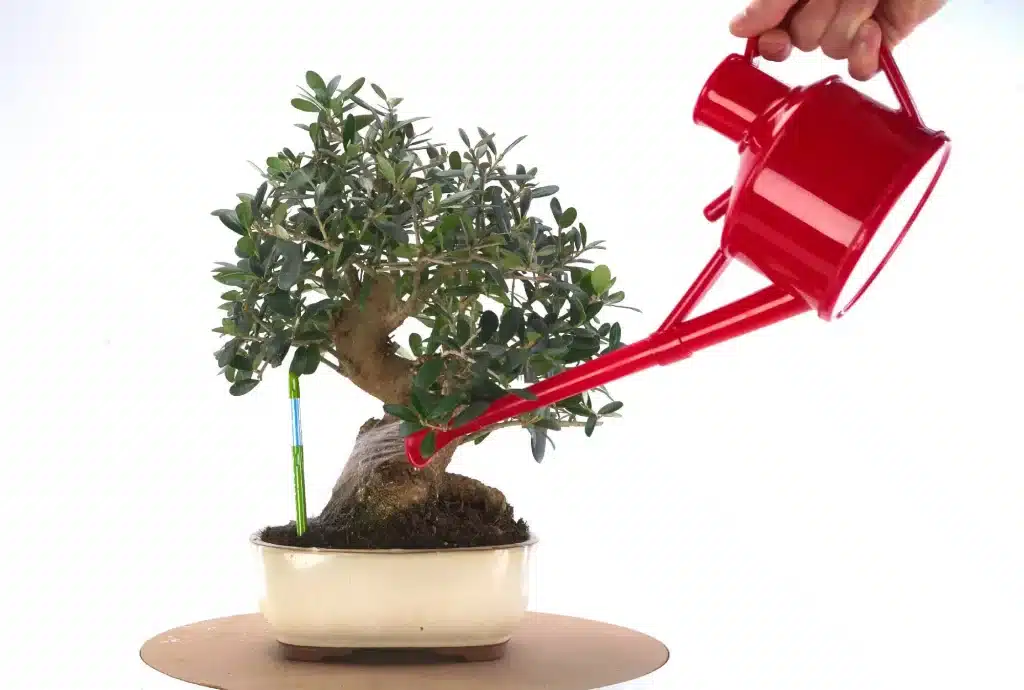
Weak feeding can leave the tree with no energy to push new shoots
Even a healthy-looking bonsai can slow down if the potting mix is depleted and feeding is too light or irregular. Nutrients get used up quickly in small bonsai pots, so regular feeding during the growing season can help support healthy new shoots.
That does not mean feeding harder is always better. A tree in poor light or bad soil will not suddenly grow well just because you add more feed. Feeding only works properly when the rest of the setup is supporting active growth too.
- Check that the tree is in active growth first
- Make sure the soil is draining properly
- Feed lightly and consistently rather than heavily and irregularly
Pale leaves, weak growth, and poor new shoots can overlap with nutrient deficiency in indoor plants, so it helps to compare the signs before increasing feed.
Temperature and humidity stress can quietly hold a bonsai back
Temperature and humidity changes can slow a bonsai down more than people expect. Cold draughts, dry indoor air, heaters, and sudden room changes all put extra stress on the tree, especially when it is already growing in a small pot. A bonsai may look bright enough by the window but still struggle if the air is too dry or the conditions keep shifting too much from day to night.
If the leaves are also yellowing, dropping, curling or turning brown at the edges, this common bonsai leaf problems guide can help you match the leaf symptoms with the likely cause.
If the room air feels dry or the leaf edges are turning crisp, learning how to balance humidity for indoor plants can help reduce background stress.
Pruning and root work can slow growth if the timing is wrong
Pruning removes shoots and leaves, while root pruning and repotting disturb the root system the tree relies on for water and nutrients. A temporary slowdown can therefore follow major work. Check the correct timing for the species, avoid heavy top and root pruning together on a weak tree, and do not repeat the work while it is still recovering.
Sometimes the bonsai is not “failing” to grow at all. It is simply recovering from recent work. If you have just pruned hard, rewired, or repotted, give it time before assuming something else is wrong.
Seasonal slowdown is not always a problem
Some bonsai species naturally slow down or pause growth in colder months. Deciduous species such as elms and maples can go semi-dormant in winter, storing energy for spring instead of pushing new shoots. If the tree looks healthy but growth has stopped in winter, the season may be the reason.
That means a lack of visible growth is not always a sign of poor care. It may simply be the wrong season to expect strong progress. Missouri Botanical Garden also notes that hardy outdoor bonsai need a winter dormancy to maintain vigour, which makes this especially important when judging seasonal growth patterns.
A simple recovery checklist for slow bonsai growth
If your bonsai has stalled, work through the basics in order:
- check the light first
- inspect the soil texture and drainage
- review how you are watering
- feed only if the tree is in active growth
- avoid extra pruning while the tree is stressed
- think about the season before expecting fast growth
Slow bonsai growth can also overlap with other common indoor plant problems, such as yellow leaves, drooping growth, brown tips or root stress, so it helps to compare the symptoms before changing everything at once.
FAQs about bonsai not growing
Why is my bonsai alive but not growing?
Usually because one of the basics is off rather than because the tree is dying. Low light, poor soil, watering problems, root stress or seasonal slowdown are the most likely causes.
Can too much pruning stop bonsai growth?
Yes. Heavy pruning or root stress can weaken a bonsai and slow growth until it recovers, especially if the work was done at the wrong time of year.
Should I fertilise a slow-growing bonsai more often?
Not automatically. Feed during the active growing season, but do not rely on fertiliser to fix poor light, compacted soil, watering problems or root stress.
Do bonsai stop growing in winter?
Some bonsai slow down naturally in winter. Deciduous bonsai can become semi-dormant, while indoor tropical bonsai may still grow slowly if light and warmth are reduced.
Final Thoughts on Why Your Bonsai Isn’t Growing
A slow bonsai is usually telling you that something in the setup needs adjusting. In most cases, the biggest wins come from better light, better soil, steadier watering, and a bit more patience with seasonal cycles.
The best approach is to fix one likely issue at a time instead of changing everything at once. Once the tree has what it needs, new growth is often much easier to encourage.
Related Articles
KEEP YOUR BONSAI GROWING STRONGER YEAR-ROUND
Simple Fixes for Healthier Indoor Bonsai Growth
If your bonsai has stalled, small changes to light, watering, and root care can make a bigger difference than most people expect. Learn the next step that helps bonsai recover below the soil line.