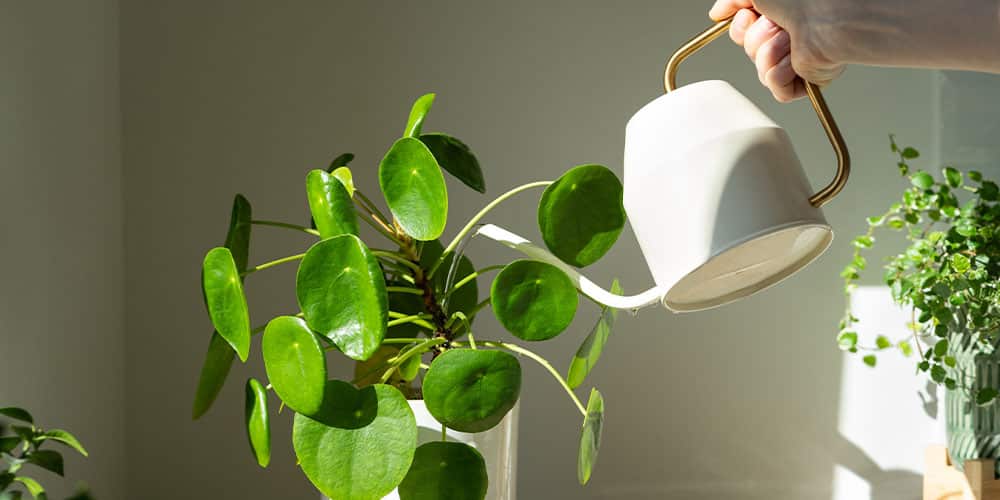
The right watering tool can make indoor plant care much easier. It helps you water more accurately, avoid messy spills, and stop guessing when the compost is actually dry enough for another drink.
That matters because watering mistakes are one of the quickest ways to stress houseplants. If the wrong tool makes it harder to reach the soil, judge moisture, or water evenly, even a healthy plant can start to struggle.
Contents
- 0.1 Quick answer: what are the best watering tools for indoor plants?
- 0.2 Why the right watering tools matter
- 0.3 Narrow-spout watering cans are the most useful all-round choice
- 0.4 Moisture meters help you stop guessing
- 0.5 Self-watering pots can help with consistency
- 0.6 Plant misters are useful, but not for everything
- 0.7 Smart watering systems are best for larger collections or travel
- 0.8 Watering globes and spikes can work for short gaps
- 0.9 How to choose the best watering tool for your setup
- 0.10 FAQs about watering tools for indoor plants
- 0.11 Final Thoughts on the Best Watering Tools for Indoor Plants
- 0.12 Related Articles
- 1 Easy Ways to Water More Accurately Indoors
Quick answer: what are the best watering tools for indoor plants?
Do this first
Before buying more gear, work out what the actual watering problem is. Are you spilling water on shelves, struggling to reach hanging pots, overwatering because the surface looks dry, or forgetting to water altogether?
Once you know the weak point, the best tool becomes much easier to choose. A moisture meter helps with guessing, a long-spout can helps with control, and a self-watering setup helps with consistency. Buying the right tool for the problem is much better than collecting gadgets you barely use.
Why the right watering tools matter
Different plants and potting mixes dry at different speeds, so one basic routine does not always work across the whole house. A small pot on a bright windowsill will dry very differently from a larger plant in a darker corner, which is why the right watering tool can make the whole job easier and more accurate.
The right tools help you:
- water the compost more precisely
- reduce splashing and mess
- check moisture more accurately
- keep watering more consistent
- make plant care easier when life gets busy
That is often the difference between a plant collection that feels manageable and one that always seems to be on the edge of drying out or staying too wet.
Narrow-spout watering cans are the most useful all-round choice
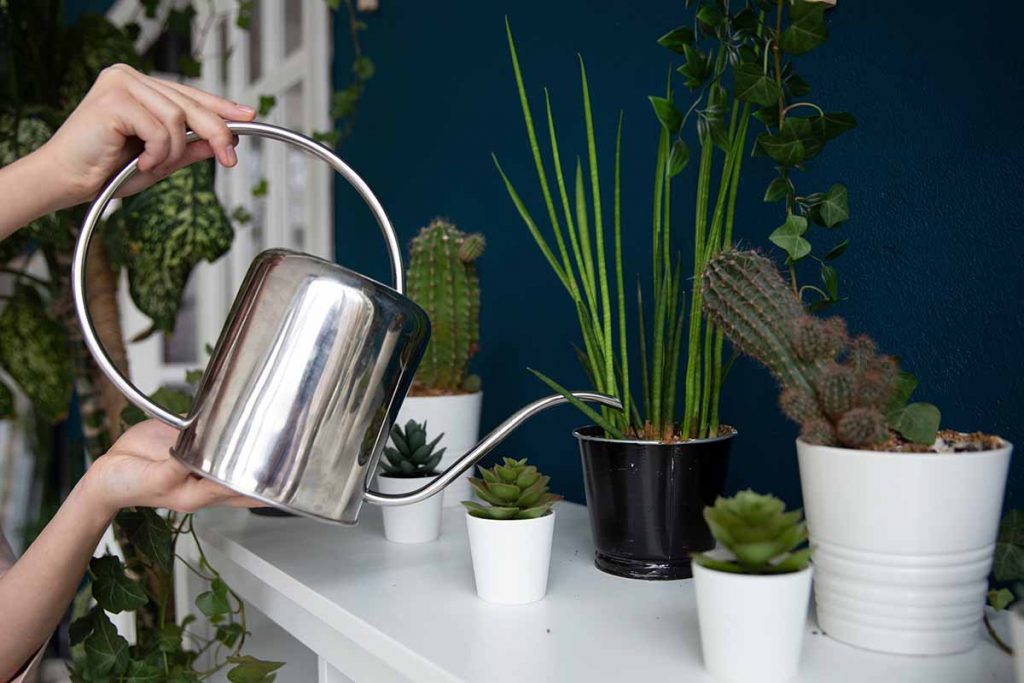
A long, narrow spout makes it much easier to reach under leaves, between stems, and into awkward pots without splashing water over foliage or furniture. That matters because watering the compost directly is usually much cleaner and more accurate than pouring from a mug or bottle.
Look for one that:
- feels light enough when full
- has a comfortable handle
- holds enough water for your usual round
- has a spout long enough for shelves or hanging pots
A narrow-spout watering can for indoor plants makes it much easier to water the compost directly without soaking leaves or shelves.
Moisture meters help you stop guessing
They are especially useful when:
- the top of the compost looks dry but lower layers are still damp
- pots are large or deep
- you are still learning how different plants behave
- you tend to overwater “just in case”
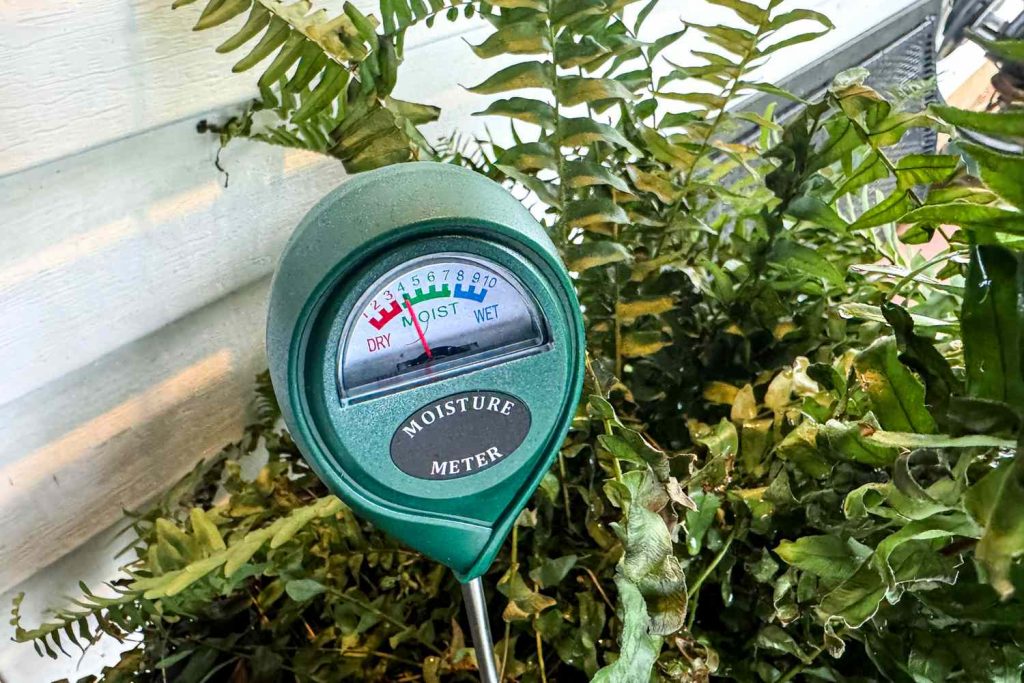
They are not perfect, and they should not replace common sense, but they can still help you avoid the biggest mistake of all: watering by habit instead of by need.
BBC Gardeners’ World explains that checking moisture properly helps you avoid both overwatering and underwatering, which is why a simple meter can be so useful for indoor plants.
A digital moisture meter for houseplants can make it much easier to check what is happening lower in the pot before you water.
Self-watering pots can help with consistency
Self-watering pots are useful when you want steadier moisture and less day-to-day fuss. They can work especially well for people who forget to water regularly or want a simpler routine for plants that prefer more even moisture.
They are usually best for plants that like relatively even moisture rather than plants that prefer to dry out hard between waterings. That means they can work well for many foliage plants, but they are less ideal for cacti and some succulents.
A good self-watering pot can help if you:
- travel often
- forget watering dates
- want fewer small top-ups
- grow plants that dislike repeated dry swings
You still need to check the plant and the season, though. Self-watering does not mean zero monitoring.
If your plants keep struggling with dry spells or soggy compost, it helps to understand the most common indoor plant watering mistakes before relying on a self-watering setup alone.
Plant misters are useful, but not for everything
A mister is most useful for:
- lightly cleaning dusty leaves
- dampening moss poles
- giving a brief surface mist where appropriate
- small routine care jobs
It is less useful as your main answer to dry indoor air. For that, broader humidity changes usually matter more than occasional leaf misting.
So if you buy one, think of it as a support tool rather than your whole watering strategy.
If dry air is the real issue, learning how to balance humidity for indoor plants is usually more helpful than relying on misting alone.
Smart watering systems are best for larger collections or travel
These setups can work well if you:
- have a large group of plants
- travel regularly
- want a more hands-off routine
- enjoy tinkering with plant tech
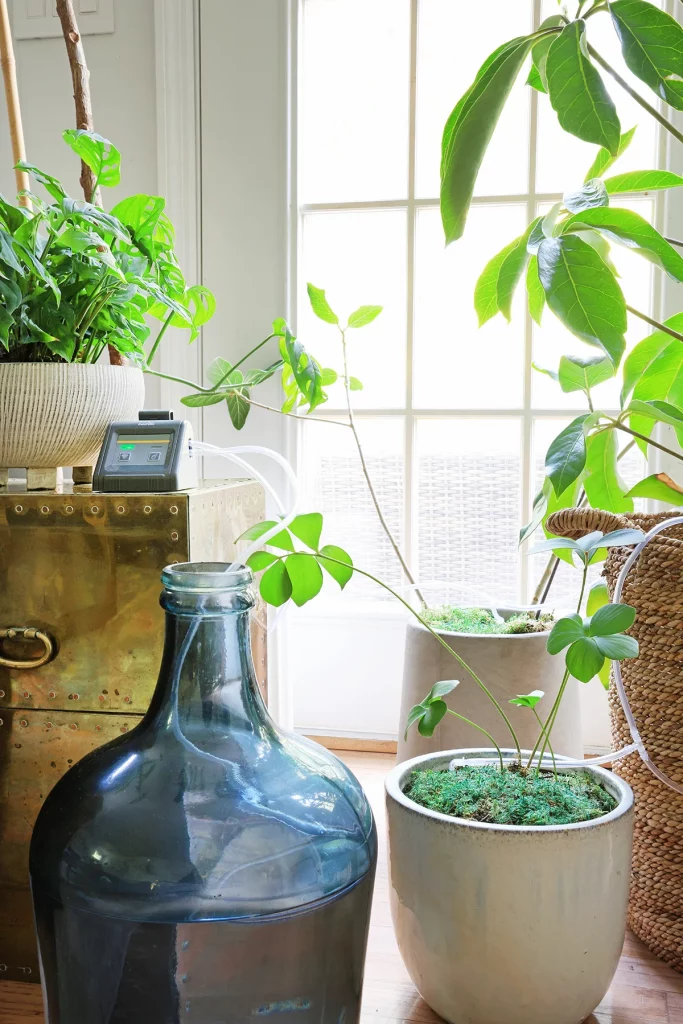
The main thing to watch is that not every system is equally “smart”. Some run on simple timers, while others pair with sensors or app controls. That is why this type of tool makes the most sense when convenience is your goal, not when you are trying to replace all hands-on care.
A smart indoor plant watering system can be useful if you travel often or need a more hands-off setup for a bigger plant collection.
Watering globes and spikes can work for short gaps
They can be useful when:
- you are away briefly
- one plant dries out faster than the others
- you want a simple backup option
They are not always the most precise tool, though. Some release water unevenly depending on the soil mix, the angle, and how dry the compost already is. They are best treated as a light support option rather than your most reliable long-term system.
How to choose the best watering tool for your setup
The best choice depends less on what looks clever and more on what solves your actual problem.
A simple way to choose:
- buy a narrow-spout can if you want better control
- buy a moisture meter if you keep guessing wrong
- choose self-watering pots if consistency is the issue
- use smart systems if you travel or manage lots of plants
- use globes or spikes only as backup support
In other words, buy for the gap in your routine, not for the novelty.
If your plants still seem unhappy after improving your tools, it may be worth checking the wider issue with signs your indoor plant needs repotting.
FAQs about watering tools for indoor plants
What is the most useful watering tool for beginners?
A narrow-spout watering can is usually the most useful starting point because it gives you cleaner, more accurate watering without making the routine complicated.
Are moisture meters worth it for houseplants?
Are self-watering pots good for all indoor plants?
Do I need a smart watering system?
Not unless it solves a real problem for you. They are most useful for bigger collections, regular travel, or people who want a more automated setup.
Final Thoughts on the Best Watering Tools for Indoor Plants
The best watering tools for indoor plants are the ones that make your routine easier and more accurate. For most people, that starts with better control, not more complexity.
A narrow-spout can, a moisture meter, or a simple self-watering setup can solve a lot of common plant care problems without turning watering into a big project. Once the basics feel easier, the rest of your plant care usually improves too.
Related Articles
MAKE EVERYDAY PLANT CARE SIMPLER
Easy Ways to Water More Accurately Indoors
If watering still feels messy, inconsistent, or hard to judge, a better setup can make the whole routine easier. Learn how to spot deeper pot problems that affect watering before they turn into plant stress.