
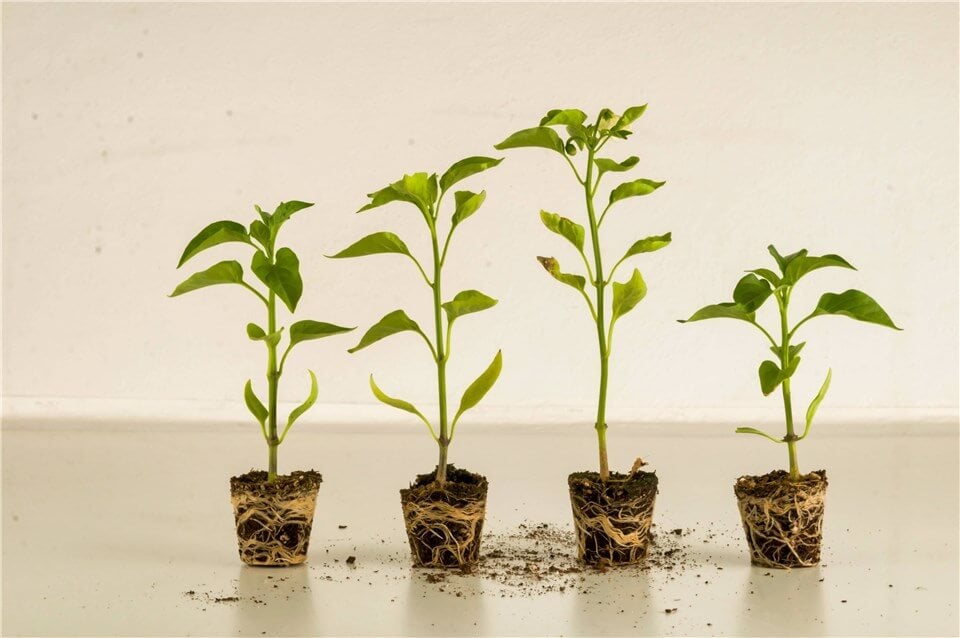
If you want to make indoor plants grow faster, focus on the big three: more usable light, healthier roots, and a steady care routine. Most “slow growth” is really plants surviving, not thriving — usually because light is too low or roots are sitting in stale, wet compost.
Contents
- 0.1 1) Give plants more usable light (not just “a bright room”)
- 0.2 2) Fix drainage (roots can’t grow in stale, wet compost)
- 0.3 3) Water properly: soak, drain, then let it dry slightly
- 0.4 4) Feed at the right time (and less than you think)
- 0.5 5) Repot only when it’s truly root-bound
- 0.6 6) Clean leaves (dust blocks light)
- 0.7 7) Boost humidity sensibly (only for plants that need it)
- 0.8 8) Add gentle airflow (stops stagnation and mould)
- 0.9 9) Fix pests early (they slow growth more than you realise)
- 0.10 Long-tail quick fixes (fast answers)
- 0.11 FAQs About Making Indoor Plants Grow Faster
- 0.12 Final Thoughts on Making Indoor Plants Grow Faster
- 0.13 Related Articles
- 1 Set Up Conditions That Plants Can Actually Use
Quick answer: make indoor plants grow faster
Move plants into brighter indirect light (or add a grow light).
Water properly: soak, drain, then let the top dry slightly.
Improve drainage and airflow around roots (roots need oxygen).
Feed lightly during active growth (don’t feed in low light).
Repot only when root-bound; use a mix that suits the plant type.
Do this first: Move your slowest plant 30–60 cm closer to a bright window for 10–14 days and stop “top-up watering” — wait until the top layer dries, then water thoroughly.
If you want a simple way to keep checks consistent (light, watering, pests), Indoor Plant Maintenance Routine is a useful companion.
1) Give plants more usable light (not just “a bright room”)
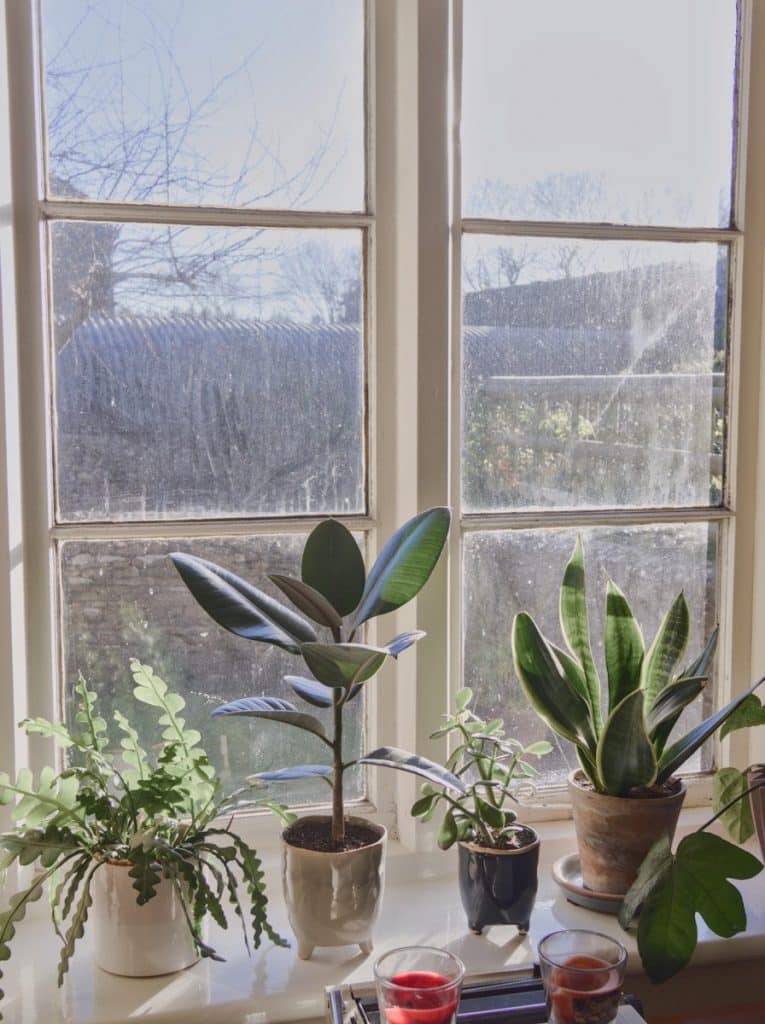
Light is the #1 limiter indoors. A plant can sit in a “bright” room and still be too far from the window to grow well.
Fast upgrades:
Move plants closer to windows (even 30–60 cm helps).
Rotate pots weekly so growth stays even.
Use pale walls / reflective surfaces nearby.
If your plant looks tall, pale, or stretched, it’s almost always a light issue first.
For a simple baseline, University of Florida IFAS Extension advice on indoor plant care reinforces that bright light and correct watering are the foundation for healthier growth indoors.
If you’re unsure what light levels actually mean (and what type of grow light is worth it), Best Lights for Indoor Gardening breaks it down clearly.
A full-spectrum LED grow light panel can boost growth on darker shelves where window light isn’t enough.
2) Fix drainage (roots can’t grow in stale, wet compost)
This is the most underrated growth booster: roots need oxygen. If compost stays wet for days, growth slows — and leaves often yellow.
Quick checks:
Does water drain out within a minute or two?
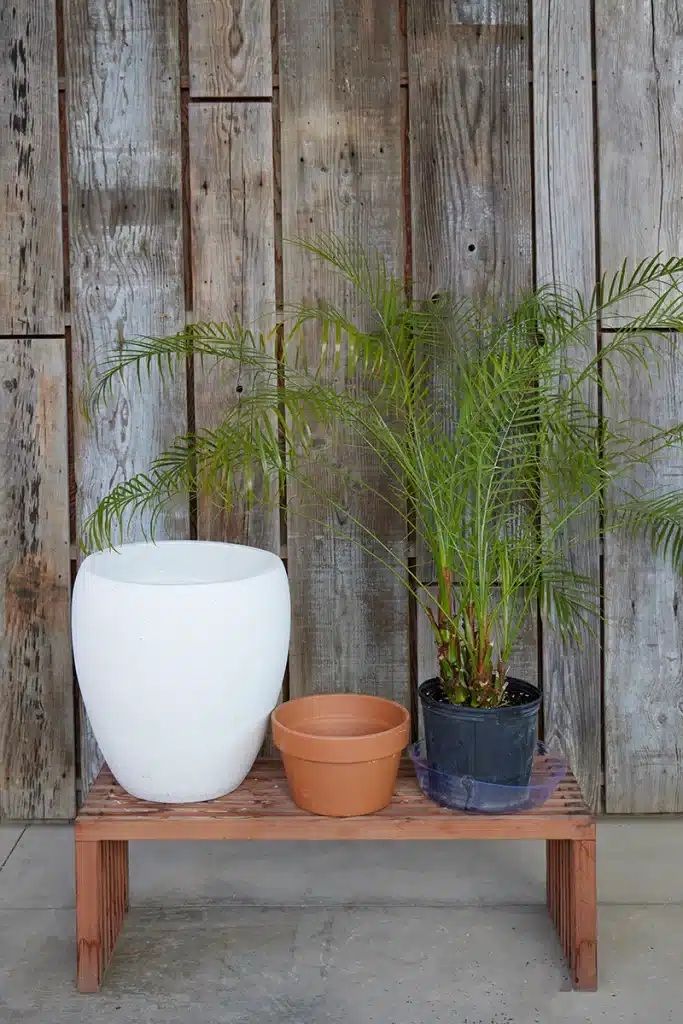
Does the pot have real drainage holes?
Is there standing water in the saucer/cachepot?
If your plant stays wet for ages, fixing drainage often speeds growth more than feeding.
If you want a practical checklist to fix soggy pots fast, Improve Indoor Plant Drainage fits perfectly here.
3) Water properly: soak, drain, then let it dry slightly
Many indoor plants grow slowly because they’re watered “little and often,” which keeps compost constantly damp.
A better method:
Water thoroughly until it drains out.
Empty the saucer/cachepot.
Let the top few centimetres dry before watering again.
This encourages stronger root growth, which supports faster top growth.
If watering feels confusing (or you keep getting inconsistent results), Perfect Watering Schedule Indoor Plants can help you tighten your timing.
4) Feed at the right time (and less than you think)
Feeding can help, but it only speeds growth when:
the plant has enough light
roots are healthy
the plant is actively growing
If you feed in low light, you often get weak, soft growth — or stressed roots.
A gentle option that’s hard to overdo is a balanced liquid houseplant fertiliser used at a diluted strength during active growth.
If you want to avoid overfeeding and follow a simple schedule, How Often to Fertilize Indoor Plants makes it much easier.
5) Repot only when it’s truly root-bound
Repotting can speed growth — but only if roots are packed and the plant is drying too quickly, or growth has stalled despite good light.
Signs it may be root-bound:
roots circling the pot
water running straight through
plant drying out very fast
growth slowing even in good light
If you’re unsure, Prevent Root Bound Plants Indoors helps you judge timing without guesswork.
6) Clean leaves (dust blocks light)
This sounds small, but it matters — especially for big-leaf plants like monstera, rubber plants, and peace lilies.
Quick method:
wipe leaves with a damp cloth
support the leaf underneath
check undersides for pests while you’re there
If you want a simple step-by-step method, How to Clean Houseplant Leaves is the easiest reference.
7) Boost humidity sensibly (only for plants that need it)
Some plants grow faster with steadier humidity (calatheas, ferns, some tropicals). Others don’t care much.
Low-effort options:
group plants together
move sensitive plants away from radiators
use a tray method (if it fits your setup)
If you’re considering humidity trays, Humidity Trays for Houseplants is a useful next read.
8) Add gentle airflow (stops stagnation and mould)
Airflow helps plants transpire properly and reduces fungus/mould issues in constantly moist setups.
Simple fixes:
don’t crowd pots tightly together
crack a window occasionally (if temperature allows)
avoid trapping plants in stagnant corners
If you see mould on soil often, Prevent Mold in Indoor Soil is worth linking for troubleshooting.
9) Fix pests early (they slow growth more than you realise)
Even mild pests reduce growth by draining plant energy.
Fast check:
inspect undersides weekly
look for sticky residue, speckling, webbing, or bumps
isolate a plant if you’re unsure
If you want a simple page that helps you identify the problem fast, Indoor Plant Pest Guide is a strong reference.
Long-tail quick fixes (fast answers)
Make indoor plants grow faster in winter: what actually works?
Increase light first (move closer to windows or add grow lights). Reduce feeding, and keep watering slightly lighter because growth slows.
Why do indoor plants grow slowly even with fertiliser?
Usually low light or poor root oxygen (compost stays wet too long). Feeding can’t compensate for weak light.
How to speed up new leaf growth without burning roots
Use diluted feed only when the plant is actively growing, and make sure drainage is strong so salts don’t build up.
Fix in 10 minutes: the quickest growth boost
Move the plant closer to the window, rotate it, and empty any standing water in the saucer/cachepot.
FAQs About Making Indoor Plants Grow Faster
Do grow lights make indoor plants grow faster?
Yes, if your home doesn’t provide enough bright light. They’re most useful for shelves, winter months, and light-hungry plants.
Should you fertilise weekly to speed growth?
Usually no. It can cause root stress. Diluted feeding during active growth is safer.
Why does my plant grow leaves but not get bigger?
Low light often produces small, weak leaves. Improve light and support healthy roots.
What’s the biggest mistake that slows growth?
Overwatering in low light — it reduces root oxygen and stalls the plant.
Final Thoughts on Making Indoor Plants Grow Faster
If you want to make indoor plants grow faster, don’t start with fertiliser. Start with light and roots. Move plants closer to usable light, fix drainage so roots can breathe, and water thoroughly with a proper dry-down between. Once those basics are steady, gentle feeding during active growth can noticeably speed things up.
Related Articles
Faster growth starts with better basics
Set Up Conditions That Plants Can Actually Use
Most “growth hacks” don’t work if light is too low or roots are stuck in wet compost. Improve light, drainage, and watering rhythm first, then use gentle feeding to support steady new leaves.