To prevent root-bound plants indoors, pay attention to how quickly each pot dries and check the roots before growth becomes badly restricted. A crowded pot may need a little more room, but drooping or slow growth alone does not mean it is time to repot.
Quick answer: how to prevent root-bound plants indoors
- Check the compost and root ball if a pot starts drying much faster than usual or roots appear through its drainage holes.
- If the roots are densely circling, choose a pot only slightly larger than the root ball, with drainage holes.
- Use a potting mix suited to the plant, and water according to how the compost dries rather than a fixed schedule.
- Gently loosen densely matted outer roots where appropriate; do not pull apart healthy roots unnecessarily.
Do this first: Check whether the compost is wet or dry. If the plant is reasonably healthy and comes out easily, slide it from its pot to see whether roots are densely packed and circling. Do not force out a fragile or severely stressed plant just to check.
What does root bound mean?
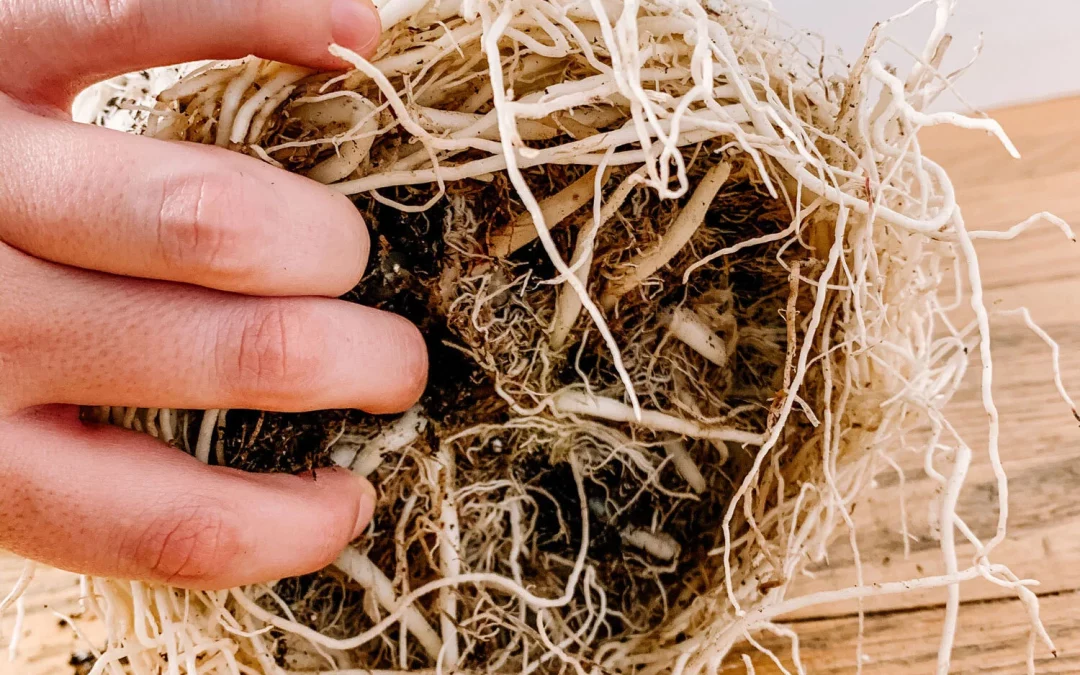
A plant is root bound, or pot bound, when its roots have filled the available space and become congested, often circling the inside of the pot. With less compost around the roots, watering can become harder to manage and growth may slow. A few visible roots are a prompt to look more closely, not proof that the plant needs a bigger pot. The Penn State Extension guide to repotting houseplants recommends examining the root ball for dense or circling roots before deciding to repot.
Choose a pot that fits the roots
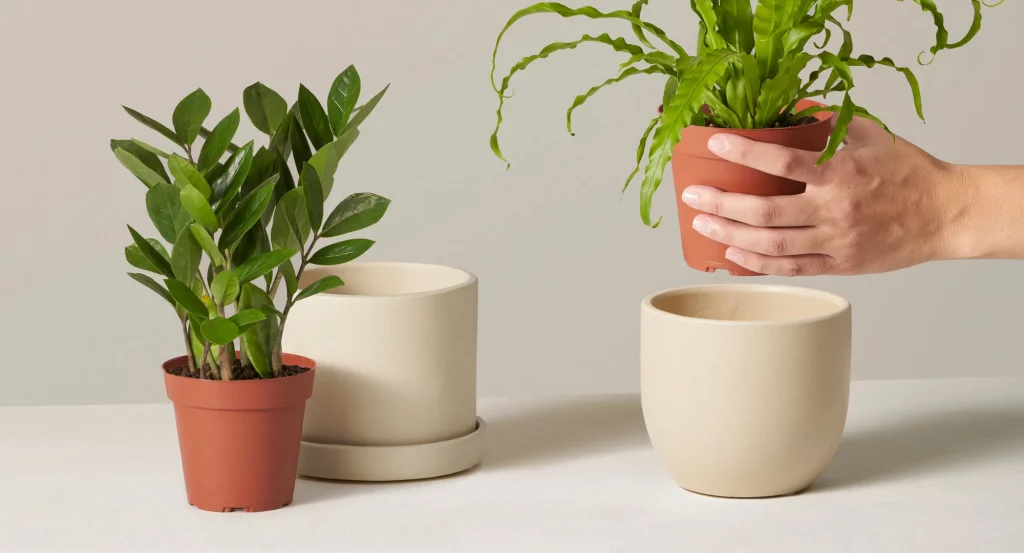
If the plant is growing and its roots are crowded, choose a container slightly larger than the existing root ball rather than making a large jump. Consider the plant’s growth rate, the shape of its roots and how quickly its compost dries. A pot with a large volume of unused compost may stay wet too long, particularly when growth is slow or watering is generous. The RHS guide to overpotting explains why this can cause problems.
Use a pot with drainage holes. A decorative outer pot is fine if the inner pot can drain and you empty away excess water. If compost remains persistently wet, see Improve Indoor Plant Drainage before assuming the plant needs more space.
Notice changes, then inspect
Check the pot more closely if compost dries substantially faster than it used to, roots emerge from drainage holes, the plant becomes top-heavy, or growth slows during its normal growing period. Water running through quickly may be another clue. None of these signs confirms the cause by itself: compost that has dried excessively, poor drainage and watering problems also deserve consideration.
A useful habit is to reassess pots during active growth and whenever their watering behaviour changes. There is no inspection interval that suits every houseplant. A vigorous plant in a small pot may need attention sooner than a slow-growing plant in a larger one.
Repot with minimal disturbance
Spring, when growth resumes, is generally a convenient time to repot. Choose a potting mix appropriate to the plant: an orchid, for example, does not need the same medium as an ordinary foliage houseplant. Put fresh mix around the root ball without burying the stems more deeply than before.
If the outer roots are densely matted or circling, ease some apart gently so they can grow into the fresh mix. If they are not crowded, there is no need to pull the root ball apart. Avoid routine root pruning; plants that respond poorly to disturbed roots need particular care. The RHS repotting guide explains how to assess congestion and water a plant after repotting.
Water the newly potted plant thoroughly and let it drain. After that, check the compost before watering again; the new pot may dry at a different rate from the old one. For help adjusting your routine, see How Often to Water Indoor Plants.

If you cannot repot yet
Check the compost regularly and water when that plant needs it, allowing excess water to drain away. Do not automatically give small amounts more often: they may fail to wet the root ball properly. Keep the plant in conditions suited to it rather than moving a stressed plant abruptly into stronger light.
If the plant is badly wilted or yellowing, check moisture, drainage and root condition before treating crowding as the cause. Wet, failing roots call for a different response from a healthy but congested root ball. When a plant is growing slowly, repotting can often wait until it resumes active growth; a plant that is clearly struggling needs a closer assessment sooner.
Common questions
Is being root bound always harmful?
No. Some plants tolerate a fairly snug pot. Act on the condition of the roots and plant, especially if watering has become difficult, rather than repotting because you can see a single root.
Should I repot in winter?
If the plant is otherwise healthy, waiting for active growth is often easier. If it is seriously congested and struggling, assess its roots and watering rather than waiting solely because it is winter. Take extra care not to leave fresh compost persistently wet.
What if roots are growing through the drainage holes?
Check whether they are part of a densely packed root ball. Do not trim protruding roots as a routine temporary fix; inspect the plant and decide whether it needs repotting. Take care when removing the pot so you do not tear off roots unnecessarily.
Can I just add compost on top?
Fresh compost may replace a little lost surface material, but it cannot create space for a congested root system. Do not pile it against the stems.
Final thoughts
The most useful prevention habit is to notice changes in watering and growth, then inspect the roots before choosing a larger pot. Match any new pot and compost to the plant, and disturb the roots only as much as their condition calls for.
Related articles
Make repotting feel simple, not stressful
Keep Pots the Right Size Before Problems Start
Preventing root-bound plants indoors is mostly a rhythm: quick checks, one-size pot upgrades, and an airy mix that dries at a sensible pace. Once you follow a repeatable routine, most “mystery drooping” problems disappear.