
Lucky bamboo is famous for growing in water, but it can be even happier and longer-lived in soil. Planting a lucky bamboo plant in soil gives it more nutrients, better stability, and a more natural environment – as long as you set things up correctly.
If you want a wider overview of this plant first, you can also read the main Lucky Bamboo Plant Care – Complete Indoor Guide, then come back here when you’re ready to move it into soil.
Contents
- 0.1 Can Lucky Bamboo Grow in Soil Indoors?
- 0.2 Best Soil Mix for a Lucky Bamboo Plant in Soil
- 0.3 Pots, Drainage and Placement
- 0.4 Watering and Feeding a Lucky Bamboo Plant in Soil
- 0.5 Common Problems With a Lucky Bamboo Plant in Soil
- 0.6 FAQs About Growing a Lucky Bamboo Plant in Soil
- 0.7 Final Thoughts on Growing a Lucky Bamboo Plant in Soil
- 0.8 Related Articles
- 1 Discover Indoor Plants That Reduce Stress
Can Lucky Bamboo Grow in Soil Indoors?
Yes – a lucky bamboo plant in soil can thrive for many years indoors. In fact, soil is closer to its natural conditions than plain water. When potted correctly, your plant can grow thicker stems, stronger roots and fresh leaves without needing constant water changes.
A soil-grown lucky bamboo plant:
Has access to more nutrients than it gets in water alone.
Is less prone to rotting stalks if the drainage is right.
Can be styled more like a normal indoor plant in decorative pots.
The key is giving your lucky bamboo plant in soil a light, airy potting mix, gentle watering and bright, indirect light.
Best Soil Mix for a Lucky Bamboo Plant in Soil
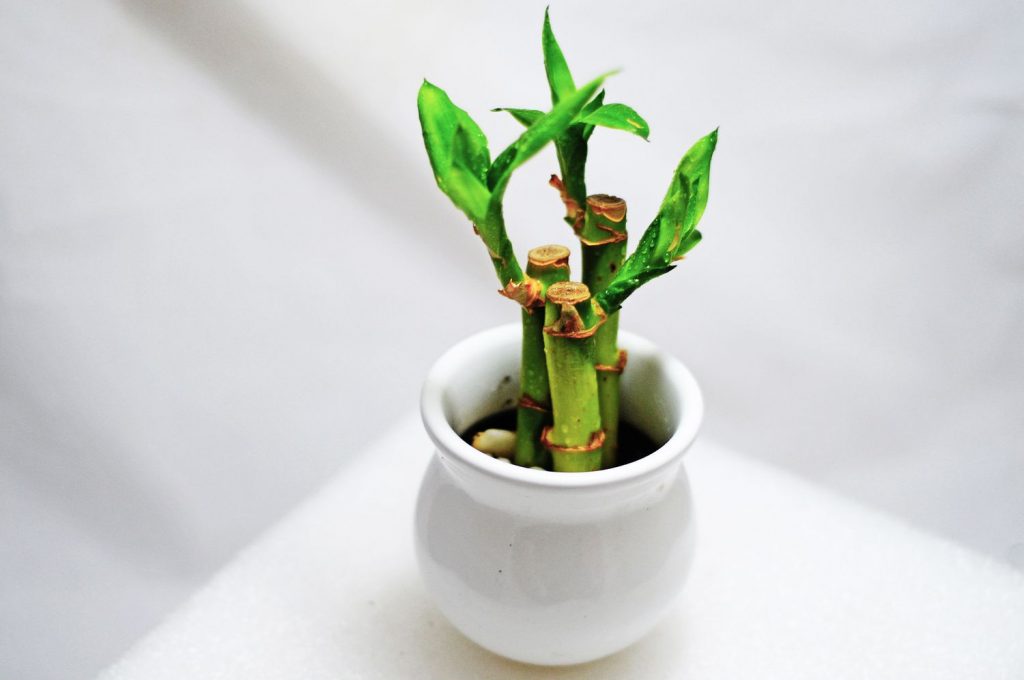
The right soil mix is one of the most important parts of growing a lucky bamboo plant in soil. You want a mix that holds some moisture but never stays soggy.
A good blend is:
2 parts all-purpose houseplant compost
1 part perlite or pumice for drainage
Optional: a small handful of fine bark chips for extra air around the roots
This kind of mix lets water move through easily while keeping enough moisture for the roots to absorb. Avoid heavy garden soil or pure peat, which can compact and suffocate roots.
If you don’t want to blend your own, look for a well-draining indoor plant potting mix labelled for foliage or tropical plants – it works well for lucky bamboo in soil too.
Lightly firm the soil around the canes so they stand upright, but don’t pack it too hard; the roots still need space to breathe.
Pots, Drainage and Placement
A lucky bamboo plant in soil doesn’t need an oversized container, but it does need one with proper drainage holes.
Choosing a pot
Pick a pot only 2–4 cm wider than the root ball.
Ensure it has several drainage holes in the base.
Use a decorative outer cachepot if you want – as long as excess water can be tipped away.
Shallow ceramic bowls work nicely for a group of stems, while a single tall cane looks good in a narrow cylinder pot.
Best place for your lucky bamboo plant in soil
Bright, indirect light is ideal – a spot near a window but not in harsh midday sun.
Avoid cold draughts from doors or leaky windows.
Keep away from radiators or heaters that dry the air.
According to indoor plant guidance from the Ambius, most foliage houseplants – including lucky bamboo – do best in bright, filtered light rather than deep shade or intense direct sun. Linking light levels to your room choice will keep a soil-grown lucky bamboo looking fresh and green.
Watering and Feeding a Lucky Bamboo Plant in Soil
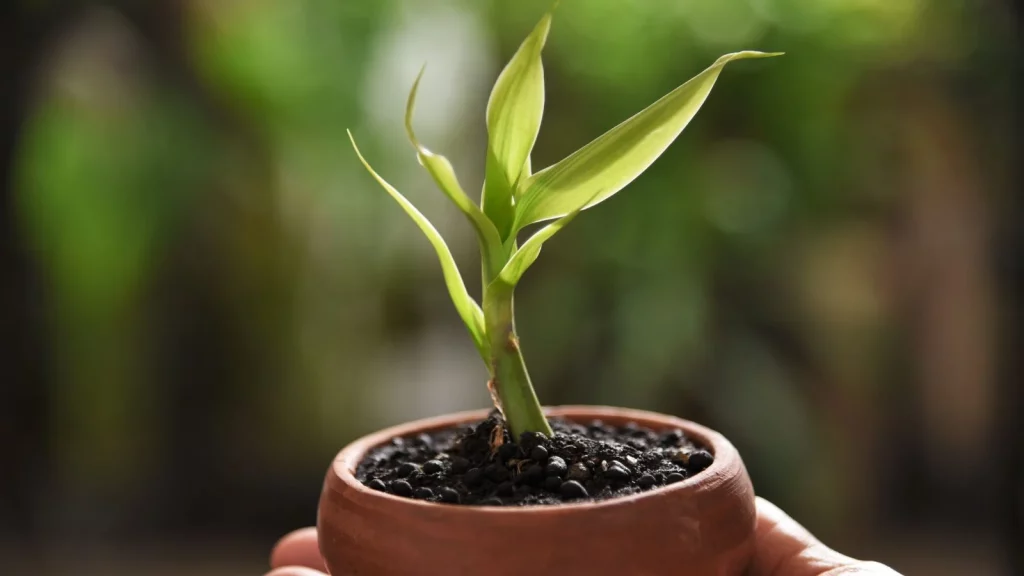
Watering is where many people go wrong with a lucky bamboo plant in soil. The stalks should never sit in swampy compost, but they also don’t like being bone dry for long.
Watering routine
Check the top 2–3 cm of soil with your finger.
If it feels dry, water slowly until a little drains from the bottom.
Empty any water collected in the outer pot or saucer.
In bright, warm rooms you may water once a week; in cooler rooms, it may be every 10–14 days.
If your tap water is very hard or heavily chlorinated, using filtered or distilled water can help prevent leaf tips browning over time.
A small soil moisture meter can help you learn how quickly soil dries around your lucky bamboo roots and avoid overwatering.
Feeding
A lucky bamboo plant in soil doesn’t need heavy feeding. Over-fertilising can scorch the roots or cause yellowing leaves.
In spring and summer, use a balanced liquid fertiliser for indoor plants at half strength once a month.
Skip feeding in winter when growth naturally slows.
Common Problems With a Lucky Bamboo Plant in Soil
Even with good care, your lucky bamboo plant in soil may occasionally show stress. Here’s what common symptoms usually mean:
Yellow leaves
Often caused by overwatering, poor drainage or too much fertiliser. Let the soil dry out a little more between waterings and flush the pot with plain water if you suspect salt build-up.Yellow or mushy stalks
Usually a sign that the roots or base of the cane have stayed too wet. Carefully remove any soft, rotten stalks and repot the healthy ones in fresh, better-draining soil.Brown leaf tips
Can be due to dry air, hard tap water or underwatering. Trim the tips neatly with clean scissors and switch to filtered water if your tap water is very mineral-rich.Drooping or leaning stems
May mean the plant is stretching for light or the soil is too loose. Move your lucky bamboo plant in soil to a brighter position and gently firm the compost around the canes.
If you fix the underlying issue early, most plants bounce back with fresh growth from the top of the stalks.
FAQs About Growing a Lucky Bamboo Plant in Soil
1. Is soil better than water for lucky bamboo?
Neither is “better” in every case, but growing a lucky bamboo plant in soil often leads to stronger roots and longer-term health. Soil provides more nutrients and stability, while water setups are more decorative and need more frequent cleaning.
2. Can I move lucky bamboo from water into soil?
Yes. Gently rinse off any slime from the roots, trim damaged parts, then plant the canes into a moist, well-draining potting mix. Keep the soil slightly damp (but not soggy) for the first few weeks while new roots establish.
3. How deep should I plant lucky bamboo in soil?
Plant each cane deep enough that the root area and a small section of the lower stem are buried – usually a few centimetres. The nodes with leaves should stay above the soil surface.
4. Does a lucky bamboo plant in soil need high humidity?
Normal home humidity is usually fine. If the air is very dry, occasional misting or placing the pot on a pebble tray with water (without submerging the base) can help keep leaf tips from drying out.
5. How often should I repot lucky bamboo grown in soil?
Every 2–3 years is usually enough. Repot when roots fill the pot, the soil breaks down, or drainage seems slower than before. Move up to a pot just one size larger with fresh mix.
Final Thoughts on Growing a Lucky Bamboo Plant in Soil
Switching to soil is a great way to give your lucky bamboo a more stable, natural home. With a light, airy potting mix, careful watering and bright, indirect light, a lucky bamboo plant in soil can become a long-lasting, low-maintenance feature in your indoor garden.
Take your time when repotting, watch how the plant responds over the first few weeks, and adjust watering rather than making big changes all at once. Once it settles, you’ll find that caring for lucky bamboo in soil is simple – and the fresh green stems and leaves are well worth the effort.
Related Articles
TAKE YOUR INDOOR CALM EVEN FURTHER
Discover Indoor Plants That Reduce Stress
Once your indoor bamboo garden is in place, you can deepen that peaceful atmosphere by choosing plants that actively help you unwind. Our Indoor Plants Reduce Stress guide walks you through relaxing, easy-care plants that soften your space and support a calmer mood at home.