
A low-maintenance indoor herb garden starts with a few herbs that suit the light you have, each in a pot you can water properly. It still needs checking and occasional cutting, but it need not become a daily project.
Here is how to choose herbs, arrange them in a small space and care for them without following a rigid schedule. If mint is your first choice, see our guide to growing mint.
What makes an indoor herb garden low maintenance?
- Start small: two or three herbs you regularly cook with are easier to look after than a crowded collection.
- Match herbs to the light: even relatively forgiving herbs need a bright position to produce useful growth indoors.
- Use draining containers: pots with drainage holes let you water thoroughly without leaving roots standing in water.
- Check rather than follow a calendar: the compost may dry at different rates as light, temperature and plant size change.

Which herbs should you choose?
Mint, chives and parsley are sensible starting points if you have a bright windowsill. Thyme and oregano suit a sunnier spot and a more restrained approach to watering. Even these herbs may grow slowly in a UK winter; choose according to your space rather than expecting constant harvests.
Mint
Mint is useful for drinks, desserts and savoury dishes. It tolerates some shade, but give it as much useful daylight as you can indoors. Keep its compost evenly moist rather than letting it dry out completely. Grow it in its own pot: its spreading roots can crowd other herbs. Mint may die back in winter, even though a sunny indoor position can extend picking.
Chives
Chives are compact and useful in salads, egg dishes and potatoes. A sunny windowsill can extend their growing season. Snip leaves just above the base as needed, leaving the rest of the clump to grow on.
Parsley
Flat-leaf parsley grows in a well-lit window and prefers compost that stays lightly moist, not waterlogged. Take a few outer stems near the base rather than stripping the whole plant. Parsley is a biennial: it usually puts its energy into flowering in its second year, so plan to replace it for leaf harvests.
Dill is another option if you have strong light and can keep its compost from drying out too far. It is less suited to a set-and-forget pot; see our indoor dill guide if you want to try it.
Thyme and oregano
These herbs favour a sunny position and free-draining compost. They can cope with the compost drying somewhat between waterings, but a small indoor pot still needs checking. They are better choices for a bright window than for a shaded worktop.
Rosemary
Rosemary can grow in a container, but it is not the easiest herb for a low-light kitchen. Give it a very sunny position and a free-draining pot, and avoid leaving its roots wet. If your indoor window is dim, a sunny outdoor doorstep or balcony may suit it better, provided the pot is protected from prolonged winter wet and severe cold.
Choose pots that make care easier
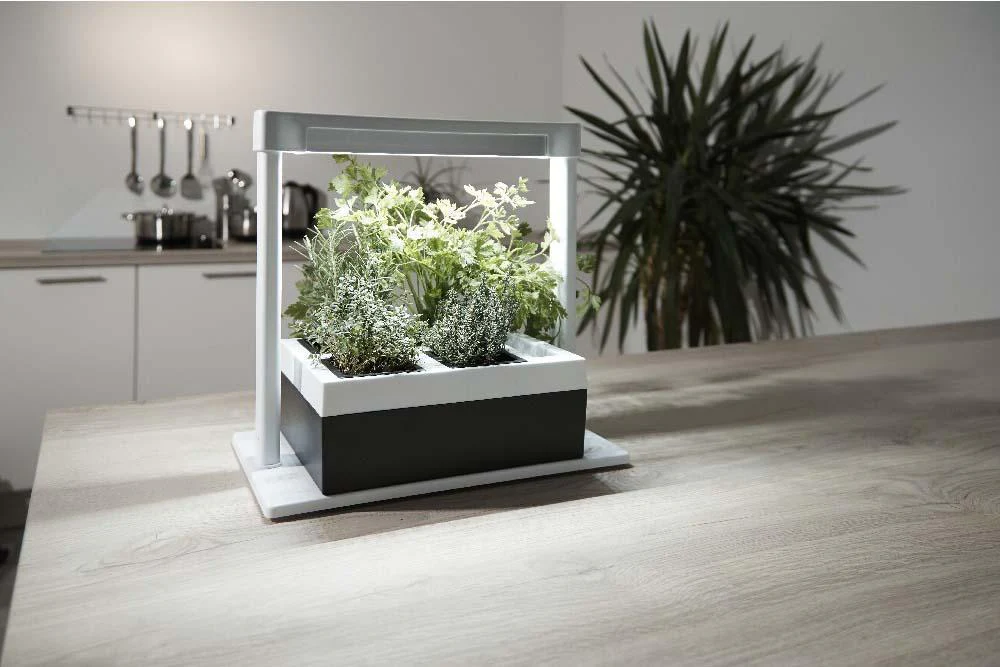
Individual pots make the simplest starting setup. You can move each herb towards the light and water it according to its needs. A rectangular planter can work where space is tight, but herbs sharing compost also share its moisture conditions. For example, keep mint separate from thyme rather than treating them as one watering group.
- Choose pots with drainage holes and place a saucer or tray beneath them. Empty any water left standing after watering.
- Use a suitable peat-free potting compost. For Mediterranean herbs, a free-draining mix with horticultural grit can help prevent the compost staying wet for too long.
- Avoid a pot much larger than the plant’s root ball: excess compost can remain wet. Move up a pot size when roots become crowded.
- Terracotta tends to dry faster than plastic or glazed pots, so check moisture rather than assuming two pots need water together.
A self-watering planter is optional, not essential. If you use one, check its instructions and the compost moisture; a reservoir does not compensate for insufficient light or suit every herb equally. Ordinary clean scissors are sufficient for harvesting.
Give indoor herbs enough light
Place pots close to your brightest suitable window. In many UK homes, a south-facing window offers the most light, particularly in winter. Mint and parsley can tolerate some partial shade, but a dim room is not a reliable place to grow a useful crop. Thyme, oregano and rosemary need a particularly sunny position. Turn pots occasionally if growth leans towards the glass, and keep leaves away from cold panes and direct heat from radiators or hobs.
If stems become pale, long and sparse, insufficient light may be the cause. A suitable grow light can supplement a dark windowsill; follow the light maker’s placement and operating instructions rather than assuming any kitchen light will work. The University of Minnesota Extension guide to indoor lighting explains how light affects plant growth.
A simple care routine
Watering
Check the compost with a finger rather than watering automatically on a particular day. Water a pot when its compost has begun to dry to the degree that herb prefers, let excess water drain, and empty the saucer. Mint and parsley generally need more consistent moisture; thyme, oregano and rosemary dislike persistently wet compost. Check more often in warm, bright weather and less often when winter growth slows. The RHS guide to watering containers offers more ways to judge when a pot needs water.
Feeding
Fresh potting compost supplies some nutrients. When herbs are actively growing and cropping, feed lightly if needed with a fertiliser suitable for edible container plants, following its label. Avoid frequent, heavy feeding. Plants growing slowly in low winter light generally need less.
Harvesting
Take modest amounts regularly while plants are growing well. Cut chives near the base; pick outer parsley stems near the base; take mint shoot tips to encourage branching. Snip tender thyme or rosemary shoots rather than cutting hard into old woody stems. Leave enough healthy growth for the plant to recover, especially in winter.
Layouts for small spaces
Narrow windowsill
Start with separate pots of chives and parsley, with mint in its own pot if there is room. Check that the pots sit securely and do not block access to the window.
Small kitchen worktop
Group two or three pots on a tray for easier cleaning, but only if the position receives enough daylight or has a suitable grow light. Keep them clear of heat from hobs and kettles.
Indoor and outdoor combination
If you have a sunny balcony or doorstep, thyme and rosemary may grow better there than in a dim kitchen. Keep the herbs you use most often close to the kitchen. Move indoor-raised plants outside gradually so they can adjust to brighter light and outdoor conditions.
For further advice on choosing herbs to suit their growing conditions, read these beginner herb-growing tips from UF/IFAS Extension.
FAQs about low-maintenance indoor herb gardens
Do indoor herb gardens really stay low maintenance?
They can be manageable if you start with a few plants suited to your light and check each pot before watering. They will still need harvesting and occasional repotting or replacement.
Which herbs can be trickier indoors?
Rosemary is demanding in a dim room, while basil needs warmth and strong light. Coriander and dill can flower and finish cropping relatively quickly, so they are less convenient if you want one long-lived pot. Start with the herbs your space supports, then experiment.
Can I grow herbs indoors all year?
You can keep some herbs indoors year-round, but shorter winter days often slow growth and reduce harvests. A bright window or suitable supplementary light helps; do not expect every herb to produce at its summer rate.
Do I need special compost?
A suitable peat-free potting compost works for many herbs, provided the pot drains. Thyme and rosemary particularly benefit from a free-draining mix. Whatever you use, avoid leaving pots standing in water.
When should I replace a plant?
Divide or repot mint and chives when their clumps become crowded. Replace parsley when it starts flowering in its second year if you want leaves. A struggling plant is not necessarily old, though: check its light, roots and watering before discarding it.
Final thoughts
Begin with two or three herbs you will use, give each a draining pot and place them where they receive enough light. Checking the compost and taking small harvests will tell you more than a fixed watering timetable. You can add other herbs once you know which ones thrive in your space.
Related articles
MAKE HOME-GROWN FLAVOUR EVEN EASIER
Grow More Edible Plants in Small Spaces
Once your low-maintenance herb garden is going, it’s easy to branch out into other crops indoors. Learn how to use spare corners, shelves and containers to grow extra greens and edible plants so you can pick more from home without needing a full garden.