
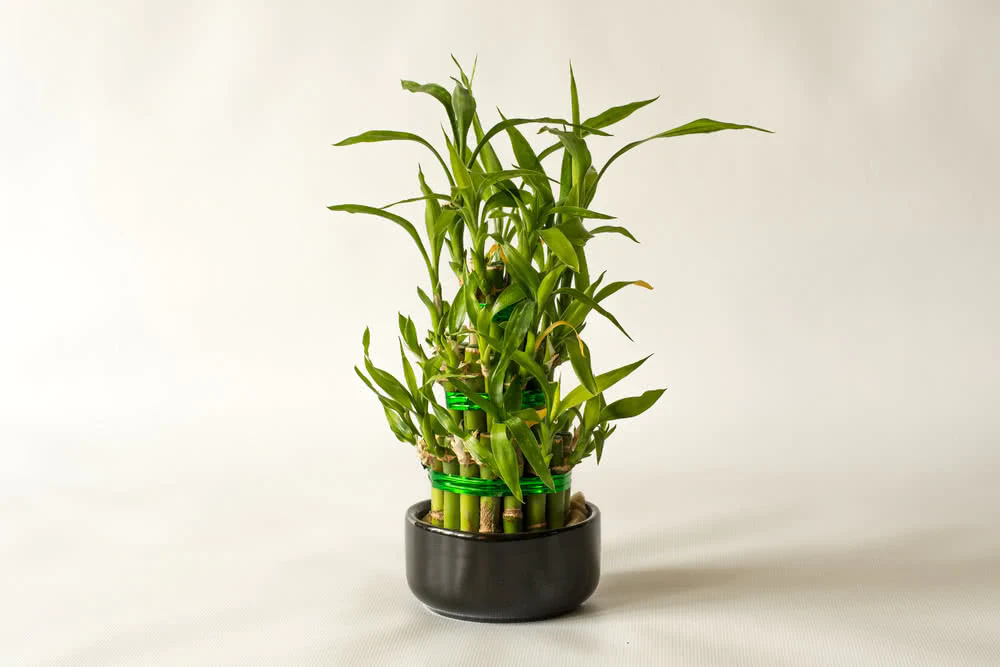
An indoor bamboo garden is one of the easiest ways to make your home feel calm, fresh, and a little bit like a spa. Whether you’re using lucky bamboo stems on a shelf or taller bamboo-style plants in a corner, the right setup can look classy rather than cluttered.
This guide will walk you through everything you need to know about creating and caring for an indoor bamboo garden – from choosing plants and containers to styling and long-term maintenance.
If you’d like a bigger-picture routine to go with this, read Indoor Garden Care guide for everyday watering, feeding, and troubleshooting tips that work for all your plants.
Contents
- 0.1 Why an Indoor Bamboo Garden Works So Well
- 0.2 Choosing the Right Plants for an Indoor Bamboo Garden
- 0.3 Containers, Soil and Drainage for Indoor Bamboo Gardens
- 0.4 Light, Water and Humidity for Bamboo Indoors
- 0.5 Styling Ideas for an Indoor Bamboo Garden
- 0.6 Long-Term Care and Common Problems
- 0.7 FAQs About Indoor Bamboo Gardens
- 0.8 Final Thoughts on Indoor Bamboo Gardens
- 0.9 Related Articles
- 1 HowDiscover How Indoor Plants Help Reduce Stress
Why an Indoor Bamboo Garden Works So Well
Bamboo immediately gives a room structure and height. The slim canes and neat foliage draw the eye upwards, which makes small rooms feel bigger. When grouped together, an indoor bamboo garden creates a strong focal point without being fussy.
It’s also surprisingly versatile. You can keep a few lucky bamboo stems on a desk, build a Zen-style arrangement with stones and water, or use taller bamboo-like plants (such as bamboo palms) to soften a bare corner. With the right containers and light, an indoor bamboo garden fits modern, minimalist spaces just as easily as cosy, boho rooms.
The key is to pick plants that truly cope indoors and then give them consistent care rather than treating them like disposable décor.
Choosing the Right Plants for an Indoor Bamboo Garden
Not all “bamboo” is the same, and some types are much better suited to indoor life than others.
Lucky bamboo (Dracaena sanderiana) – technically not a true bamboo, but perfect for tabletops, desks, and shelves. It likes bright, indirect light and can be grown in water or soil.
Bamboo palm (Chamaedorea seifrizii) – a real palm with a bamboo-like look. Great for adding height in corners and along walls.
Compact clumping bamboos – in very bright rooms or conservatories, some dwarf clumping varieties can work indoors in large containers, but they need plenty of light and space.
For most homes, a mix of lucky bamboo arrangements and one or two bamboo palms gives a lush bamboo feel without the risk of fast-spreading roots.
If you have pets, it’s worth double-checking plant safety using trusted sources such as the Royal Horticultural Society’s guidance on houseplant toxicity, so you can position your indoor bamboo garden safely.
Containers, Soil and Drainage for Indoor Bamboo Gardens
The right container makes your indoor bamboo garden look intentional rather than thrown together.
For lucky bamboo grown in water, choose glass vases, bowls, or tall cylinders and:
Add decorative stones or pebbles to hold stems upright.
Keep the water level just covering the roots, not the whole stem.
Refresh the water every 1–2 weeks to keep it clear.
For lucky bamboo or bamboo palms grown in soil:
Pick pots with good drainage holes and saucers to catch excess water.
Use a well-draining houseplant mix – you can lighten it with a bit of perlite or fine bark.
Avoid heavy garden soil that stays soggy and compacts easily.
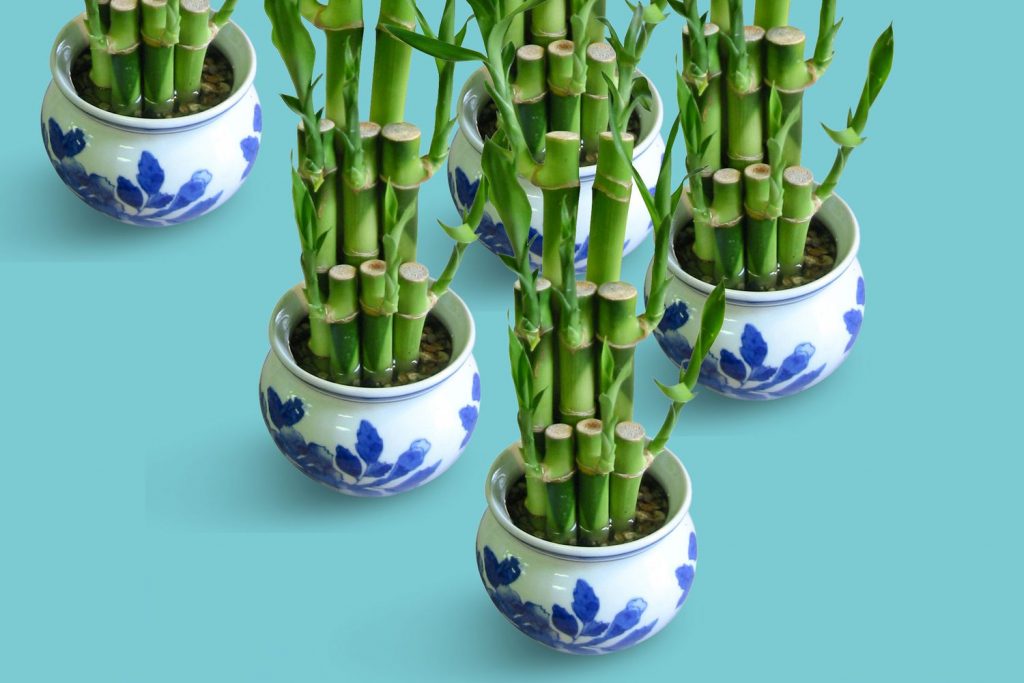
A ceramic indoor plant pot with drainage holes and matching saucer works beautifully for bamboo palms and soil-grown lucky bamboo, keeping things neat while protecting your furniture.
Light, Water and Humidity for Bamboo Indoors
Good light is essential for a healthy indoor bamboo garden. Aim for bright, indirect light – near a window where you can comfortably read a book without turning on a lamp. Avoid harsh midday sun directly through glass, which can scorch leaves.
Water needs depend on whether your plants are in water or soil:
Lucky bamboo in water: top up when the level drops and completely change the water regularly.
Lucky bamboo in soil: keep the soil lightly moist but never waterlogged; let the top couple of centimetres dry slightly between waterings.
Bamboo palms: like evenly moist soil during active growth but hate sitting in soggy compost.
Most bamboo-style plants appreciate moderate humidity. Grouping plants together, placing pots on trays of pebbles with water below (not touching the base of the pot), or using a gentle humidifier in winter can all help.
A simple soil moisture meter can take the guesswork out of watering, especially if your indoor bamboo garden includes several pots of different sizes.
Styling Ideas for an Indoor Bamboo Garden
Once you’ve chosen plants and containers, you can start treating your indoor bamboo garden like a design feature. A few ideas:
Zen corner: arrange lucky bamboo stems in shallow bowls with smooth stones, a small tray of sand, and maybe a single candle (kept safely away from foliage).
Window backdrop: line bamboo palms along a bright window or glass door to create a natural screen without blocking all the light.
Shelf display: use a mix of heights – tall vases at the back, smaller cubes in front – so every stem is visible.
Pathway effect: in long hallways or open-plan rooms, place a few identical pots in a row to guide the eye through the space.
Keep the colour palette of your pots fairly simple (white, grey, black or natural clay) so the green foliage stands out and the display feels calm rather than busy.
Long-Term Care and Common Problems
An indoor bamboo garden looks best when plants stay fresh and tidy. Build a simple care routine:
Trim yellow or damaged leaves promptly to keep arrangements looking clean.
Rotate pots every couple of weeks so growth stays even and doesn’t lean too heavily towards the light.
Wipe leaves occasionally with a damp cloth to remove dust and keep them glossy.
Feed lightly in spring and summer with a diluted liquid fertiliser every 4–6 weeks, and ease off in autumn and winter.
Watch out for:
Yellowing stems or leaves – often a sign of overwatering, poor water quality (for lucky bamboo), or very low light.
Brown tips – can signal dry air, underwatering, or fertiliser salt build-up.
Pests like mealybugs or scale – check stem joints and leaf undersides; treat early with a gentle, plant-safe spray or by wiping pests off with a cotton pad.
With small, regular tweaks, your indoor bamboo garden will stay lush instead of slowly declining in the background.
FAQs About Indoor Bamboo Gardens
1. Can I grow real bamboo indoors, not just lucky bamboo?
Yes, but only certain compact clumping varieties will cope indoors, and they need very bright conditions and large containers. For most homes, lucky bamboo and bamboo palms are much easier and more reliable.
2. Do I need special fertiliser for my indoor bamboo garden?
Not usually. A general liquid houseplant fertiliser, used at half strength every few weeks during spring and summer, is enough. Avoid heavy feeding – too much fertiliser can cause leaf burn and weak, soft growth.
3. How often should I change the water for lucky bamboo?
Every 1–2 weeks is ideal. Rinse the container, refresh the water, and give the roots a quick check to make sure they’re firm and healthy, not mushy or foul-smelling.
4. Will an indoor bamboo garden grow well in low light?
Bamboo-style plants prefer bright, indirect light. They may survive in lower light but will likely grow slowly, lean towards the window, and lose some of their lush look. In darker rooms, consider adding a small grow light.
5. Can my indoor bamboo garden go outside in summer?
You can move containers outdoors in warm weather if temperatures stay above about 15°C, but introduce them gradually to brighter light and bring them back inside before nights turn cool again.
Final Thoughts on Indoor Bamboo Gardens
An indoor bamboo garden is one of those projects that looks impressive but is surprisingly simple to maintain. By choosing suitable bamboo-style plants, giving them the right mix of light, water and drainage, and paying attention to a few small details, you can create a calm, elegant green feature in almost any room.
Start small with a single arrangement, then build up to a fuller display as your confidence grows. Over time, your indoor bamboo garden can become a favourite part of your home – a quiet, living backdrop that makes the whole space feel more peaceful and alive.
Related Articles
BRING MORE CALM INTO YOUR INDOOR SPACE
HowDiscover How Indoor Plants Help Reduce Stress
If you love the soothing feel of an indoor bamboo garden, you’ll probably enjoy other mood-boosting plants too. Our Indoor Plants Reduce Stress guide explains which houseplants are best for creating a relaxing atmosphere, how they affect your mood, and simple ways to style them so your home feels more like a sanctuary than a workspace.