If you’re learning how to prune indoor plants, the goal isn’t to chop everything back — it’s to make a few clean cuts in the right places so your plant grows tidier, bushier, and healthier.
Contents
- 0.1 Why pruning helps indoor plants (and when it can backfire)
- 0.2 Where to cut: nodes, stems, and the “right spot”
- 0.3 How to prune indoor plants step-by-step
- 0.4 The 3 pruning styles you’ll actually use indoors
- 0.5 Pruning different indoor plant types (quick, practical)
- 0.6 Top picks made simple (tools that make pruning easier)
- 0.7 Common pruning mistakes (and fast fixes)
- 0.8 Long-tail mini fixes
- 0.9 FAQs About Pruning Indoor Plants
- 0.10 Final Thoughts on How to Prune Indoor Plants
- 0.11 Related Articles
- 1 Build a Simple Plant-Care Routine That Sticks
Quick answer: how to prune indoor plants
Remove dead, yellow, or damaged leaves any time of year
For shaping, prune when the plant is actively growing
Cut just above a node to encourage branching
Don’t remove more than 20–30% in one session
Use sharp, clean tools and wipe blades between plants
Do this first: Find a clear node (leaf joint) on one stem and practise one small cut just above it before you trim anything else.
Why pruning helps indoor plants (and when it can backfire)
Pruning works because it stops your plant wasting energy on weak growth and encourages fresh shoots. It can backfire if you prune a plant that’s already struggling (overwatered, low light, pests), or if you remove too much at once.
A simple weekly check habit makes pruning feel far less stressful, because you notice legginess and leaf damage early rather than dealing with a big “catch-up” prune.
Where to cut: nodes, stems, and the “right spot”
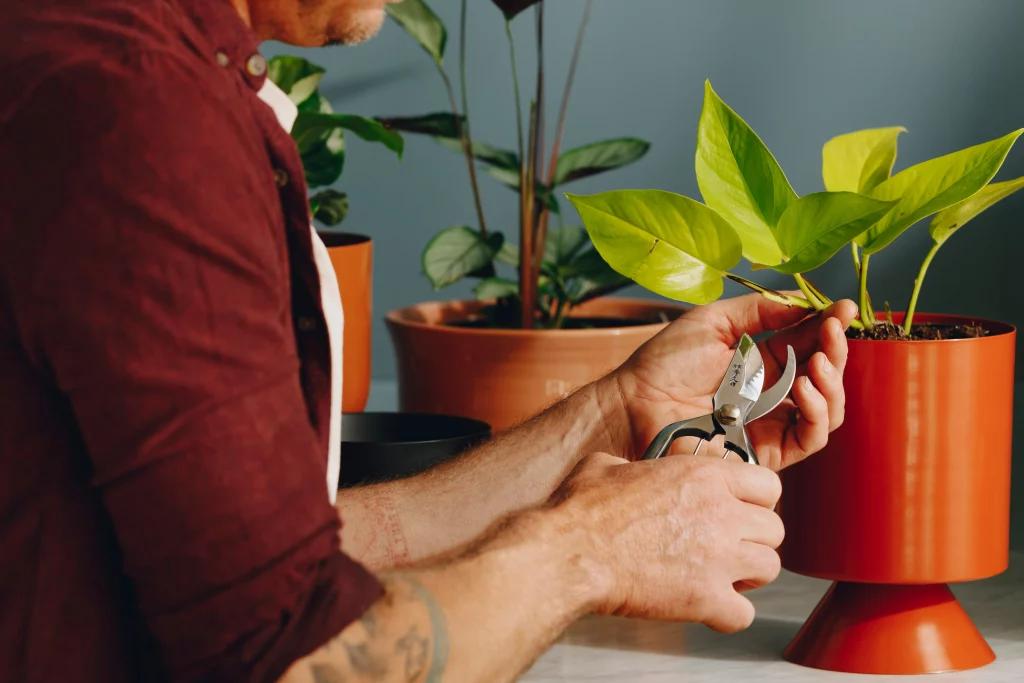
A node is the point where a leaf joins the stem (often a small bump). When you cut just above a node, many plants respond by pushing new growth from that area.
Want the plant to grow wider? Choose a node facing outward
Want it shorter? Cut the tallest stem back to a lower node
Want it bushier? Trim the tips of multiple stems lightly
Simple rule: For shaping, cut 0.5–1cm above a node and avoid leaving long stumps.
How to prune indoor plants step-by-step
Pruning is easiest when you follow the same order every time.
- Clean your tools
Wipe blades before you start and between plants. - Remove the obvious first
Dead leaves, yellow leaves, snapped stems, and anything badly damaged can go straight away. - Choose one goal
Pick one: shorter, bushier, or simply tidier. Trying to fix everything at once is how people over-prune. - Make clean cuts just above a node
Cut slightly above a node (not through it) so the plant has a clear point to regrow from. - Step back every few cuts
Indoor plants look best when the shape stays balanced.
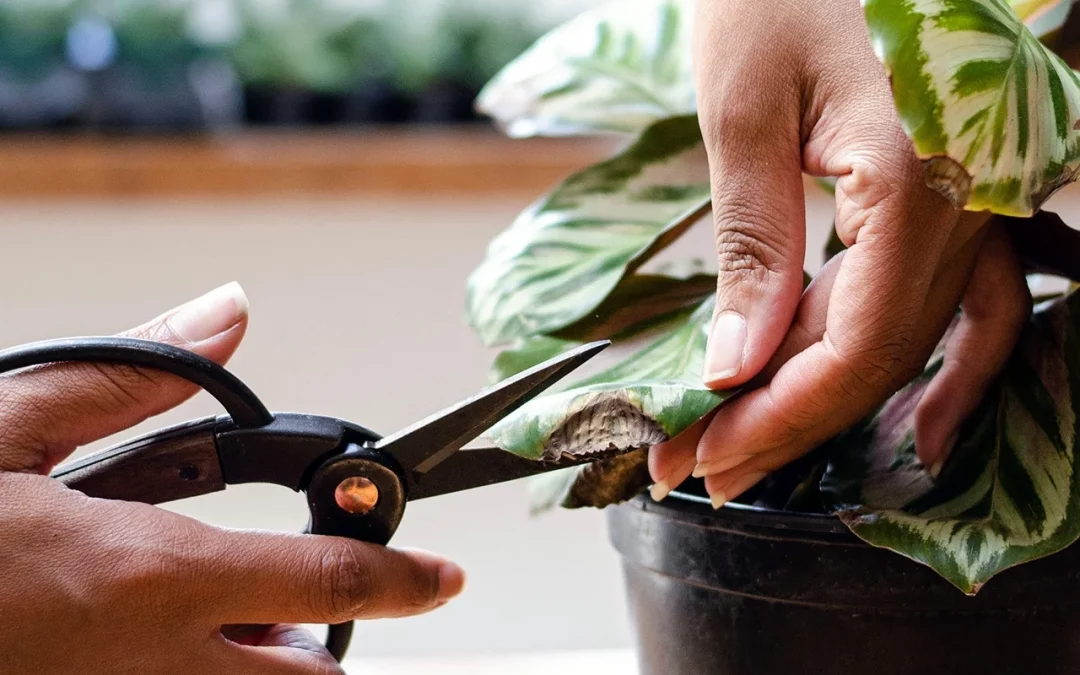
For small stems and tight spaces, micro-tip pruning snips make neat cuts without tearing leaves.
Using sharp tools and making clean cuts (instead of tearing stems) is one of the simplest ways to keep pruning stress low — it’s the same approach highlighted in University of Maryland Extension’s grooming indoor plants advice.
The 3 pruning styles you’ll actually use indoors
Clean-up pruning (any time)
This is the safest type: removing dead and damaged growth so the plant looks better immediately and stays healthier.
Shaping pruning (best during active growth)
This is when you reduce size or correct legginess. Keep it gentle — you can always trim more later.
Pinching (great for leafy plants and herbs)
Pinching removes the soft new tip growth and encourages side shoots, which is perfect for fast growers and many kitchen herbs.
Before you decide what needs cutting, it helps to clean dusty foliage using How to Clean Houseplant Leaves so you’re judging the plant’s true condition.
Pruning different indoor plant types (quick, practical)
Vining plants (pothos, philodendron, tradescantia)
Vining plants respond brilliantly to pruning because every cut can create a fuller look.
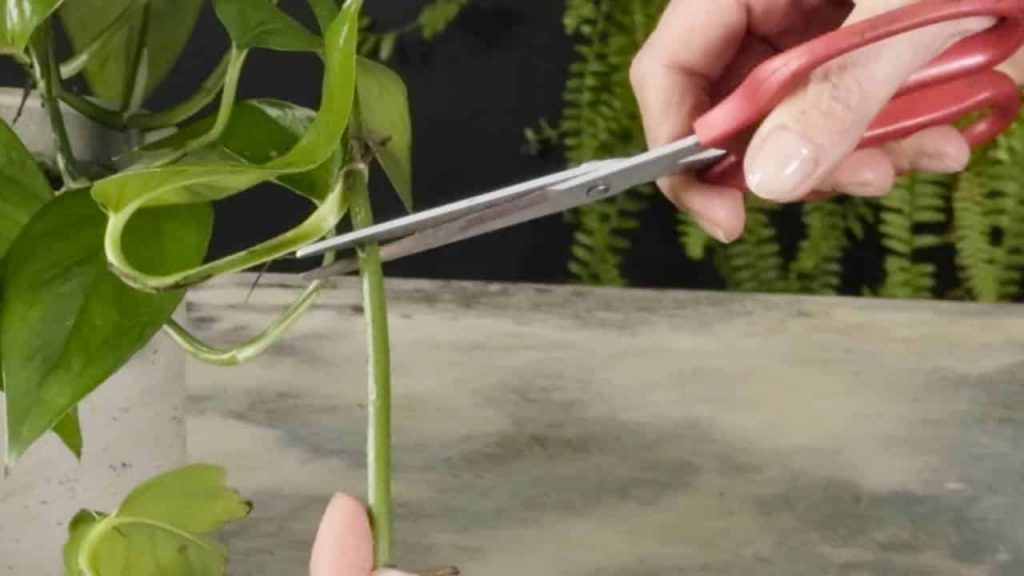
Cut long vines back to just above a node
Trim a little from multiple vines for a bushier plant
Use healthy cut pieces for new plants if you want more pots
Many pruned stems can become new plants, so it’s worth keeping a few cuttings and following Propagate Houseplants Indoors if you want extra pots for free.
Upright leafy plants (rubber plant, dracaena, schefflera)
With upright plants, pruning is more about control and balance than constant trimming.
Remove lower yellow leaves first
Reduce height only if you’re happy with slower recovery
Keep light strong afterwards so new growth stays sturdy
If your plant keeps stretching with big gaps between leaves, improving light makes a huge difference — Best Lights for Indoor Gardening helps you quickly judge what’s “enough” indoors.
Flowering houseplants
Deadhead spent blooms
Remove weak stems and damaged leaves
Avoid heavy pruning right before flowering if you want blooms soon
Top picks made simple (tools that make pruning easier)
If you only buy one…
A pair of bypass pruning shears gives the cleanest cut on thicker stems, which helps wounds heal neatly.
Best for: rubber plant, dracaena, schefflera, woody stems.
A decent pair of bypass pruning shears makes bigger cuts quicker and reduces crushed stems.
If you want the easy mode setup…
Use bypass shears for thick stems and micro-tip snips for fine trimming.
Best for: faster, neater pruning without tearing leaves.
Common pruning mistakes (and fast fixes)
Cutting too far above a node
That leaves a stump that can brown back.
Fix: Next time, cut closer (still above the node).
Pruning too much at once
Removing half the plant can shock it indoors.
Fix: Trim 20–30%, then wait 2–3 weeks before doing more.
Pruning a stressed plant
If the plant is dropping leaves, wilting, or generally unwell, heavy pruning can make things worse.
Fix: Steady the basics first (watering, light, pests), then prune once it’s recovering.
If the plant looks unwell rather than just messy, it’s usually better to stabilise care first with Revive Dying Houseplant before doing a heavier prune.
Long-tail mini fixes
How do I prune a leggy houseplant?
Cut the longest stems back just above a node, then improve the light so new growth comes in tighter and fuller.
Can I prune indoor plants in winter?
You can remove dead/damaged leaves any time, but bigger shaping cuts are usually better when growth is active again (unless the plant is badly outgrowing its space).
What should I do right after pruning?
Water normally (don’t overwater “to help it recover”)
Keep the plant in stable light
Avoid feeding for 1–2 weeks if you removed a lot
FAQs About Pruning Indoor Plants
How often should I prune indoor plants?
Light tidy-ups can be monthly, but shaping is occasional — prune when you see legginess, damaged leaves, or uneven growth.
Will pruning make my plant bushier?
Often yes — cutting just above a node encourages side shoots.
Should I cut off brown leaf tips?
You can for looks, but it won’t heal the leaf. If tips keep browning, it’s usually care (watering swings, salts, dry air).
Do I need to disinfect tools?
It’s a smart habit, especially if any plant looks unhealthy.
Can I propagate the cuttings?
Many plants root easily from pruned pieces, especially vining houseplants.
Final Thoughts on How to Prune Indoor Plants
Start small, cut cleanly, and prune for one goal at a time. When you trim just above nodes and avoid overdoing it, most indoor plants respond with steadier growth and a better shape within a couple of weeks.
Related Articles
PRUNE WITHOUT THE PANIC
Build a Simple Plant-Care Routine That Sticks
Learn how to water, feed, position, and maintain all your houseplants so your new plant stands don’t just look good – they help your plants thrive long term.