
An indoor water garden can be as simple as a houseplant cutting rooting in a glass vase, or as involved as a planted aquatic bowl. Start by deciding which you want to make: the plants, materials and maintenance are not interchangeable.
What Is an Indoor Water Garden?
For this beginner-friendly project, the simplest option is a water-grown houseplant display: a clean container holds water and the roots or lower stem of a suitable plant, while its leaves stay above the surface. It is different from a bowl of floating aquatic plants or a planted aquarium.
Aquatic plants have their own requirements for water depth, light and, sometimes, planting medium. A bowl containing fish or other animals needs separate aquarium care; this guide covers plant-only displays.
Choose Plants for the Setup You Want
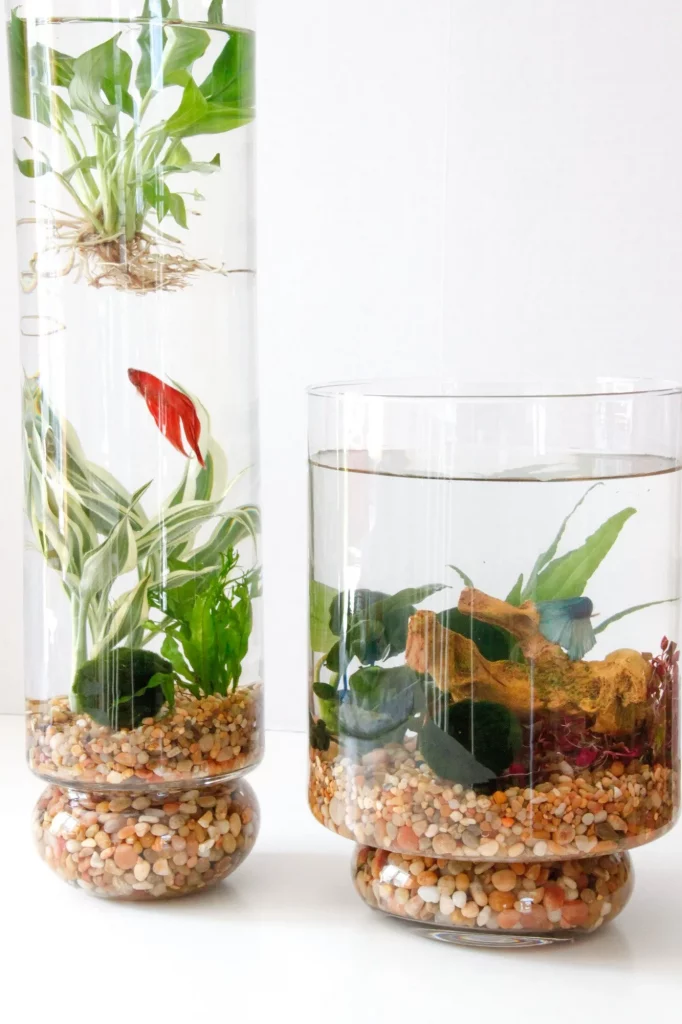
- For a vase: Lucky bamboo can grow with its roots in water. A pothos (devil’s ivy) stem cutting can be rooted in water; keep its leaves above the surface. A rooted cutting can later be potted into compost if you prefer.
- For a planted aquatic display: Anubias is an aquarium plant that can be attached to a stone or piece of suitable aquarium wood. Keep its rhizome—the thick stem from which roots and leaves grow—unburied. Check the chosen plant’s light and water requirements rather than treating every aquatic plant like a vase cutting.
- For floating plants: Choose a species suited to the container and your location. Floating plants can spread across the surface and need thinning. Check its identity before buying; never release aquatic plants or plant fragments into ponds or waterways.
Duckweed can rapidly cover a small surface, so it is not the easiest choice if you want to see clear water. Peace lilies are generally propagated by division, not by taking aquatic-style stem cuttings. For another introduction to soil-free growing, see Can You Grow Plants Without Soil Indoors?
How to Make a Simple Water-Grown Display
1. Choose and Clean a Container
Use a stable, watertight glass jar or vase with room for the roots. Wash it before use. A clear container makes root growth easy to see, but it also lets light reach the water, so watch for algae.
2. Add a Base, If Needed
Rinse decorative pebbles before adding them. They can help support an upright stem, but they do not filter or clean the water. A pothos cutting may need no base at all. Do not add garden soil to a simple cutting vase; a planted aquatic species may instead need its own suitable planting medium.
3. Add Water
Use water appropriate for your plant and local supply. If treatment is needed, follow the water conditioner’s instructions. Leaving tap water to stand may reduce free chlorine, but it will not reliably remove chloramine. If you are keeping animals, follow aquarium-specific water-treatment guidance rather than these plant-only steps.
4. Position the Plant
For a pothos cutting, place a stem node below the waterline and remove any leaves that would be submerged. For lucky bamboo, cover the roots or base without immersing the leafy growth. Add only enough pebbles to hold the plant securely; avoid crushing its roots.
5. Find a Suitable Spot
Start in bright, indirect light, away from a radiator and strong direct sun, then adjust to the needs of your plant. Too much sun on a clear container can encourage algae. Place the vessel where it cannot easily be knocked over.

If You Prefer an Aquatic Bowl
Choose the aquatic plant first and check its recommended water depth, light and planting method. Floating plants rest on the surface; rooted aquatics may need an aquatic basket and suitable medium. Anubias can be secured to stone or aquarium wood without burying its rhizome. A layer of loose pebbles is not a universal substitute for these different methods.
Keep a plant-only bowl distinct from an aquarium with fish or other animals. Do not add animals to a decorative bowl on the assumption that plants alone will keep the water suitable for them. The RHS guide to planting aquatic plants explains why planting depth and medium matter.
How to Maintain Your Indoor Water Garden
- Check the water level: Top up a vase when needed so roots or the cutting’s lower node remain in water, without submerging leaves.
- Remove debris: Take out fallen or yellowing leaves before they decay. If a small cutting display becomes cloudy or develops an unpleasant smell, clean the vessel and refresh its water.
- Watch for algae: Move a sunlit container away from strong direct light and clean visible build-up. No plant will keep every display permanently clear.
- Feed only when appropriate: Do not add fertiliser to every new cutting vase. If an established aquatic display needs feeding, choose a product intended for its plants and setup and follow its label. Take particular care where animals are present.
- Contain aquatic plants: Thin vigorous floating growth when necessary. Do not put unwanted plants or fragments into natural water; check local disposal guidance if you have an invasive species.
Troubleshooting Common Problems
Water Turning Green
Green water often indicates algae. Reduce strong sunlight, remove decaying material and clean a small plant-only container as needed. Frequent green water is a reason to review the light and nutrients, not simply to keep adding fertiliser.
Yellowing Leaves
Yellow leaves have several possible causes, including an unsuitable position or a struggling cutting. Remove damaged leaves and check the species’ light needs and the condition of its roots before changing your routine.
Cloudy Water or Soft Roots
Remove fallen leaves, inspect the plant and clean a small vase if its water becomes cloudy or smelly. Soft, discoloured roots may indicate a plant in poor condition; replacing water on a fixed weekly schedule is not a guaranteed cure. Check that the species is suited to the way you are growing it.
Final Thoughts
A vase with lucky bamboo or a pothos cutting is a manageable place to start. If you want a bowl of submerged or floating plants instead, choose the species and its planting method before assembling the display. Either way, check the water and plant regularly rather than assuming a water garden will look after itself.
Related Articles
PREVENT PROBLEMS BEFORE THEY START
Stop Mold and Fungus From Spreading Indoors
Moisture and poor airflow can quickly lead to mold and fungus in indoor soil. Learn the simple fixes that keep your plants healthy, your soil fresh, and your home free from unwanted growth.