

Creating an indoor cactus garden is an easy, stylish way to bring structure, colour, and a modern desert feel into your home. Indoor cactus gardens are low-maintenance, long-lasting, and perfect for shelves, desks, windowsills, and small decorative spaces.
If you’re still building confidence with general plant care, it’s worth reading Simple Indoor Plant Maintenance Routine first.
What Is an Indoor Cactus Garden?
An indoor cactus garden is a decorative arrangement of several cacti grouped together in a shallow bowl, dish, or container. Because cacti thrive in bright light and dry, fast-draining soil, they’re ideal for anyone who wants a bold indoor display without constant watering.
Indoor cactus gardens can be styled as:
-
table-top dish gardens
-
terracotta bowl arrangements
-
modern minimalist stone planters
-
mixed cactus “desert landscapes”
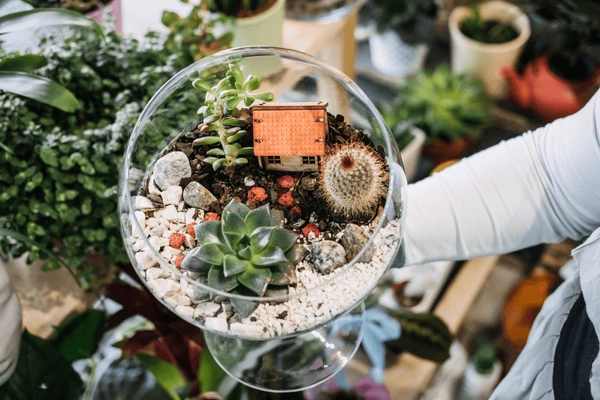
Best Cacti for an Indoor Cactus Garden
Not every cactus variety loves indoor conditions. The best indoor cactus garden uses compact species that cope well with container life and bright indoor light.
Good choices include:
-
Golden Barrel Cactus – classic rounded shape, great as a centrepiece
-
Bunny Ear Cactus (Opuntia) – rounded pads and an interesting silhouette; handle carefully, because its tiny barbed bristles can irritate skin.
-
Mammillaria – small and cluster-forming, ideal for dish gardens
-
Haworthia – a compact succulent rather than a cactus; display it alongside desert cacti in a separate pot so its light and watering can be managed independently.
-
Fairy Castle Cactus – tall, castle-like stems for height
-
Moon Cactus – colourful grafted tops for bright contrast
-
Christmas Cactus – a tropical forest cactus with seasonal flowers; display it in a separate pot, not planted among desert cacti with different care needs.
Different heights, shapes and colours add interest, but plants sharing one planter should have compatible light and watering needs. Christmas cactus is a tropical forest cactus that needs different conditions from most desert cacti, and many Haworthia species prefer gentler light. For a mixed display, group plants in separate drainage-holed nursery pots on a decorative tray so each can be watered and moved independently.
Add fast-draining soil
1. Choose the right container
A good container is the foundation of a healthy indoor cactus garden. Choose a container with drainage holes and enough depth for the existing root balls, without leaving a large volume of unused compost. It need not be unusually shallow. Individual nursery pots arranged on a decorative tray can work better when plants have different care needs.
Great options include:
-
shallow terracotta bowls
-
ceramic dishes with drainage
-
wide clay planters
-
stone containers
Avoid glass containers without drainage, as trapped moisture quickly leads to rot.
2. Add fast-draining soil
Cacti need soil that dries quickly. Regular potting compost holds too much moisture, so use the best soil mix for indoor succulents and cacti before planting the garden.
For desert cacti, use a free-draining, peat-free cactus and succulent compost. If you prefer to mix your own, the RHS gives an example of two parts peat-free John Innes No. 2 compost to one part horticultural grit or horticultural sharp sand. This is an option rather than a required formula for every species; suitable drainage matters most. See the RHS cacti and succulents growing guide.
-
Use a suitable free-draining compost for desert cacti
-
Add horticultural grit or sharp sand if your chosen mix needs improving
-
Adjust ingredients to the plant and growing conditions rather than using a universal percentage
If you want something ready to use, a cactus and succulent potting mix is a solid choice for indoor pots.

3. Arrange your cacti before planting
Before you plant anything, place the cacti on top of the soil and play around with the layout.
Layout tips:
-
position taller cacti at the back or in the middle
-
place medium plants around them
-
fill gaps with small, round varieties
-
mix column, pad, and ball shapes
-
leave some empty space for stones or sand
Once you’re happy with the arrangement, plant the cacti one by one. Use gloves or folded newspaper to hold each plant and protect your hands from spines.
4. Add decorative elements for a finished look
Decorative top-dressing makes an indoor cactus garden look polished and helps keep soil in place.
You can use:
-
small white or black pebbles
-
decorative gravel
-
crushed granite
-
sand patterns
-
small pieces of driftwood
If you want clean, indoor-safe stones that won’t stain or discolour, decorative river pebbles for plant pots work really well.
5. Place your cactus garden in the best spot
To keep an indoor cactus garden healthy, light placement matters.
Good locations include:
-
bright south- or west-facing windowsills
-
sunny shelves near a window
-
under a small LED grow light
-
bright rooms away from cold drafts
Avoid dark corners and spots right next to radiators or humidifiers. Too little light causes stretching; too much heat can scorch the plants.
How to Care for an Indoor Cactus Garden
Watering
Check the compost rather than using a fixed interval. During spring and summer, many desert cacti can be watered thoroughly when the surface of a free-draining mix feels dry; let excess water drain away and never leave the pot standing in water. Reduce watering greatly during a cooler winter rest, giving only enough to prevent excessive shrivelling. Christmas cactus needs a different routine, so keep it separately and follow its own care guidance.
Light
Most desert cacti need strong light and usually suit a sunny window. Increase exposure gradually if a plant has been in shade, and watch for scorching. Christmas cactus and many Haworthia species prefer bright but less intense light, so position them separately. If a cactus stretches or leans towards the window, review its light conditions.
Temperature
Temperature needs vary by species and season. Many desert cacti benefit from a cooler, relatively dry winter rest; Christmas cacti have their own seasonal requirements for flowering. Keep plants away from radiators and sudden draughts, and follow species-specific guidance rather than treating 18–26°C as a universal requirement.
Airflow
Good airflow helps prevent mould, fungus, and pest build-up. Make sure your cactus garden isn’t crammed into a tight corner.
Cleaning
Dust can build up on cactus spines. Use a soft brush to dust them gently so they can photosynthesise properly and look sharp.
The RHS recommends matching light and watering to the type of cactus, using free-draining compost and adapting care during the winter rest period.
Troubleshooting Common Cactus Problems
Soft or mushy stems
Soft or mushy tissue can indicate rot, sometimes associated with overly wet compost, but one symptom alone does not confirm the cause. Check the compost, drainage and extent of the damage. Severely affected tissue may not recover simply by withholding water.
Yellow or bleached patches
Too much direct, intense sun can scorch the plant. Move your indoor cactus garden slightly further from the window.
Leaning or stretching
This means your cacti are reaching for more light. Shift them to a brighter position or add a small grow light.
White fluff or tiny white insects
White, cottony patches may be mealybugs. Inspect the plant, keep affected pots apart from the rest of your collection and check nearby plants. For small accessible infestations, careful physical removal may help, although dense spines make this difficult. Follow the RHS guidance on indoor sap-feeding insects for further options rather than assuming a home chemical treatment suits every cactus.
FAQs About Indoor Cactus Gardens
How often should I water an indoor cactus garden?
There is no single reliable watering interval for every indoor cactus garden. Check the species, season, light and compost instead of using a fixed two-to-four-week schedule. Water desert cacti appropriately during active growth and let the excess drain away; reduce watering in a cooler winter rest. Christmas cactus needs different moisture management.
Do indoor cactus gardens need drainage holes?
Yes, drainage holes are strongly recommended. Without them, water sits at the bottom of the container and quickly leads to root rot. Do not rely on a stone layer to compensate for a container without drainage holes. For a beginner cactus garden, use a container with drainage holes and fast-draining cactus compost throughout. If you want to use a decorative container without holes, keep the cactus in a draining nursery pot inside it rather than planting directly into the outer container.
Can I grow an indoor cactus garden in low light?
Cacti need bright light to stay compact and healthy. In low light, they will stretch, lean, and lose their natural shape. If your home doesn’t get much sun, place your cactus garden in the brightest spot you have and consider using a small LED grow light to supplement.
Final Thoughts on Making an Indoor Cactus Garden
An indoor cactus garden is a simple project that looks far more impressive than the effort it takes to create. With drainage, a free-draining potting mix and plants chosen for compatible care needs, you can create a striking display without an elaborate routine. Check the compost rather than following a fixed watering calendar, provide the right light for each species and enjoy the sculptural shapes and textures of your indoor cactus garden.
For extra reassurance on caring for desert plants indoors, the RHS offers helpful guidance on cactus care and how to avoid common problems.
Related Articles
KEEP YOUR INDOOR PLANTS HEALTHY
Learn the Simple Habits That Transform Plant Growth
Small weekly habits can prevent rot, pests, and slow growth across your whole indoor garden. Discover an easy routine that keeps your plants looking fresher, stronger, and more resilient — even if you’re just starting out.