

Dragon fruit is a tropical climbing cactus, not a compact windowsill plant. You can grow it in a container in the UK, but it needs exceptional light, a strong support, a free-draining root zone and enough room for long, heavy stems. Keeping the plant healthy is realistic in a bright conservatory, heated greenhouse or carefully lit indoor space. Flowers and fruit are possible, but they are not guaranteed.
The best results come from planning the mature setup before the cutting starts to climb. This guide takes you from choosing a plant through watering, feeding, pruning, pollination and troubleshooting, without relying on a fixed calendar that ignores your light, temperature and potting mix.
Quick Answer
Grow dragon fruit in a stable container with unobstructed drainage and a support strong enough for the mature canopy. Use a loose cactus-style growing medium, give the plant very bright light, keep it warm and protect it from frost. Water thoroughly only when the mix is close to dry, then let every excess drop escape. Feed a rooted, actively growing plant lightly with a complete fertiliser, reducing or pausing when growth slows.
Indoor fruiting is the difficult part. A plant must be mature, receive enough light to flower and have compatible pollen while its short-lived night flower is open. Some cultivars can use their own pollen; others need pollen from a genetically different cultivar.
Do This First
- Buy a named cutting or rooted plant. Ask the supplier whether the cultivar is self-compatible and which other cultivar can pollinate it. “Red” or “white” describes fruit flesh, not reliable pollen compatibility.
- Choose the permanent growing area. A mature container plant takes much more vertical and horizontal room than a typical houseplant.
- Plan the support and pot together. Do not wait until long stems are leaning over before adding a narrow stake.
- Check the available light. A bright-looking room may sustain green stems but still be too dim for strong growth or flowers.
Can Dragon Fruit Grow Indoors?
Yes, dragon fruit can grow indoors as a container plant. Whether it can grow well—and whether it can fruit—depends on the space.
A bright conservatory or heated greenhouse is normally easier than an ordinary room because the plant can receive stronger overhead light and use a larger support. In a home, a very bright south- or west-facing position may support growth, but winter light can be limiting. A suitable grow light may be needed, especially if stems become narrow, stretched or unusually pale.
Indoor growing also changes pollination. The moths, bats and early-morning insects that may visit flowers outdoors will not normally be available in a room. You may need to hand-pollinate, and that still cannot overcome genetic self-incompatibility.
Treat fruit as a demanding extra rather than the basic test of success. A well-trained, healthy plant and its large night flower are worthwhile outcomes even when an indoor setup never produces a crop.
Choosing the Right Dragon Fruit Plant
Dragon fruit is a common name for several species and hybrids now generally placed in the genus Selenicereus. Cultivar matters because stem habit, fruit colour, flavour and pollen compatibility vary.
For most home growers, a named rooted cutting or young plant is more useful than seed:
- a named cultivar gives you a better chance of checking its mature size and pollination needs;
- a rooted plant removes the uncertain first stage of propagation;
- a cutting normally reaches maturity sooner than a seedling and preserves the parent plant’s characteristics.
Seedlings can be interesting to grow, but they vary and may not resemble the fruit they came from. UF/IFAS dragon-fruit guidance says seed-grown plants may take up to seven years to produce fruit, while cuttings can fruit much sooner in suitable warm field conditions.
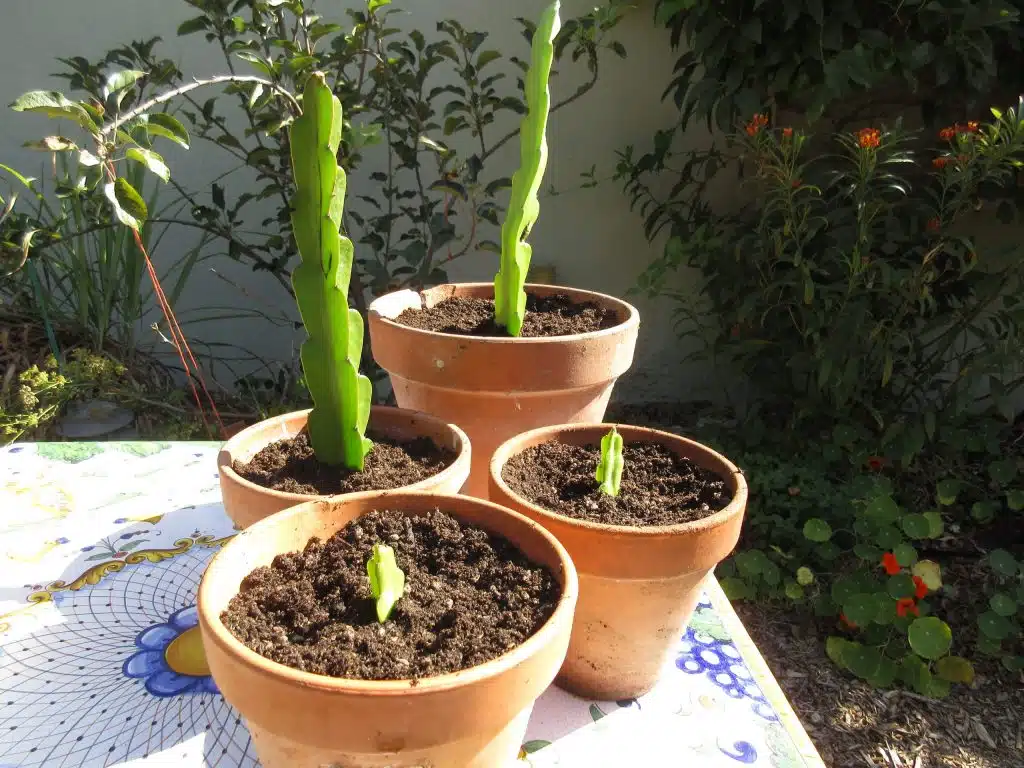
Choose a cutting that is firm and free from soft, blackened or spreading discoloured areas. Let a fresh cut dry and heal in a shaded, airy place before potting it. Extension guidance commonly gives roughly five to eight days for curing, but the important sign is a dry, sealed wound rather than a wet cut surface.
Set the cured cutting upright in a small, free-draining pot. Keep the medium lightly moist rather than saturated while roots form. Do not fertilise an unrooted cutting; wait for root development and visible new growth.
Best Pot and Support for Dragon Fruit
There is no single correct pot diameter for every dragon-fruit plant. A recently rooted cutting does not need to sit in a huge mass of wet compost, while an established plant needs enough root room and ballast to keep its canopy stable.
Choose a container that:
- has several clear drainage holes rather than one easily blocked outlet;
- is wide and heavy enough for the planned support and top growth;
- leaves room to water the entire root ball;
- can be moved under cover if the plant spends summer outside;
- is not so large that unused compost stays wet for long periods.
Move the plant up a pot size when roots fill the available space, the pot dries abnormally fast or the top growth makes the setup unstable. Repot without burying the stem base more deeply than it was before.
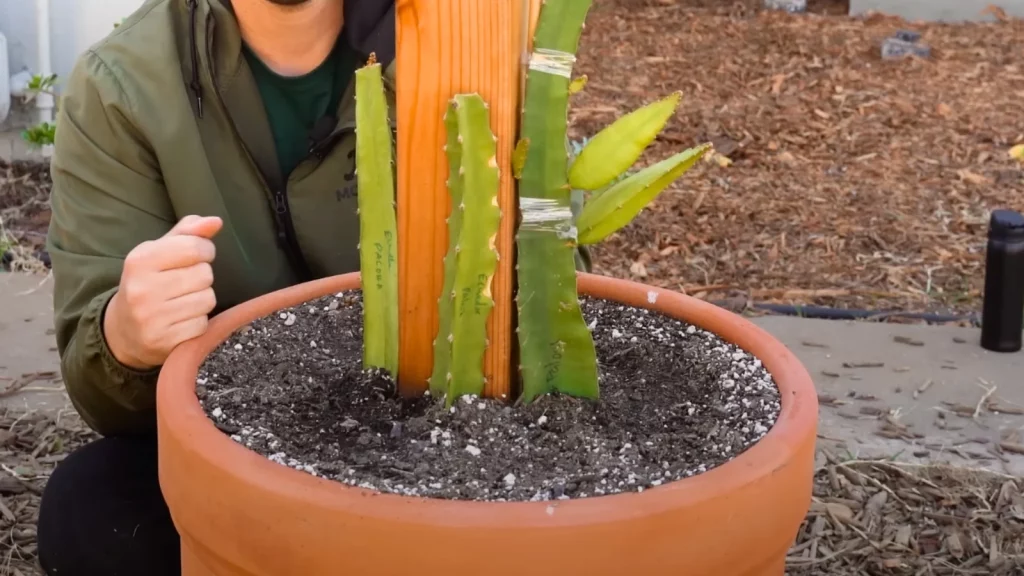
The support matters as much as the pot. In outdoor production, mature dragon-fruit plants can become extremely heavy; UF/IFAS recommends a robust post-and-top structure, not a decorative hoop. For a size-controlled container plant, install a strong central post or purpose-built frame before the roots fill the pot. Make sure the whole unit cannot tip.
Tie stems loosely with soft, wide ties. Do not put bare wire against the fleshy stems because it can cut into them. Guide one or more strong stems upwards, then let selected branches bend or hang from the top of the support.
Soil and Drainage
Dragon fruit tolerates several soil types outdoors, but poor drainage is a consistent risk. In a container, use a loose growing medium that holds some moisture without remaining airless.
A commercial cactus or succulent mix can be a starting point, not an automatic guarantee. Some bagged mixes still stay wet in a large indoor pot. Add an appropriate coarse mineral component such as horticultural grit, pumice or perlite when the product is too fine or slow to drain. A modest amount of mature compost can contribute organic matter, but do not turn the mix into dense garden soil.
Slightly acidic to neutral conditions are generally suitable. Very alkaline media can reduce the availability of iron and other micronutrients, while repeated fertilising can raise soluble salts. Test rather than guess if a persistent colour problem continues after light, temperature, water and roots have been checked.
Let water leave the pot freely and empty the saucer or cover pot. A layer of stones at the bottom does not compensate for blocked holes or a dense mix. The guide to improving indoor plant drainage explains how pot structure, growing medium and watering work together.
Light Requirements
Give dragon fruit the brightest practical position. The plant is grown in full or almost full sun in suitable climates, but stems can scorch when they move abruptly from shade or indoor glass to intense direct sun.
Increase exposure gradually over one to two weeks when moving a plant outdoors or into a stronger position. Watch the newest growth:
- broad, firm green stems suggest that light and general care are supporting useful growth;
- thin, stretched growth often points to inadequate light;
- bleached tan or brown areas appearing after a sudden move can indicate scorch.
Window direction alone does not tell you how much usable light reaches the plant. Buildings, winter sun angle, curtains, distance from the glass and dirty glazing all matter. If natural light is inadequate, use the indoor plant grow light guide to choose coverage and output for the whole canopy. Follow the lamp maker’s distance and safety instructions; a small low-output bar is unlikely to light a mature climbing cactus evenly.
Temperature and Humidity
Dragon fruit is a tropical/subtropical cactus. UF/IFAS gives an estimated optimum growth range of about 18–25°C and warns about freezing injury, extreme heat and severe sunlight. That range is useful context, not a promise that every cultivar stops outside it.
For UK container growing:
- keep the plant frost-free and bring an outdoor pot under cover well before freezing weather;
- avoid a cold, wet root ball and cold draughts;
- keep it away from a radiator or heater that bakes one side of the stems;
- provide airflow without exposing it to a chilling current;
- expect slower growth when winter light and temperature fall.
Ordinary moderate household humidity is usually more manageable than a hot, stagnant, constantly damp enclosure. Air movement and spacing help wet surfaces dry and reduce disease pressure. Do not mist the plant to create humidity; it does not replace root watering and can leave stems wet.
How to Water Dragon Fruit
Dragon fruit tolerates some dryness, but it is not a desert cactus that should remain bone-dry throughout active growth. It also declines in a constantly saturated pot. The right interval changes with the container, root mass, medium, light, heat and season.
Use this routine:
- Check below the loose surface with a finger, wooden skewer or the weight of the pot.
- When the root-zone mix is close to dry, water the whole surface slowly.
- Continue until excess water drains from the holes.
- Empty the saucer or outer pot and wait for the mix to approach dry again.
In warm, bright active growth, checks will be more frequent. In a cool, dim winter position, the same pot may stay wet much longer. Reduce the interval rather than following a weekly schedule.
Once buds, flowers or developing fruit are present, avoid both waterlogging and prolonged severe drought. Crop-specific extension guidance notes that drought during flowering and fruit development can reduce production, while excess moisture increases flower-drop and rot risks.
A few shallow wrinkles after a long dry spell can suggest water stress. Soft translucent tissue, a yellowing base, a sour smell or roots that are brown and collapsing point more towards excess moisture or root damage. Never respond to every shrivelled stem with repeated watering without checking the root zone.
How to Feed Dragon Fruit
Dragon fruit needs nitrogen, phosphorus, potassium and smaller amounts of other elements, but no single indoor NPK ratio or fixed schedule suits every pot. The field quantities in tropical extension programmes are designed for plants rooted into soil and must not be copied into a UK container.
Use one complete fertiliser intended for container plants, cacti or fruiting plants. It should supply micronutrients as well as N-P-K. Follow the label for the pot size and application method, starting at the cautious end for a young plant. Do not automatically combine slow-release granules, regular liquid feed, rich compost and foliar products.
Feeding by Growth Stage
On smaller screens: scroll sideways to view the full table.
| Growth stage | How to feed | What to avoid |
|---|---|---|
| Fresh or unrooted cutting | Do not feed. Wait for roots and visible new growth. | Fertiliser in a wet pot with no functioning roots. |
| Rooted young plant | Apply a complete feed lightly during warm, bright active growth, following its container label. | Trying to force fast growth with a strong dose. |
| Established vegetative growth | Continue a complete feed only while the plant is actively producing healthy stems. Moderate nitrogen supports growth without encouraging an unnecessarily soft canopy. | Calendar feeding through a cool, low-light rest. |
| Budding, flowering and fruit development | Keep water consistent and continue a suitable complete feed only as its label permits. | A heavy “bloom booster” or extra phosphorus without evidence of need. |
| Slow or dormant growth | Reduce or pause feeding. Resume when warmth, light and active growth return. | Using fertiliser to compensate for inadequate light, cold or damaged roots. |
Water a dry root ball before applying a liquid feed unless the product specifically says otherwise. If you use a controlled-release product, record when it was added so that you do not unknowingly layer it with frequent liquid feeding. The indoor plant fertiliser guide explains formulation and label choices in more detail.
Signs of Nutrient Problems
Stem colour alone cannot diagnose a deficiency. Use the pattern, recent care and root condition together.
On smaller screens: scroll sideways to view the full table.
| What you see | Check before feeding | Sensible next step |
|---|---|---|
| General yellowing | Wet roots, cold exposure, sudden light change, pests and whether the plant is actively growing | Correct the environmental problem first; inspect roots if the base is soft. |
| Pale newest growth while older stems stay greener | Root-media pH, iron/micronutrient availability and root health | Test pH and use a suitable complete feed; add a single nutrient only when the evidence supports it. |
| Thin, weak new stems | Light intensity, warmth, root space and support before assuming low nitrogen | Improve the limiting condition; feed lightly only if the rooted plant is actively growing. |
| Browned tips/edges after feeding or a white crust on the pot | Recent dose, stacked products, drainage and soluble-salt build-up | Stop feeding, remove obvious surface deposits and flush with plain water only if the pot drains freely. |
| Few flowers or no fruit | Maturity, light, canopy structure, pollination compatibility, water stress and excess nitrogen | Do not diagnose phosphorus deficiency from this symptom alone. Correct the limiting stage. |
High-pH conditions are a recognised micronutrient risk in dragon fruit, but routine iron drenches or Epsom salts are not harmless insurance. Apply a targeted amendment only after the likely cause has been established.
Training and Pruning
Training creates the basic plant shape; pruning keeps it safe and open.
During establishment, select strong stems and guide them upwards. Remove or shorten badly placed side shoots when they prevent the plant reaching its support. At the top, allow selected branches to hang, because mature drooping branches form the productive canopy in standard trellis systems.
After the framework is established:
- remove dead, soft, badly damaged or diseased stems;
- thin severely crowded growth so light and air can enter;
- remove branches that rub against the support or create an unstable load;
- shorten the plant when it outgrows the available indoor space.
Use clean, sharp secateurs and make deliberate cuts rather than tearing the fleshy stem. Clean tools between diseased and healthy tissue. Let healthy cut pieces cure if you intend to propagate them.
Do not strip the plant heavily in one session simply to trigger flowers. Productive pruning depends on plant size, season and the remaining healthy canopy.
Flowering and Pollination
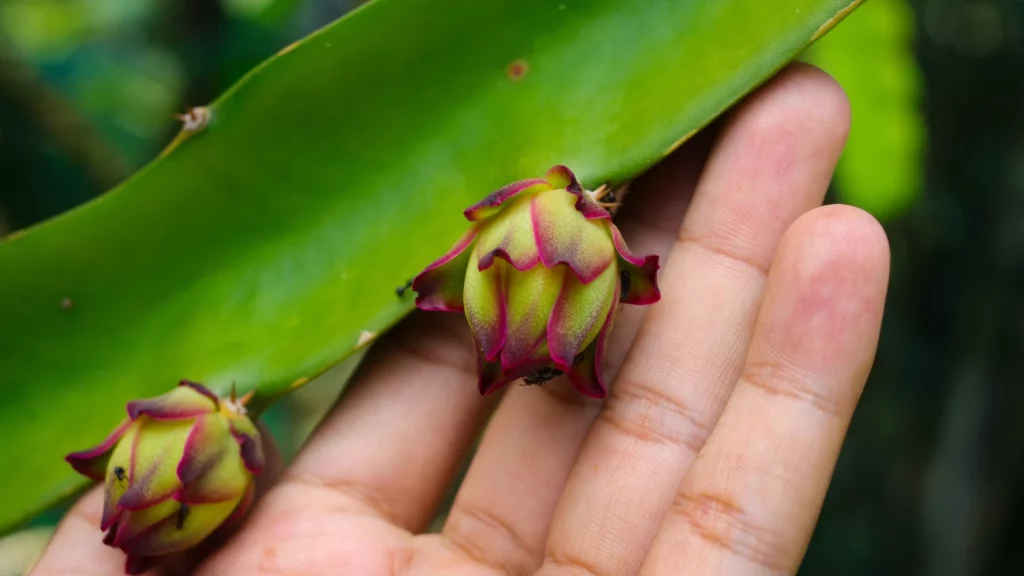
Dragon-fruit flowers are large, fragrant and mainly nocturnal. A flower may open for only one night, sometimes remaining receptive into the following morning, so the pollination window is short.
The crucial question is compatibility. Some cultivars are self-compatible; others are self-incompatible and need pollen from a genetically different compatible cultivar. A two-year dragon-fruit pollination study found a tested white-fleshed variety to be self-compatible while a tested red-fleshed clone was strictly self-incompatible. Flesh colour therefore cannot tell you whether a particular plant will use its own pollen.
When a flower opens:
- Use a clean, soft brush to collect ripe pollen from the stamens.
- Brush it onto the lobed stigma in the centre of the flower.
- For a self-incompatible cultivar, use compatible pollen from a different genetic cultivar.
- Pollinate in the evening or early morning while the flower is open and receptive.
Label stored or transferred pollen by cultivar. Two cuttings cloned from the same parent are not genetically different pollinators.
Can Dragon Fruit Produce Fruit Indoors?
It can, but an ordinary room rarely provides all the conditions without help. A fruiting plant needs:
- mature hanging growth on a strong support;
- enough light to initiate and sustain flowers;
- warm, stable conditions;
- appropriate watering and nutrition without excessive soft growth;
- a flower that opens successfully;
- compatible pollen applied within the receptive period.
Do not rely on the existing 2–3-year promise. In warm outdoor production, extension sources report that some cuttings can fruit within roughly six to twelve months. Indoor plants may take several years or may never flower because the light and canopy are insufficient. Seedlings can take much longer.
After successful fruit set, warm-climate cultivation guidance commonly places harvest roughly 30–50 days later, depending on species, cultivar and conditions. Cooler or less consistent indoor conditions can differ. Wait for the cultivar’s normal full skin colour and use clean secateurs rather than pulling an unripe fruit.
Common Dragon Fruit Problems
Yellowing
Yellowing is a symptom, not a diagnosis. A soft yellow base usually makes excess moisture and root damage urgent suspects. Uniform pale growth can also follow low light, cold roots, poor nutrient supply or a high-pH medium. Check the pot and roots before adding fertiliser.
Soft Stems or Rot
Stop routine watering and inspect the root zone. Remove the plant from a persistently wet pot, cut away collapsed roots or stems with sanitised tools and repot viable tissue into fresh, free-draining medium. If rot is advancing from the base, taking a healthy cutting above the affected tissue may be the safest way to preserve the plant. Keep the wound dry while it cures.
Spreading dark lesions on otherwise firm stems may be disease rather than simple overwatering. Isolate the plant, avoid splashing water between plants and seek local horticultural advice when damage continues.
Weak or Stretched Growth
Low light is the first thing to assess, particularly when new stems are much narrower than older ones. Also check warmth, root room, the strength of the support and whether a rooted active plant has received any complete feed. Change one limiting factor at a time so that you can see the response.
No Flowers
The plant may be too young, too small, too shaded or carrying only upright juvenile growth. Excess nitrogen, cold conditions, repeated stress or severe pruning can also delay flowering. Improve light and canopy structure before reaching for a flowering booster.
No Fruit
If flowers open but no fruit develops, check pollination first. Confirm the cultivar’s compatibility, the identity of the pollen donor and whether pollen reached the stigma while it was receptive. Heat, prolonged drought, saturated roots or poor plant health can also cause flowers or young fruit to abort.
Brown or Bleached Patches
Dry tan patches after a sudden move into direct sun are often scorch. Stop increasing exposure, protect the plant from the most intense period and acclimatise it more gradually. Soft, spreading or sunken lesions need a disease/rot assessment instead.
Pests or Sticky Marks
Scale insects, mealybugs, thrips and mites can affect dragon fruit. Inspect stem edges, tie points and sheltered joints. Isolate an affected indoor plant and identify the pest before treating it; the indoor plant pest guide provides a practical starting point.
FAQs About Growing Dragon Fruit
How Often Should I Water Dragon Fruit in a Pot?
There is no safe fixed interval. Check the root-zone moisture and pot weight, then water thoroughly when the mix is close to dry. A warm, bright, root-filled pot may need checking often; a cool winter pot may stay wet for much longer.
Can I Use Ordinary Cactus Compost?
Yes, if it drains freely in your container. Some commercial cactus mixes are still too fine or moisture-retentive for a large indoor pot, so adjust with suitable coarse material when needed. Never use a product name as a substitute for checking the actual drainage.
What Is the Best Fertiliser for Dragon Fruit?
Use a complete fertiliser suitable for containers, with moderate nitrogen and micronutrients. The best formulation is one you can apply correctly at the labelled rate during active growth. There is no proven universal indoor NPK ratio.
Does Dragon Fruit Need a Huge Pot?
It eventually needs a substantial, stable container, but an unrooted cutting should not sit in a huge volume of wet compost. Increase pot size as roots and top growth develop, and design the support and ballast as one system.
How Long Does Dragon Fruit Take to Produce Fruit?
It varies widely. Some field-grown cuttings fruit within a year in warm climates, while indoor plants can take years or never receive enough light to flower. Seed-grown plants may take up to seven years and do not reliably copy the parent fruit.
Do I Need Two Dragon-Fruit Plants?
Not always. A proven self-compatible cultivar may set fruit with its own pollen, although hand-pollination can still help indoors. A self-incompatible cultivar needs compatible pollen from a genetically different cultivar; two clones of the same plant do not solve that problem.
Can Dragon Fruit Go Outside in a UK Summer?
Yes, when nights are reliably mild and the plant is acclimatised gradually to direct sun. Secure the pot against wind, do not leave it waterlogged in heavy rain and bring it back under cover well before cold or frost.
Ready to Try Another Unusual Indoor Crop?
Explore What Else Can Grow Indoors
If you enjoy the challenge of giving tropical crops enough light, warmth and space, compare the realistic options in the guide to growing exotic fruits and vegetables indoors.
Final Thoughts on How to Grow Dragon Fruit
Start with a named plant, build the support early and let the roots—not a calendar—tell you when to water and repot. Strong light and a free-draining root zone matter more than a complicated product routine. Feed an actively growing plant moderately, keep the canopy open and learn the cultivar’s pollination needs before expecting fruit.
That approach gives you the best chance of maintaining a healthy climbing cactus while keeping indoor fruiting expectations realistic.
Related Articles
SUPERCHARGE YOUR FRUITING PLANTS’ ROOTS
Boost Your Indoor Garden with Mycorrhizal Fungi
Once you know how to grow dragon fruit, you can help it – and your other fruiting plants – establish even stronger root systems. Our Boost Your Indoor Garden with Mycorrhizal Fungi guide explains how beneficial fungi improve nutrient uptake, resilience, and long-term plant health.