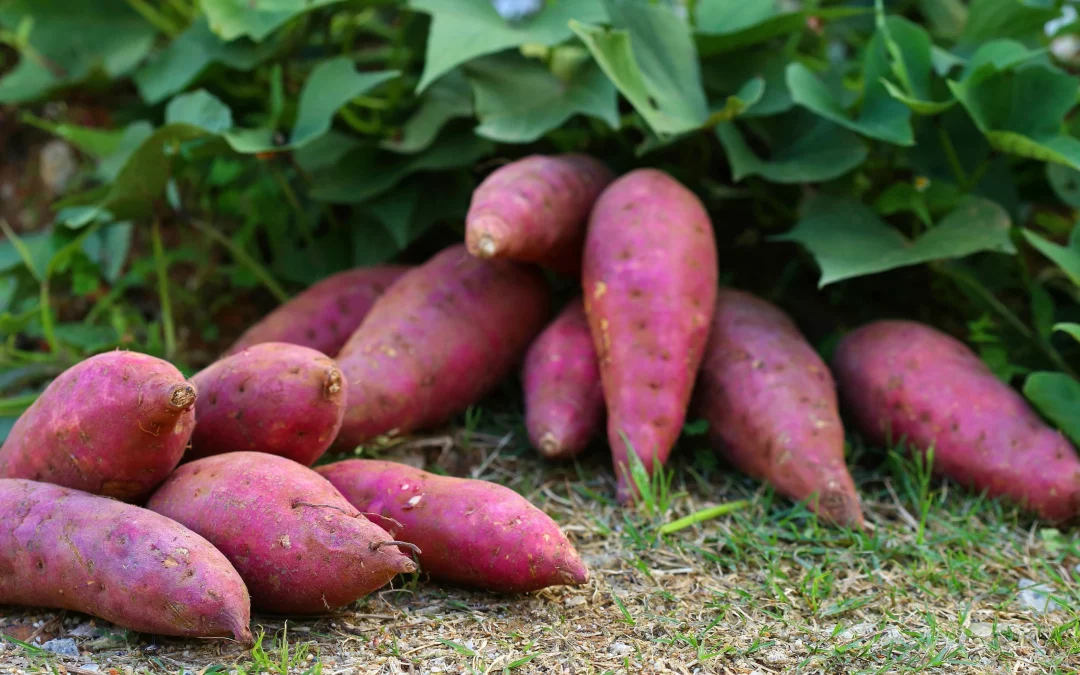
Growing sweet potatoes indoors can mean starting slips for later planting, keeping a leafy vine, or attempting a crop of edible roots. These are different projects. For a harvest, treat this as an experiment rather than a dependable windowsill vegetable: sweet potatoes need a long, warm growing season, strong light and room for their roots. Utah State University Extension’s growing guide explains those basic requirements.
Quick answer: grow sweet potatoes indoors
- Start with healthy sweet potato slips, or grow shoots from a sound sweet potato.
- Move rooted plants into containers with drainage holes and suitable potting compost.
- Choose your warmest, sunniest growing position before committing to a root crop.
- Keep the compost moist without leaving it saturated.
- Allow several months of growth, but do not assume a leafy vine guarantees a harvest.
These steps adapt Extension guidance on sweet potato cultivation; they are not a tested indoor yield formula. Do this first: decide whether your priority is propagation, foliage or food, and reserve enough space for the final container.
Can you really grow sweet potatoes indoors?
The RHS sweet potato guide recommends greenhouse conditions for dependable UK cropping and gives 21–26°C as the best cropping temperature range. That makes an ordinary room a less predictable growing environment. Starting slips is a more modest goal than producing a worthwhile harvest there.
Choose plants sold as a vegetable crop if you want roots to eat. Ornamental sweet potato cultivars are selected for foliage and may produce disappointing roots, as NC State Extension explains. For other options, compare our guide to indoor edible plants.

What you need to grow sweet potatoes indoors
- A healthy sweet potato for propagation, or slips from a reputable supplier.
- A clean jar for rooting shoots.
- A substantial pot with drainage holes and peat-free potting compost.
- A tray to catch drainage water and a stable position for the filled pot.
- A support for the vines, with access for watering and harvesting.
A fabric bag is optional, not essential. Pots and grow bags are both suitable container types; the RHS container-vegetable guide emphasises adequate root space, suitable compost and avoiding waterlogging.

Step 1: How to make sweet potato slips indoors
Slips are shoots grown from a sweet potato. The following water method follows Clemson Extension’s propagation guidance:
- Choose a healthy root without soft or rotten patches.
- Support it over a clean jar with its lower half in water.
- Keep it warm and in indirect sunlight. Top up the water as needed and replace it weekly.
- When shoots are about 15 cm long, gently detach them near their bases.
- Stand the shoots in fresh water with only their lower ends submerged.
- Once roots develop, pot up the slips rather than treating the jar as their final growing container.
If the parent sweet potato starts rotting
Discard a soft or decaying root rather than repeatedly trimming it and continuing propagation. Clean the container before restarting. Inspecting propagation roots and rejecting diseased or bruised material is part of Oklahoma State University’s guidance.
Step 2: Choose a pot and compost
The RHS recommends one plant in a pot at least 30 cm wide. Transfer an established young plant at its previous growing depth and water it in. This is a container starting point, not a guarantee of an indoor crop. See the RHS planting instructions.
Use peat-free multi-purpose or vegetable-container compost. There is no need to follow a fixed perlite or bark recipe. Drainage holes must remain unobstructed, and the container should not stand in collected water. General RHS container guidance supports suitable potting compost and a steady water supply without prolonged waterlogging.
For help comparing containers, see our pot size and depth guide for indoor vegetables.
Step 3: Provide enough light
Sweet potatoes are a sun-loving crop: Alabama Extension recommends full sun. For an indoor attempt, choose a sunny window or glazed growing space rather than a bright-looking corner elsewhere in the room.
Supplementary horticultural lighting may be needed where daylight is inadequate, especially during UK winters. Consider the illuminated area, mounting space and running cost before buying equipment. Follow the light manufacturer’s positioning instructions rather than assuming one distance or wattage suits every lamp. The RHS guide to artificial lighting explains why light intensity and placement matter.
If growth is weak, review the light reaching the whole plant before adding fertiliser. Pruning cannot substitute for adequate light. A lamp suitable for a small propagation tray should not automatically be assumed sufficient for a mature vine.
Step 4: Watering and feeding
Check the compost regularly and aim for moisture without saturation. Do not let the whole root ball repeatedly dry out, but do not water simply because a calendar says it is time. This follows Extension guidance to maintain consistent moisture.
For container plants, the RHS recommends high-potassium liquid feeding fortnightly in summer. Follow the product’s dilution instructions and account for fertiliser already in the compost; do not automatically carry a summer schedule into weak winter growth.
More feed is not necessarily better. Excess nitrogen can impair root quality, so avoid extra doses intended to force a harvest.

Step 5: Manage the vine and harvest leaves carefully
Give the stems a support and guide them as they grow. Sweet potatoes can spread widely and need training when grown vertically, according to NC State Extension. Keep the main container somewhere stable and accessible rather than balancing a heavy pot on a high shelf.
The young leaves and shoot tips of Ipomoea batatas are edible. Once the plant is well established, take modest amounts and cook them, for example by steaming or stir-frying. If roots are your priority, keep leaf picking light: UC Davis guidance warns that frequent harvesting can reduce root growth.
Identify the plant correctly: this advice does not apply to ordinary potato foliage, which is poisonous. See the University of California’s poisonous-plants guidance. Do not eat leaves if you are unsure what plant you have.
When to harvest sweet potatoes indoors
Utah State University Extension gives four to five months as a general root-maturity period. Count growing time from planting the slips, not from first putting the parent sweet potato in water. Treat the estimate as a growing-season reference, not an indoor deadline.
A large vine is not proof that sizeable roots have formed. Near the expected harvest period, carefully uncover a root at the container edge to assess its size rather than relying only on foliage. Yellowing can accompany maturity, but should not be treated as a guarantee of a crop.
When harvesting, gently empty the container and handle the roots carefully to avoid cuts and bruises. Utah State’s guide also covers harvesting and curing; its advice concerns garden-grown crops rather than a tested indoor system.
For storage, keep sound roots in a dry, ventilated place, not the fridge. Use damaged roots promptly and inspect stored ones for deterioration. Clemson’s storage guidance explains why refrigeration is unsuitable; the RHS advises checking stored harvests regularly. Do not assume a home harvest will keep for months without suitable curing conditions.
FAQs
Can I grow sweet potatoes indoors just in water?
A jar is useful for propagation. The Clemson method moves rooted slips on to growing containers or the garden; it is not a method for producing a crop in plain water. For this project, use potting compost for the final container.
How many slips should I plant per pot?
Start with one plant rather than crowding several together. Follow the container guidance in Step 2, and reserve enough space for its foliage as well as its roots.
Why am I getting leaves but no useful roots?
Review the length of the growing season, warmth, light and feeding rather than assuming one cause. University of Florida guidance notes both the long growing season and the risk of excessive fertiliser preventing root formation. Indoor conditions add uncertainty.
Are sweet potato leaves safe to eat?
Correctly identified sweet potato leaves are edible; ordinary potato leaves are not. Follow the identification and harvesting precautions above, and cook the young leaves rather than treating all potato-like foliage as interchangeable.
Final thoughts
Decide what success means before you start. Propagating a few slips is a different commitment from maintaining a large container for months. If you attempt an indoor root crop, plan the growing space first and regard any harvest as an outcome to assess, not a promise.
Related articles
KEEP INDOOR EDIBLES GROWING STRONG
Grow More Indoor Veg With Less Guesswork
Want better harvests indoors? Learn the simple setup tweaks that make vegetables grow faster, stay healthier, and waste less space — even on a windowsill.