
A smart indoor plant setup need not automate every task. A grow light on a timer, a reminder to check the compost, or a room hygrometer may be enough to make care easier. Start with the problem your plants and your routine actually have, then add one tool at a time.
Quick answer: how to build a DIY smart plant setup
Put each plant in a position that suits its light needs. Check its compost before watering. If natural light is insufficient, consider a suitable grow light and timer; if missed checks are the problem, try a reminder or a moisture-checking tool. Only automate watering after you know how quickly that particular pot dries.
Do this first
For a week or two, note where each plant sits, when its compost begins to dry and which care task you tend to miss. This gives you a better buying guide than a list of gadgets.
Why a smart indoor plant setup can help
Useful tools make a routine easier to follow or help you notice a condition you might otherwise overlook. They cannot correct an unsuitable position, poor drainage or a watering system that delivers water more often than a plant needs it.
Think of the setup in three parts: light, watering and room conditions. You may only need to improve one of them.
What to include first
1. Suitable light and a timer, if needed
If a plant is getting too little light, move it to a brighter position that suits the species before buying equipment. Where daylight still falls short, a grow light can supplement it. The University of Minnesota Extension’s indoor lighting guide explains why both light intensity and duration matter.
A timer can keep supplemental lighting regular without leaving it on continuously. Lamp strength, placement and the amount of daylight already available all affect the setup, so follow the lamp maker’s positioning guidance and adjust for the plant’s response. Our grow light placement guide offers a closer look at positioning.
2. A watering check you will actually use
Before watering, feel the compost a few centimetres below the surface and consider how heavy the pot feels. The RHS advises checking moisture rather than watering houseplants at fixed intervals. Different plants and pots can dry at different rates, even on the same shelf.
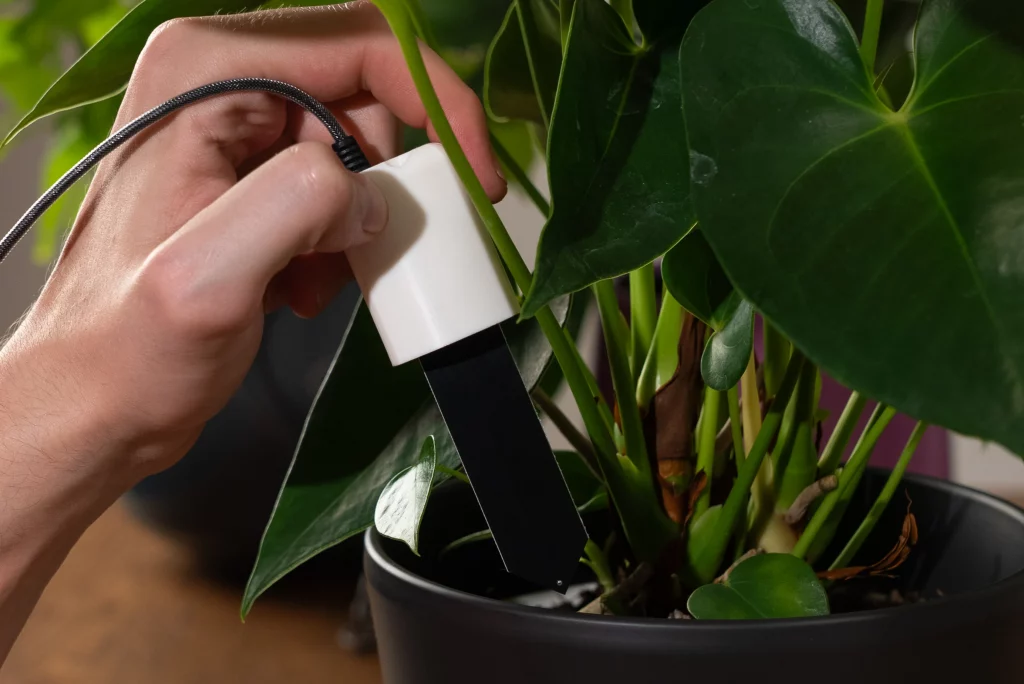
A narrow-spout can may make it easier to direct water onto the compost. A moisture meter or sensor can provide another clue, especially in a deeper pot, but check its reading against what you find by hand. It does not diagnose why a plant is wilting, and it should not trigger watering without regard to that plant’s needs. See our guide to indoor watering tools if the task itself is awkward.
3. Simple room monitoring
A hygrometer can help you see whether a room is particularly dry; it will not tell you on its own whether a plant needs a humidifier. First check that the species benefits from higher humidity and that its light and watering are suitable. A phone reminder can be useful too—set it to check plants, not automatically to water them.
A beginner setup, step by step
- Choose one or two plants to start with and check their individual light and watering needs.
- Place them where they receive suitable light, away from positions that are consistently too dark or exposed to direct heat or draughts.
- If daylight is inadequate, add a suitable grow light; use a timer if remembering to switch it on and off is difficult.
- Check the compost before each watering. Water the compost rather than routinely wetting the leaves, and do not leave excess water standing around the pot.
- After a couple of weeks, add a sensor, hygrometer or watering aid only if a specific problem remains.
Choose tools by problem, not by gadget
- Dim shelf or short winter days: Try a better position first, then consider supplemental light and a timer. Limit: a timer does not make an underpowered or badly placed lamp adequate.
- Uncertain watering: Use a reminder to check the pot, then compare how the compost feels with the pot’s weight. A meter may help you monitor changes. Limit: one reading cannot replace checking the plant and its roots.
- Frequent short absences: Consider a suitable watering aid or ask someone to check your plants. Limit: test any system while you are home; a reservoir can still keep the wrong plant too wet.
- A dry room and humidity-loving plants: Check room humidity before considering a humidifier. Limit: it adds cleaning and refilling to your routine and cannot fix a watering or light problem.
Should you automate indoor watering?
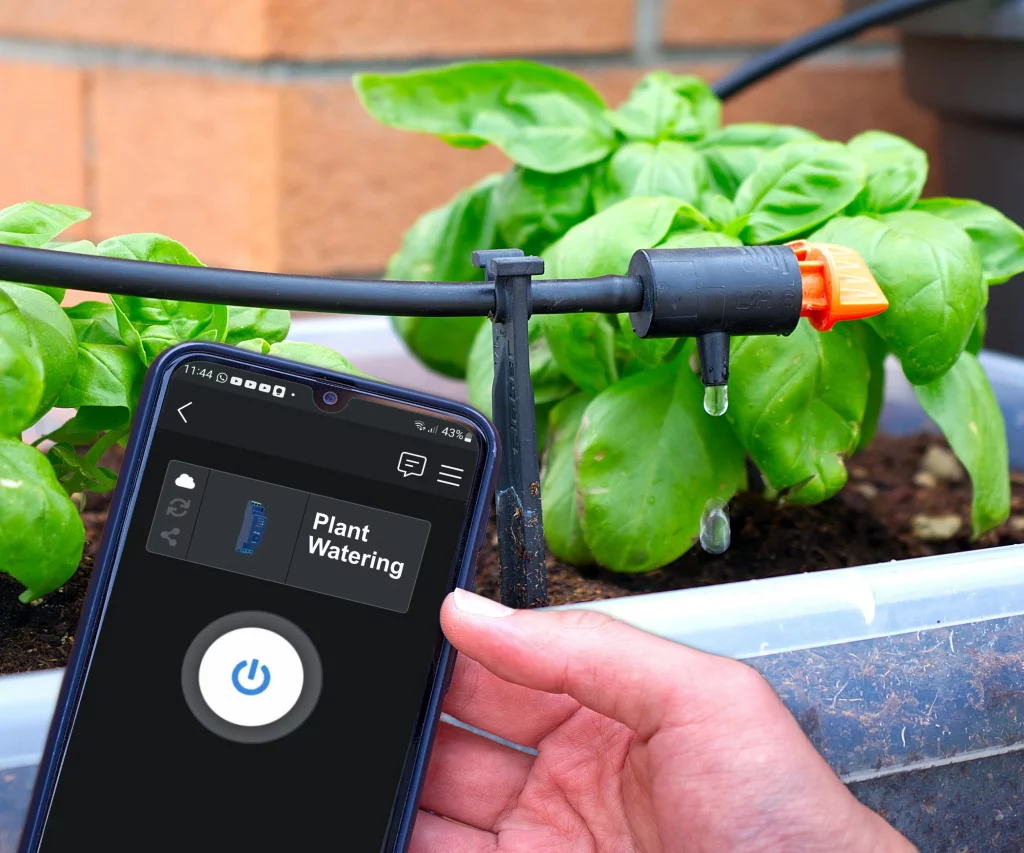
Automatic watering may be helpful if you travel or care for several plants with similar moisture needs. It is a less straightforward choice for a mixed collection: a succulent, a tropical foliage plant and a pot of herbs should not automatically receive the same amount on the same days.
Before relying on a reservoir or pump, check that the pot and compost suit the plant, run the system while you are at home, and inspect how moist the compost stays. Keep checking it afterwards, particularly when growth or room conditions change. A consistent manual check is often simpler than managing another device.
Humidity and airflow: check before you adjust
Some houseplants benefit from more humid air, but brown leaf edges are not proof that a room is too dry. The RHS notes several possible causes of leaf damage, including watering and the growing environment. Check the compost, roots where appropriate, and the plant’s position before treating a symptom.
Give crowded plants a little space and avoid leaving foliage persistently wet. If the room is dry and you grow plants that need higher humidity, a hygrometer can help you assess conditions before choosing a humidifier. Compare the upkeep as well as the features in our indoor plant humidifier guide.
Where smart setups go wrong
- Automating before identifying the problem: a plug or app will not repair damaged roots or unsuitable compost.
- Watering every pot together: group plants for convenience, but still check each pot’s moisture needs.
- Relying on a sensor alone: use readings alongside a compost check and the plant’s appearance.
- Putting a lamp wherever it fits: check that its position suits both the lamp and the plant.
- Adding too much equipment at once: make one change, then observe whether it helps.
Which space should you start with?
A bright shelf, suitable windowsill or small herb-growing area can be a manageable starting point if the plants’ needs match the conditions there. Avoid choosing a spot solely because it has room for equipment. Look at the available daylight, nearby heat sources, draughts and whether you can reach the pots to check them.
A compact setup is particularly useful when the equipment serves a clear purpose—for example, a light over herbs that do not get enough daylight. An easy-care plant already growing well may need no smart equipment at all.
FAQs
What smart tool should I get first?
Choose according to the problem. For inadequate light, consider a grow light. For forgotten checks, try a reminder before buying a sensor. If the plants are doing well, you may not need either.
Are plant moisture sensors worth it?
They can help you follow changes in a pot you find difficult to judge. Treat the reading as one clue and check the compost yourself before deciding to water.
Can automatic watering overwater indoor plants?
Yes. If the system supplies water faster than a plant uses it, the compost can remain too wet. Test and adjust it for the individual plant rather than assuming one setting works for a collection.
Will a humidifier fix brown leaf tips?
Not necessarily. Low humidity is one possible factor, but watering and other conditions can also cause leaf damage. Check those first.
Does a smart setup have to be expensive?
No. A suitable position and a habit of checking compost cost little. Add a timer, light or monitoring tool only when you know what it needs to improve.
Final thoughts
The most useful smart indoor plant setup is one you can understand and maintain. Start with suitable light and a watering check, then use a tool to solve a specific recurring difficulty. Review how the plant responds rather than letting the equipment make every decision.
Related articles
Keep Your Growing Space Running Smoothly
Best Watering Tools for Indoor Plants
The right watering tools make any smart plant setup easier to manage, especially when you want better accuracy, less mess, and fewer watering mistakes. Read Best Watering Tools for Indoor Plants to find practical options that suit different houseplants and care styles.