Most indoor plants do best when temperatures stay fairly steady rather than changing sharply through the day. For many common houseplants, the safest general range is around 18 to 24°C, with slightly cooler nights usually being fine as long as the plant is not exposed to cold draughts, radiators, or sudden swings.
Quick answer: best temperature range for indoor plants
The best temperature range for indoor plants is usually between 18 and 24°C. Many common houseplants can cope a little outside that range, but sudden cold snaps, radiator heat, and sharp day-to-night changes often cause more stress than the exact number itself.
Do this first
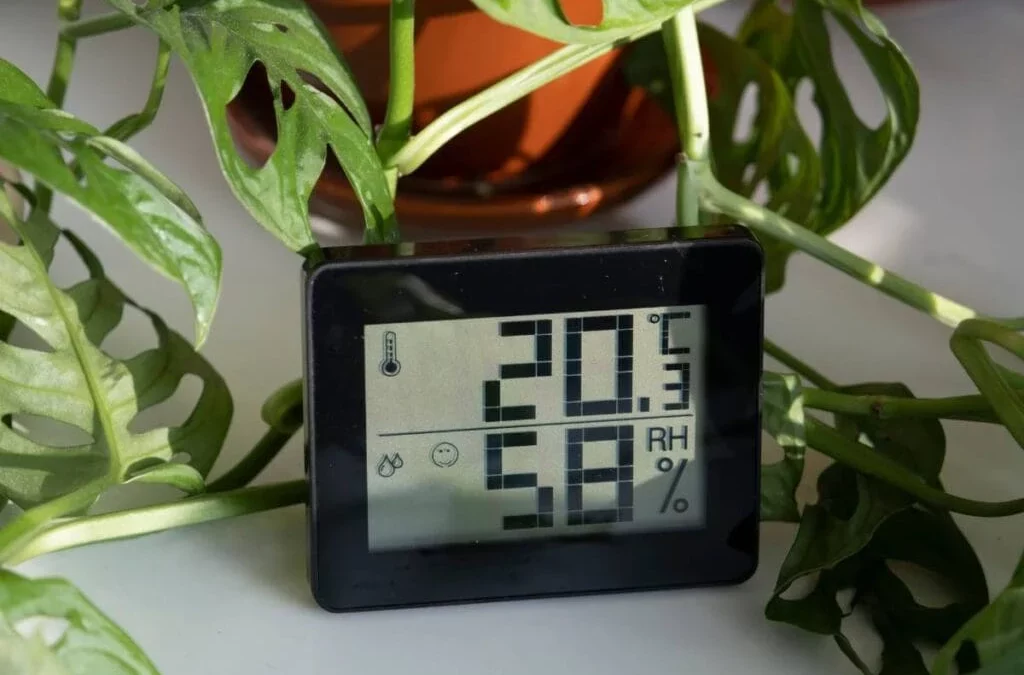
Check the temperature where the plant actually sits, not just the thermostat in the room. A plant beside a cold window, radiator, heater, or draughty door can experience very different conditions from the rest of the house. If you want a clearer picture of what is really happening around your plants, a digital room thermometer and hygrometer can make it much easier to spot dry air, colder nights, and hidden temperature swings.
Why temperature matters for indoor plants
Light and watering usually get most of the attention, but temperature affects almost everything your plant does. It influences growth speed, root activity, water use, and how well the leaves cope with stress.
When temperatures stay steady and comfortable, plants usually grow more predictably. When conditions keep shifting, leaves may begin yellowing, drooping, crisping, or dropping even when your watering routine seems fine.
That is why a plant can struggle in a room that feels normal to you. Indoor plants respond to the conditions in their exact spot, not just the average temperature of the whole room.
If your plant is already showing stress, why indoor plants turn yellow can help you work out whether temperature is part of the problem or whether something else is also contributing.

The best general temperature range for most indoor plants
For most common houseplants, a good target is:
- Daytime: 18 to 24°C
- Night-time: 15 to 18°C
That range suits many popular indoor plants, including pothos, philodendrons, peace lilies, spider plants, snake plants, monsteras, and other common foliage plants.
The real goal is not to keep the room at one exact number every hour of the day. It is to avoid extremes and stop the plant from sitting in the worst spots in the room.
Many indoor plants cope better with a slightly imperfect but stable temperature than with repeated swings between too cold and too warm.
Why stable temperatures matter more than the perfect number
A room that stays close to 17 or 18°C most of the time is often easier for a plant to handle than one that drops very cool at night and becomes overly warm during the day. Sudden swings can affect water uptake and place extra stress on both roots and leaves.
This often happens when plants sit near:
- radiators
- heating vents
- air-conditioning units
- cold windowpanes in winter
- frequently opened doors
- bright glass that heats up quickly in direct sun
The Royal Horticultural Society notes that many houseplants prefer warm, steady indoor conditions and can struggle near heat sources or cold draughts.
When indoor temperatures are too low
Low temperatures usually slow a plant down before they cause obvious damage. Growth may become sluggish, the compost may stay wet for longer, and leaves may start to yellow or drop.
Common signs the temperature may be too low include:
- slower growth
- limp leaves despite moist soil
- yellowing after cold weather
- leaf drop near windows or doors
- compost staying wet for too long
- blackened or damaged leaves after severe chill
Cold stress is often worse when it comes with soggy compost. Roots in cold, wet soil usually struggle much more than roots in mild conditions.
If the compost is staying wet for too long in cooler conditions, it also helps to read why indoor plant soil smells bad because temperature and moisture problems often overlap.
When indoor temperatures are too high
Too much heat can be just as stressful, especially in dry indoor air. Warm rooms often make plants lose moisture faster through the leaves, and if the roots cannot keep up, the plant may start to wilt, crisp, or curl.
Common signs of excess heat include:
- dry brown tips
- leaf curl
- faster soil drying
- drooping in warm afternoons
- faded or scorched-looking leaves
- stress near radiators or sunny windows
Dry indoor heat is usually the bigger problem rather than warmth alone. A plant sitting close to a radiator may not just be warm. It may be drying out far faster than expected.
Different rooms create different plant temperatures
One of the easiest mistakes is assuming the whole house gives your plants the same conditions. In reality, one room can be much warmer, colder, drier, or more changeable than another.
A few common spots where plants often do well include:
- on a bright kitchen shelf
- in a home office corner
- in a spare room with a stable temperature
- beside a bright window
- in a compact indoor herb station
The room itself matters, but so does the exact placement inside it. A plant set back from a window can behave very differently from one pressed against the glass.
Best temperature range by plant type
Not every indoor plant wants exactly the same warmth, but broad plant groups make this easier to judge.
Tropical foliage plants
Plants such as monstera, pothos, philodendron, calathea, peace lily, and many ferns usually prefer warmer, steadier indoor conditions. They often do best around 18 to 24°C and dislike cold draughts and sudden temperature drops.
Succulents and cacti
These often cope better with slightly cooler nights and generally do not need the same constant warmth as tropical foliage plants. Even so, they still dislike prolonged cold combined with wet compost.
Snake plants and ZZ plants
These are more forgiving than many houseplants and can handle a wider indoor range, but they still do best when protected from cold shock and long periods of chilly, damp conditions.
Flowering houseplants
These vary more. Some enjoy steady warmth, while others do better with slightly cooler spells. If you are unsure, avoid extremes and keep them away from both hot radiators and icy windowsills.
The biggest indoor temperature mistakes
A lot of temperature problems come down to placement rather than the weather itself.
The most common mistakes are:
- putting plants directly above a radiator
- leaving them pressed against cold winter glass
- keeping them in draughty hallways
- moving them between very different rooms too often
- watering heavily when the room is cold
- assuming a bright windowsill is always the best place
If you regularly move plants back from cold windows in winter or away from hot summer glass, a rolling indoor plant stand can make that easier without dragging heavy pots across the floor.

How to keep indoor plants in a safer temperature range
You do not need perfect climate control. You just need fewer extremes.
Try these simple adjustments:
- keep plants away from direct heaters and vents
- avoid leaves touching cold glass in winter
- move sensitive plants back from windows on very cold nights
- water more carefully when rooms are cooler
- group plants in more stable parts of the room
- watch for seasonal changes instead of using one setup all year
If dry heated air keeps stressing tropical plants, a smart humidifier for indoor plants can help keep conditions more comfortable.
If your room air is dry as well as warm, balance humidity for indoor plants is worth reading alongside this article.
If the room feels stale or stuffy, air circulation and indoor plant health can help you improve the whole growing environment rather than focusing on temperature alone.
Does humidity affect how plants handle temperature?
Yes, and this is where many indoor plant problems overlap.
Warm rooms with very dry air can make plants lose moisture quickly, especially tropical ones. Cooler rooms with soggy compost can cause the opposite problem, where roots stay wet and sluggish for too long.
That is why temperature should not be judged on its own. It works together with:
- humidity
- airflow
- watering frequency
- compost texture
- pot size
- light levels
A plant in a warm bright room with dry air may struggle in a very different way from one in a cool dim room with dense, wet compost, even if both seem to have a temperature problem.
Seasonal changes matter indoors too
The best position in summer may not be the best one in winter.
In winter:
- windows get colder
- rooms may be draughtier
- heating dries the air
- compost dries more slowly in low light
In summer:
- bright windows can become much hotter
- sunny glass can raise leaf temperature quickly
- smaller pots dry out faster
This is why plant placement often needs adjusting through the year rather than staying fixed in one exact spot.
How to tell if temperature is really the problem
Temperature stress often gets confused with poor watering, low humidity, or weak light. The clues usually come from the plant’s position and the timing of the symptoms.
Ask yourself:
- Is the plant close to a radiator, heater, vent, door, or cold window?
- Did the symptoms begin after a weather change?
- Is the room much cooler at night?
- Is the soil drying much faster or slower than before?
- Are only the leaves nearest the window or heat source affected?
If the answer to several of those is yes, temperature is probably part of the issue.
FAQs
What is the ideal room temperature for indoor plants?
For many common houseplants, around 18 to 24°C is the safest general range.
Is 15°C too cold for houseplants?
Some can cope with it, especially overnight, but many tropical houseplants will slow down and may start showing stress if temperatures stay that low too often.
Can indoor plants survive near a radiator?
Some tougher plants may cope, but most do not like being right next to a radiator because the heat is strong, dry, and uneven.
Are indoor plants okay by windows in winter?
They can be, but sensitive plants may struggle if leaves touch cold glass or if the area becomes draughty overnight.
Final Thoughts on the Best Temperature Range for Indoor Plants
The best temperature range for indoor plants is usually not about chasing one perfect number. It is about keeping conditions steady, mild, and free from harsh swings.
For most houseplants, 18 to 24°C is a good target. Once you also factor in draughts, heaters, cold windows, and seasonal shifts, it becomes much easier to understand why a plant is thriving or struggling.
Related Articles
Keep Your Indoor Plants Growing Well
Make indoor conditions easier to manage
If your plants keep struggling near windows, radiators, or draughts, it helps to improve the overall growing environment instead of blaming watering alone. Read Air Circulation and Indoor Plant Health for practical ways to make indoor conditions feel more stable.