
Snake plants are forgiving when their roots can dry between waterings, but they are not plants for a permanently dark, wet corner. Give yours useful light, a modest pot with drainage holes and time to dry, and most routine care becomes simple.
The familiar snake plant is now accepted botanically as Dracaena trifasciata. You will still see its older name, Sansevieria trifasciata, on labels and in care guides; both names usually refer to the same plant.
Quick Answer
For reliable snake plant care indoors:
- place the plant in bright indirect light or gentle filtered sun;
- let the compost dry through most of the root zone before watering again;
- water thoroughly, then let every drop of surplus water escape;
- use a free-draining potting mix in a pot with working drainage holes;
- keep the pot only slightly larger than the roots or rhizomes;
- feed lightly only while a healthy plant is actively growing; and
- investigate several symptoms together before assuming the plant needs more water.
Snake plants tolerate lower light and an occasional missed watering better than many houseplants. Tolerance is not the same as ideal growth: in a dim position, growth slows and the compost stays wet for longer.
Do This First
Before watering or buying a product, check the whole setup:
- Push a clean wooden skewer down towards the lower root zone, avoiding force around thick rhizomes. If it comes out cool with damp compost attached, wait.
- Lift the pot. A recently watered pot feels much heavier than one that has dried.
- Look into the cover pot or saucer for trapped water.
- Feel the leaf bases. Firm tissue is reassuring; softness, collapse or an unpleasant smell calls for a root check.
- Note the light and temperature. A cool plant far from a window uses water much more slowly than one growing warmly in bright light.
If the pot is still wet and the plant is yellowing, wrinkling or leaning, do not add more water until you have checked the roots.
Where to Place a Snake Plant Indoors
Choose a place with bright indirect light for the strongest, most reliable growth. An east- or west-facing window, or a brighter south-facing room with the plant set back from intense midday sun, often works well.
A snake plant can remain alive in lower light, but expect slower growth and slower drying. Move it closer to a usable window if new growth becomes weak, the whole plant leans towards the light or the pot stays wet for an unusually long time.
NC State Extension’s snake plant profile describes both its broad light tolerance and the need for well-drained conditions. In practice, the safer combination is to give it useful light and reduce watering as drying slows.
Avoid treating “low-light tolerant” as “thrives in darkness”. Every snake plant needs light for photosynthesis. A windowless room needs a suitable grow light, not simply a more neglect-tolerant plant.
Strong sun can also cause damage when a plant has been grown in shade. If you move it to a sunnier position, increase exposure gradually and watch for pale, bleached or scorched patches. Keep it away from cold draughts and direct blasts from radiators.
Different forms need slightly different practical setups. A tall ‘Laurentii’ or similar upright plant may need a heavier pot or stable cover pot to stop it toppling. A compact ‘Hahnii’ type often sits in a much smaller volume of compost, which can dry faster. These differences change checking frequency; they do not create a universal watering timetable.
How and When to Water a Snake Plant
Water according to the condition of the compost, not the day of the week. The calendar can remind you to check the plant, but it cannot tell you that the roots are ready for water.
Check deeper than the surface
The top layer can feel dry while the bottom of a tall pot remains damp. Use pot weight, a wooden skewer and, where possible, a drainage-hole check. Wait until the mix is dry through most of the root zone and the pot feels substantially lighter.
How long that takes depends on:
- light and room temperature;
- season and active growth;
- the size of the root system;
- pot size and material;
- the amount and structure of the compost; and
- whether water is trapped in a saucer or decorative cover.
In a cooler, dimmer position the same pot can take far longer to dry than it does near a bright window. The guide to common indoor plant watering mistakes explains why check-first watering is safer than fixed intervals.
Water thoroughly, then drain
When the root zone has dried enough:
- Water the compost evenly around the plant rather than pouring into the centre of a tight rosette.
- Continue until surplus water reaches the drainage holes.
- Let the pot drain fully.
- Empty the saucer or cover pot before returning the plant to its place.
- Do not give small daily top-ups. They make moisture distribution harder to judge and can keep part of the root zone continually damp.
If very dry compost has shrunk from the sides and the first water runs straight through, water slowly in stages so the root ball can absorb moisture, then drain it completely.
The Best Soil and Pot for Snake Plants
Snake plants need a root zone that holds some usable moisture but does not remain saturated. A good peat-free cactus or succulent potting compost can be a practical starting point. An open houseplant compost can also work if it drains promptly and retains air as it ages.
There is no single ratio that suits every home. A mix that dries safely in a warm terracotta pot may stay wet for too long in a large plastic pot in low light. Judge the complete setup by how evenly it wets, whether surplus water escapes and how predictably it dries.
Use a container with unobstructed drainage holes. A plastic nursery pot inside a decorative cover is fine if you remove it to water and never leave runoff underneath. Terracotta can dry faster and its weight can steady a tall plant, but it is an option, not a requirement.
Choose a pot only slightly wider than the root and rhizome mass. A large jump in pot size surrounds slow-growing roots with extra wet compost. Do not add a gravel layer at the bottom; it does not replace drainage holes or an airy mix. The guides to improving indoor plant drainage and choosing indoor plant soil explain those root-zone decisions in more detail.
Snake Plant Problems: Diagnose Before You Act
One symptom rarely proves one cause. Start with compost moisture, pot weight, leaf-base firmness and root condition, then consider recent changes in light, temperature or feeding.
On smaller screens: scroll sideways to view the full table.
| What you see | What to check | More likely explanation | First action |
|---|---|---|---|
| One older lower leaf yellows; the rest is firm and growing | Roots are firm, compost behaves normally, yellowing is not spreading | Normal ageing or old damage | Remove the leaf at the base when fully yellow if it is untidy; keep monitoring |
| Several leaves yellow while compost is damp and heavy | Trapped water, oversized pot, sour smell, soft/dark roots | Excess moisture or root stress; possible root rot | Stop routine watering, empty runoff and inspect roots |
| Leaves fold or wrinkle and the pot is very light | Compost is dry deeper down and the leaf bases remain firm | Water deficit | Water thoroughly and drain; reassess placement and checking routine |
| Leaves fold or wrinkle while compost is wet | Roots are dark, soft, hollow or foul-smelling | Damaged roots cannot supply the leaves | Do not add water; inspect and remove rot if enough healthy tissue remains |
| A firm plant leans towards the window | Roots hold the plant securely and growth bends in one direction | Uneven or insufficient light | Move to brighter indirect light and rotate periodically |
| A leaf falls or bends at one crease, but its base is firm | Old impact, handling or permanent mechanical damage | Cosmetic damage | Leave it or remove the whole leaf cleanly at soil level |
| The whole rosette is loose or collapses at a soft base | Wet compost, odour, dark tissue at crown or roots | Crown or root rot | Isolate, unpot and inspect immediately |
The RHS guide to houseplant leaf damage also stresses that yellowing and browning have several possible causes. Diagnose the pattern rather than treating leaf colour as proof.
Why are snake plant leaves turning yellow?
One old lower leaf can yellow naturally. Several yellow leaves, especially alongside damp compost, a heavy pot, soft tissue or a sour smell, point more strongly towards excess moisture and poor root function.
Yellowing can also follow prolonged drought, a cold draught, very low light, a sudden environmental change or root crowding. Check the root zone before changing several things at once. If the leaves are yellow but firm and the pot is dry, watering may be overdue; if they are yellow and soft while the pot is wet, adding water is likely to make matters worse.
Why are the leaves soft or mushy?
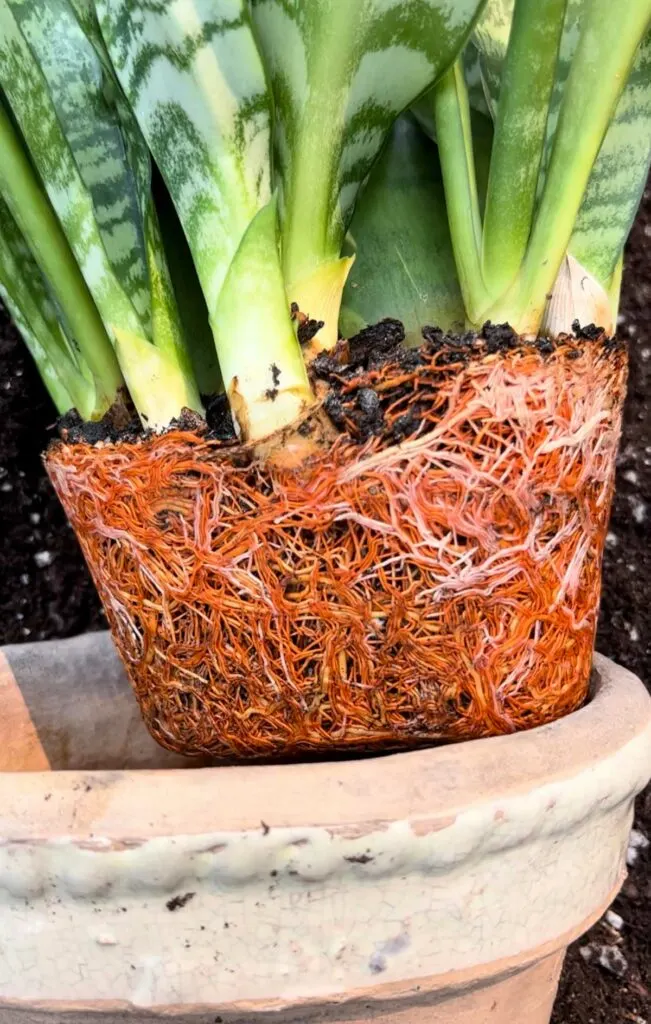
Softness at the base is an urgent warning. Slide the plant out of its pot and look for brown or black roots that feel soft, hollow or slimy. Remove clearly rotten tissue with a clean blade, clean the container and repot viable firm sections into fresh, free-draining mix.
If the crown is extensively soft or foul-smelling, recovery may not be possible. University of Maryland Extension’s root-rot guidance recommends using only healthy tissue for cuttings and discarding severely infected plants. The step-by-step guide to root rot in houseplants covers inspection and recovery in more detail.
Why do snake plant leaves curl or wrinkle?
Wrinkling means the leaf has lost water, but it does not tell you why. Dry compost and a very light pot suggest the plant has used its available water. Wet compost plus wrinkled leaves suggests roots are damaged or oxygen-starved and cannot take water up normally.
Check the root zone before watering. Low humidity is not the first assumption for a snake plant with fleshy leaves; pot moisture and root health are more useful starting points.
Why is a snake plant falling or leaning over?
A whole healthy plant may lean towards stronger light. Move it to brighter indirect light, turn it periodically and use a stable pot that fits the root ball.
An individual leaf that has been sharply folded or knocked will not straighten its damaged tissue. Leave it if it is still mostly green, or cut the entire leaf cleanly at compost level for appearance. Do not cut just the top in the hope that the tip will regrow.
A loose rosette, soft base or wobble from below the compost is different. That calls for an immediate root and crown check, not a stake. Staking may hold damaged tissue upright, but it cannot repair rotten roots.
Brown tips and marks
Brown tips can follow a long dry spell, inconsistent watering, excess fertiliser salts, cold damage, scorch or old physical injury. The brown part will not turn green again. Trim it for appearance only after correcting the cause, and do not respond to a dry-looking tip by watering while the root zone is still damp.
Fine pale speckling, webbing or cottony clusters point away from a watering problem and towards spider mites or mealybugs. Isolate the plant and identify the pest before treating it.
Does a Snake Plant Need Fertiliser?
Snake plants can grow with modest feeding. Fertiliser is useful only when light, watering and root health are already suitable.
Feed a healthy plant during active growth using a balanced houseplant or succulent fertiliser at a conservative label rate. Check whether fresh compost already contains starter feed. Pause if the plant is not growing, the root zone is dry, or you are treating rot or another stress problem.
Do not add fertiliser to make up for low light, and do not assume a yellow leaf proves a deficiency. Excess salts can damage roots and leaf tips. The indoor plant fertiliser guide explains liquid, controlled-release and organic options without requiring one product for every plant.
When and How to Repot a Snake Plant
Repot when the plant gives you a reason, rather than automatically doing it every spring or after a fixed number of years.
Useful signs include:
- thick rhizomes or roots deforming or cracking the pot;
- the root mass filling the container so tightly that watering becomes difficult;
- the plant becoming unstable despite a sensible position;
- compost that has collapsed, drains unevenly or stays wet much longer than before; or
- symptoms that require a direct root inspection.
Move a healthy plant up by one pot size. Use a clean container with drainage holes, keep the crown at its previous depth and fill around the root mass without packing the compost hard. If you find rot, remove wet old mix and clearly decayed tissue rather than moving the problem into a larger pot.
Tall forms may need weight for stability; compact forms may need only a small container. In both cases, choose the pot around the roots, not the eventual height of the leaves.
How to Propagate a Snake Plant
Snake plants can be propagated by division or by leaf-section cuttings. The right method depends on whether you want the quickest established plant, the parent’s exact pattern or the largest possible number of new plants.
Division: faster and true to the parent
Choose division when the plant has produced separate shoots or offsets.
- Remove the plant from its pot and expose the joining rhizomes.
- Separate a natural cluster with its own leaves and healthy roots. Use a clean sharp knife if the rhizome does not pull apart cleanly.
- Discard soft or rotten tissue; keep only firm sections.
- Pot each division snugly into a free-draining mix in a container with holes.
Division creates a substantial plant immediately and preserves the leaf pattern of variegated cultivars.
Leaf sections: more plants, more patience
For a healthy green snake plant, cut a firm leaf into sections about 8–10cm long. Mark the bottom of each piece because an upside-down section will not root correctly. Insert the lower end into a clean, airy rooting medium, keep it lightly moist rather than saturated, and place it in warmth with bright indirect light.
Leaf sections can take time to produce roots and new shoots, so be patient and discard a section if it becomes soft or rotten.
Most variegated snake plants, including yellow-edged ‘Laurentii’, do not reproduce their pattern reliably from leaf sections. Iowa State Extension explains that the variegation is chimeral and recommends division to keep the leaf pattern. A variegated leaf cutting may produce plain green shoots.
Pet Safety and Snake Plants
Snake plants are not pet-safe if eaten. The ASPCA lists snake plant as toxic to cats and dogs; saponins can cause signs including nausea, vomiting and diarrhoea.
Place the plant where a chewing pet cannot reach it. If you think a pet has eaten any part, contact your vet promptly and tell them the plant name. Do not wait for a web article to diagnose or treat the animal.
Snake Plant Care FAQs
Are snake plants easy to care for?
Yes, they are relatively forgiving because their fleshy leaves and rhizomes store water and they tolerate a range of indoor light. They are not impossible to kill. Continually wet compost, a pot without drainage or a cold dark position can still cause serious decline.
Can a snake plant live in low light?
It can tolerate lower light better than many houseplants, but it will usually grow more slowly and use water less quickly. “Low light” still means some usable natural or artificial light; darkness is not a growing condition.
How often should I water a snake plant?
There is no safe universal interval. Check the compost deeper in the pot and water when most of the root zone is dry and the pot feels much lighter. Then soak the compost evenly, drain it fully and wait for the next dry-down.
Do snake plants like small pots?
They cope well with a fairly snug pot, but severe crowding is not a goal. Move up one size when roots or rhizomes distort the pot, watering becomes difficult or the plant is unstable. Avoid an oversized container that keeps a large volume of unused compost wet.
Do snake plants clean indoor air?
Snake plants can take up some volatile compounds in small controlled chambers, but that does not make one or two pots an effective room air cleaner. A review of chamber studies found that impractically large numbers of plants would be needed to match normal air exchange in buildings. Use ventilation and appropriate source control for indoor air quality, and see the evidence-led guide to what indoor plants can and cannot remove from the air for the fuller explanation.
Final Thoughts
Good snake plant care is less about doing more and more about reading the pot. Give the plant useful light, let the root zone dry, drain it completely after watering and investigate roots before reacting to vague leaf symptoms.
The most important split is simple: a firm plant in dry compost may need water, while a soft or wrinkled plant in wet compost needs a root check. That distinction prevents the extra watering that turns a manageable problem into rot.
Related Articles
UPGRADE YOUR INDOOR GARDEN SETUP
Essential Indoor Gardening Tools & Tips
Learn which tools actually make a difference to your indoor plants – from moisture meters and pruning snips to pots and watering cans. Keep your setup simple, efficient, and easy to maintain so your plants stay healthy all year.