
Small-space gardening works best when your tools are compact, practical, and easy to store. The best small-space gardening tools help you water neatly, prune accurately, repot without mess, and make the most of tight indoor or balcony growing areas without filling your home with bulky equipment.
That matters more than many people think. In a small flat, kitchen, spare room, or windowsill setup, oversized tools quickly become awkward and annoying. A few well-chosen compact tools usually do a much better job than buying a full kit you hardly use.
Quick answer: what tools do you need for small-space gardening?
The most useful small-space gardening tools are usually a narrow-spout watering can, compact pruning snips, a hand trowel, gloves, a moisture meter, and something practical for catching soil mess during repotting. You do not need a huge collection. A few compact, well-chosen tools are enough for most small indoor growing setups.
Do this first
Think about where you actually garden now. A small-space tool that works well on a balcony may not be the best fit for a kitchen shelf or indoor plant stand. The most useful tools are the ones that suit the way you really grow plants rather than the ones that simply look good in a set.
Why tool choice matters more in a small gardening space
When you only have a little room to work with, every tool needs to earn its place. A bulky watering can, oversized shovel, or awkward storage setup can make small-space gardening feel more difficult than it needs to be.
Compact tools tend to work better because they:
- are easier to store
- create less mess indoors
- feel more manageable around shelves and pots
- suit smaller containers and raised spaces
- make quick jobs easier to keep on top of
That is especially true if most of your gardening is indoors, on a patio, or in a tight outdoor corner rather than in a large garden.
If you mainly grow indoors, the best tools are usually the ones that make watering, pruning, and upkeep easier without creating extra clutter.

Best small-space gardening tools to actually use
Narrow-spout watering can
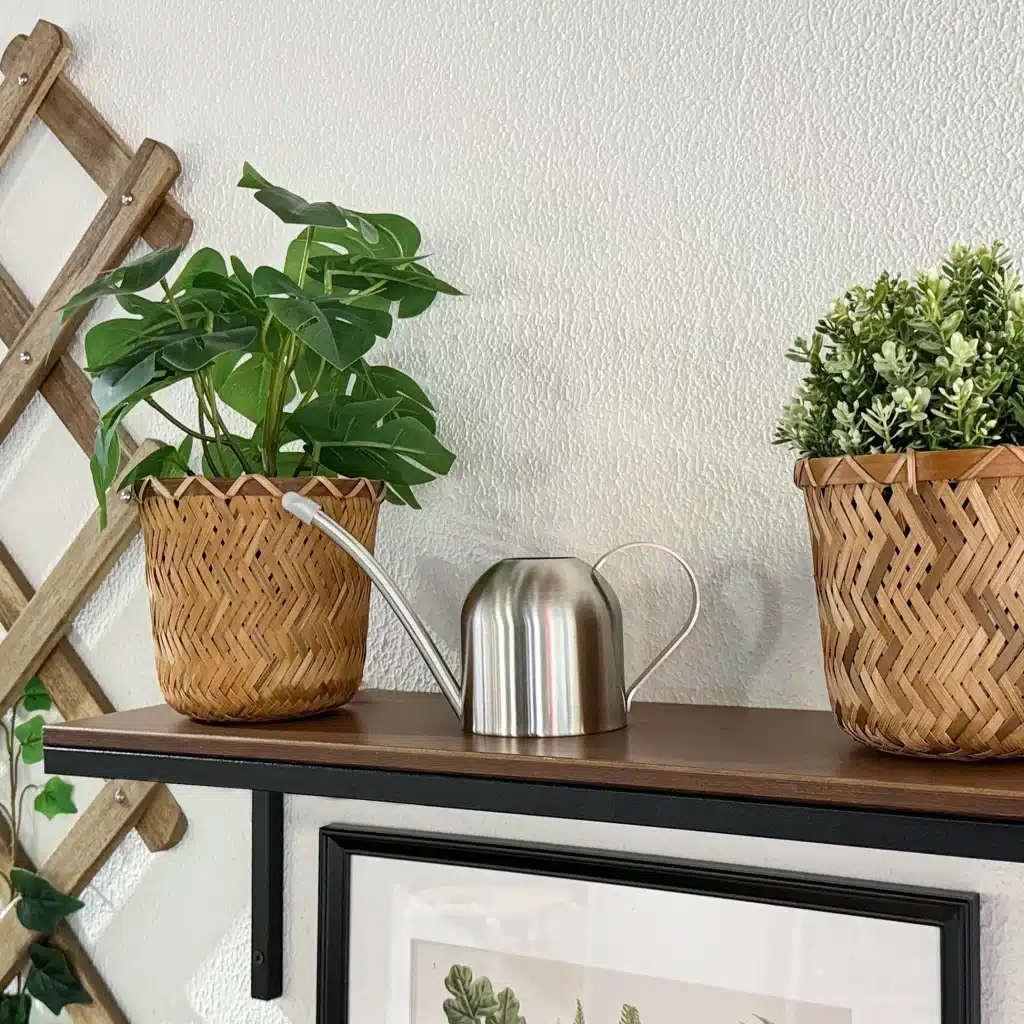
A narrow-spout watering can is one of the best tools for small-space gardening because it lets you water more precisely without splashing leaves, shelves, or windowsills. That matters much more indoors or in compact growing areas where mess builds up quickly.
It is especially useful for:
- houseplants
- seed trays
- herbs on kitchen shelves
- balcony planters
- crowded pot displays
A narrow-spout indoor watering can is often the single most useful small-space gardening tool to start with.
Compact pruning snips
Small pruning snips are far more practical than large secateurs when you are trimming herbs, deadheading houseplants, or tidying plants in a tight space. They are easier to control, easier to store, and much better for fine work.
This is one of those tools you end up reaching for more often than expected.
Hand trowel
A small hand trowel helps with repotting, topping up compost, and moving mix around containers without turning the whole room into a mess. Choose a compact, sturdy one rather than a large garden version that feels oversized indoors.
Gardening gloves
A lightweight pair of gloves is useful even in small-space gardening, especially if you are handling rough compost, fertiliser, prickly stems, or repeat repotting jobs. They do not need to be thick and heavy. A flexible pair is usually better.
Moisture meter
A moisture meter is especially useful in small-space gardening because container plants can dry out or stay wet in uneven ways depending on light, room heat, and pot size. It can help you avoid watering too soon, especially in deeper pots.
If you often struggle to tell whether the compost is still damp lower down, it helps to understand the watering habits that cause the most indoor plant problems.
Repotting mat or tray
This is one of the most underrated tools for indoor and small-space gardening. A repotting mat or tray makes it much easier to handle compost neatly on a table, floor, or kitchen surface without soil ending up everywhere.
A foldable repotting mat for indoor gardening is especially useful if you repot inside and want to keep the mess contained.
Which tools are best for indoor small-space gardening?
If your gardening space is mostly indoors, some tools become much more useful than others. The best indoor-friendly tools are usually the ones that help you work neatly and accurately.
The most useful are often:
- a narrow-spout watering can
- compact snips
- a moisture meter
- a hand trowel
- a repotting mat
- a small spray bottle for cleaning or light misting where appropriate
These tools suit shelves, windowsills, indoor herb stations, and small houseplant collections much better than bulky outdoor kits.
For indoor growing, tools work best when they help you stay neat, accurate, and consistent—making everyday care simpler and supporting good indoor plant maintenance habits.
Best tools for balcony and patio gardeners
If your small-space gardening happens on a balcony or patio, you may need slightly tougher versions of the same essentials. Wind, outdoor exposure, and larger containers can make durability more important.
Useful tools here include:
- a compact watering can
- sturdy snips or secateurs
- a narrow hand trowel
- a small hand fork
- gloves
- a moisture meter for containers that dry unevenly
The main difference is that balcony gardeners often need tools that cope better with repeated outdoor use, while still being easy to store.
Tools that are helpful but not always necessary
It is easy to buy extra tools that sound useful but do not really improve your routine. In a small gardening space, that matters because every extra item takes up room.
Tools that can be useful but are not essential for everyone include:
- full matching tool kits
- large storage caddies
- heavy outdoor buckets
- oversized secateurs
- specialist gadgets you only use rarely
A few compact basics nearly always beat a crowded collection of tools that do the same job.
Washington State University Extension advises choosing tools that are durable, lightweight, and easy to use, which makes a lot of sense when you are gardening in a small space where storage and handling matter more.
How to store gardening tools in a small home
Storage matters just as much as the tools themselves when space is tight. The easiest systems are the ones that keep tools together and easy to grab without creating clutter.
Good storage ideas include:
- a small handled tote
- a shallow shelf box
- a cupboard basket
- wall hooks for lightweight tools
- a tray kept near your plant area
The goal is to keep your tools close enough to use regularly without leaving them scattered around the house.
What makes a gardening tool good for a small space?
The best small-space gardening tools usually share a few things in common. They are:
- compact
- easy to clean
- easy to store
- precise rather than oversized
- useful for more than one task
- comfortable in the hand
That is why smaller, better-designed tools often feel much more useful in indoor and compact gardening than bigger traditional ones.
If your plants live in tighter indoor conditions, room setup and airflow also affect how easy day-to-day care feels.
Common mistakes when buying small-space gardening tools
One of the most common mistakes is buying a big all-in-one set before you know what you actually need. Another is choosing attractive tools that are awkward to store or too large for the kind of containers you use.
It also helps to avoid:
- buying outdoor-sized tools for indoor jobs
- choosing heavy tools for delicate work
- buying gadgets instead of basics
- overlooking how messy repotting can be indoors
- forgetting about storage before buying more
In most cases, starting with a few compact essentials is the better route.
FAQs
What is the most useful small-space gardening tool?
For most people, it is a narrow-spout watering can because it makes routine watering easier, neater, and more precise.
Do I need a full gardening tool set for a small space?
No. A few compact essentials are usually much more useful than a large set.
Are moisture meters worth it for small-space gardening?
Yes, especially for container growing, where compost can stay wet or dry out unpredictably depending on the setup.
What tools are best for indoor gardeners?
Compact snips, a watering can, a hand trowel, a moisture meter, and a repotting mat are usually the most useful.
Final Thoughts on Small-Space Gardening Tools
The best small-space gardening tools are not the biggest set or the fanciest gadgets. They are the compact, practical tools that make everyday jobs easier without adding clutter. For most people, that means starting with a narrow-spout watering can, compact snips, a hand trowel, a moisture meter, and a tidy way to handle repotting.
Once you have those basics in place, small-space gardening usually becomes much easier to keep up with.
Related Articles
Make Small-Space Gardening Simpler
Choose tools that suit the way you really grow
The best tool setup is usually the one that makes everyday plant care easier, neater, and more realistic for your space. Read Watering Tools for Indoor Plants for a closer look at one of the tool categories most small-space gardeners use the most.