
If you’re using neem oil for indoor plants, the big win is controlling soft-bodied pests without turning your home into a chemical war zone. The key is correct dilution, full coverage, and timing — because neem can also scorch leaves if you overdo it.
Quick answer: neem oil for indoor plants
-
Works best on aphids, spider mites, whitefly, and young scale
-
Spray in the evening (or away from strong light) to avoid leaf burn
-
Always test one leaf first and wait 24 hours
-
Coat top + underside of leaves; pests hide underneath
-
Repeat treatment only at the interval allowed by the exact product label, and stop once the infestation is controlled.
Do this first: Move the plant away from windows/strong light, then wipe off visible pests so neem doesn’t have to do all the work.
If you want a quick “what pest is this?” check before you spray anything, Indoor Plant Pest Guide: Identify and Treat Pests Fast makes identification much easier.
What neem oil actually does (and what it won’t fix)
Neem is best thought of as a pest management tool, not a magic cure. It helps by disrupting pest feeding and development, and it can smother some small insects when applied correctly.
Neem is most useful for:
-
Aphids
-
Spider mites
-
Whitefly
-
Mealybugs (works better when combined with wiping)
-
Young scale (crawler stage)
Neem is not great for:
-
Severe infestations on heavily stressed plants (you’ll need pruning + isolation too)
-
Soil problems (root rot, sour compost)
-
Instant results (it’s usually a repeat-treatment method)
How to use neem oil for indoor plants step-by-step
Neem works when you get the basics right: dilution, coverage, and repeat treatments.
1) Isolate the plant first
Pests spread fast indoors. Put the plant a short distance from others for a week or two while you treat it.
2) Mix a safe dilution
If you use a neem-based plant-protection product, use only a product authorised for the intended UK use and follow its current label for dilution, application method, repeat interval and precautions. Do not rely on a homemade universal neem-and-soap recipe, because concentration and permitted uses vary between products.
3) Test spray one leaf
Neem can mark or scorch some plants. Spray one leaf, wait 24 hours, and check for spotting.
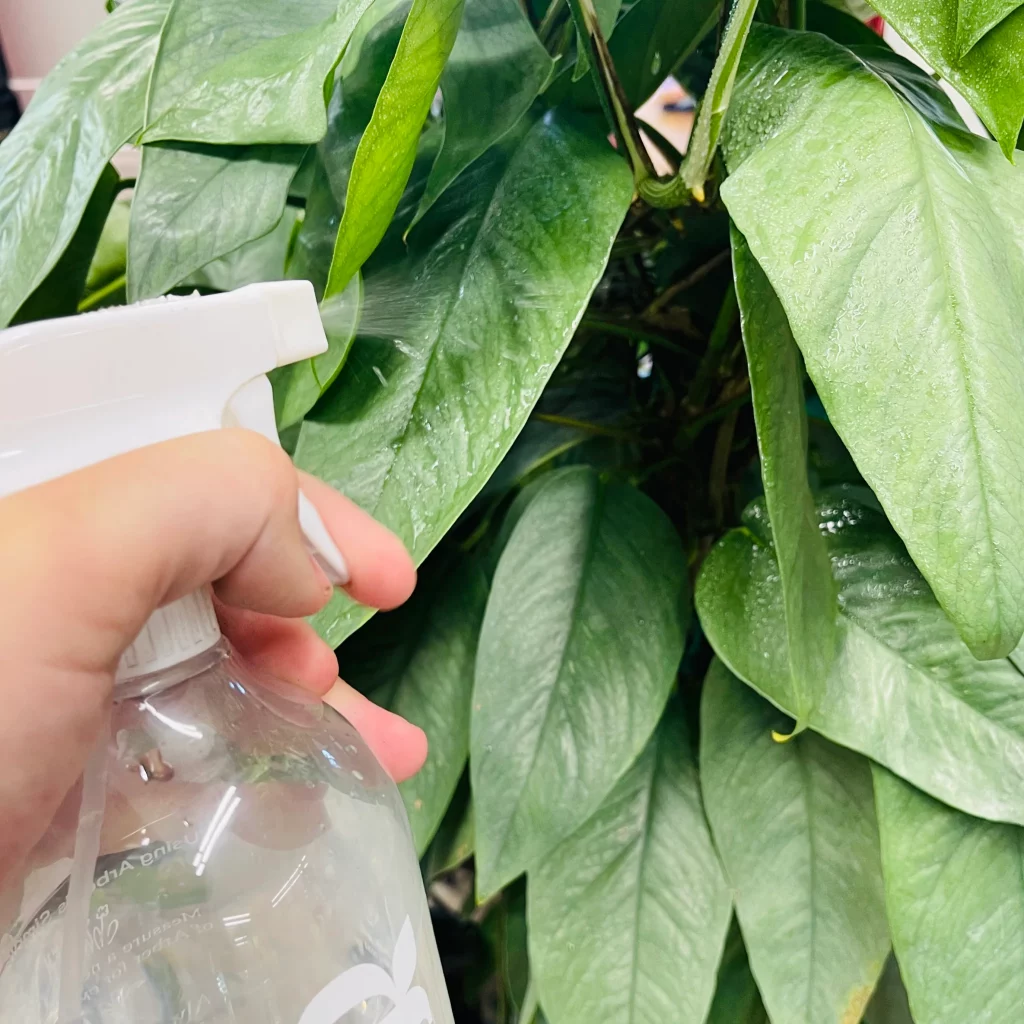
4) Spray properly (this is where most people miss)
-
Spray undersides of leaves first (that’s where pests sit)
-
Then spray tops
-
Lightly mist stems and leaf joints
-
Avoid soaking the compost
5) Let it dry away from direct light
Keep it out of bright window sun until fully dry.
A cold-pressed neem oil concentrate for plants should not be treated as suitable pest-control guidance unless the current UK product label specifically permits the intended plant and pest use.
When to Repeat Treatment
One spray rarely solves it because eggs keep hatching.
A simple plan:
-
Day 1: Spray thoroughly
-
Check the product label before any repeat treatment and use only the stated interval.
-
Recheck the plant and repeat treatment only if the product label permits it and pests are still active.
-
Continue monitoring new growth and leaf undersides. Do not keep spraying on a fixed calendar once the infestation is under control.
In between sprays, wipe leaves and remove heavily infested tips.
If you’re battling tiny speckling, webbing, or “dusty-looking” leaves, the signs section in Spider Mites on Houseplants can help you confirm it’s mites (and not just dry air).
It can be tempting to mix neem ‘extra strong’ to get faster results, but the safest approach is simply to follow the label directions — the US Environmental Protection Agency guidance on pesticide labels explains that the label is the legal, practical set of instructions for safe use.
Neem oil mistakes that cause leaf burn (and how to avoid them)
Neem “fails” indoors for predictable reasons. Fix these and your results improve instantly.
Spraying in strong light
Oil + sun/strong grow lights can cause spotting.
Fix: Spray in the evening, or move the plant back from the window until dry.
Mixing too strong
More isn’t better — it can clog pores and mark leaves.
Fix: Use the exact label rate for the product and plant you are treating.
Missing the underside of leaves
You can spray the top perfectly and still leave the pests untouched.
Fix: Always start with undersides.
Treating without cleaning first
Neem works better when you remove the bulk of pests first.
Fix: Wipe with a damp cloth or cotton pad before spraying.
For outbreaks that look like clusters on new growth, Aphids on Indoor Plants is a helpful companion read because aphids often bounce back unless you remove them physically between treatments.

Neem oil vs insecticidal soap vs rubbing alcohol
If neem hasn’t worked for you before, it’s usually because the pest needs a different approach (or you need a combo).
-
Neem oil: best for repeated control and prevention on many pests
-
Insecticidal soap: great contact-kill option; needs full coverage
-
Rubbing alcohol (spot use): best for mealybugs/scale dab treatment, not full-plant spraying
Neem oil works best after you’ve identified the pest — once you know what you’re treating, it’s much easier to choose the right method.
Common Questions About Using Neem Oil Indoors
Neem oil isn’t working — what am I doing wrong?
Usually one of these:
-
Not spraying undersides
-
Repeating treatment more often than the product label allows
-
Plant is in bright light while wet
-
Infestation is too heavy (needs pruning + isolation)
Can neem oil be used on all indoor plants?
No. Test first. Plants with delicate leaves can spot easily (some ferns, some calatheas, very fuzzy leaves). Always do a single-leaf test.
Can I spray neem oil on flowers?
Try not to. Spraying blooms can cause marking and can bother pollinators if the plant is outdoors later. Focus on leaves and stems.
Is neem oil safe around pets and children?
Treat it like a product you don’t want on skin or in eyes. Let it dry fully, keep pets away during spraying, and always follow the label instructions.
Top picks made simple
If You Are Choosing a Neem Product
Choose only a product whose current UK label clearly covers the pest and plant or crop you intend to treat. The label should tell you the permitted dilution, application method, repeat interval and any restrictions; a generic raw neem oil listing is not a substitute for an authorised plant-protection product.
If you want the easy mode setup…
Add a handheld pump pressure sprayer so you can coat undersides evenly without soaking the room.
Best for: faster coverage, fewer missed spots.
A small handheld pump pressure sprayer makes it easier to hit leaf undersides evenly (where pests hide).
FAQs About Neem Oil for Indoor Plants
How often should I spray neem oil indoors?
There is no single safe repeat interval for every neem product or plant. Follow the exact product label for how often it can be reapplied and whether it is permitted on the plant or crop you are treating.
Should I wipe leaves after neem oil dries?
If leaves look greasy or dusty afterwards, a gentle wipe after 24 hours can help — just don’t remove it immediately.
Can neem oil cause brown spots?
Yes, especially if it’s too strong or the plant sits in strong light while wet. Always test first.
Can I use neem oil in the soil?
It’s usually better on foliage pests. For soil issues (gnats, root rot), use a targeted approach instead.
What’s better: neem oil or insecticidal soap?
The better option depends on the pest, plant and exact product label. Use one suitable, authorised product as directed rather than creating an unlabelled rotation or mixing programme.
Final Thoughts on Neem Oil for Indoor Plants
Neem can be one option for some indoor pest problems, but it should not be treated as a universal routine. Identify the pest first, remove as much of the infestation as you can physically, and use any neem-based plant-protection product only as its current label directs. Judge progress from new growth and falling pest numbers rather than spraying on a fixed calendar.
Related Articles
TREAT PESTS WITHOUT THE PANIC
Build a Simple Spray Routine That Works
Neem works best when it’s applied evenly and repeated on schedule — especially on leaf undersides where pests hide. A simple setup makes the whole process quicker and more consistent.