If you’ve ever come home to drooping leaves after a busy week, self-watering pots can feel like a lifesaver. They promise fewer watering worries, more consistent moisture, and happier roots – but they’re not magic, and they work better for some plants than others.
In this article, you’ll learn how self watering pots work, which plants suit them, and how to set them up properly so you avoid root rot and soggy soil. If you want help getting your watering right overall, you might also like How to Use a Soil Moisture Meter for Indoor Plants.
Contents
- 0.1 What Is a Self-Watering Pot and How Does It Work?
- 0.2 Pros and Cons of Self Watering Pots
- 0.3 Which Plants Do Best in Self Watering Pots?
- 0.4 How to Set Up a Self Watering Pot Properly
- 0.5 Common Mistakes with Self Watering Pots (and How to Avoid Them)
- 0.6 Can You Make DIY Self Watering Setups?
- 0.7 FAQs About Self Watering Pots
- 0.8 Final Thoughts on Self Watering Pots
- 0.9 Related Articles
- 1 Repotting & Hygiene Tips for Indoor Plants
What Is a Self-Watering Pot and How Does It Work?
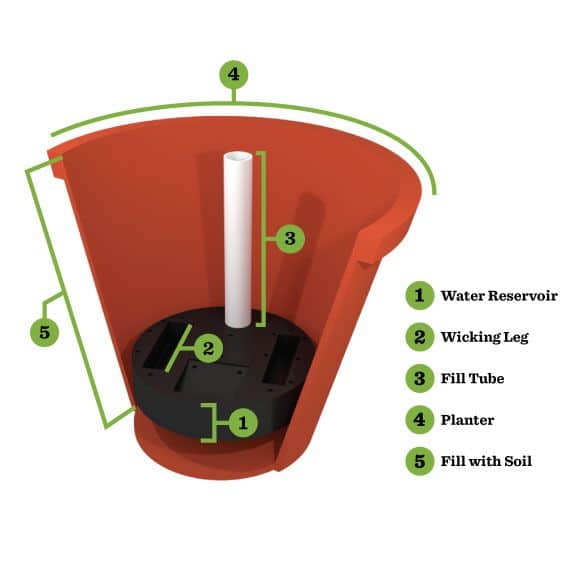
A self-watering pot is basically a container with its own built-in reservoir. Instead of pouring water directly through the soil every time, you fill a hidden tank, and water is gently drawn up into the compost as the plant needs it.
Most self watering pots use:
A reservoir: A lower chamber that holds water.
A wicking system: This might be a strip of fabric, a column of compost, or capillary cones that move water upwards.
An inner pot or platform: Keeps most of the root ball above standing water.
An overflow or indicator: Helps you avoid overfilling the reservoir.
The idea is to keep the root zone evenly moist without cycling constantly between “bone dry” and “soaked”, which is one of the biggest problems for indoor plants.
Pros and Cons of Self Watering Pots
Self watering pots can be incredibly helpful, but they’re not a perfect fit for every plant or household.
Benefits
More consistent moisture: Roots get a steady supply of water, reducing stress.
Less frequent watering: Ideal if you’re busy or away for weekends.
Cleaner watering: You fill the reservoir from a spout or side hole, so there’s less splashing and runoff.
Good for thirsty plants: Many foliage plants and herbs love consistent moisture at the roots.
Downsides
Not ideal for very dry-loving plants: Cacti and some succulents may stay too damp for their liking.
Easy to overfill: If you constantly top up without letting the reservoir run down, roots can sit in water.
Can hide problems: Because the surface looks dry, it’s easy to forget there’s still plenty of water below.
Many gardeners find self-watering containers work best when they still keep an eye on the compost moisture and adjust filling habits, rather than relying on the reservoir alone. Guidance like Royal Horticultural Society advice on watering and containers can be helpful for understanding how moisture moves through potting mixes.
Which Plants Do Best in Self Watering Pots?
Self watering pots suit plants that enjoy steady moisture and don’t want to dry out completely between waterings. Good candidates include:
Peace lilies: Naturally thirsty and quick to sulk if forgotten.
Most ferns: Prefer consistently moist compost and higher humidity.
Many foliage houseplants: Such as pothos, philodendron, tradescantia and syngonium.
Indoor herbs: Mint, parsley, basil and coriander often appreciate even moisture (though still avoid waterlogging).
Plants that prefer to dry out more – like many succulents, cacti and some Mediterranean herbs such as rosemary – usually do better in regular pots with sharp-draining compost.
A compact self-watering pot set for indoor plants is a good way to test the system on a few suitable plants before switching larger containers.
How to Set Up a Self Watering Pot Properly
Getting the setup right makes a big difference to how well your self watering pot works.
1. Use the Right Potting Mix
Self-watering systems rely on capillary action – the ability of the compost to wick water upwards.
Use a light, airy mix designed for houseplants.
Avoid very heavy, dense soils that stay waterlogged.
For thirsty plants, you can add a little extra coco coir to help wick moisture.
2. Position the Wick Correctly
If your pot uses a wick or inner column:
Make sure the wick is fully in contact with both the water reservoir and the compost.
Pack compost gently around the wick so there are no big air gaps.
Don’t crush or fold the wick sharply, as this can slow water movement.
3. Fill the Reservoir Slowly
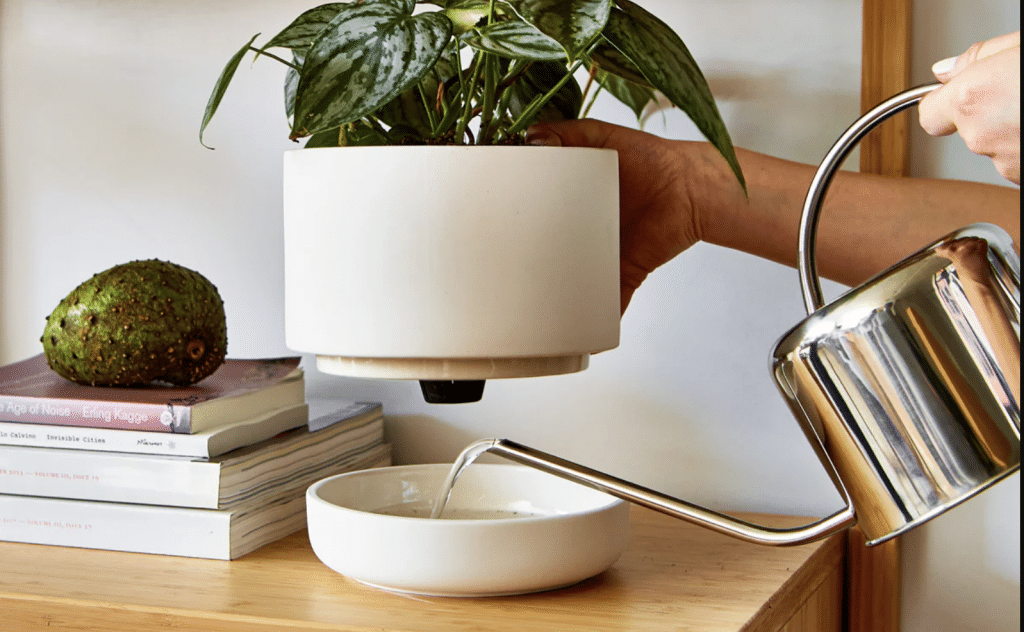
Add water via the fill spout or side opening until you reach the maximum marker or see water at the overflow.
Don’t keep topping up every day. Let the plant use what’s stored, then refill when the indicator shows the level is low.
4. Let the Top Dry Slightly
Even in a self watering pot, the upper few centimetres of compost should be allowed to dry a little between refills.
This helps prevent fungus gnats and surface mould.
It also encourages roots to spread downwards towards the moisture, not sit at the surface.
Common Mistakes with Self Watering Pots (and How to Avoid Them)
Even with a good pot, a few habits can cause problems.
Overfilling the Reservoir
Constantly keeping the reservoir full can lead to roots sitting in water, especially if the potting mix is dense.
Fix: Allow the level to drop before refilling, and occasionally let the reservoir run almost dry so the root zone can breathe.
Using the Wrong Plants
Trying to grow very dry-loving plants in constantly moist compost is a recipe for root rot.
Fix: Reserve self watering pots for plants that prefer steady moisture, and use standard pots with gritty mix for succulents and cacti.
Ignoring the Compost
Because the surface can look dry, it’s easy to assume the plant “must be thirsty” and overfill the reservoir.
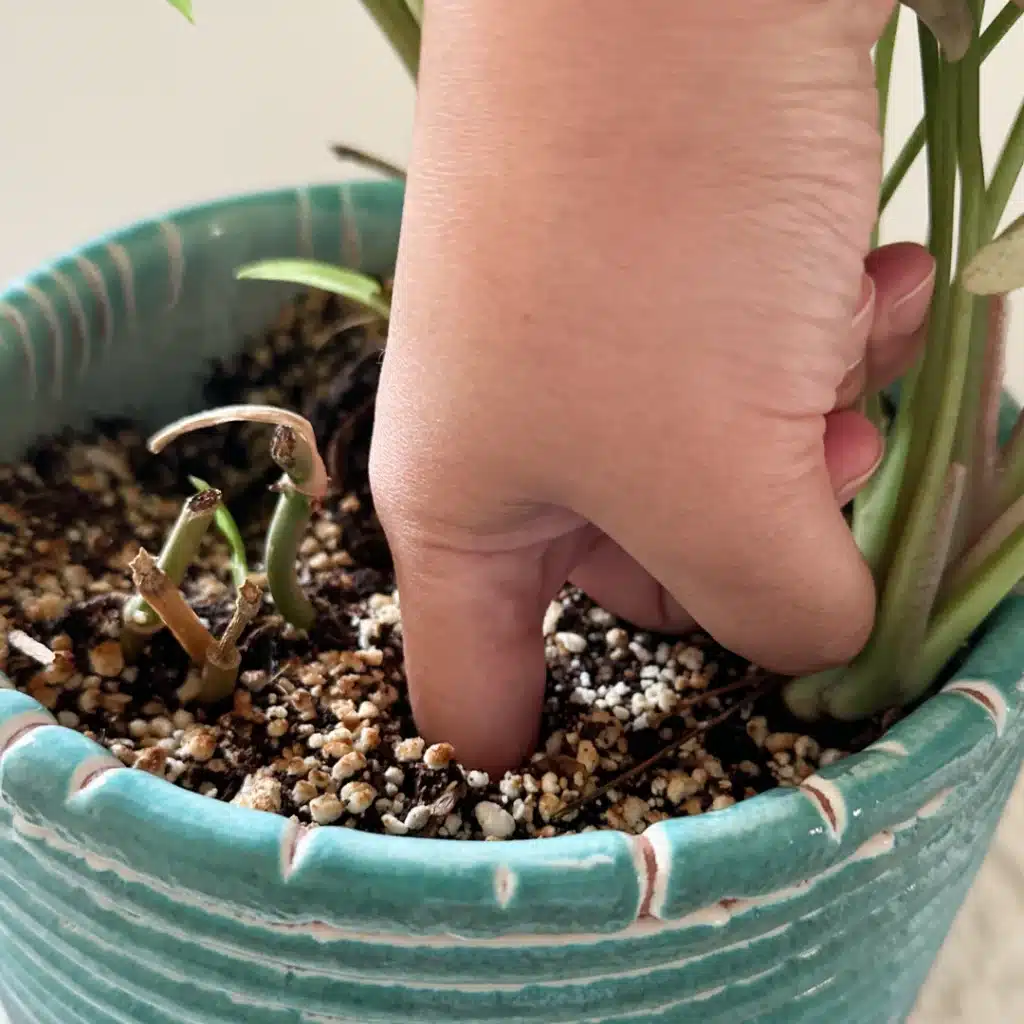
Fix: Check the compost with your finger or a simple meter before refilling. A basic soil moisture meter for indoor plants can help you see what’s happening deeper in the pot.
Never Flushing the Pot
If you only ever water via the reservoir, fertiliser salts can build up in the compost over time.
Fix: Every so often, water from the top until you see some water drain through, then empty the reservoir. This helps flush out excess salts.
Can You Make DIY Self Watering Setups?
You don’t have to buy dedicated pots to get some of the same benefits. Simple DIY options include:
Double-pot method: Place a standard nursery pot inside a slightly larger decorative pot with a small amount of water at the bottom. Use a strip of fabric or capillary matting through the drainage holes to wick water up.
Capillary matting trays: Stand several smaller pots on a piece of capillary matting that’s partly dipped in a shallow tray of water. The mat pulls water up to the base of each pot.
Bottle spike systems: For large containers, a spike attached to a bottle can slowly release water into the compost.
A roll of capillary matting for houseplants is handy if you want to create your own DIY self-watering trays for groups of small pots.
FAQs About Self Watering Pots
Do self watering pots really work?
Yes – when set up correctly and used with suitable plants, self watering pots can keep moisture more consistent and reduce the risk of underwatering. You still need to monitor the compost and reservoir, but they take a lot of guesswork out of watering.
How often should I fill the reservoir?
It depends on plant size, room temperature and light. Some setups might only need topping up once a week, others every few days in warm weather. Watch the water level indicator and the compost – refill when the reservoir is low and the top few centimetres of soil start to dry.
Can I use fertiliser in a self watering pot?
Yes, but go gently. Liquid feeds can be added at a diluted rate when you refill the reservoir, or you can use slow-release fertiliser granules mixed into the compost. Occasionally flush the pot from the top to prevent fertiliser salts building up.
Are self watering pots good for beginners?
They can be, especially if you’re busy or forgetful with watering. Just remember they’re a tool, not a complete solution – you still need to choose the right plants, use suitable compost and keep an eye on moisture.
Do self watering pots stop overwatering completely?
Not entirely. If you constantly overfill the reservoir, use dense compost, or choose unsuitable plants, you can still get root rot. Think of self watering pots as a way to reduce watering mistakes, not eliminate them.
Final Thoughts on Self Watering Pots
Self watering pots can make indoor plant care much easier, especially if you’re juggling work, travel and everyday life. When you pair the right plants with a well-set-up pot, you get steadier moisture, fewer droopy surprises and healthier roots.
Treat them as a helpful tool rather than a complete fix: choose suitable plants, use light, wick-friendly compost, and give the reservoir time to empty before topping up. With those habits in place, self watering pots are a simple upgrade that can keep your indoor garden thriving with far less effort.
Related Articles
START FRESH FOR HEALTHIER ROOTS
Repotting & Hygiene Tips for Indoor Plants
Learn how to clean pots properly, refresh tired potting mix and repot without stressing your plants. A cleaner setup means fewer pests, less disease, and stronger, longer-lasting houseplants.