If you’re stuck on organic vs synthetic fertilisers, here’s the honest version: both can work brilliantly indoors — but they suit different goals. The best choice depends on whether you want fast, predictable results or a gentler, slower approach that’s harder to overdo.
Contents
- 0.1 What “organic” and “synthetic” mean in real indoor terms
- 0.2 Organic vs synthetic fertilisers: the key differences indoors
- 0.3 When organic fertiliser is a good choice indoors
- 0.4 When synthetic fertiliser is the better choice indoors
- 0.5 The indoor rule that matters more than the type
- 0.6 A simple “safe feeding method” that works with either type
- 0.7 FAQs About Organic vs Synthetic Fertilisers
- 0.8 Final Thoughts on Organic vs Synthetic Fertilisers
- 0.9 Related Articles
- 1 Keep feeding simple and consistent
Quick answer: organic vs synthetic fertilisers
Synthetic fertiliser is usually faster and easier to dose accurately.
Organic fertiliser is often slower and steadier, but less “instant” indoors.
Most indoor problems come from feeding in low light or feeding too strong (either type).
If you’re a beginner, “dilute + consistent” beats “strong + occasional”.
Many people do best with one simple plan and stick to it for 4–6 weeks before changing anything.
Do this first: Decide which outcome you want most: faster growth now or lowest-risk feeding. That choice makes the decision easier.
If you want a quick overview of indoor-friendly feeding options (liquid vs slow-release, when to use what), Indoor Plant Fertilizers Guide is a useful next read.
What “organic” and “synthetic” mean in real indoor terms
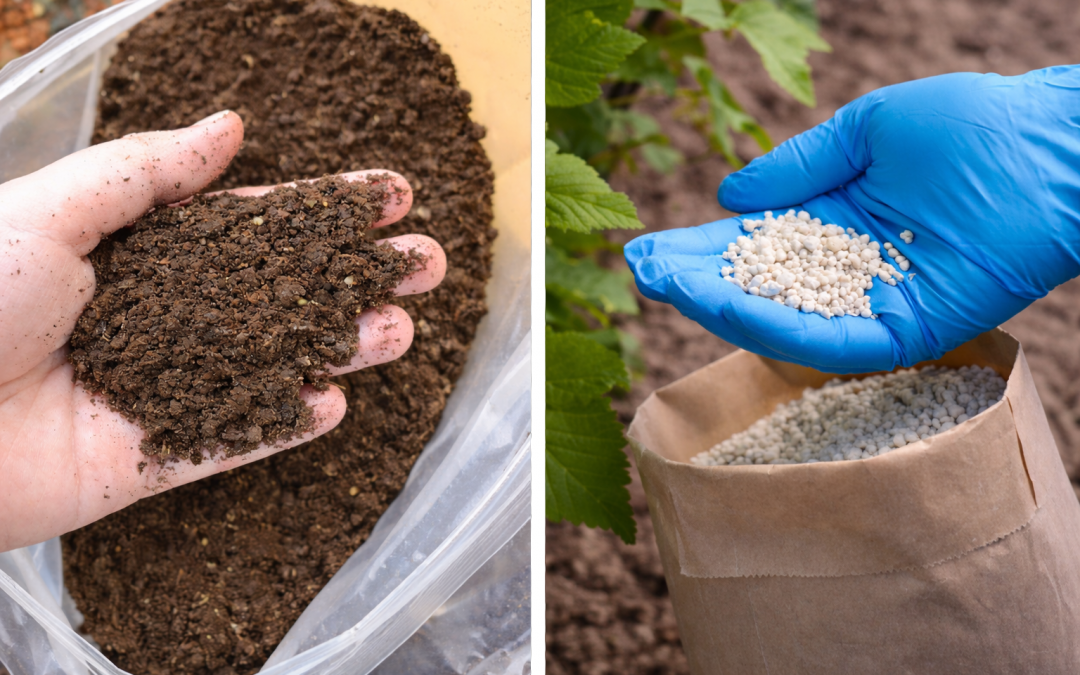
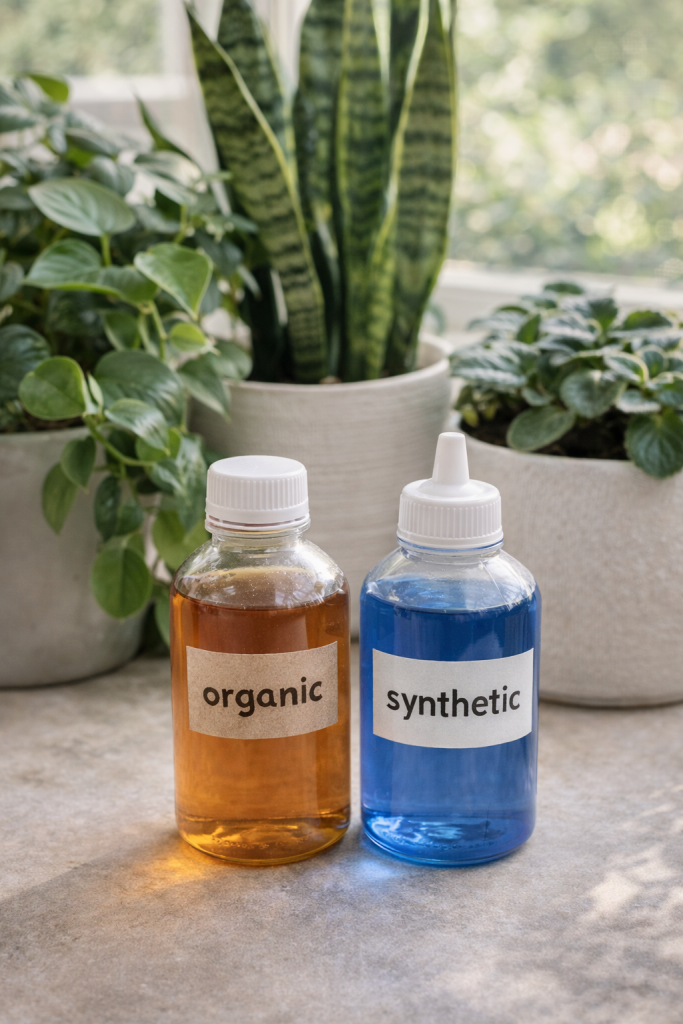
Organic fertilisers are usually made from natural sources (plant/animal-based materials). Nutrients become available as those materials break down, so results often feel slower and steadier.
Synthetic fertilisers are usually mineral-based and designed to be immediately available, which is why they often give faster, more predictable results.
Organic vs synthetic fertilisers: the key differences indoors
Speed of results
Synthetic: often quicker leaf colour improvement and faster growth when light is good.
Organic: often improves the plant more gradually (especially in larger pots).
Precision and consistency
Synthetic: easier to measure and repeat, which helps if you like routines.
Organic: can vary more in release speed depending on warmth, moisture, and compost activity.
Smell and mess factor
Synthetic: usually cleaner and low-odour (nice in small rooms).
Organic: some options can smell stronger — not always ideal indoors.
Risk of “burn” or stress
Either can cause problems if used too strong. Indoors, the real risk is small pots + low light + frequent feeding.
When organic fertiliser is a good choice indoors
Organic fertiliser can be a great fit if you:
prefer a gentler, slower approach
grow mostly foliage houseplants
want to avoid strong spikes from feeding
don’t mind that results can be less instant
A gentle option that’s hard to overdo is a seaweed-based liquid plant feed, used diluted during active growth.
When synthetic fertiliser is the better choice indoors
Synthetic fertiliser is often the best pick if you:
want predictable results and easy dosing
grow fast plants or indoor edibles
want minimal smell indoors
like a simple schedule you can repeat
A reliable “one bottle for most plants” option is a balanced liquid houseplant fertiliser, diluted and used during active growth.
If you want a clear schedule, How Often to Fertilize Indoor Plants lays out simple frequencies by plant type.
The indoor rule that matters more than the type
The type of fertiliser matters less than whether the plant can actually use it.
If light is low:
growth slows
compost stays wet longer
roots are easier to stress
feeding more rarely helps
If you’re unsure whether your setup is bright enough to justify feeding, Best Lights for Indoor Gardening makes indoor light levels easier to judge.
A simple “safe feeding method” that works with either type
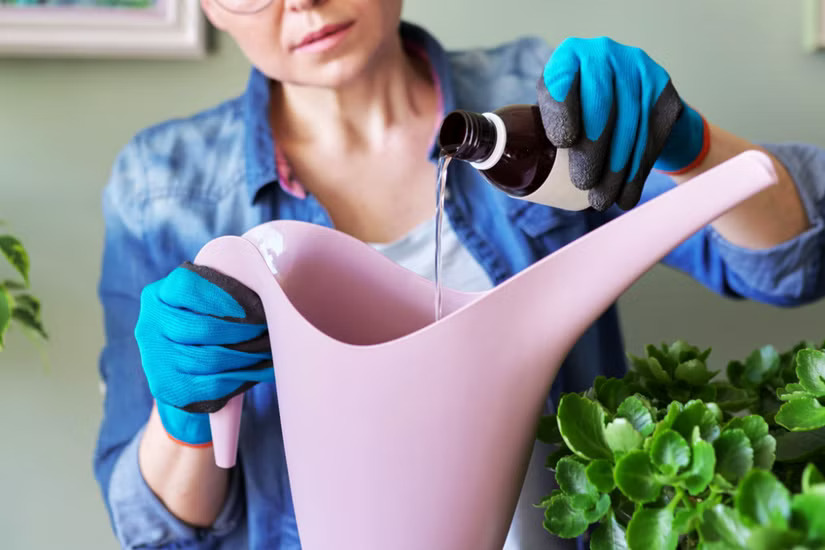
- Water first (or feed on already-moist compost).
- Use half-strength for the first few feeds.
- Feed consistently during growth (don’t do random big doses).
- If tips brown or leaves spot, pause feeding and reset rather than adding more.
If you want seasonal timing (when to start and stop), Best Time to Fertilise Indoor Plants keeps you from feeding during slow winter growth.
University of Florida IFAS Extension explains that organic materials generally release nutrients more gradually, while many synthetic fertilisers are more immediately available and easier to apply precisely.
FAQs About Organic vs Synthetic Fertilisers
Which is better for indoor plants?
Neither is automatically “better”. Synthetic fertiliser is often easier for predictable results; organic fertiliser can be gentler and steadier. Light and drainage matter most.
Can synthetic fertiliser cause root rot?
Root rot is mainly caused by soggy conditions, but heavy feeding can stress roots and make problems worse in wet compost.
Do organic fertilisers improve compost indoors?
They can help over time, especially in larger pots, but indoor results are usually slower than outdoors.
Is “fertilizer” the same as “fertiliser”?
Yes — it’s the US spelling vs UK spelling of the same word.
Final Thoughts on Organic vs Synthetic Fertilisers
For most indoor growers, the best option is the one you can do consistently without overfeeding. If you want fast, measurable results, go synthetic and stay diluted. If you want a gentler approach, go organic and keep it steady. Either way, light and drainage decide whether feeding helps — so fix those first if growth is slow.
Related Articles
Keep feeding simple and consistent
Keep feeding simple and consistent
Indoor plants respond best when feeding matches real conditions: enough light, breathable compost, and a dose that’s easy to repeat. Once your routine is steady, both organic and synthetic fertiliser can work well without stressing roots.