
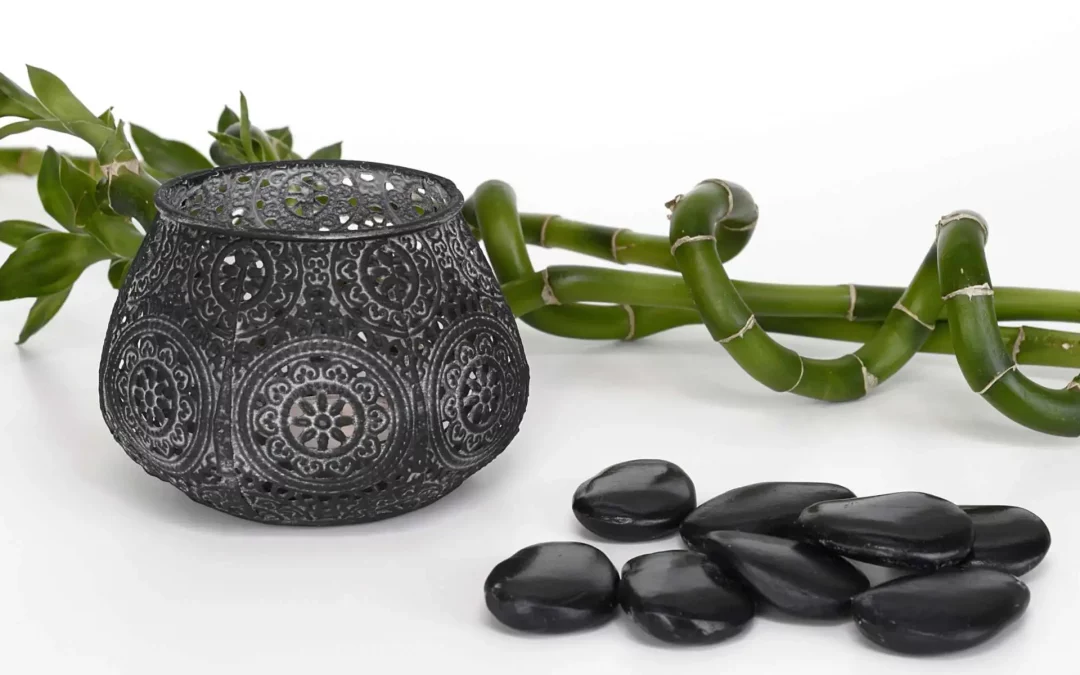
Lucky bamboo is one of those plants that looks exotic but is surprisingly easy to care for once you know what it needs. With the right light, water, and container, your lucky bamboo can stay green, glossy, and tidy on a desk, shelf, or windowsill for years.
If you’d like step-by-step help moving your plant out of water and into potting mix, our Lucky Bamboo Plant in Soil: Complete Indoor Care Guide walks you through choosing soil, pots, and watering routine.
Contents
- 0.1 Understanding Lucky Bamboo (and What It Really Is)
- 0.2 Light and Placement for Lucky Bamboo Indoors
- 0.3 How to Water Lucky Bamboo in Water and in Soil
- 0.4 Best Containers and Substrates for Lucky Bamboo
- 0.5 Feeding and General Maintenance
- 0.6 Common Problems When Caring for Lucky Bamboo
- 0.7 FAQs: How to Care for Lucky Bamboo
- 0.8 Final Thoughts on How to Care for Lucky Bamboo
- 0.9 Related Articles
- 1 Discover Indoor Plants That Reduce Stress
Understanding Lucky Bamboo (and What It Really Is)
Despite the name, lucky bamboo isn’t a true bamboo at all – it’s usually Dracaena sanderiana, a tough, cane-like plant that copes well with typical indoor conditions. It’s often sold in glass vases, tied into spirals or towers, but it can also be grown in soil like a normal houseplant.
The basics of how to care for lucky bamboo are simple:
Give it bright, indirect light, not harsh direct sun.
Keep the roots moist but not stagnant or waterlogged.
Use clean water (ideally low in salts and chlorine).
Avoid sudden changes in temperature or cold draughts.
Once those foundations are in place, most lucky bamboo plants will quietly put out fresh leaves from the tops of the canes and slowly thicken over time.
Light and Placement for Lucky Bamboo Indoors
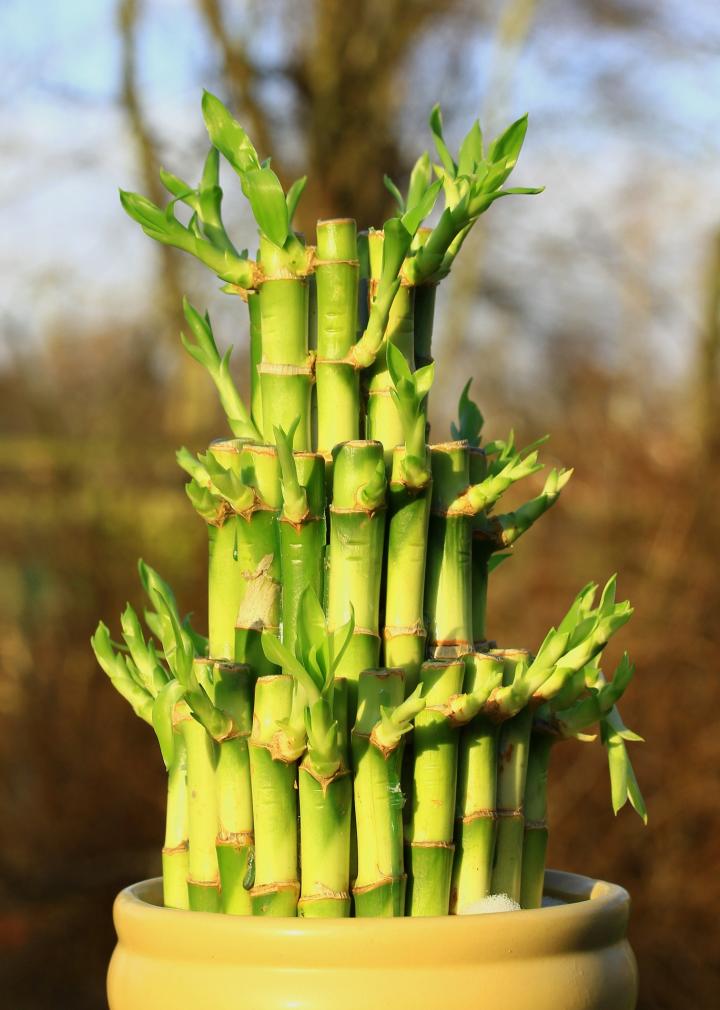
Light is a big part of how to care for lucky bamboo successfully. Too little light and it stretches, fades, and weakens; too much harsh sun and the leaves scorch.
Good spots include:
A bright room near a window, but not in direct midday sun.
A desk or shelf in an east- or north-facing room.
A bathroom or kitchen with good natural light and some humidity.
Try to avoid:
Deep, dark corners with almost no daylight.
Window ledges where the midday sun hits directly through glass.
Right next to radiators, heaters, or air conditioning vents.
According to RHS houseplant guidance, most foliage plants prefer bright, indirect light rather than strong midday sun, and lucky bamboo is no exception – filtered light keeps leaves green and avoids crisp, brown edges.
How to Water Lucky Bamboo in Water and in Soil
Watering is the main thing to get right when you learn how to care for lucky bamboo. The exact routine depends on whether your plant is grown in water or soil.
Lucky bamboo grown in water
Many lucky bamboo arrangements are sold in glass vases or shallow bowls filled with water and decorative stones.
Keep the roots submerged, but do not cover the entire cane.
Change the water every 1–2 weeks to keep it fresh and prevent slimy build-up.
Rinse the container and stones when you change the water.
Top up with clean water when the level drops.
If your tap water is very hard or heavily chlorinated, use filtered, distilled, or rainwater to help prevent brown tips and mineral deposits on the glass.
Lucky bamboo grown in soil
For plants in pots, treat them more like a typical houseplant:
Check the top 2–3 cm of soil with your finger.
Water when it feels just starting to dry, until a little runs out of the drainage holes.
Empty any excess water from the saucer or outer pot.
A compact narrow-spout watering can for indoor plants makes it easier to water at the base without splashing leaves or overfilling decorative containers.
Best Containers and Substrates for Lucky Bamboo
Because lucky bamboo is often displayed as a decorative piece, the container is part of the look as well as the care.
For water-grown plants
Use a stable glass vase, bowl, or cylinder that comfortably fits the canes.
Add pebbles or glass stones to help support the stems.
Make sure there’s enough depth for the roots to stay submerged.
A clear glass cylinder vase with decorative pebbles shows off the roots and stems while keeping everything upright and secure.
For soil-grown plants
Choose a pot with drainage holes (and a saucer or outer cachepot if needed).
Use a well-draining indoor plant mix, similar to what you’d use for other foliage plants.
Avoid very heavy, compacted soil that stays wet for days.
If you want to switch a water-grown plant into soil, move it gently and keep the soil lightly moist (not soaked) while new roots adjust.
Feeding and General Maintenance
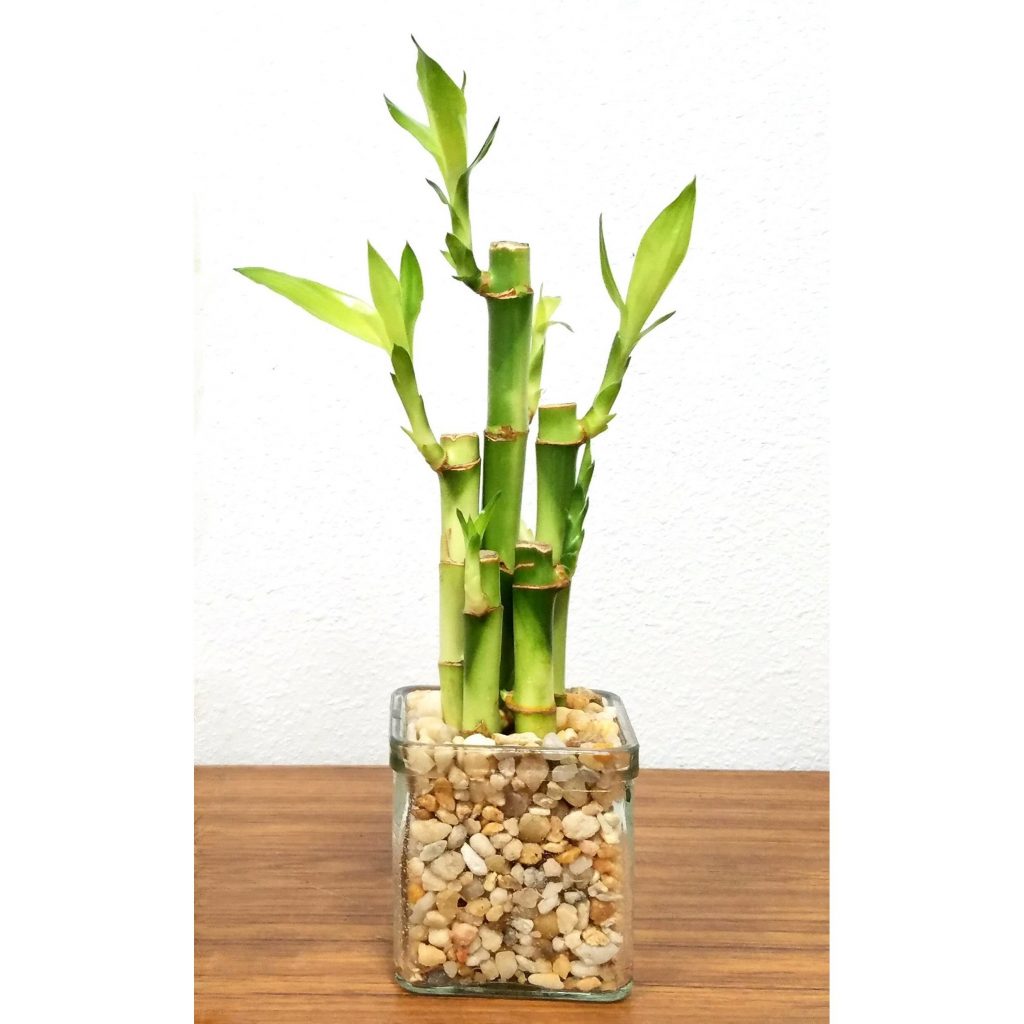
Lucky bamboo doesn’t need a lot of fertiliser, and overfeeding is a common mistake. Part of learning how to care for lucky bamboo is keeping the feeding light and infrequent.
For plants in water: use a very weak liquid houseplant fertiliser only a few times a year, and only after a water change. Too much feed can cause algae and root burn.
For plants in soil: feed once a month in spring and summer with a balanced liquid fertiliser at half the recommended strength. Skip feeding in winter.
General maintenance tips:
Wipe leaves gently with a damp cloth now and then to remove dust.
Trim any completely yellow leaves with clean scissors.
Rotate the container occasionally so light hits all sides evenly.
If canes become very tall and top-heavy, you can trim and re-root sections, then replant them, but always use clean tools and let cut ends dry slightly before putting them in water or soil.
Common Problems When Caring for Lucky Bamboo
Even with good care, you might notice small issues from time to time. Here’s what they often mean:
Yellowing leaves
Often caused by too much direct sun, overfeeding, or poor water quality.
Move the plant out of harsh light, switch to filtered water, and reduce fertiliser.
Brown leaf tips
Can come from dry air, underwatering, or very hard water.
Trim the tips neatly, increase humidity slightly, and use filtered or distilled water if needed.
Mushy or yellow stalks
Usually a sign of rot from old, stagnant water or constantly soggy soil.
Remove affected canes, refresh the water or soil, and keep conditions a little drier.
Pale, stretched growth
A sign your plant isn’t getting enough light.
Move it closer to a bright window with filtered light.
Most lucky bamboo problems improve once you tweak light, water, and feeding, so don’t panic at the first yellow leaf – focus on the basics and watch for new, healthy growth.
FAQs: How to Care for Lucky Bamboo
1. How often should I change the water for lucky bamboo?
For water-grown lucky bamboo, change the water every 1–2 weeks. Rinse the vase and stones when you do, and top up with fresh, clean water so the roots always stay submerged.
2. Can I use tap water for lucky bamboo?
You can, but very hard or heavily chlorinated tap water can cause brown tips or dull leaves over time. If you notice this, try filtered, distilled, or rainwater instead.
3. Does lucky bamboo prefer water or soil?
Both can work. Water displays are more decorative but need more frequent cleaning. A lucky bamboo plant in soil often has stronger roots and can be easier to maintain long-term once established.
4. How much light does lucky bamboo need indoors?
Lucky bamboo prefers bright, indirect light. It can tolerate slightly lower light, but avoid deep shade and harsh direct midday sun, which can scorch the leaves.
5. Why is my lucky bamboo turning yellow from the bottom?
Yellow canes often indicate root or stem rot from stagnant water or very wet soil. Remove badly affected stalks, refresh the growing medium and water, and adjust your watering routine so conditions are moist but not soggy.
Final Thoughts on How to Care for Lucky Bamboo
Learning how to care for lucky bamboo is mostly about getting the basics right: clean water or well-draining soil, bright but gentle light, and light feeding. Once those boxes are ticked, it becomes one of the easiest statement plants to keep in your home.
Whether you prefer a simple glass vase on your desk or a small pot grouped with other houseplants, lucky bamboo will reward you with fresh, tidy foliage and a calming presence. Start with one arrangement, pay attention to how it responds over a few weeks, and adjust water and light as needed. With a little consistency, lucky bamboo care becomes second nature.
Related Articles
CREATE A CALMER CORNER WITH EASY INDOOR PLANTS
Discover Indoor Plants That Reduce Stress
Once you know how to care for lucky bamboo, it’s easy to build a whole relaxing corner around it. Our Indoor Plants Reduce Stress guide highlights soothing, low-maintenance plants you can pair with lucky bamboo to create a peaceful, spa-like atmosphere at home.