
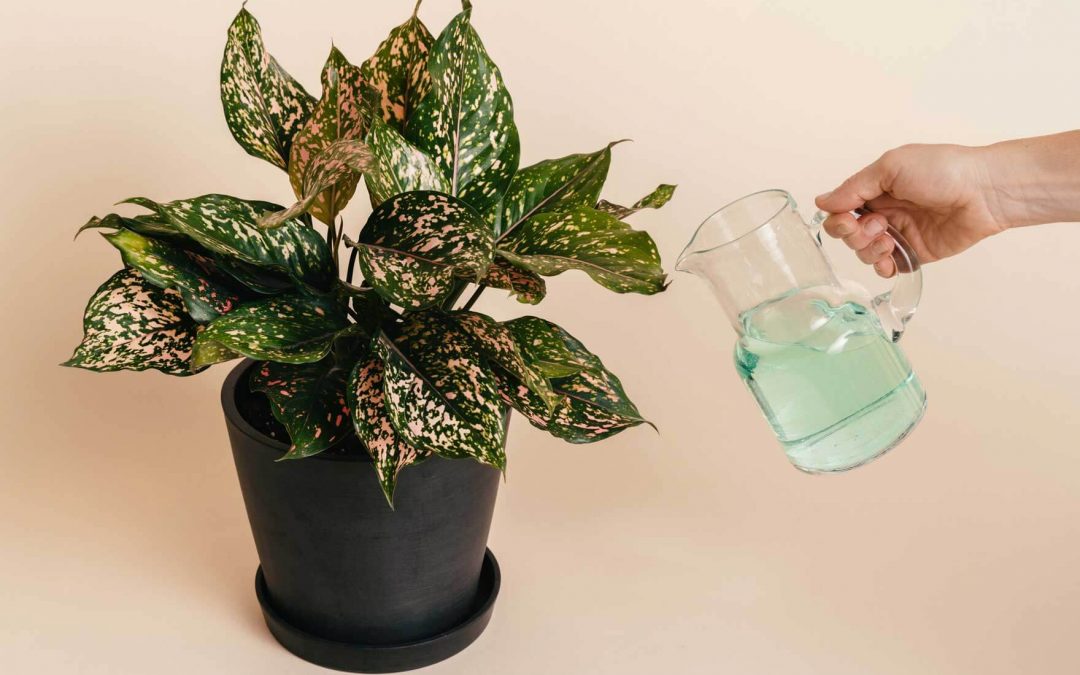
Liquid fertilizer is one of the easiest ways to keep indoor plants green, growing, and flowering. Used properly, it gives your plants a quick nutrient boost without a complicated schedule or special equipment.
If you’re still deciding what kind of feed suits your style, it’s worth pairing this with our Organic vs Synthetic Fertilizers guide so you understand the pros and cons of each type before you commit to one routine.
Contents
- 0.1 What Is Liquid Fertilizer?
- 0.2 Benefits of Liquid Fertilizer for Indoor Plants
- 0.3 Choosing the Right Liquid Fertilizer
- 0.4 How to Dilute and Apply Liquid Fertilizer
- 0.5 How Often Should You Use Liquid Fertilizer?
- 0.6 Avoiding Overfeeding and Common Mistakes
- 0.7 FAQs About Liquid Fertilizer for Indoor Plants
- 0.8 Final Thoughts on Liquid Fertilizer
- 0.9 Related Articles
- 1 Learn How Balanced Fertilizers Support Long Term Plant Health
What Is Liquid Fertilizer?
Liquid fertilizer is a concentrated nutrient solution that you dilute in water and apply when you water your plants. Instead of relying on slow-release pellets in the soil, you’re giving plants a drink that contains the nutrients they need right now.
Most liquid fertilizers for indoor plants contain a mix of:
Nitrogen (N) for leafy growth
Phosphorus (P) for roots, flowers, and fruit
Potassium (K) for overall health and resilience
plus small amounts of micronutrients like iron and magnesium
Because it’s already in solution, plants can absorb liquid fertilizer more quickly than some granular feeds, which is why many indoor gardeners use it as their main “top-up” during the growing season.
Benefits of Liquid Fertilizer for Indoor Plants
Liquid fertilizer is popular with indoor plant owners for a few simple reasons:
Fast results – plants often respond within days with fresher colour or new growth.
Easy to control – you can adjust strength or frequency if plants look stressed or hungry.
Works with your normal routine – you just mix it into your watering can on feeding days.
Good for containers – nutrients are evenly spread through the pot rather than sitting in one place.
It’s also a good way to “fine-tune” feeding if you already have slow-release products in the soil and just want a light boost during peak growth.
Choosing the Right Liquid Fertilizer
Not all liquid fertilizers are the same, but you don’t need anything overly complicated. The main things to look for are:
Balanced NPK ratio – something like 7–7–7, 10–10–10, or similar for mixed collections.
Product type – general houseplant fertilizer, foliage plant feed, or flowering plant feed.
Where you’ll use it – on leafy plants, flowering plants, or edible herbs and veg.
A balanced liquid fertilizer for indoor plants is a great all-round choice if you have a mixture of foliage plants and a few flowering species.
If you grow more specialised plants (like orchids, cacti, or flowering exotics), you can layer in specific formulas later. For now, a straightforward balanced product will meet the liquid fertilizer needs of most indoor plants.
How to Dilute and Apply Liquid Fertilizer
Getting the concentration right is more important than chasing a “strong” feed. Too much fertilizer can damage roots and scorch leaves.
Basic steps:
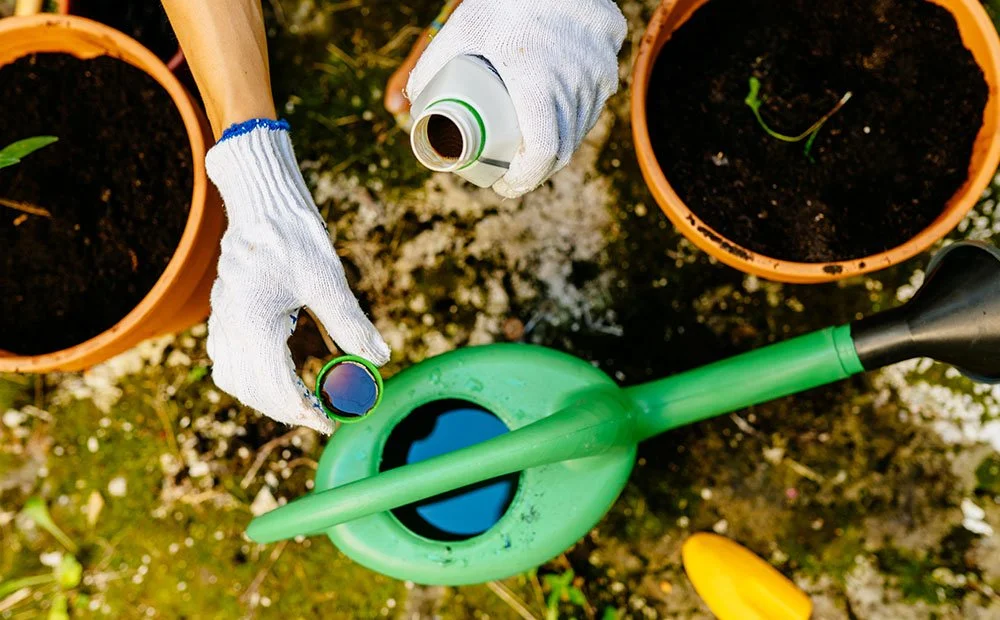
- Read the label – check how much concentrate to use per litre of water.
- Measure carefully – use the cap or a small measuring spoon; don’t pour “by eye.”
- Mix thoroughly – add the concentrate to your watering can, then fill with water and swirl.
- Water the soil, not the leaves – pour slowly around the base of each plant until water starts to drain from the bottom.
- Empty saucers – don’t leave pots sitting in fertiliser solution.
If you like keeping things neat, a small indoor plant watering can with a long spout and volume markings makes it much easier to mix and apply the right amount of liquid fertilizer without splashing.
How Often Should You Use Liquid Fertilizer?
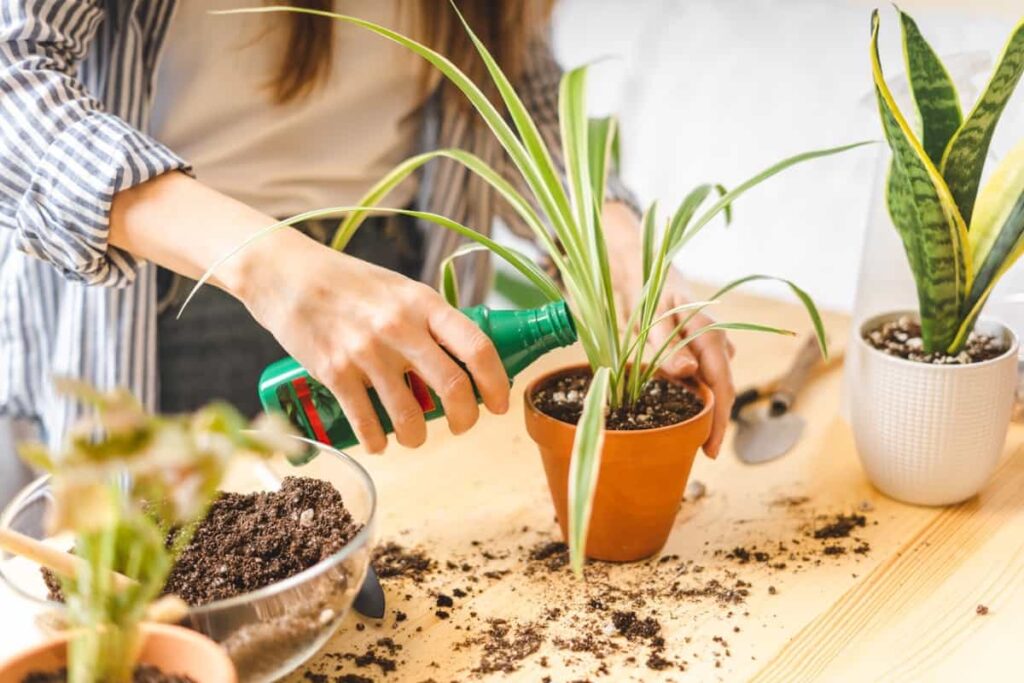
How often you use liquid fertilizer depends on plant type, light levels, and the time of year. A simple rule is: more feeding in active growth, much less in rest periods.
As a starting point:
Spring and summer (active growth):
Most indoor plants: feed every 2–4 weeks.
Hungry or fast-growing plants (like some vines or fruiting plants): every 1–2 weeks at a slightly weaker dilution.
Autumn and winter (slower growth):
Bright, warm rooms with grow lights: you can continue very light feeding once a month.
Cooler or darker rooms: reduce or stop feeding until growth picks up again.
If you’re also using slow-release pellets in the soil, reduce liquid fertilizer frequency so you don’t overdo it. The aim is to support growth, not flood the pot with nutrients.
Avoiding Overfeeding and Common Mistakes
Liquid fertilizer is easy to use, but it can cause problems if you get carried away.
Signs of overfeeding:
Brown, crispy tips or edges on leaves
Yellowing leaves that drop prematurely
White crust or residue on the soil surface
Stunted or twisted new growth
If you see these signs:
- Flush the pot with plain water until lots of water drains from the bottom.
- Let the plant rest with no fertilizer for a few weeks.
- When you resume feeding, use a weaker solution less often.
According to RHS advice on feeding houseplants, it’s usually safer to underfeed slightly and watch the plant’s response than to routinely overfeed, which often leads to salt build-up and root stress over time.
FAQs About Liquid Fertilizer for Indoor Plants
1. Is liquid fertilizer better than slow-release fertilizer?
Neither is strictly better – they just work differently. Liquid fertilizer acts quickly and is easy to adjust, while slow-release products provide a steady trickle of nutrients over time. Many people use a combination of both.
2. Can I use outdoor liquid fertilizer on indoor plants?
You can, but be careful. Outdoor formulas may be stronger, so always dilute according to the label and consider starting at half-strength for indoor plants in smaller pots.
3. Should I fertilize every time I water?
Usually no. Most indoor plants don’t need fertiliser at every watering. Feeding every 2–4 weeks during the growing season is enough for many species, especially if they’re in fresh potting mix.
4. Can I use liquid fertilizer on succulents and cacti?
Yes, but sparingly. Use a fertilizer formulated for cacti, or dilute a balanced liquid fertilizer more heavily and apply less often, as these plants are sensitive to overfeeding.
5. Do I still need liquid fertilizer if my soil has slow-release pellets?
Not always. Slow-release pellets may cover most of your plant’s needs. You can use liquid fertilizer occasionally as a gentle top-up during strong growth or flowering, but keep the doses light.
Final Thoughts on Liquid Fertilizer
Liquid fertilizer is one of the simplest tools you can add to your indoor plant care routine. Once you’ve picked a balanced product, learned how to dilute it properly, and settled into a sensible schedule, feeding stops feeling like a chore and becomes just another quick step when you water.
Start gently, watch how your plants respond, and adjust strength or frequency as needed. With a light, consistent approach, liquid fertilizer will help your indoor plants stay greener, stronger, and more resilient all year round.
Related Articles
FEED YOUR PLANTS THE SMART WAY
Learn How Balanced Fertilizers Support Long Term Plant Health
Once you’re comfortable using liquid fertilizer, the next step is choosing the right overall nutrient balance. Our Balanced Fertilizers guide explains NPK ratios, how they affect growth, and how to use them across your indoor and outdoor plants for steady, reliable results.