Winter is when many indoor plants start struggling, even in homes that seem warm enough. Shorter days, colder windows, dry heating, slower growth, and overwatering all make winter care trickier than it looks. The good news is that most houseplants do not need complicated treatment. They just need a few sensible adjustments.
Quick answer: how to keep indoor plants alive in winter
To keep indoor plants alive in winter, give them as much suitable light as possible, water less often, keep them away from cold draughts and radiators, and avoid feeding too heavily while growth is slow. Most winter plant problems come from reduced light and soggy compost rather than from cold alone.
Do this first
Look at where each plant is sitting right now. In winter, the same spot that worked in summer may suddenly become too dark, too cold, too dry, or too close to heating. If you want a simple way to monitor the room more accurately, a digital room thermometer and hygrometer can help you spot colder nights, dry air, and hidden swings around your plants.
Why indoor plants struggle more in winter
Winter changes several parts of the growing environment at once. Light levels drop, the sun stays lower, days get shorter, windows become colder, and indoor heating often dries the air. At the same time, many plants slow their growth, which means they use less water and nutrients than they did in warmer months.
That combination is where problems start. People often keep watering as if it is still summer, while the plant is sitting in lower light and using moisture much more slowly.
The result is often:
- yellowing leaves
- drooping
- soft stems
- leaf drop
- crispy edges
- slow or stalled growth
- sour-smelling compost
If you want a more consistent care pattern through the colder months, an indoor plant maintenance routine can make winter care easier to manage.

Give indoor plants more light in winter
Lower light is one of the biggest reasons indoor plants decline in winter. Even if the room still feels bright to you, your plants may be receiving far less usable light than they were a few months earlier.
A lot of plants cope better in winter if you:
- move them closer to a bright window
- clean dusty leaves so they can absorb light better
- rotate them occasionally for more even growth
- move them away from dark corners until spring
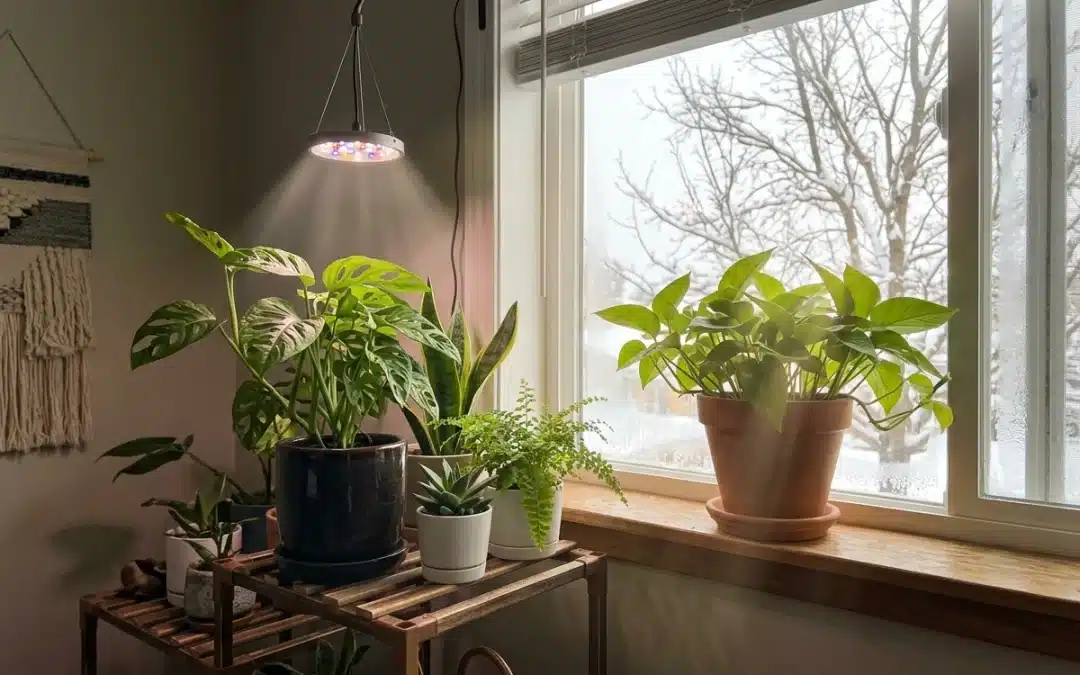
Just be careful with cold glass. A bright windowsill can help with light, but it can also expose the plant to chilly nights and draughts.
If your home is especially dim in winter, a LED grow light with timer can help support healthier growth without making the setup feel complicated.
If natural light drops heavily in your home during winter, an indoor plant grow light guide can help you choose something more suitable than guessing.
Water less often, not on autopilot
One of the most common winter mistakes is sticking to the exact same watering routine used in spring or summer. In winter, many indoor plants grow more slowly and the compost takes longer to dry.
That means plants often need:
- less frequent watering
- lighter watering in some cases
- more patience between checks
- closer attention to the soil, not the calendar
If the compost is still damp below the surface, wait. Watering too soon in winter is one of the fastest ways to end up with yellow leaves, drooping growth, or root trouble.
A moisture meter for indoor plants can be helpful if you tend to water by habit and are not always sure how damp the compost still is below the top layer.
Winter plant stress is often blamed on temperature when it is really caused by moisture staying in the pot too long, which is why top indoor plant watering mistakes are worth checking too.
Keep plants away from cold draughts and hot radiators
Winter placement matters more than many people realise. A plant pressed against cold glass or sitting beside a radiator can start struggling even if the room itself feels comfortable.
Cold draughts can shock leaves and roots, while radiator heat can dry plants out quickly and create uneven conditions around the pot.
Watch out for plants placed:
- right on icy windowsills
- beside frequently opened doors
- close to radiators or heat vents
- in draughty hallways
- near fireplaces or intense heaters
The best winter spot is usually bright, sheltered, and steady rather than extreme in either direction.
The Royal Horticultural Society notes that many houseplants prefer steady indoor conditions and can suffer when placed near cold draughts or direct heat.

Dry indoor air can quietly cause trouble
Heating can make indoor air much drier in winter, and some plants show that stress through brown tips, curling leaves, or crispy edges even when the watering is roughly right.
Tropical houseplants usually notice this more than tougher plants like snake plants or ZZ plants. You do not always need to chase high humidity, but it does help to avoid placing humidity-loving plants in the driest, hottest corners of the room.
A few simple ways to make winter air easier on plants include:
- keeping them away from direct heat
- grouping compatible plants together
- avoiding very dry windowsills above radiators
- improving the overall room setup rather than misting constantly
If winter heating is drying the room out badly, a smart humidifier for indoor plants can help keep conditions more comfortable, especially for tropical foliage plants.
If dry air is one of the main issues in your home, balance humidity for indoor plants can help you improve it without overdoing things.
Do not overfeed winter houseplants
Many indoor plants do not need heavy feeding in winter because growth slows down. If you keep fertilising as if it is peak growing season, you can end up with salt build-up, stressed roots, or weak growth that the plant cannot properly support.
In many cases, the safest winter approach is to:
- reduce feeding
- pause fertiliser for slow or resting plants
- only feed lightly if the plant is still actively growing
- avoid feeding stressed plants just to “perk them up”
Plants recovering from low light, cold stress, or soggy compost usually need better conditions before they need extra fertiliser.
If you think winter feeding has become part of the problem, revive over-fertilized indoor plants can help you correct it before the roots decline.
Clean leaves and check for pests
Winter is also a good time to clean leaves and keep an eye out for pests. Dust reduces how efficiently leaves use limited winter light, and dry indoor conditions can make pests more likely on stressed plants.
Check regularly for:
- dusty leaves
- fine webbing
- sticky residue
- pale stippling
- curling new growth
- tiny insects around stems and undersides of leaves
A simple wipe with a soft damp cloth can help many houseplants make better use of weak winter light.
Some winter leaf drop is not always a disaster
Leaf drop always looks alarming, but a little change is not always a sign the plant is dying. Some indoor plants shed a few older leaves while adjusting to shorter days, lower light, or a new indoor routine.
The bigger concern is when leaf drop comes with other warning signs such as:
- soggy compost
- yellowing all over
- mushy stems
- blackened leaves
- strong cold exposure
- repeated overwatering
That is when you need to check the roots, the light level, and the placement more carefully.
Best winter care by plant type
Not every indoor plant needs exactly the same winter routine.
Tropical foliage plants
These usually need the most protection from cold windows, dry heating, and low humidity. They often benefit from brighter placement and steadier room conditions.
Succulents and cacti
These usually need much less water in winter. They often prefer bright light and a more restrained watering routine rather than extra humidity.
Snake plants and ZZ plants
These are more forgiving, but they still dislike sitting wet in cold rooms. Less watering is usually the key winter change.
Herbs and edible plants indoors
These often need more light support than people expect in winter. If they become leggy or weak, light is usually the first thing to improve.
The biggest winter mistakes that kill indoor plants
Most winter plant losses come from a few repeat mistakes:
- overwatering in low light
- leaving plants beside cold glass
- keeping them too close to radiators
- feeding too heavily during slow growth
- ignoring dry indoor air for tropical plants
- assuming every yellow leaf means the plant needs more water
Avoiding those mistakes is often enough to keep many plants alive and reasonably healthy until spring.
When indoor plants need extra winter help
Sometimes a plant needs a more active intervention rather than a small adjustment. Step in more quickly if you notice:
- a sour smell from the pot
- compost staying wet for far too long
- blackened leaves after cold exposure
- severe wilting with wet soil
- widespread yellowing that keeps getting worse
- no improvement after fixing the obvious issue
That is when it helps to check drainage, root health, and whether the plant is sitting in the wrong conditions altogether.
If the pot has started smelling stale or sour, why indoor plant soil smells bad can help you work out whether winter moisture is becoming a root problem.
FAQs
How often should I water indoor plants in winter?
Usually less often than in summer, but the right timing depends on light, room temperature, and the plant type. Check the compost before watering instead of relying on a fixed schedule.
Should I fertilise indoor plants in winter?
Usually only lightly, or not at all, unless the plant is still actively growing. Many houseplants need less feeding in winter.
Are indoor plants okay near windows in winter?
They can be, but avoid leaves touching cold glass and watch for draughts at night.
Can indoor plants recover after winter stress?
Yes, many can, especially if you catch the problem early and correct the light, watering, and room conditions.
Final Thoughts on Keeping Indoor Plants Alive in Winter
Keeping indoor plants alive in winter is usually less about doing more and more about adjusting what already worked in warmer months. Most plants need less water, steadier placement, better use of available light, and protection from cold glass and dry indoor heat.
Once you make those changes, winter care becomes much less unpredictable.
Related Articles
Keep Winter Plant Care More Manageable
Make cold-season problems easier to prevent
If winter keeps throwing off your plant care routine, improving the wider room setup can make a bigger difference than reacting to one symptom at a time. Read Indoor Plant Maintenance Routine for simple ways to stay more consistent through the colder months.