
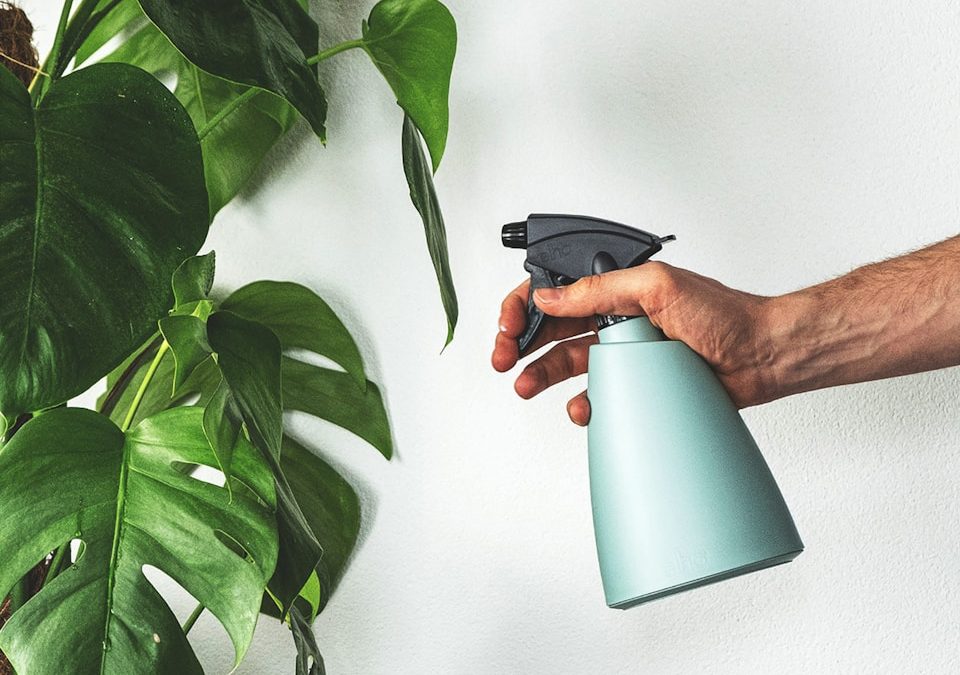
How often to mist indoor plants depends on why you’re doing it. Misting can help with leaf hygiene and short-term comfort for humidity-loving plants, but it usually doesn’t raise room humidity for long.
Contents
- 0.1 What misting actually does
- 0.2 How often to mist indoor plants for humidity
- 0.3 How often to mist indoor plants for leaf care
- 0.4 Plants you shouldn’t mist
- 0.5 How to mist properly (so it helps, not harms)
- 0.6 Long-tail quick answers people search for
- 0.7 FAQs About How Often to Mist Indoor Plants
- 0.8 Final Thoughts on How Often to Mist Indoor Plants
- 0.9 Related Articles
- 1 Make Indoor Plant Care Feel More Predictable
Quick answer: how often to mist indoor plants
If you mist for humidity, think occasionally (it’s short-lived) — use a humidifier or pebble tray for a bigger effect.
If you mist for leaf care, 1–2 times a week is usually plenty (and wiping leaves often works better).
Don’t mist fuzzy-leaved plants or succulents (higher risk of spots/rot).
Always mist lightly, in the morning, with good airflow.
Do this first: Decide whether the goal is humidity or clean leaves — the “right” misting schedule changes completely based on that.
If dusty leaves are making plants look tired (and making pest checks harder), Clean Dust Off Indoor Plant Leaves is a useful companion read.
What misting actually does
A lot of people mist to “increase humidity,” but the boost is usually brief — often minutes — because the water evaporates quickly.
Some extension guidance even notes you’d have to mist extremely frequently to meaningfully change overall humidity.
So misting is best thought of as:
a short-term local effect (not a room-humidity solution), and/or
a way to freshen leaves and make inspections easier.
How often to mist indoor plants for humidity
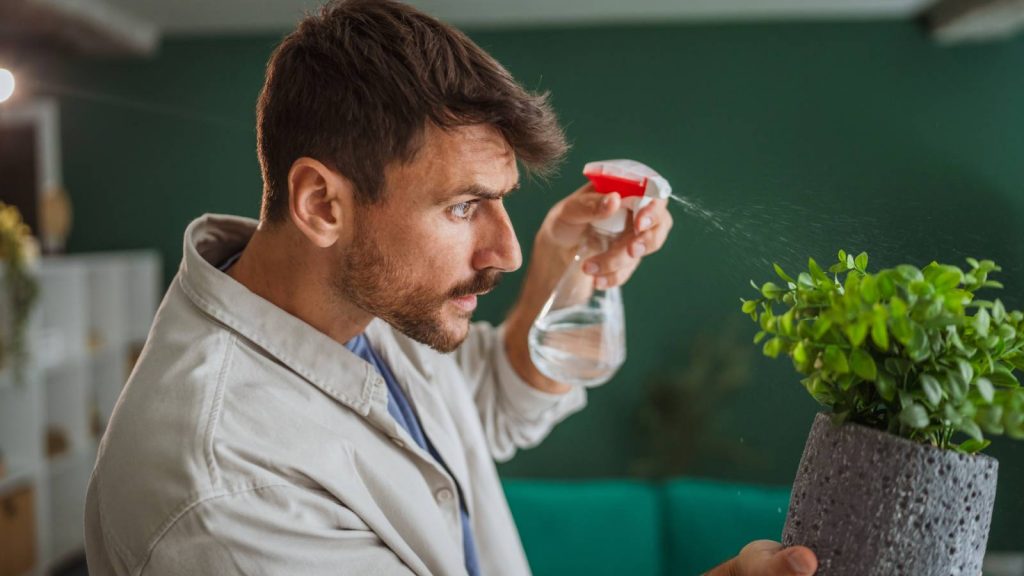
If your home air is dry (especially with heating), misting can be a light “top-up,” but it’s not the most reliable tool for humidity.
A sensible misting rhythm for humidity-loving plants:
2–4 times per week, lightly (not soaking), if the plant enjoys humidity
Mist in the morning, so leaves dry before evening (helps reduce leaf-spot risk).
Better than misting (if humidity is the real problem):
group plants together
use a pebble tray
run a humidifier
A small digital hygrometer for indoor plants makes it obvious whether you’re dealing with low humidity or something else.
If you want a clearer way to keep humidity steady without guessing, Balance Humidity for Indoor Plants pairs well with this topic.
If you’re misting mainly to “raise humidity,” it’s worth knowing the effect is usually brief — Penn State Extension notes that humidity rises after misting only until the water evaporates, which can be just minutes.
How often to mist indoor plants for leaf care
If your main goal is leaf hygiene, you usually need less misting than you think.
A practical schedule:
1–2 times per week for big-leaf tropical plants that collect dust
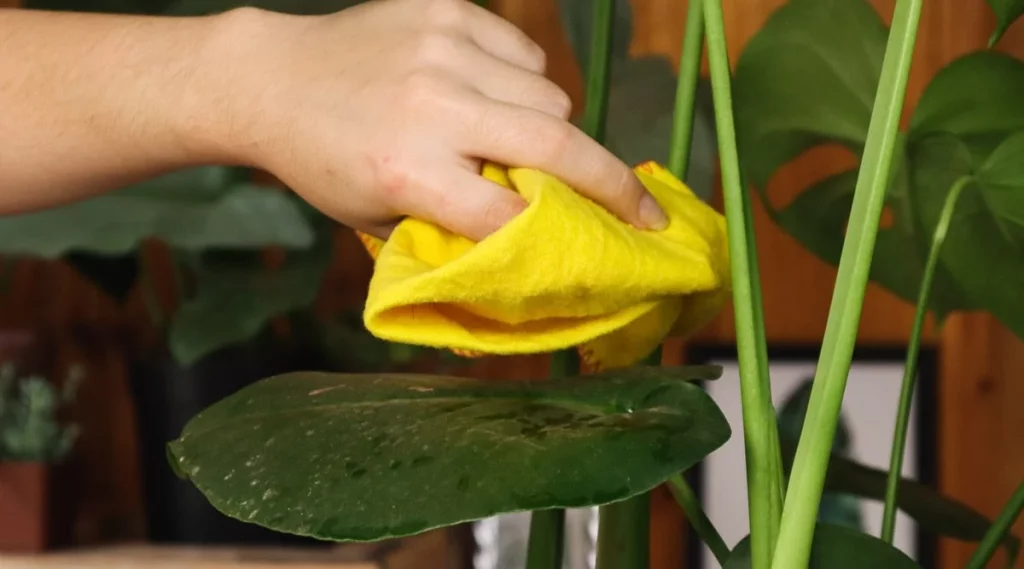
Instead of misting daily, do a proper leaf wipe/check weekly (often more effective)
This is also one of the easiest ways to spot pests early — mites, thrips, and scale often start on undersides.
If you’re building a simple weekly habit that stops problems snowballing, Indoor Plant Maintenance Routine is a good “keep it consistent” read.
Plants you shouldn’t mist
Misting isn’t universal. Avoid misting:
succulents and cacti (they prefer drier leaf surfaces)
fuzzy leaves (e.g., African violets)
plants prone to spotting if your water leaves marks
any plant already showing leaf-spot issues
If your plant is already struggling with browning tips or patchy marks, misting can sometimes make diagnosis harder. In that case, Brown Leaf Tips on Indoor Plants can help you troubleshoot the real cause.
How to mist properly (so it helps, not harms)
Under each step, keep it simple and consistent.
Use a fine mist, not a jet
A fine mist settles evenly without pooling.
Aim for leaves, not the crown
Avoid soaking the centre of rosette plants.
Mist in the morning
Leaves should dry before the cooler evening hours.
Keep airflow gentle
Stagnant wet leaves are where problems start.
A fine mist plant spray bottle makes it easier to mist lightly (without drenching).
Long-tail quick answers people search for
Should you mist indoor plants every day?
Usually no. Daily misting is rarely necessary, and if the goal is humidity it’s not very efficient because the effect is short-lived.
Is misting better than watering?
No — watering is about roots and soil. Misting is optional leaf care or a short-term comfort boost.
Why do leaves get spots after misting?
Often mineral-heavy water marks, or leaves staying wet too long (low airflow / evening misting).
What if you mist and still get spider mites?
Spider mites can still show up in warm, dry homes. Consistent wiping/inspection plus targeted treatment is usually more effective than misting alone.
If you suspect mites, Spider Mites Indoor Plants helps you confirm and act fast.
FAQs About How Often to Mist Indoor Plants
How often should you mist tropical houseplants?
Often 2–4 times per week lightly is enough if the plant benefits from humidity. If you need real humidity changes, use other methods.
Can misting cause fungus or mould?
It can if leaves stay wet for long periods, especially in still air or when misted late in the day.
Should you mist in winter?
You can, but winter is when indoor air is driest — it’s usually better to focus on steadier humidity rather than lots of misting.
Is wiping leaves better than misting?
For cleanliness and pest spotting, yes — wiping is often more effective than frequent misting.
Final Thoughts on How Often to Mist Indoor Plants
If you’re figuring out how often to mist indoor plants, start by deciding the goal. For humidity, misting is usually a short-lived boost — helpful sometimes, but not the main fix. For leaf care and inspections, a light mist once or twice a week (or a weekly wipe) is often plenty. Keep it morning-only, light, and supported by gentle airflow.
Related Articles
Stop guessing whether it’s “dry air” or something else
Make Indoor Plant Care Feel More Predictable
Misting can be useful, but it’s easy to rely on it for the wrong reason. When you understand humidity, airflow, and leaf care, you’ll fix the real cause faster — and plants stay healthier with less effort.