
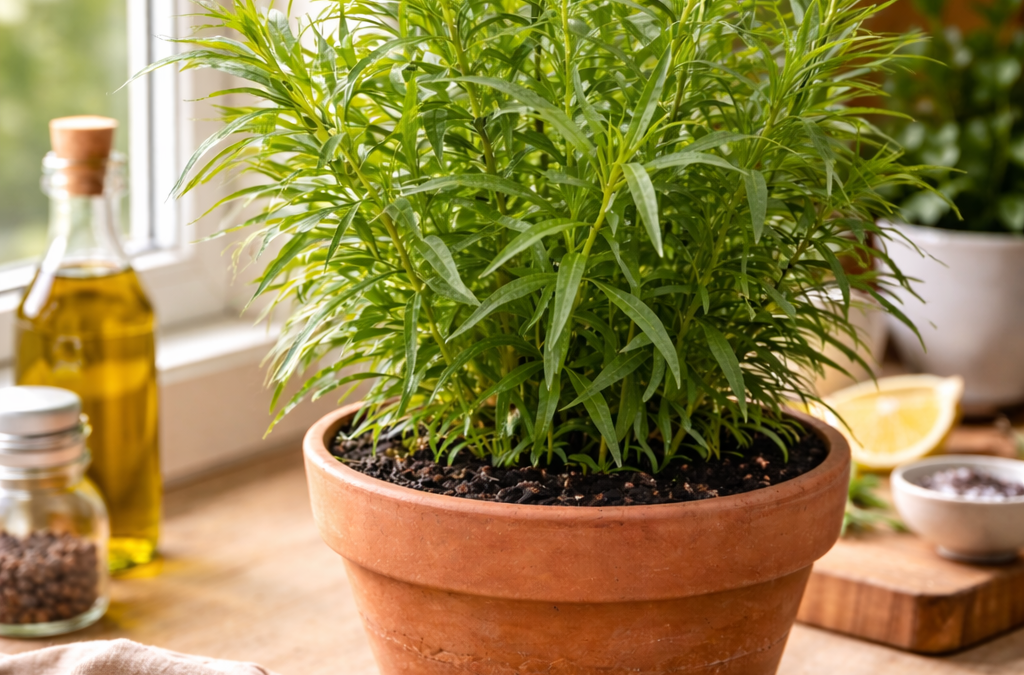
If you want to grow tarragon indoors, the biggest thing to know is this: French tarragon is the one you want for cooking, and it grows best with very bright light, sharp drainage, and a lighter watering routine than softer herbs. Indoors, it can do well in a pot, but it usually performs best when you keep the setup simple and don’t overwater it. Illinois Extension notes that small pots of tarragon can be grown indoors in very bright light, with the soil kept on the dry side.
Contents
- 0.1 French tarragon vs Russian tarragon indoors
- 0.2 Best light for growing tarragon indoors
- 0.3 Best pot and soil to grow tarragon indoors
- 0.4 How to water tarragon indoors
- 0.5 How to keep tarragon bushy indoors
- 0.6 Feeding tarragon indoors
- 0.7 Common tarragon problems indoors
- 0.8 Harvesting tarragon indoors
- 0.9 FAQs About How to Grow Tarragon Indoors
- 0.10 Final Thoughts on How to Grow Tarragon Indoors
- 0.11 Related Articles
- 1 Build a Brighter Setup for Better Flavour
Quick answer: grow tarragon indoors
Grow French tarragon, not Russian tarragon, for the best flavour.
Keep it in the brightest indoor spot you have.
Use a pot with drainage holes and a free-draining compost.
Water thoroughly, then let the compost dry a little before watering again.
Trim regularly to keep the plant compact and leafy.
Do this first: Check which tarragon you actually have. If it’s Russian tarragon, the flavour is usually weaker, so it won’t give the same result in the kitchen.
If you want another herb with similar “bright light + lighter watering” needs, Grow Marjoram Indoors fits nicely into the same indoor herb cluster.
French tarragon vs Russian tarragon indoors
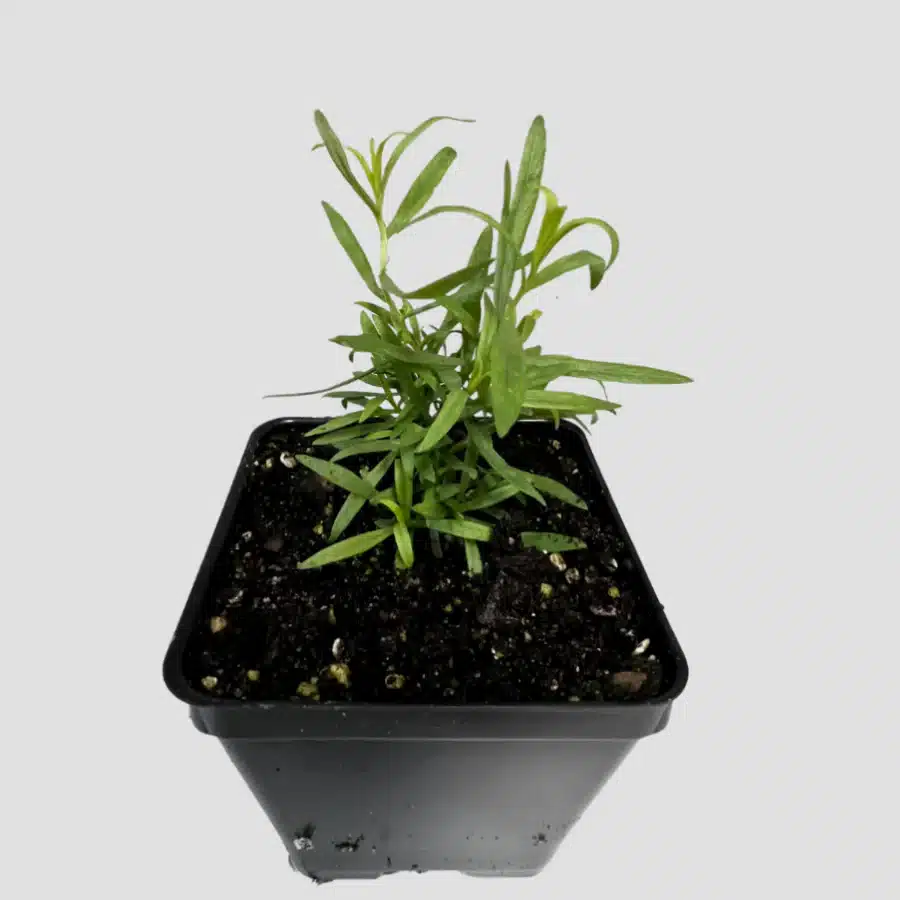
This matters more than most people realise. French tarragon is the preferred culinary type, while Russian tarragon is usually easier to grow from seed but has a weaker flavour. RHS notes that French tarragon is best grown in a container and protected from wet, cold conditions, while French tarragon does not produce viable seed and is usually propagated by division or cuttings.
So if you want tarragon indoors for cooking, the better option is:
French tarragon
bought as a plant, division, or cutting
grown in a container with strong light and good drainage
Best light for growing tarragon indoors
Tarragon indoors needs stronger light than many people expect. Illinois Extension says indoor tarragon should be grown where very bright light is available.
If the light is too weak, tarragon often becomes:
thin and floppy
less leafy
less strongly flavoured
slower to recover after cutting
A bright south-facing window is usually the easiest starting point. If your home is dim for part of the year, Best Lights for Indoor Gardening is the best supporting read because better light will usually help more than extra feed.
A clip-on full-spectrum grow light for herbs can help keep tarragon more compact if natural light is not strong enough.
Best pot and soil to grow tarragon indoors
Tarragon hates heavy, wet compost. RHS says French tarragon should be grown in well-drained soil and can struggle in heavy, poorly drained conditions.
A better indoor setup includes:
a pot with drainage holes
a saucer you can empty
compost that drains freely
a container that is not too oversized
RHS also advises that a container at least 20cm wide and deep is suitable for one plant.
If your indoor pots tend to stay wet for days, Improve Indoor Plant Drainage is the best supporting page because that’s usually the real cause of weak herb growth indoors.
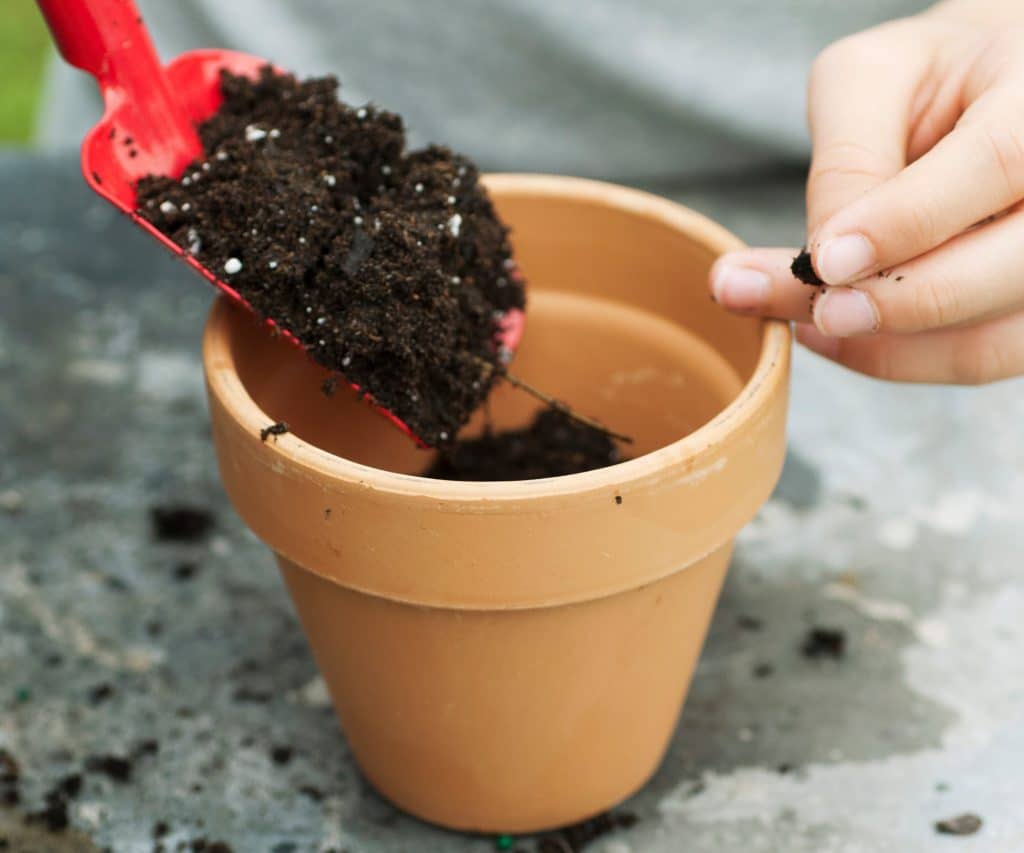
A terracotta herb pot with drainage holes and saucer is a good match for tarragon because it helps the compost dry more evenly.
How to water tarragon indoors
Tarragon prefers a lighter watering rhythm than herbs like basil or coriander. Illinois Extension specifically advises keeping the soil on the dry side for indoor tarragon.
A simple routine:
water thoroughly
let excess drain away
wait until the top layer dries a little before watering again
Avoid:
daily splashes
soggy saucers
compost that always feels heavy
If you want a simple weekly check routine rather than guessing, Indoor Plant Maintenance Routine fits well here because tarragon does better with consistent care than reactive care.
How to keep tarragon bushy indoors
Tarragon can get thin and sparse if it’s left untouched too long. Regular trimming helps keep it leafier and more useful.
The easiest shaping method:
trim tips often
cut above leafy nodes
avoid letting the plant get too tall and woody
RHS advises cutting French tarragon back to the lowest new shoots near the base in mid to late spring, which supports stronger new growth.
A pair of micro-tip herb pruning snips makes it easier to trim tarragon neatly in a small pot.
If you want a simple “where to cut and why” guide, How to Prune Indoor Plants is a useful supporting read.
Feeding tarragon indoors
Tarragon generally prefers moderate fertility rather than heavy feeding. Illinois Extension’s general herb guidance notes that herbs usually perform best with moderate fertility, not rich, overfed conditions.
A simple approach:
don’t feed very young plants straight away
feed lightly during active growth if the plant has been in the same compost for a while
avoid heavy feeding in low light
A diluted seaweed-based liquid plant feed is a safer choice than anything strong if indoor tarragon starts looking pale or tired.
If you want a simple schedule, How Often to Fertilize Indoor Plants helps keep feeding straightforward without turning every slow spell into a fertiliser problem.
Common tarragon problems indoors
Tarragon is floppy and thin
Usually weak light. Move it brighter first.
Growth is very slow
Often caused by low light, cold indoor conditions, or compost staying wet for too long.
Leaves are pale
This can be low light or a plant that has been in old compost too long.
Tarragon tastes weak
This is often the wrong variety. Russian tarragon is usually much less flavourful than French tarragon.
A useful reminder here is that Illinois Extension’s French tarragon guidance says indoor plants will not be of the same quality as those grown outdoors, but small amounts can still be harvested fresh if you give them very bright light and keep the soil on the dry side.
Harvesting tarragon indoors
Harvest a little and often rather than stripping the whole plant. That keeps the plant tidier and encourages more usable leafy growth.
A simple harvesting rule:
snip small stems regularly
harvest across the plant, not just from one side
combine harvesting with light shaping
If you want another indoor herb that works well as part of a sunny kitchen setup, Grow Thyme Indoors is a useful next read.
FAQs About How to Grow Tarragon Indoors
Can tarragon grow indoors all year?
Yes, but it usually performs best with very bright light and lighter watering.
What type of tarragon is best indoors?
French tarragon is best for cooking. Russian tarragon is usually weaker in flavour.
Can I grow French tarragon from seed indoors?
Usually no. French tarragon does not produce viable seed, so it is normally grown from cuttings or division.
How often should I water tarragon indoors?
Water when the top layer has dried a little. Indoors, tarragon generally prefers the compost kept on the drier side.
Final Thoughts on How to Grow Tarragon Indoors
If you want to grow tarragon indoors successfully, start with the right variety, give it the brightest light you can, and resist the urge to keep the compost too wet. French tarragon is the better culinary choice, and with the right setup, it can give you small but worthwhile fresh harvests indoors.
Related Articles
Keep indoor herbs productive without overcomplicating them
Build a Brighter Setup for Better Flavour
Tarragon grows best indoors when the basics stay simple: very bright light, fast drainage, and regular light trimming. Once those are in place, it becomes much easier to keep leafy and useful in the kitchen.