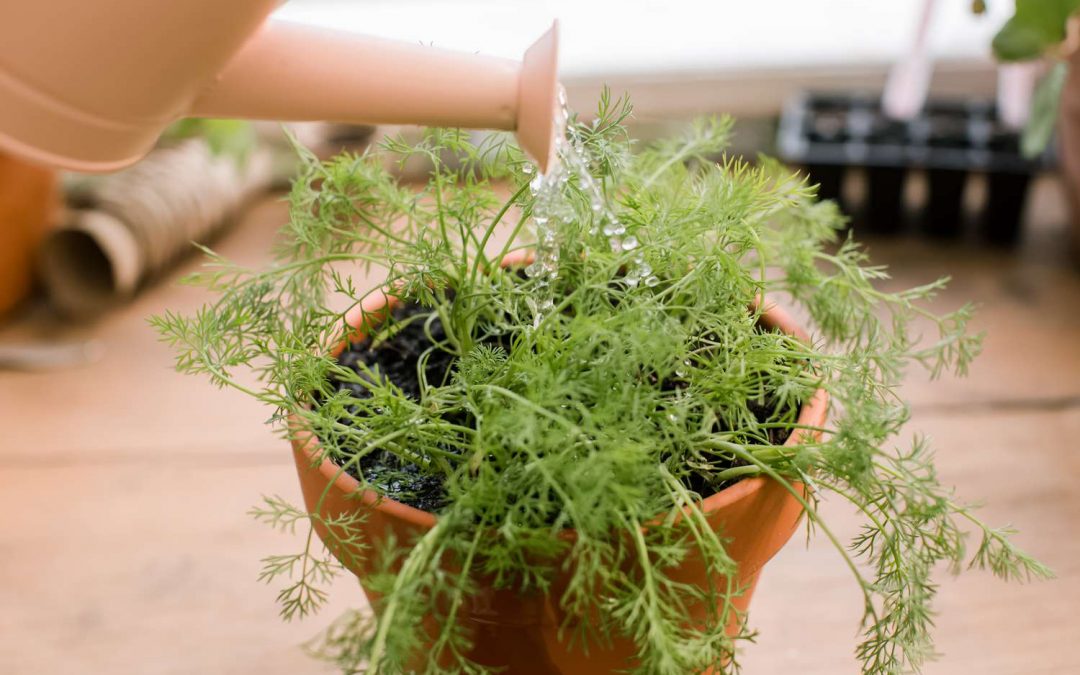
To grow dill indoors successfully, you mainly need strong light and a pot that’s deep enough for the roots. Dill also dislikes being moved once settled, so the easiest approach is sowing it straight into the pot you’ll keep it in.
Contents
- 0.1 What dill needs indoors to stay upright
- 0.2 Seeds vs shop-bought dill indoors
- 0.3 How to grow dill indoors from seed
- 0.4 Light for dill indoors (the difference between sturdy and floppy)
- 0.5 Watering dill indoors without soggy compost
- 0.6 Feeding dill indoors (keep it gentle)
- 0.7 Harvesting dill so it keeps producing
- 0.8 Long-tail quick fixes (fast answers)
- 0.9 FAQs About Growing Dill Indoors
- 0.10 Final Thoughts on Growing Dill Indoors
- 0.11 Related Articles
- 1 Build a Simple Herb Routine That Prevents Floppy Growth
Quick answer: grow dill indoors
Sow dill directly into its final pot (it hates transplanting).
Give bright light (sunny windowsill or grow light) so stems don’t flop.
Keep compost evenly moist, not soggy.
Harvest little-and-often, cutting outer stems first.
Expect best growth in brighter months; it may slow down in winter.
Do this first: Choose a deeper pot and sow directly into it — that one decision prevents most indoor dill problems.
If you’re building an easy indoor herb setup, Low Maintenance Indoor Herb Garden Ideas is a useful companion for pairing herbs that suit small spaces.
What dill needs indoors to stay upright
Dill grows tall and airy, so it needs conditions that support strong stems.
Aim for:
Bright light most days
A deeper pot for roots and stability
Steady watering without waterlogging
Light airflow (stagnant air can make growth weaker)
If your dill looks tall and collapses, it’s usually light-related.
If you’re unsure what “bright enough” actually looks like indoors, Best Lights for Indoor Gardening explains it clearly without making it complicated.
Seeds vs shop-bought dill indoors
Growing from seed is usually the better indoor option because you control spacing and avoid transplant stress.
Seed-grown dill often grows stronger indoors and lasts longer.
Shop-bought pots are often overcrowded and short-lived (fine for quick harvesting, but not ideal as a long-term plant).
If you do buy a shop pot, consider treating it as a “use soon” herb rather than something to keep for months.
How to grow dill indoors from seed
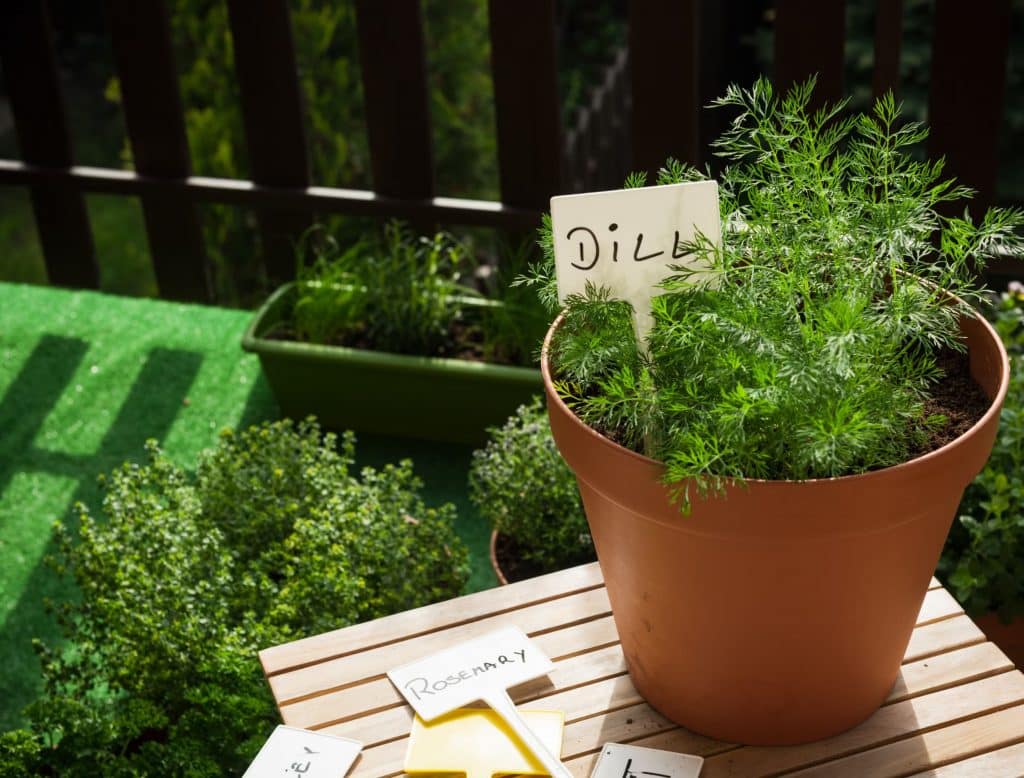
Sowing directly into the final pot gives the best results.
- Pick a deeper pot
Dill forms a long root, so depth matters more than width. - Sow thinly
Sprinkle seeds, cover lightly (around 0.5–1 cm), and water gently. - Keep evenly moist
Compost should feel like a wrung-out sponge — moist, but never wet and heavy. - Thin seedlings
Once seedlings have a few true leaves, thin them so they aren’t competing for light and space. - Give strong light early
Good light from day one prevents weak, floppy stems later.
For realistic expectations around sowing and growing herbs in containers, the Royal Horticultural Society’s dill growing guidance is a helpful reference for spacing and harvest timing.
Light for dill indoors (the difference between sturdy and floppy)
Dill wants more light than most leafy herbs.
Good options:
The brightest window you have
Rotating the pot weekly
Extra lighting if growth is pale or leaning
If dill is stretching toward the window or falling over, increase light first before changing feeding or watering.
A clip-on full-spectrum grow light works well for herbs on shelves or darker windowsills and helps dill stay more upright.
If you also grow parsley, the setup overlaps a lot — Grow Parsley Indoors is a useful comparison for keeping herbs compact under indoor light.
Watering dill indoors without soggy compost
Dill likes steady moisture, but seedlings can fail fast if compost stays waterlogged.
A simple rhythm:
Water when the surface starts to dry
Water thoroughly so it drains out
Empty the saucer after watering
Avoid “tiny top-ups” every day — that tends to keep compost permanently damp and weakens roots.
If compost stays wet for days, the fix is usually drainage and mix texture — Improve Indoor Plant Drainage helps you tighten this up quickly.
Feeding dill indoors (keep it gentle)
Dill doesn’t need heavy feeding. In fresh compost, it can often grow for weeks without anything extra.
If growth slows in a small pot:
feed lightly during active growth
reduce or pause feeding when light is low (often winter)
don’t feed a stressed plant until light/watering are stable
A gentle option that’s hard to overdo is a seaweed-based liquid plant feed, especially if you’re growing several leafy herbs indoors.
If you want a simple schedule to follow (without guessing), How Often to Fertilize Indoor Plants makes frequency much clearer.
Harvesting dill so it keeps producing
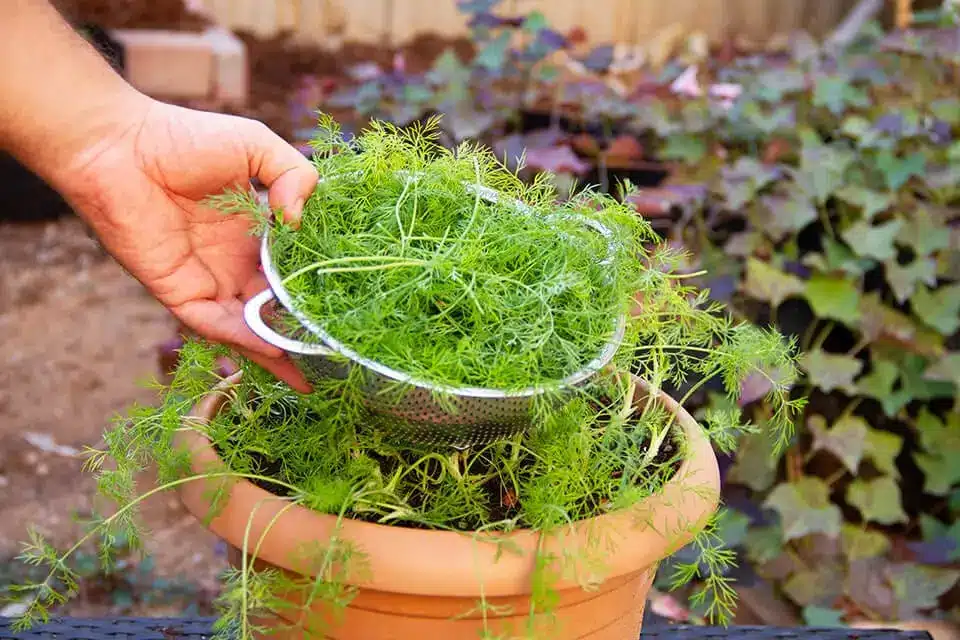
Dill can keep giving you fresh leaves if you harvest it the right way.
Do this:
Cut outer stems first
Harvest little-and-often rather than stripping the whole plant
Leave enough growth so it can recover (roughly two-thirds of the plant)
If you want neater, cleaner harvesting in small pots, micro-tip pruning snips make it easier to cut stems without crushing them.
Long-tail quick fixes (fast answers)
Why is my dill falling over indoors?
Usually low light. Move it brighter, rotate the pot weekly, and avoid overwatering.
Why is indoor dill growing slowly?
Often cool temperatures or low light. Keep it bright and don’t feed heavily in dim conditions.
Can dill grow indoors all year?
It can live indoors year-round, but growth usually slows in winter unless light is strong.
How long does dill take to grow indoors?
Leaves can be harvestable within weeks, but it depends heavily on light and warmth.
FAQs About Growing Dill Indoors
Does dill need full sun indoors?
It needs very bright light. A sunny window helps, and a grow light can make a big difference in darker homes.
Can you grow dill indoors from cuttings?
Dill is best from seed. Cuttings are unreliable compared to simply sowing again.
How often should you water indoor dill?
When the surface starts to dry, then water thoroughly. Seedlings need steadier moisture than mature plants.
Should you pinch dill like basil?
Not in the same way. Harvesting outer stems regularly is usually enough to keep it producing.
Final Thoughts on Growing Dill Indoors
To grow dill indoors well, start with the right pot and strong light. Sow directly into the final container, keep moisture steady without soaking the compost, and harvest outer stems regularly. With a bright spot and a simple routine, dill can be one of the most rewarding indoor herbs.
Related Articles
Keep indoor herbs productive with less effort
Build a Simple Herb Routine That Prevents Floppy Growth
Dill is easy once the basics are steady: strong light, a deep pot, and watering that keeps compost moist but never waterlogged. A simple routine helps you spot weak growth early and keep harvesting fresh leaves without the plant collapsing.