
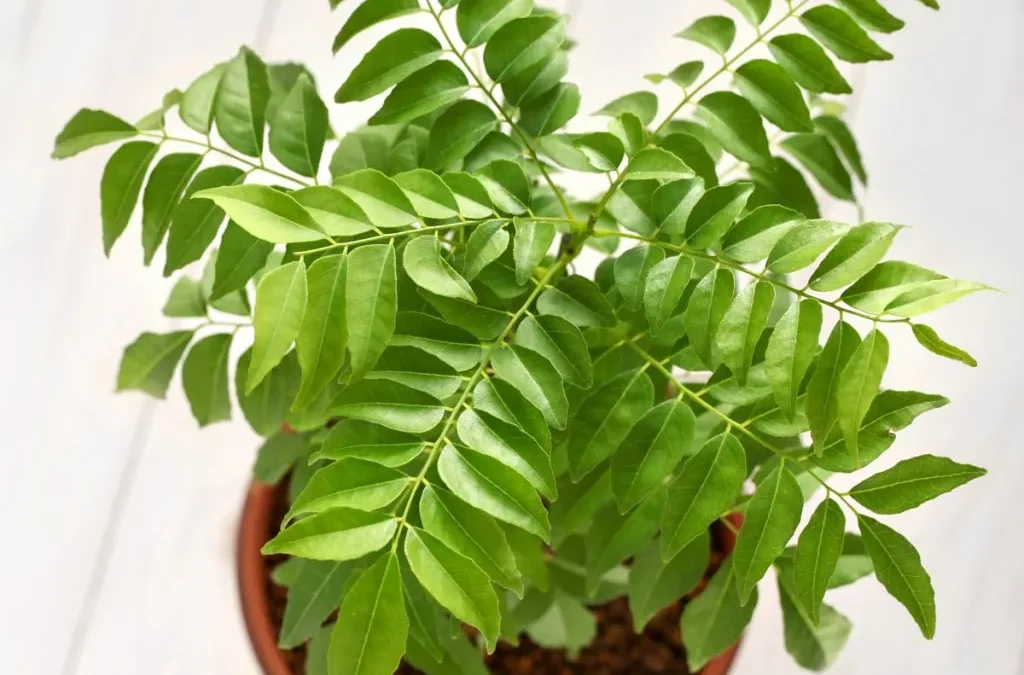
To grow curry leaves indoors, start with a bright position, a pot that drains and protection from cold. Curry leaf is a tender tree rather than a quick-growing kitchen herb, so expect modest picking from a small plant and slower growth during a UK winter.
Quick answer: grow curry leaves indoors
- Place the plant by a bright window with plenty of daylight. A grow light may help if the room is dim in winter.
- Use a pot with drainage holes and moisture-retentive but well-drained compost.
- Check the compost before watering; water thoroughly when it begins to dry, then empty the saucer.
- Keep the plant sheltered from frost and cold draughts.
- Pick lightly from an established, actively growing plant rather than stripping a small one.
Do this first: Check both the light and the compost. A brighter position will not fix roots left sitting in water, and extra feed will not make up for a dark room.
Why curry leaves can be tricky indoors
Curry leaf, Bergera koenigii (also known as Murraya koenigii), is a tropical to subtropical tree grown for its aromatic leaves. The RHS recommends growing it indoors or under cover in the UK. In a pot, the practical challenge is balancing enough light and water for growth without leaving the roots cold and wet.
It is worth deciding whether you have space for a long-term plant rather than expecting the quick, repeated harvests of an annual herb. For other small-space options, see indoor edible plants.
Best light for growing curry leaves indoors
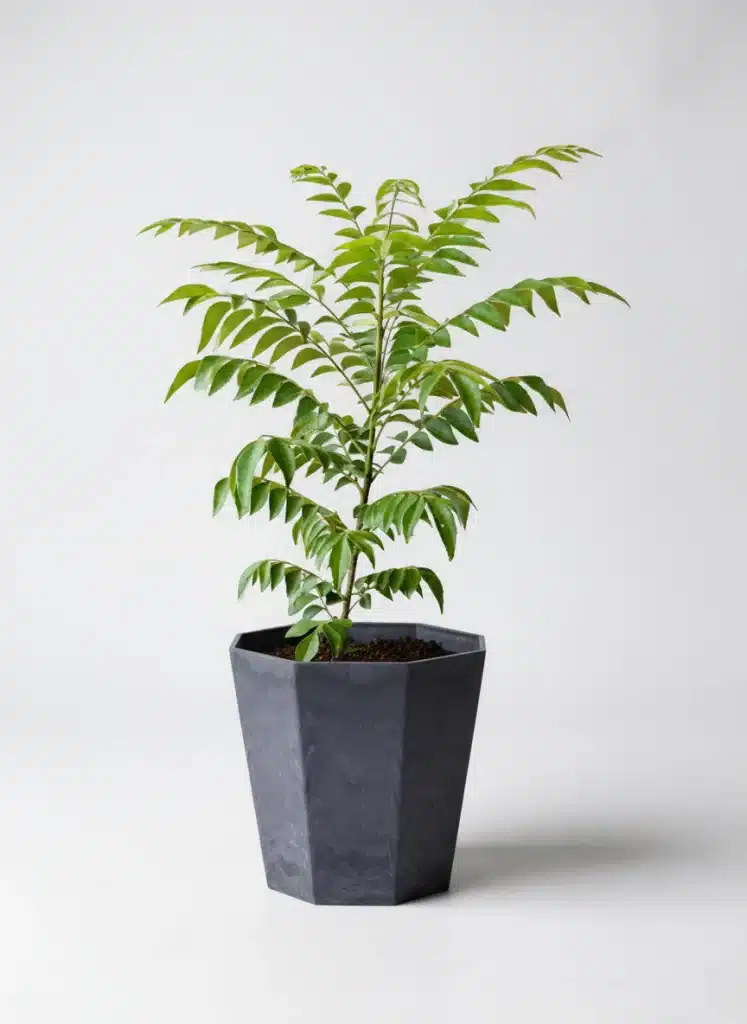
Choose a bright windowsill or a position close to a bright window. Curry leaf grows in full sun or partial shade, but daylight falls away quickly farther into a room. If the plant has thin, stretched new growth, consider whether its position is too dim before increasing fertiliser.
Watch how the plant responds when moving it into stronger sun: a sudden change can damage leaves. In a dim winter room, a suitable grow light may help, although it does not replace warmth or sensible watering.
Best pot and compost for curry leaves
Choose a container with drainage holes, and empty any water that collects in its saucer. The RHS specifies moisture-retentive, well-drained compost: the aim is to provide moisture while allowing excess water to escape, not to keep the pot either soggy or permanently dry.
A pot only modestly larger than the rootball is easier to monitor than a much larger one. Terracotta is optional; drainage holes and how you water matter more than the pot material.

How to water curry leaves indoors
Feel the compost a few centimetres below the surface rather than watering on a fixed schedule. When it is beginning to dry, water until excess runs from the drainage holes, then empty the saucer. Check less frequently during slow winter growth, but do not assume the plant needs no water.
If leaves wilt or yellow, check the compost before reaching for the watering can: both overly wet and overly dry roots can cause problems. Compost that remains soggy, especially in a cold position, calls for a check of drainage and watering frequency.

Temperature and placement
Keep curry leaf in a sheltered, frost-free place. In winter, check whether a bright windowsill becomes cold overnight, and keep foliage clear of cold glass and draughts. A cooler position combined with damp compost calls for particular care with watering.
The plant can spend summer outdoors in suitable conditions, but move it gradually into brighter outdoor light and bring it back under cover before cold weather.
How to keep a curry leaf plant compact
Once the plant is established and producing healthy new growth, lightly pinch or trim a long shoot to shape it. Make cuts just above a leaf or branching point, and leave plenty of foliage. Avoid repeated pruning of a small, weak or slow-growing plant; improve its growing conditions first.
Trimming can help maintain a manageable shape and supply leaves for cooking, but it cannot guarantee a large indoor harvest.
Feeding curry leaves indoors
If an established plant is growing actively, use a general-purpose feed suitable for container plants according to its label. Reduce or pause feeding when growth slows in winter. Do not add extra feed as a first response to yellow leaves or a struggling plant: check light, roots, moisture and pests first.
Common curry leaf plant problems indoors
Check in this order: feel the compost below the surface; confirm that the pot drains; review recent changes in light or temperature; then inspect the leaves and stems for pests. The RHS lists red spider mite, scale insects and mealybug as possible pests of curry leaf.
Dropping or yellowing leaves
These symptoms do not point to one cause. Compost that stays wet, drought, a cold draught, low light or pests may be involved. A few older leaves dropping is different from widespread or continuing leaf loss.
Tall, sparse growth
Check light levels first. Once the plant is growing well, light shaping can help keep it compact; cutting back a struggling plant is unlikely to solve a dark position.
Very slow growth
Growth may slow when winter light is limited. Check that the plant is warm enough and that the roots are neither waterlogged nor repeatedly left very dry. Wait for healthy new growth before harvesting heavily or increasing feed.
Harvesting curry leaves indoors
Pick leaves as needed from a healthy, established plant. Take a little from more than one shoot and leave enough foliage for continued growth. If the plant is newly bought, small or recovering from leaf loss, wait for fresh growth before picking again.
Fresh leaves are valued in cooking and can also be frozen for later use. An indoor plant may provide occasional leaves rather than a steady supply; the amount depends on its size and growing conditions. If you want another longer-term culinary plant for a bright space, see the guide to growing bay laurel in pots.
FAQs about growing curry leaves indoors
Can curry leaves grow indoors all year?
Yes, if the plant has suitable light, a frost-free position and appropriate watering. Growth may slow in winter, so reduce picking and adjust watering to the conditions.
Does a curry leaf plant need direct sunlight indoors?
It needs a bright position. The RHS lists full sun or partial shade; watch for signs of stress if moving a plant abruptly into strong direct sun.
Why is my curry leaf plant losing leaves?
Check moisture and drainage first, then consider cold, light, recent moves and pests. Leaf loss alone cannot confirm the cause.
Is curry leaf easy to grow indoors?
It is possible, but less straightforward than a quick-growing herb. A bright, sheltered place and careful watering give it a better starting point.
Final thoughts
Treat curry leaf as a tender potted tree: provide good light, well-drained compost and protection from cold. Check conditions before trying to correct slow growth with feed or pruning, and harvest conservatively until the plant is growing strongly.
Related articles
Keep indoor edible plants healthier for longer
Build a Simple Setup That Makes Curry Leaves Easier
Curry leaves indoors do best when the setup stays steady: bright light, warm placement, sharp drainage, and regular light pruning. Once those basics are in place, the plant is much easier to keep leafy and productive.