
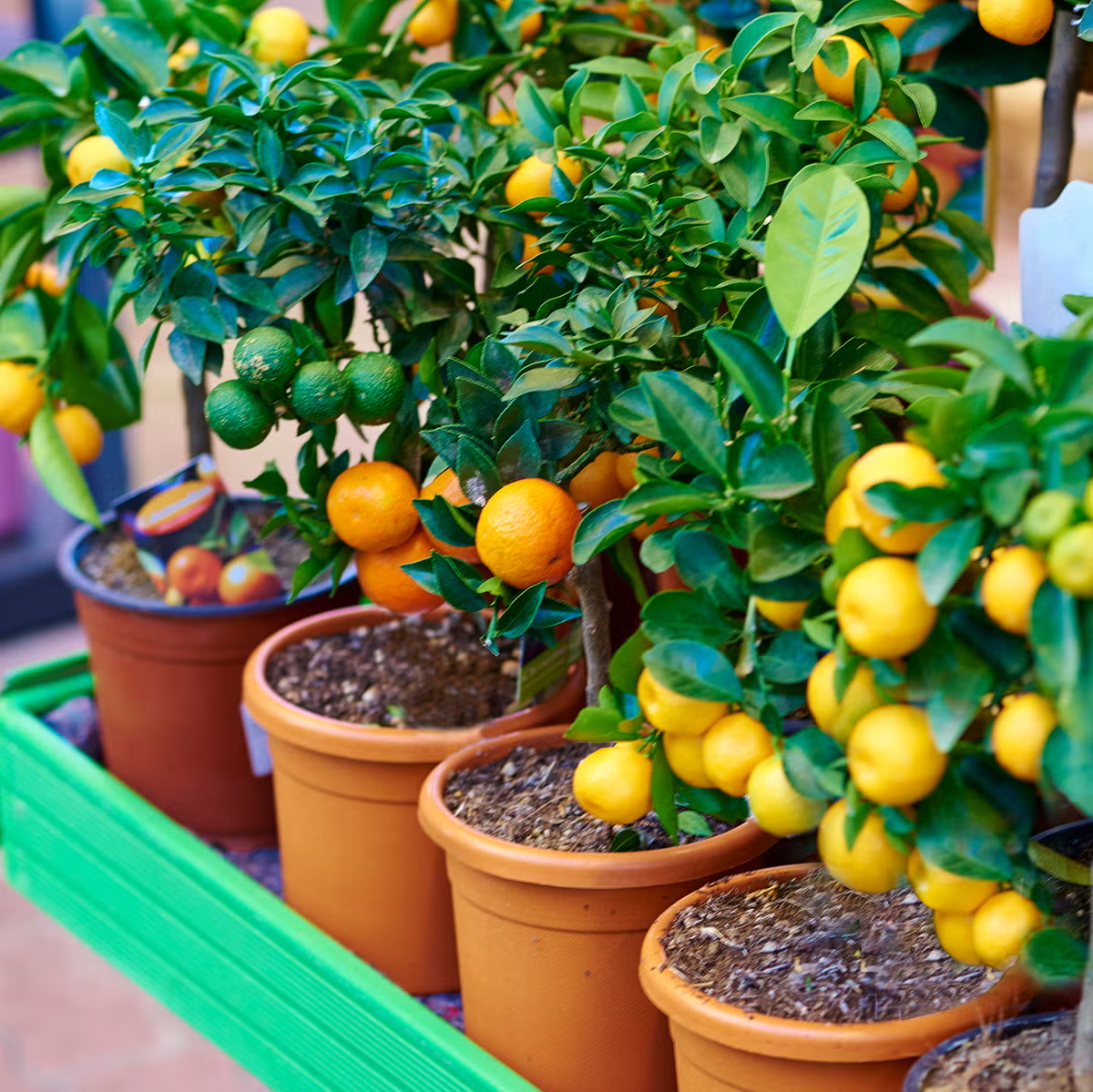
Growing dwarf fruit trees indoors is possible in the UK if you nail the basics: light, drainage, and patience. The best indoor choices are usually dwarf citrus, calamondin, and compact figs — and they do best in a bright spot with a steady routine.
Quick answer: best dwarf fruit trees for indoors
Best beginner option: dwarf lemon or calamondin citrus
Best for smaller homes: compact lime or kumquat
Best “different” choice: dwarf fig (if you can give strong light)
Expect slower growth indoors — focus on healthy leaves first, fruit second
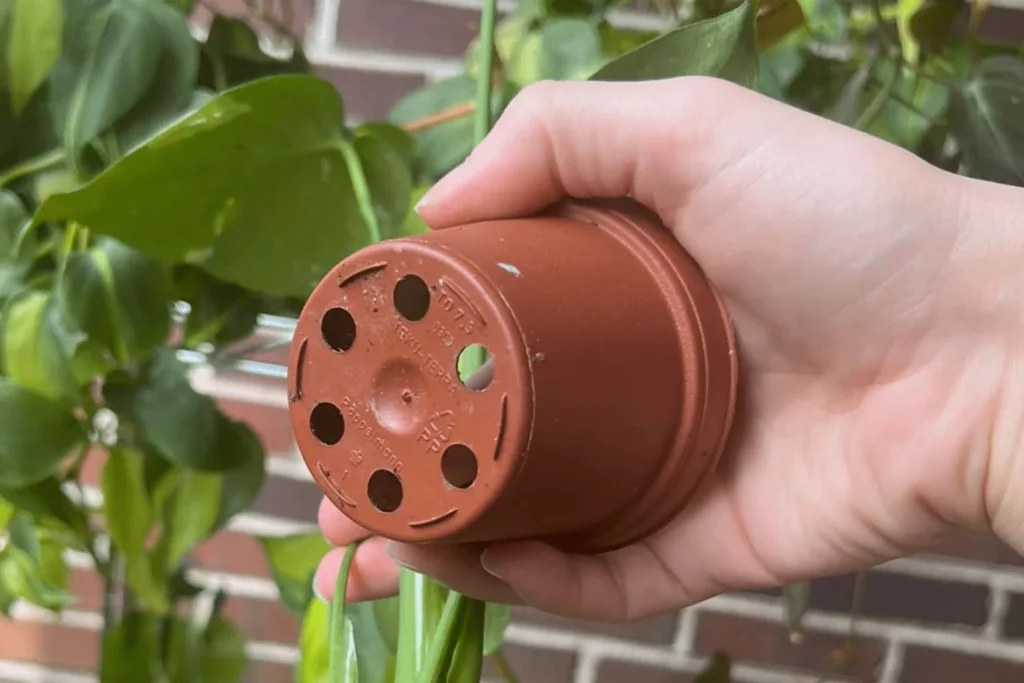
Use excellent drainage and avoid letting water sit in the saucer
Do this first: Put your tree in the brightest spot you have (south-facing window if possible) and check the pot has drainage holes before you worry about feeding.
Contents
- 0.1 What “indoors” really means for fruit trees
- 0.2 Best dwarf fruit trees for indoors (ranked by “success rate”)
- 0.3 Light: the #1 reason indoor fruit trees don’t fruit
- 0.4 Pot, drainage, and compost: make water leave fast
- 0.5 Watering: how to get it right without guessing
- 0.6 Feeding: when to fertilise (and when not to)
- 0.7 Pollination indoors: why flowers fall off (and what to do)
- 0.8 4 quick “fix in 10 minutes” problems
- 0.9 FAQs about dwarf fruit trees indoors
- 0.10 Final Thoughts on Dwarf Fruit Trees for Indoors
- 0.11 Related Articles
- 1 Build a Simple Indoor Tree Routine That Actually Sticks
What “indoors” really means for fruit trees
Indoor fruit trees don’t fail because of “bad luck” — they usually fail because indoor conditions are dim, still, and too wet in the pot.
If you remember one thing: fruiting is a bonus. Your first goal is steady growth (new leaves, healthy colour, no leaf drop). Once that’s consistent, flowers and fruit become much more realistic.
If you’re choosing a tree right now, start with your most reliable options like Dwarf Lemon Trees Indoors.
Best dwarf fruit trees for indoors (ranked by “success rate”)
Most indoor growers do best with trees that tolerate containers and imperfect indoor light.
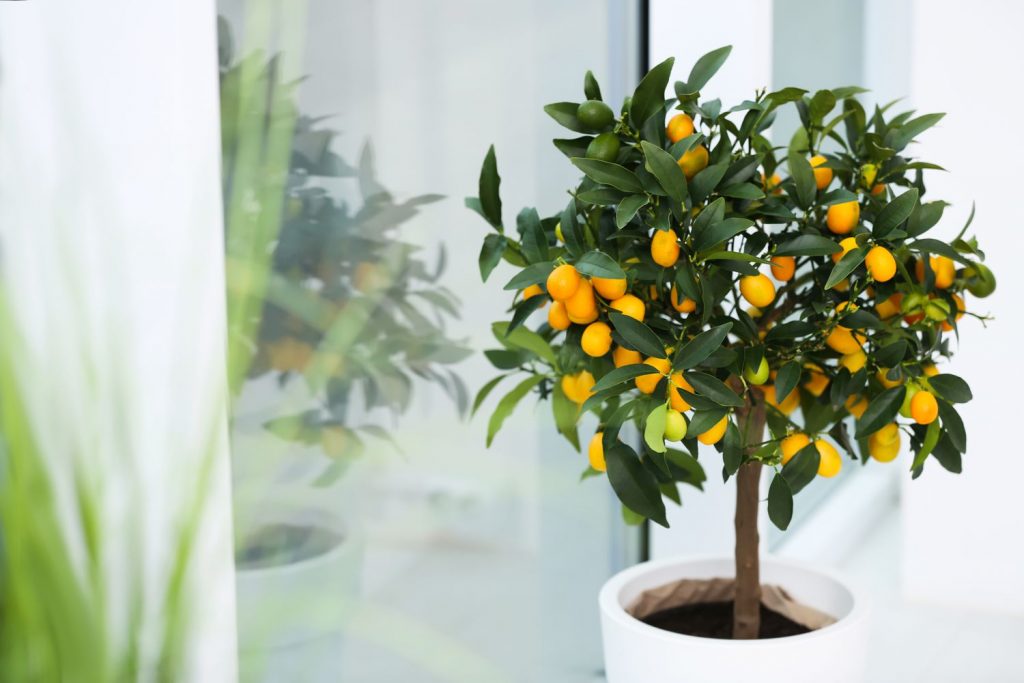
1) Dwarf citrus (lemon, lime, calamondin, kumquat)
Dwarf citrus are the most popular indoor fruit trees for a reason: they cope well in pots and respond clearly to routine.
Best for: bright windowsills, conservatories, sunny rooms
Watch out for: leaf drop after moving it / low winter light
Helpful next reads: Avocado Tree Care (for indoor tree habits) and Best Lights for Indoor Gardening (if your home is dim).
2) Dwarf fig (compact varieties)
Figs can work indoors, but they’re more demanding on light and seasonal rhythm.
Best for: strong light + a stable spot
Watch out for: slow growth if light is weak
3) Dwarf pomegranate (often grown as ornamental indoors)
These can be grown inside, but fruiting is less reliable unless light is excellent.
Best for: warm bright rooms
Watch out for: flowering with no fruit if pollination is missing
4) Dwarf banana (mostly “tropical houseplant” indoors)
You can grow them, but fruiting indoors is rare unless conditions are near-perfect.
Best for: warm, humid, very bright spaces
Watch out for: disappointment if your goal is fruit
Light: the #1 reason indoor fruit trees don’t fruit
Indoors, the tree is usually running on a “maintenance budget” — enough to stay alive, not enough to fruit.
If your tree is dropping leaves, growing leggy, or never flowering, treat it as a light problem first (before you change soil or feed).
A simple upgrade that helps a lot in UK winters is using a shelf-style light rather than a huge panel:
A LED grow light bar works well over a small indoor tree or citrus on a stand.
Keep it on for a steady routine (most people do best with a consistent daily schedule rather than random “extra light”).
Pot, drainage, and compost: make water leave fast
Indoor trees hate sitting in wet compost. The root zone needs oxygen as much as it needs water.
Here’s the simple rule: water thoroughly, then let it dry slightly before watering again.
If your current pot is heavy, stays wet for ages, or smells musty, you’ll usually get better results by improving drainage and structure.
A practical option (especially if you tend to overwater) is using a more breathable container:
A wide fabric grow bag can help stop compost staying soggy indoors (especially if you tend to overwater).
The RHS also notes that container-grown plants do best with bright light and letting the compost dry slightly between thorough waterings — which is exactly why drainage matters so much.
Watering: how to get it right without guessing
Watering is where most indoor fruit trees are lost — not because people don’t water, but because they water too often.
A simple indoor routine that works
Water until it drains out the bottom
Empty the saucer after 10–15 minutes
Don’t water again until the top few cm feels drier (not bone dry, just not wet)
If you prefer a routine rather than guessing, follow a simple weekly check-in using Indoor Plant Maintenance Routine.
Feeding: when to fertilise (and when not to)
Feeding helps once the tree is actively growing. But if light is low and roots are stressed, feeding can make problems worse.
Feed only when:
the tree is producing new leaves, and
it’s in decent light, and
the compost isn’t staying wet for days
A good “low-effort” option for indoor trees is a slow-release citrus fertiliser — it reduces the chance of overdoing it.
If you want the full explanation of feeding styles and timing, see Controlled Release Fertilisers.
Pollination indoors: why flowers fall off (and what to do)
Indoor fruit trees often flower, then drop flowers without setting fruit.
That’s usually one of these:
not enough light/energy
temperature swings (cold nights by windows)
dry indoor air
no pollination
Quick fix: if you see flowers, use a cotton bud or small soft brush to gently move pollen between flowers every day for a week.
4 quick “fix in 10 minutes” problems
Leaves dropping after you moved it
Most indoor trees hate sudden change. Move it once, then leave it alone.
Fix: keep it in one bright spot, avoid cold drafts, don’t overwater while it adjusts.
Yellow leaves + wet compost
That’s usually oxygen-starved roots.
Fix: let it dry more between waterings and improve drainage at the next repot.
Sticky leaves or tiny pests
Indoor trees can attract pests fast.
Fix: rinse the leaves, wipe stems, and isolate the plant early. If you want a quick ID + treatment walkthrough, see Indoor Plant Pest Guide: Identify and Treat Pests Fast.
No growth for months
Usually low light or the tree is root-bound.
Fix: increase light first; repot only if roots are circling and the pot dries too fast.
FAQs about dwarf fruit trees indoors
Can dwarf fruit trees really fruit indoors in the UK?
Yes, but fruiting depends heavily on light and warmth. Many indoor trees focus on leaf growth first, then fruit once conditions are consistent.
What’s the easiest dwarf fruit tree to grow indoors?
A dwarf lemon or calamondin is usually the most forgiving indoors, especially in a bright window.
How often should I water an indoor fruit tree?
There isn’t one fixed schedule — water when the top layer has dried slightly and always let excess water drain away.
Do I need a grow light?
Not always, but in many UK homes (especially winter) a grow light can be the difference between “survives” and “thrives”.
Why do the flowers drop without fruit?
Usually low light, temperature swings, or no pollination. A simple hand-pollination routine often helps.
Final Thoughts on Dwarf Fruit Trees for Indoors
If you want success with dwarf fruit trees for indoors, keep it simple: brightest spot, excellent drainage, steady watering, and patience. Start with dwarf citrus, focus on leaf health first, and treat fruit as the long-term reward once your routine is stable.
Related Articles
MAKE INDOOR TREES EASIER TO CARE FOR
Build a Simple Indoor Tree Routine That Actually Sticks
If you’re growing dwarf fruit trees indoors, the biggest results come from consistency — light, watering, and a quick weekly check. This tools-and-routine guide helps you set up a simple system you’ll keep up long-term.