

You can grow a lime tree in a container indoors, but a reliable harvest takes more than a sunny-looking room. In the UK, a bright conservatory or suitable greenhouse generally offers better conditions than a centrally heated living room. A lime tree may still be an attractive indoor plant without producing fruit.
This guide covers choosing a plant, potting it, managing light and winter warmth, and troubleshooting common problems. If you grow other citrus, see our guide to dwarf lemon trees.
Quick Facts About Indoor Lime Trees
- Best position: A very bright conservatory or greenhouse, with a sunny, sheltered place outdoors in suitable summer weather.
- Light: Give the tree as much suitable natural light as you can; low winter light makes flowering and fruiting harder.
- Winter temperature: Keep limes above 10°C and away from cold draughts and radiators.
- Watering: Check the compost rather than following a fixed weekly schedule; never leave the pot standing in water.
- Fruit: A mature, grafted plant is a better choice if you want limes, but a crop is not guaranteed indoors.
Choosing the Right Lime Tree
Choose according to what you want to harvest, and check the nursery label for the plant’s size and growing requirements. A plant sold as a small tree will not necessarily remain small without suitable container care and occasional pruning.
- Key or Mexican lime: A spiny lime that produces small fruits when conditions suit it. Do not assume every plant sold under this name is a dwarf selection.
- Tahiti or Persian lime: A choice for larger, typically seedless limes; allow room for the tree to grow.
- Makrut lime: An option if you chiefly want aromatic leaves for cooking rather than a supply of conventional juicy limes.
If fruit is the goal, look for a healthy, mature grafted plant, ideally one already flowering or carrying fruit. Check leaf undersides and stems for pests, webbing or sticky deposits before bringing it home. Grafted plants usually reach fruiting age sooner than seedlings, but their performance still depends on light and care.
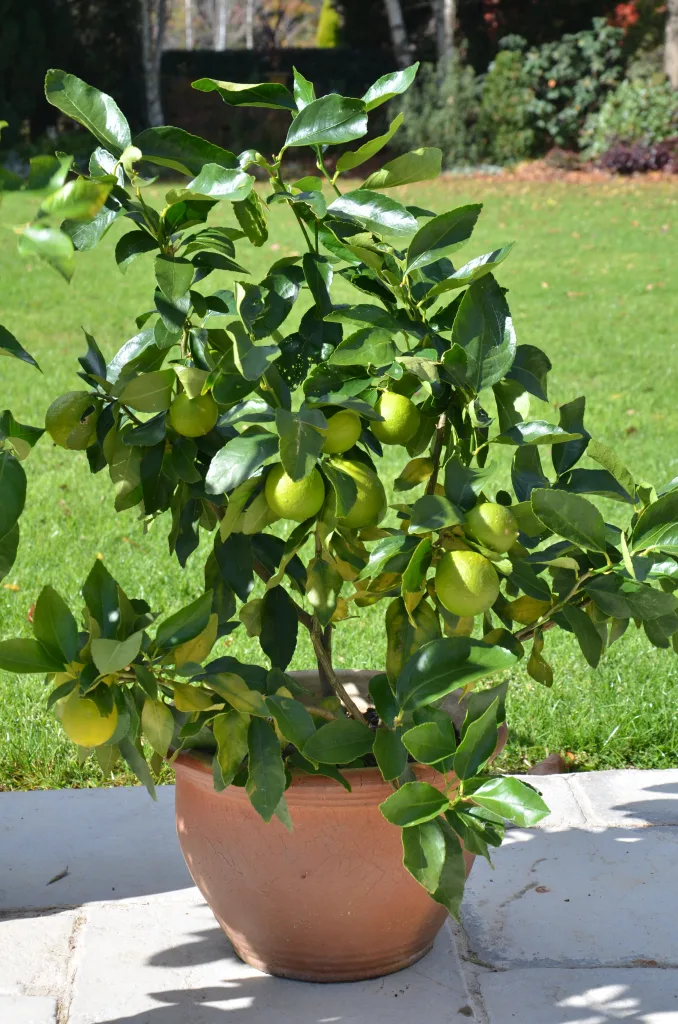
Best Containers and Compost for Lime Trees
Pot size and drainage
Use a pot with drainage holes that is only slightly larger than the rootball. A much larger pot can leave compost wet for too long. Terracotta dries more readily; plastic is lighter and holds moisture longer. Either can work if you adjust watering to the pot and conditions.
Put a saucer under an indoor pot to protect the floor, then empty away drained water. Repot in spring when roots begin emerging through the drainage holes, moving up just one pot size rather than repotting every year by default.
Compost
Use a peat-free citrus compost, or a nutrient-rich soil-based potting compost with horticultural grit added to improve drainage. Avoid heavy garden soil or a mix that stays waterlogged. In years when repotting is unnecessary, replace the top layer of old compost with fresh compost.
Light, Temperature and Humidity
Light
Place the tree in the brightest suitable position you have, such as a sunny conservatory or a bright south- or west-facing window. A typical windowsill may not provide enough light for dependable fruiting, especially through a UK winter. If you use a grow light, follow its manufacturer’s guidance for distance and duration rather than placing every lamp a fixed distance above the leaves.
Temperature
Limes need protection from cold: keep them above 10°C in winter. Avoid abrupt temperature changes, cold draughts and the dry heat immediately beside a radiator. You can move a tree outdoors to a sunny, sheltered position when nights are reliably warm enough; introduce it to outdoor light gradually and bring it back before temperatures fall too low.
Humidity
Dry indoor air can contribute to leaf or flower problems. A tray of damp gravel beneath the pot can help locally, provided the pot base sits above the water. Good ventilation also matters; a humidity tray is not a substitute for suitable light, warmth or watering.
Watering and Feeding
How to water
Check the compost frequently during warm, active growth and water when it is starting to dry, aiming to keep it just moist rather than saturated. Water thoroughly and let the excess drain away. In winter, allow the surface to partially dry before watering again. The interval will change with the season, pot, temperature and plant size, so use the compost rather than a calendar as your guide.
Feeding
Container-grown citrus benefits from regular feeding. Use a citrus fertiliser according to its label: the RHS recommends a high-nitrogen summer citrus feed from late March to October and a more balanced winter citrus feed from November to mid-March. Do not assume that a tree kept indoors needs no nutrients all winter.
Pruning and Training
Citrus usually needs only light pruning to stay manageable. In late winter, remove dead or damaged growth and thin crowded or awkward shoots. During summer, you can shorten vigorous new shoots if needed to maintain the crown. Avoid routinely cutting back every branch: citrus flowers on new side-shoot tips, so heavy pruning can reduce fruiting.
If the plant is grafted, remove shoots growing from below the graft union; they come from the rootstock. Wear sturdy gloves when working around thorny branches.

Pollination and Fruit Set Indoors
Citrus trees are self-fertile, so you do not need a second tree or a daily hand-pollination routine. Flowers can still fall without setting fruit if the roots become too dry or the air is dry. Check moisture and conditions before assuming pollination is the problem.
A tree may also shed some young fruit naturally. If many fruits develop on a small tree, thinning some can help the remaining fruits grow. Even successfully set limes take time to develop, so do not expect a quick harvest after flowering.
Common Problems With Lime Trees
Yellow or dropping leaves
Check whether the compost is too wet or too dry, then consider draughts, winter temperature and feeding. Yellow leaves do not point to a single nutrient deficiency: correcting drainage or watering may matter more than adding fertiliser. The RHS guide to citrus problems gives further help with diagnosis.
No flowers or fruit
A young tree may not yet be mature enough to flower. Poor light, inconsistent watering, inadequate feeding and unsuitable temperatures can also prevent flowering. If the tree flowers but does not set fruit, check root moisture and dry air before trying to pollinate it by hand.
Pests: scale, aphids and spider mites
Inspect new plants and check stems, new growth and leaf undersides regularly. Sticky deposits or raised bumps can indicate sap-feeding insects; fine webbing and pale leaf mottling may indicate spider mites. Separate an affected plant from other houseplants where possible. Small aphid colonies or individual scale insects can often be removed by hand; keep checking for new pests.
If you are considering a pesticide for a tree whose fruit or leaves you intend to eat, first check that the product is currently authorised in the UK and that its label permits the intended use on an edible crop. Follow all label directions, including any interval before harvest. Do not assume a product labelled ‘organic’ is automatically suitable for edible citrus. See the HSE guidance on garden pesticides.
FAQs About Growing Lime Trees Indoors
How long will it take to get limes?
It depends on the age of the plant when you buy it and the conditions you can provide. A mature grafted plant may flower and fruit sooner than a seedling, but there is no dependable indoor harvest timetable.
Can I grow a lime tree from supermarket seeds?
For a tree intended to crop, buy a nursery-grown plant instead. Citrus seedlings can take many years to fruit and may not resemble the parent; the RHS also advises against sowing pips from supermarket fruit because of potential plant-disease biosecurity risks.
Should I move my lime tree outside in summer?
You can, if you have a sunny, sheltered spot and nights are warm enough. Acclimatise it gradually and check temperatures before bringing it back indoors in autumn.
Why are the leaves curling?
Check the compost and inspect new growth and leaf undersides for aphids or other pests. Hot, dry conditions can also stress the plant; identify the likely cause before changing several parts of its care at once.
Do I need to repot every year?
No. Check for roots emerging from drainage holes and repot in spring when needed, using a pot only slightly larger than the rootball.
Final Thoughts
For the best chance of growing limes indoors, start with a mature, healthy plant and give it strong light, suitable winter warmth, free-draining compost and attentive watering. A bright conservatory is a better bet for fruit than an ordinary heated room. Enjoy the foliage and flowers while treating any harvest as a result of good conditions, not a certainty.
Related Articles
Ready to Grow a Mini Indoor Orchard?
Explore Dwarf Fruit Trees for Indoors
Once your lime tree is settled in, it’s hard not to want more citrus. From compact oranges to lemons and kumquats, dwarf fruit trees can turn a sunny corner into a tiny orchard. Take a look at Dwarf Fruit Trees for Indoors – A Complete Guide to compare varieties, pot sizes and care tips so you can choose the next fruit tree to add to your collection.