
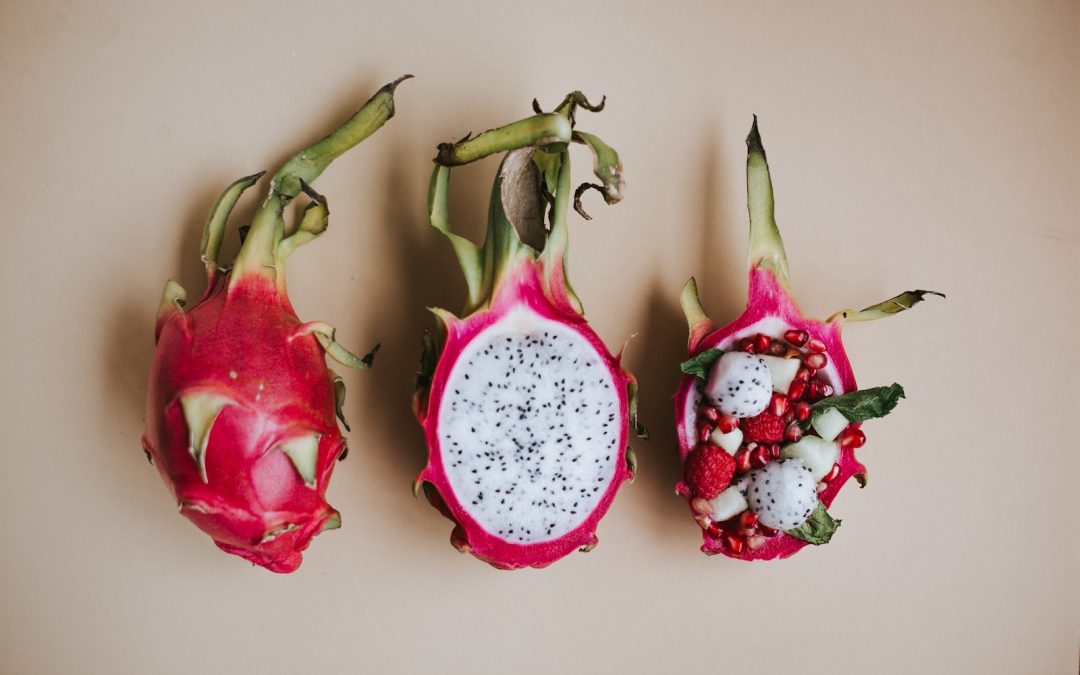
Dragon fruit looks exotic, but with the right setup it’s actually a fairly easy plant to care for. Get the basics of dragon fruit care right – light, soil, support, watering, and feeding – and you’ll be rewarded with strong growth, stunning flowers, and eventually those striking, colourful fruits.
If you want to go deeper into what to feed your plant, pair this guide with our Nutrient Requirements for Dragon Fruit article so your dragon fruit care routine covers both day-to-day care and long-term nutrition.
Contents
- 0.1 Dragon Fruit Care Basics: What This Plant Really Needs
- 0.2 Best Containers, Soil, and Drainage for Dragon Fruit
- 0.3 Light and Temperature for Strong Dragon Fruit Growth
- 0.4 Watering: Keeping Dragon Fruit Hydrated but Not Soggy
- 0.5 Supporting and Training Dragon Fruit
- 0.6 Feeding Basics for Dragon Fruit Care
- 0.7 Common Dragon Fruit Care Problems (and Simple Fixes)
- 0.8 FAQs About Dragon Fruit Care
- 0.9 Final Thoughts on Dragon Fruit Care
- 0.10 Related Articles
- 1 Explore More Exotic Fruits and Vegetables You Can Grow at Home
Dragon Fruit Care Basics: What This Plant Really Needs
Dragon fruit (pitaya) is a climbing cactus, which means its care needs are a bit different to leafy houseplants.
Good dragon fruit care focuses on:
Bright light – it loves strong light and copes well with sun once acclimatised.
Warm temperatures – it prefers warmth and hates frost.
Excellent drainage – its roots must never sit in soggy soil.
Strong support – stems need something solid to climb.
Steady but moderate feeding – enough nutrition for flowers and fruit, not so much that growth turns soft.
Once you understand these basics, the rest of your dragon fruit care routine is just about keeping things consistent.
Best Containers, Soil, and Drainage for Dragon Fruit
Because dragon fruit hates having waterlogged roots, container choice and soil mix are a big part of good dragon fruit care.
Containers
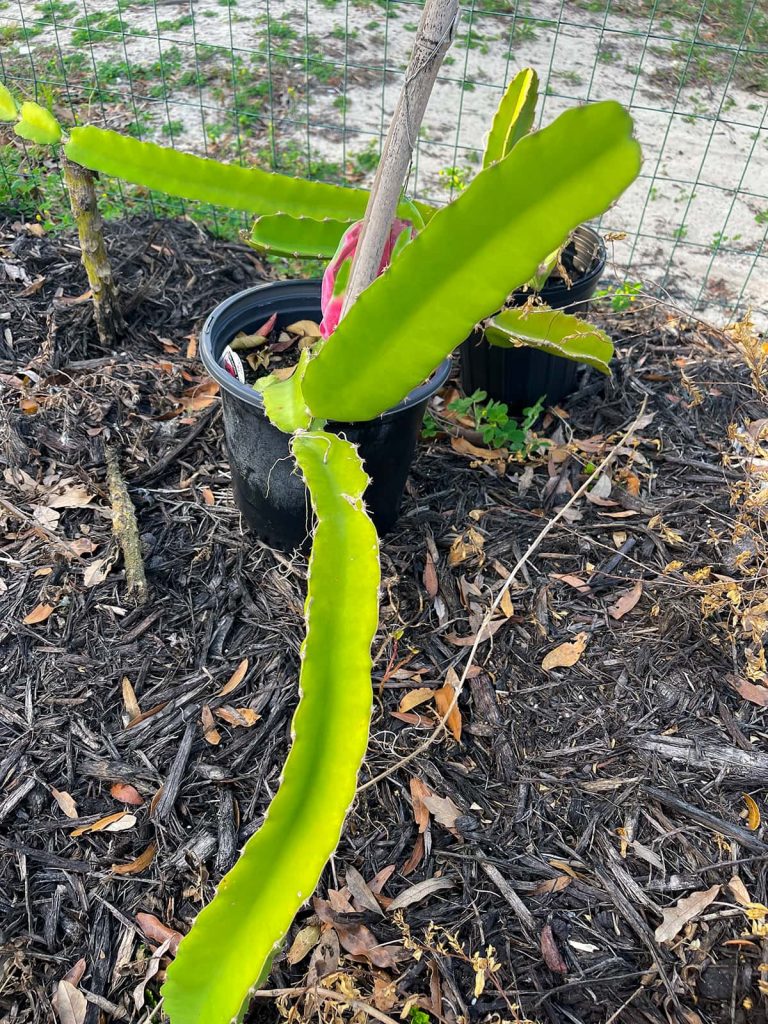
Use a large pot with drainage holes – dragon fruit needs space for its root system and ballast to stop it toppling.
Heavy materials like terracotta or thick plastic work well and help stabilise tall plants.
Start with a pot at least 35–40 cm wide and repot into something larger as the plant matures.
A well-sized cactus and succulent potting mix is perfect as a base for dragon fruit care in containers, as it’s designed to drain quickly while still holding some moisture.
Soil and drainage
Aim for a mix that is:
loose and airy
fast-draining
slightly acidic to neutral (around pH 6–7)
You can use a ready-made cactus mix or blend your own with:
cactus compost or peat-free multipurpose compost
added perlite or grit to improve drainage
a small amount of well-rotted compost for gentle nutrition
If water sits on the surface for ages or the pot feels heavy and soggy, that mix is too dense for healthy dragon fruit care.
Light and Temperature for Strong Dragon Fruit Growth
Dragon fruit care is much easier when you get the light and temperature right from the start.
Light
Outdoors, dragon fruit enjoys full sun once acclimatised.
Indoors or in cooler climates, aim for bright, direct or very strong indirect light for several hours a day.
A south- or west-facing window, conservatory, or bright greenhouse is ideal.
If your home doesn’t get enough natural light, an adjustable full-spectrum grow light bar can help keep stems thick and strong instead of pale and stretchy.
Temperature
Dragon fruit prefers warm conditions and grows best between 18–30°C.
It does not like frost or prolonged cold; bring containers under cover if temperatures drop near freezing.
Sudden cold snaps, especially when plants are wet, can cause damage to stems and slow growth dramatically.
According to a university extension guide to dragon fruit care, plants kept warm and bright with good air circulation are far less prone to disease and produce stronger, more productive stems over time.
Watering: Keeping Dragon Fruit Hydrated but Not Soggy
Because it’s a cactus, dragon fruit can cope with some dryness – but that doesn’t mean ignoring it. Good dragon fruit care strikes a balance between underwatering and root rot.
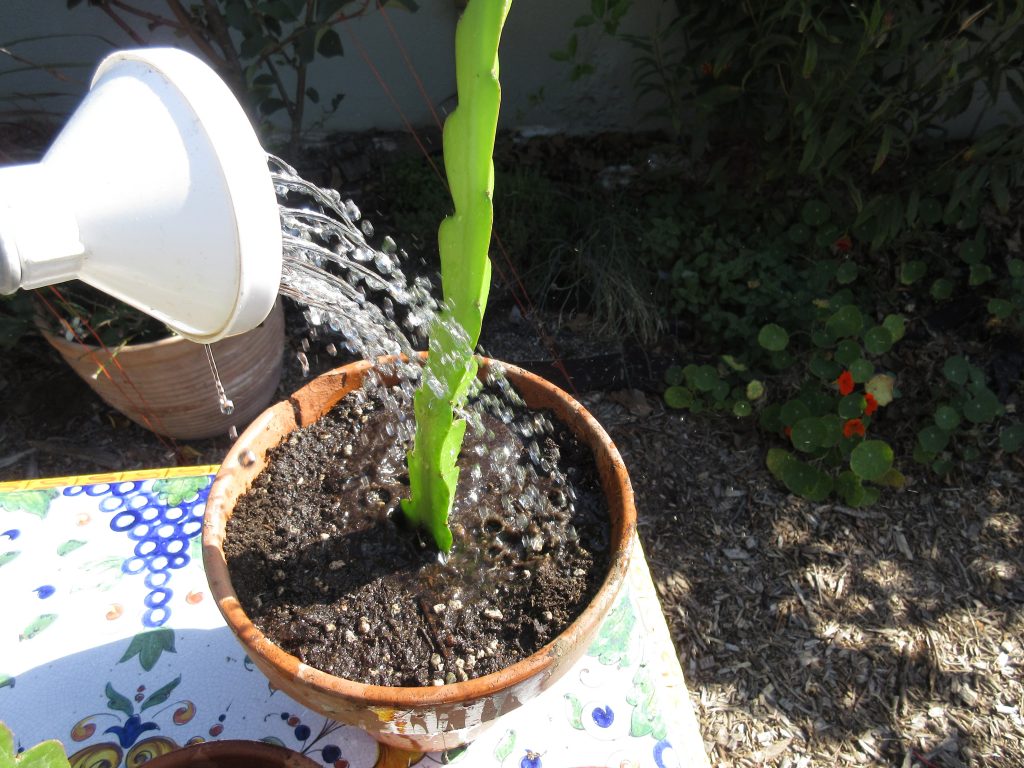
Spring and summer: water when the top few centimetres of soil feel dry. Then soak thoroughly until water drains from the bottom.
Autumn and winter: reduce watering as growth slows. Let the soil dry out a little more between waterings.
Containers: dry out faster than garden beds, especially in warm, bright spots. Check pots regularly.
Always empty saucers underneath pots so roots don’t sit in standing water. If stems start to look shrivelled, you may be letting the plant stay dry for too long; if they turn yellow and soft at the base, you may be overwatering.
Supporting and Training Dragon Fruit
Dragon fruit plants naturally want to climb and sprawl, so part of dragon fruit care is giving them something strong to grow on and keeping them trained.
Use a sturdy central post or trellis pushed deep into the pot.
Tie stems loosely using soft ties so they don’t cut into the flesh.
Encourage stems to grow up the support, then allow the upper sections to branch and hang.
A sturdy metal trellis for climbing plants can provide long-term support even as the plant grows heavier and produces fruit.
Trim away damaged, weak, or badly placed stems to keep the plant open and easier to manage. This also helps light reach more of the plant, which supports better flowering and fruit set.
Feeding Basics for Dragon Fruit Care
The nutrient requirements for dragon fruit aren’t complicated, but regular, moderate feeding makes a big difference to overall health and productivity.
In spring, start with a balanced feed as new growth appears.
During the main growing season, feed every 4–6 weeks with a fertiliser suitable for fruiting plants or cacti.
In late autumn and winter, ease off feeding while growth slows naturally.
Liquid feeds give more control and are easy to apply during normal watering. Slow-release granules can also be mixed into the top layer of soil for a gentle, long-lasting boost. For a more detailed breakdown of what each nutrient does, see our Nutrient Requirements for Dragon Fruit guide.
Common Dragon Fruit Care Problems (and Simple Fixes)
Even with a good dragon fruit care routine, a few issues pop up regularly.
Pale, stretched stems
Often a sign of low light. Move the plant to a brighter spot or add a grow light so stems can thicken and strengthen.
Soft, yellowing base or blackened roots
Usually linked to overwatering or poor drainage. Check that the pot has drainage holes, improve the soil mix, and let the plant dry more between waterings.
Slow or no growth
Can be caused by cool temperatures, exhausted soil, or very low nutrients. Warm the plant up, refresh or top-dress the soil, and start a gentle feeding routine.
Few or no flowers
Often due to insufficient light, lack of maturity, or inconsistent feeding. Mature plants with good light, warmth, and steady nutrition are much more likely to flower.
If you’re still unsure what’s wrong, compare your plant’s symptoms with the details in our other dragon fruit articles to narrow down whether it’s mainly a care, nutrient, or environment issue.
FAQs About Dragon Fruit Care
1. Is dragon fruit hard to care for?
Not really, as long as you treat it like a climbing cactus rather than a typical houseplant. Good light, warmth, free-draining soil, and a solid support take care of most of the dragon fruit care basics.
2. Can I grow dragon fruit indoors year-round?
Yes, if you can give it enough light and warmth. A bright conservatory or grow lights will usually be needed for strong growth and flowering in many climates.
3. How often should I water dragon fruit?
In warm weather, check the soil every few days and water when the top layer feels dry. In cooler months, water less often and avoid leaving the soil constantly wet.
4. Do dragon fruit plants need pruning?
Light pruning helps keep plants tidy, open, and easier to manage on their supports. Remove damaged or tangled stems and thin out any sections that are too congested.
5. When should I start feeding dragon fruit?
Start light feeding in spring as new growth appears, then continue every few weeks through the growing season. Reduce or stop feeding over winter when growth slows.
Final Thoughts on Dragon Fruit Care
Dragon fruit care might seem intimidating at first, but once you understand what this climbing cactus needs, it becomes surprisingly straightforward. Focus on bright light, warm conditions, a free-draining soil mix, solid support, and moderate feeding, and most of the hard work is already done.
Start with one healthy plant, pay attention to how it responds over a full year, and tweak your routine along the way. As your confidence grows, you’ll find that dragon fruit care is less about constant fussing and more about keeping a few key conditions steady – and enjoying the results when blooms and fruit finally arrive.
Related Articles
GROW EVEN MORE EXOTIC FRUITS INDOORS
Explore More Exotic Fruits and Vegetables You Can Grow at Home
Once you’ve got dragon fruit care under control, why stop there? Our Growing Exotic Fruits and Vegetables Indoors guide shows you how to expand your collection with unusual, rewarding plants that thrive in containers and indoor setups.