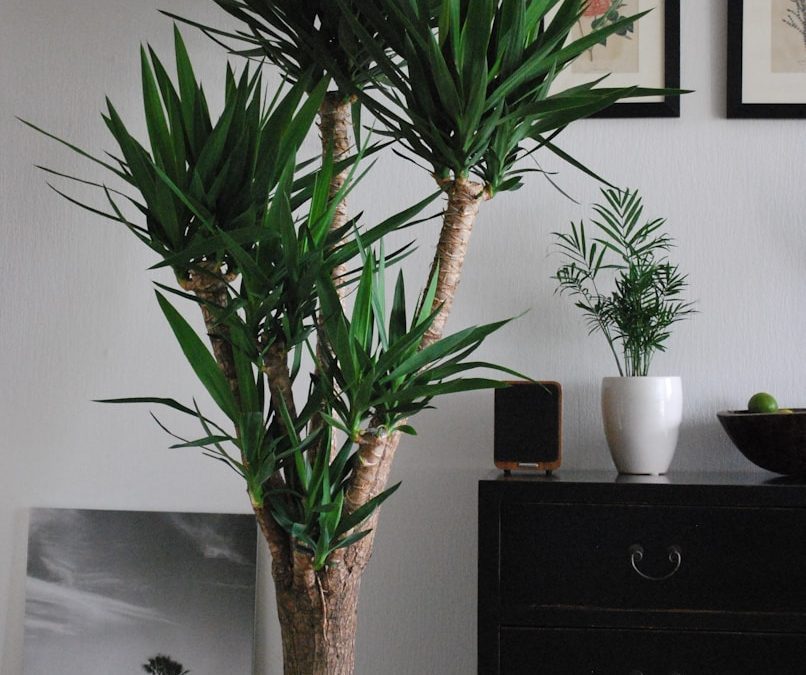
Compact indoor trees are perfect when you want that “mini jungle” look without a huge footprint. The best ones stay tidy in pots, cope with average indoor conditions, and don’t demand constant fuss.
Contents
- 0.1 What counts as a “compact indoor tree”?
- 0.2 The best compact indoor trees (ranked by easiest success)
- 0.3 Top picks made simple
- 0.4 Light placement for compact indoor trees (without guesswork)
- 0.5 Pot size, drainage, and the most common mistake
- 0.6 Watering: a simple routine that works indoors
- 0.7 Pruning: how to keep an indoor tree compact
- 0.8 Long-tail quick fixes (common problems people search)
- 0.9 A simple tool that makes compact trees look better in small spaces
- 0.10 FAQs About Compact Indoor Trees
- 0.11 Final Thoughts on Compact Indoor Trees
- 0.12 Related Articles
- 1 Indoor Garden Care – Definitive Guide
Quick answer: the best compact indoor trees
Money tree (Pachira) = easiest “tree look” indoors
Dragon tree (Dracaena) = toughest in lower light
Rubber plant = bold leaves, easy care
Ficus benjamina = classic indoor tree, but hates being moved
Ponytail palm = slow-growing and forgiving
Do this first: Decide where the tree will live permanently — most indoor trees hate being moved around (it causes leaf drop and slow growth).
What counts as a “compact indoor tree”?
A compact indoor tree is basically a houseplant that grows upright with a woody stem or cane, giving a tree shape — but stays manageable in a pot. The real trick isn’t finding a plant that never grows; it’s choosing one that:
stays balanced in a container
responds well to pruning
doesn’t need full outdoor sun to look good
If you’d rather grow something you can harvest, Dwarf Fruit Trees for Indoors is a good next read.
The best compact indoor trees (ranked by easiest success)
These are the most reliable “tree look” plants for indoor and small-space setups.
Money tree (Pachira aquatica)
Money tree is one of the best starters because it adapts well to indoor conditions and stays neat with occasional trimming.
Likes bright, indirect light but can cope with medium light
Water when the top layer dries a bit
Prune tips to keep it bushy rather than tall
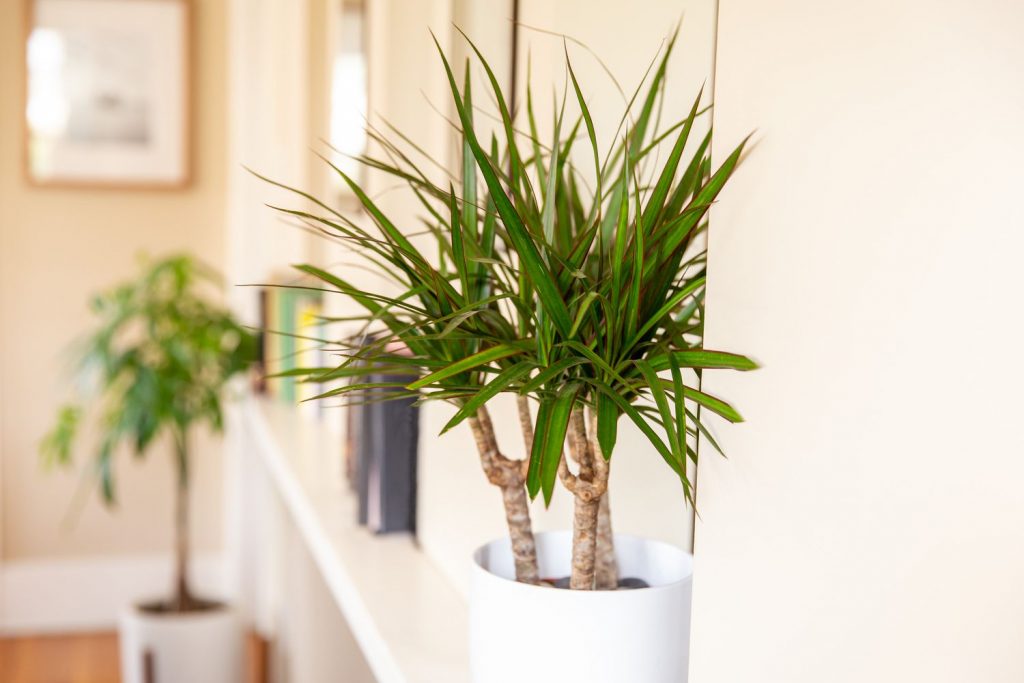
Dragon tree (Dracaena marginata)
If your home doesn’t get loads of sun, dracaena is one of the most forgiving compact indoor trees.
Handles medium and even lower light better than most
Drought-tolerant (overwatering is the real risk)
Slow grower, so it stays “compact” for a long time
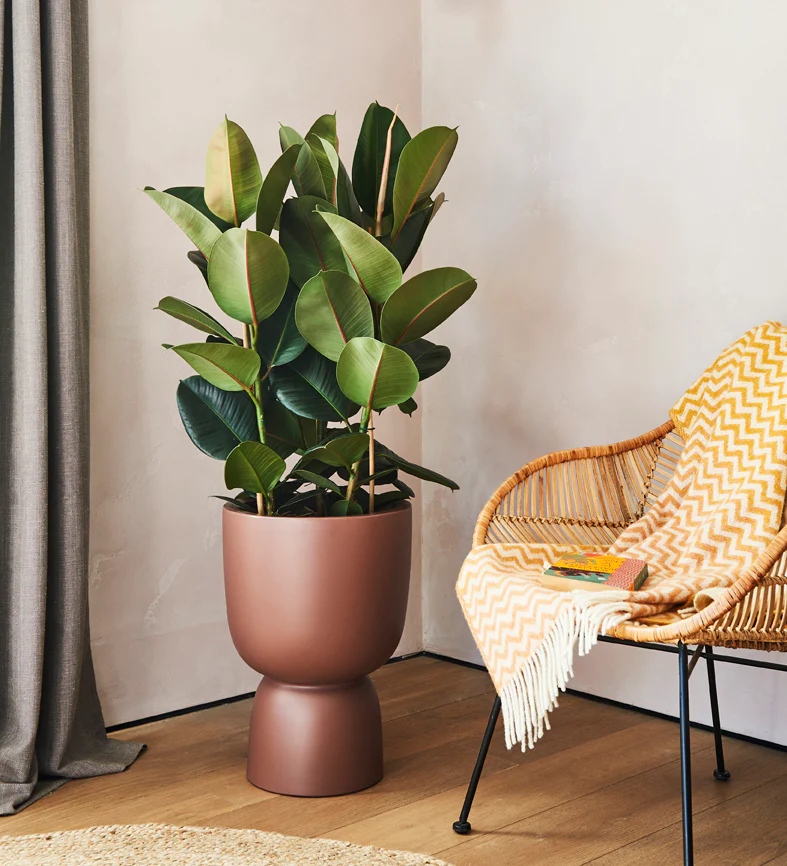
Rubber plant (Ficus elastica)
Rubber plants give you that tree vibe fast with big glossy leaves, and they respond well to pruning.
If you want a detailed care routine, this pairs well with rubber plant care.
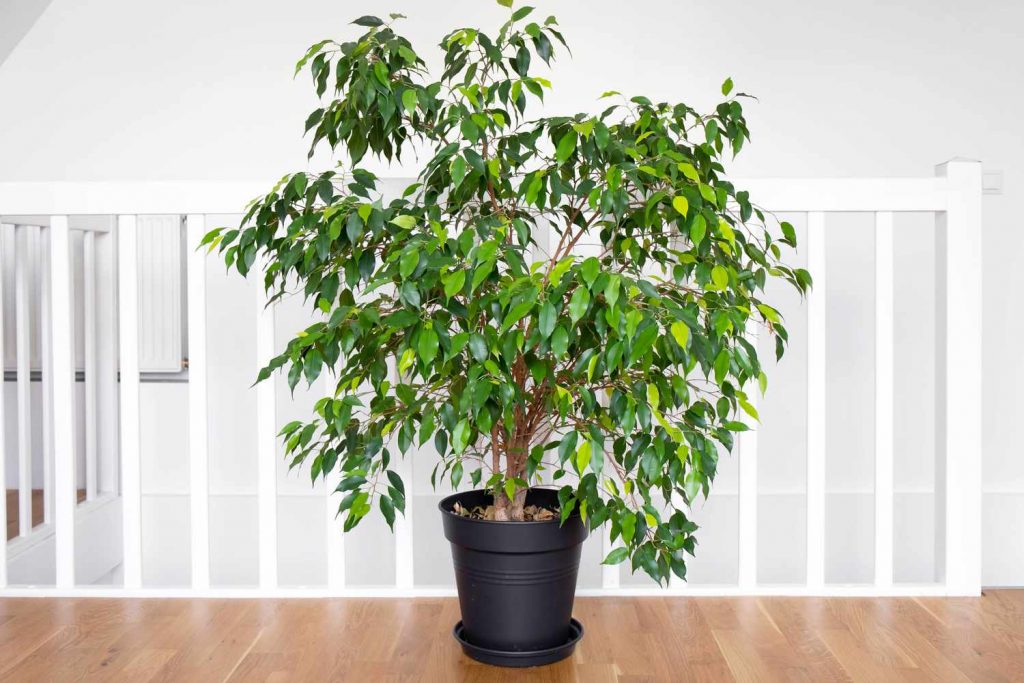
Weeping fig (Ficus benjamina)
Ficus benjamina looks like a true indoor tree, but it’s the most dramatic about change.
Do not keep moving it
Leaf drop is common after relocation
Once settled in one spot, it can be brilliant
Ponytail palm (Beaucarnea recurvata)
Not a true palm, but it’s a fantastic “tree style” plant for small homes.
Loves bright light but can cope in a bright room
Stores water in the base, so it hates constant watering
Very slow growing indoors
Top picks made simple
If you don’t want to overthink it, start here.
If you only buy one: money tree
Best for: beginners who want a compact indoor tree that’s hard to mess up.
If you want the easy-mode setup: dragon tree + a stable watering routine
Best for: people who want a “tree look” plant that survives normal life (and doesn’t need perfect light).
Light placement for compact indoor trees (without guesswork)
Light doesn’t need to be perfect, but it does need to be consistent. Most compact indoor trees do best in bright, indirect light. Lower light is doable for dracaena, but growth will be slower.
A good rule:
If you can comfortably read a book there in daytime, most “easy trees” can cope.
If it’s dim, pick dracaena over ficus.
If you’re unsure what counts as bright enough, Best Lights for Indoor Gardening makes it easy to judge indoor light and simple upgrades.
Pot size, drainage, and the most common mistake
Indoor “tree” plants usually fail from slow-draining compost more than anything else. People water too often, then roots sit wet, and leaves drop.
Quick setup tips:
Always use a pot with drainage holes
Empty the saucer after watering
Don’t pot up too big too soon (extra compost stays wet)
If your plant is already struggling and you suspect wet roots, your root rot houseplants post is the right next step.
Fix in 10 minutes: stop “wet pot” problems
Tip out any water sitting in the outer pot or tray
Lift the pot for weight (heavy = still wet)
Move it to a warmer spot for 48 hours
Next watering: water thoroughly, then wait longer before repeating
Watering: a simple routine that works indoors
Instead of watering on a schedule, water based on the compost.
Water fully until it drains
Wait until the top few cm dries a bit
Then water again
If you want to avoid the two common mistakes (too often / too little), Indoor Plant Watering Mistakes is a helpful follow-on.
The RHS also stresses that houseplants do best when you avoid waterlogging and let compost dry slightly between thorough waterings, which is why drainage matters so much.
Pruning: how to keep an indoor tree compact
Pruning is what makes these plants “compact” long-term. The goal is to encourage branching and stop them becoming leggy.
Quick pruning rules:
Trim in spring/summer when growth is active
Cut just above a leaf node to encourage branching
Take small amounts often rather than big chops
If you want a simple pruning routine, reading our guide too how to prune indoor plants.
Long-tail quick fixes (common problems people search)
Why is my ficus dropping leaves?
Usually shock from a move, cold draught, or watering change. Put it in one spot and leave it alone for a couple of weeks.
Why is my dracaena getting brown tips?
Often dry air, inconsistent watering, or mineral build-up. Water consistently and flush the pot occasionally with plain water.
My money tree is leaning — what do I do?
Rotate the pot weekly and move it slightly closer to light. Leaning is almost always a “reaching” response.
Avoid this mistake: repotting into a huge pot
A pot that’s too big holds water for too long indoors. Go up one size only when roots are circling the pot.
A simple tool that makes compact trees look better in small spaces
If your plant area feels cramped, the easiest visual upgrade is to lift plants off the floor so they get better light and airflow.
A compact indoor plant stand for small spaces can instantly make a “tree” plant look intentional instead of stuffed in a corner.
FAQs About Compact Indoor Trees
What is the easiest compact indoor tree to care for?
A money tree or dragon tree is usually easiest because they tolerate normal indoor conditions and don’t need constant attention.
Which compact indoor tree works in lower light?
Dragon tree (Dracaena) is one of the best options for medium to lower light rooms.
How do I stop my indoor tree getting too tall?
Prune growing tips during active growth seasons and rotate the pot weekly so it grows evenly.
Should I mist compact indoor trees?
Most don’t need misting. Focus on steady watering and good drainage first — misting can sometimes encourage fungal issues in still rooms.
Final Thoughts on Compact Indoor Trees
If you want a compact indoor tree that stays attractive in a small home, pick a reliable plant (money tree, dracaena, rubber plant), keep it in one stable spot, and focus on the indoor basics: light consistency, fast drainage, and gentle pruning. Once those are locked in, indoor trees become surprisingly easy to maintain.
Related Articles
GIVE YOUR WHOLE INDOOR GARDEN A GLOW-UP
Indoor Garden Care – Definitive Guide
Learn how to water, feed, position, and maintain all your houseplants so your new plant stands don’t just look good – they help your plants thrive long term.