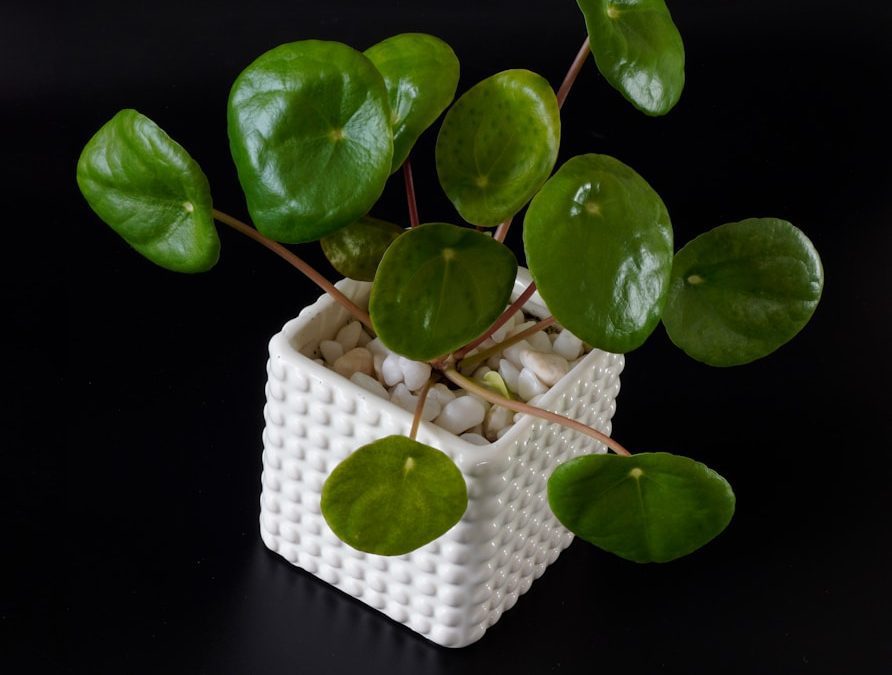
The Chinese money plant (Pilea peperomioides) is one of those houseplants that looks simple… until it starts leaning, dropping older leaves, or growing lopsided with long bare stems. The good news is most problems come down to a few fixable basics. With the right chinese money plant care, you can keep it compact, bright green, and producing plenty of pups.
In this refreshed article, you’ll learn the easiest routine for light, watering, feeding, repotting, and propagation. If you’re struggling with watering consistency across your plants, you can also read Perfect Watering Schedule for Indoor Plants.
Contents
- 0.1 Chinese Money Plant Care Basics
- 0.2 Best Light for a Chinese Money Plant Indoors
- 0.3 How Often to Water a Chinese Money Plant
- 0.4 The Best Soil and Pot for Pilea peperomioides
- 0.5 Feeding Chinese Money Plants Without Overdoing It
- 0.6 Repotting: When Your Pilea Needs a Bigger Home
- 0.7 How to Propagate a Chinese Money Plant
- 0.8 Common Chinese Money Plant Problems and Fixes
- 0.9 FAQs About Chinese Money Plant Care
- 0.10 Final Thoughts on Chinese Money Plant Care
- 0.11 Related Articles
- 1 Keep Your Indoor Plants Healthy With Less Guesswork
Chinese Money Plant Care Basics
If you remember nothing else, remember this: a Chinese money plant likes bright light, light watering, and regular turning.
A healthy Pilea usually has:
Round “coin” leaves that sit flat (not curled or droopy)
Shorter stems with leaves spaced fairly close
A steady trickle of new leaves in spring and summer
Pups (little baby plants) appearing near the base once it’s happy
Most issues come from one of these: low light, overwatering, or leaving the plant facing one direction for months.
Best Light for a Chinese Money Plant Indoors
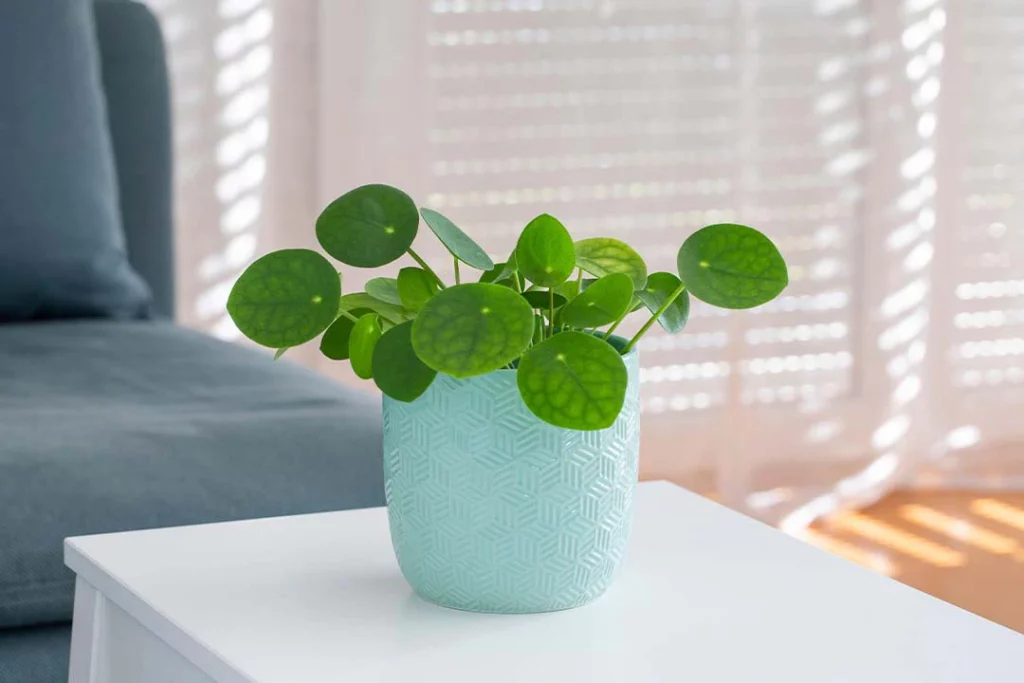
Bright, indirect light is ideal. A spot near a window is perfect, but harsh midday sun can scorch leaves.
Where to place it
Great: east-facing window (gentler morning light)
Also good: a little back from a south/west window (especially with a sheer curtain)
Avoid: deep corners where it has to “reach” for light
How to stop it leaning
Pilea leans hard toward the light if you don’t rotate it.
A simple habit that works: rotate the pot a quarter turn each week. It keeps the plant symmetrical and stops one-sided growth.
Signs the light isn’t right
Too little light: long bare stems, widely spaced leaves, leaning
Too much sun: pale patches, crispy brown spots
If your home is darker in winter, you don’t need to panic — just move it a bit closer to the window and ease back on watering.
How Often to Water a Chinese Money Plant
Overwatering is the quickest way to ruin a Pilea. The roots don’t like sitting wet, especially in cooler months.
A simple watering rule
Water when the top 2–3cm of compost feels dry. Don’t water just because it’s “been a week”.
In many UK homes that often means:
Spring/summer: roughly every 7–10 days
Autumn/winter: roughly every 10–18 days
(But always check the soil — heating and light change everything.)
Best way to water
Water until a little runs from the drainage holes
Let it drain fully
Empty the saucer or outer pot so it never sits in water
If your plant is drooping, check the compost before doing anything else. A droopy Pilea can be either thirsty or waterlogged, and the fixes are totally different.
The Best Soil and Pot for Pilea peperomioides
Chinese money plants do best in a compost that holds a little moisture but drains freely.
Soil that works for beginners
A peat-free houseplant compost is fine
If your compost stays wet for ages, mix in perlite or fine bark to loosen it
Pot choice
Always use a pot with drainage holes
Don’t jump up multiple pot sizes (big pots stay damp longer)
If you love decorative cachepots, keep the plant in a nursery pot inside and tip out excess water
A lot of “mystery yellow leaves” issues are actually just poor drainage plus slightly too much watering.
Feeding Chinese Money Plants Without Overdoing It
Pilea doesn’t need heavy feeding, but gentle feeding in the growing season helps keep leaves coming.
Feed once a month in spring and summer
Skip feeding in winter when growth slows
If the plant looks weak but the soil is wet, don’t feed — fix the watering and light first
A balanced liquid houseplant fertiliser used at a mild dilution can support steady leaf growth without pushing soft, weak stems.
Repotting: When Your Pilea Needs a Bigger Home
A Chinese money plant usually needs repotting every 1–2 years, or when it dries out very fast and roots are circling the pot.
Signs it’s time to repot
Water runs straight through and the plant dries very quickly
You see roots coming out of drainage holes
The plant feels top-heavy and unstable
Growth has slowed even in brighter months
How to repot (simple method)
- Go up one pot size only
- Use fresh, airy compost
- Keep it slightly drier for the first week while roots settle
- Avoid strong sun for a few days after repotting
If you repot and then overwater straight away, the plant can sulk. Think “fresh compost, gentle watering, steady light”.
How to Propagate a Chinese Money Plant
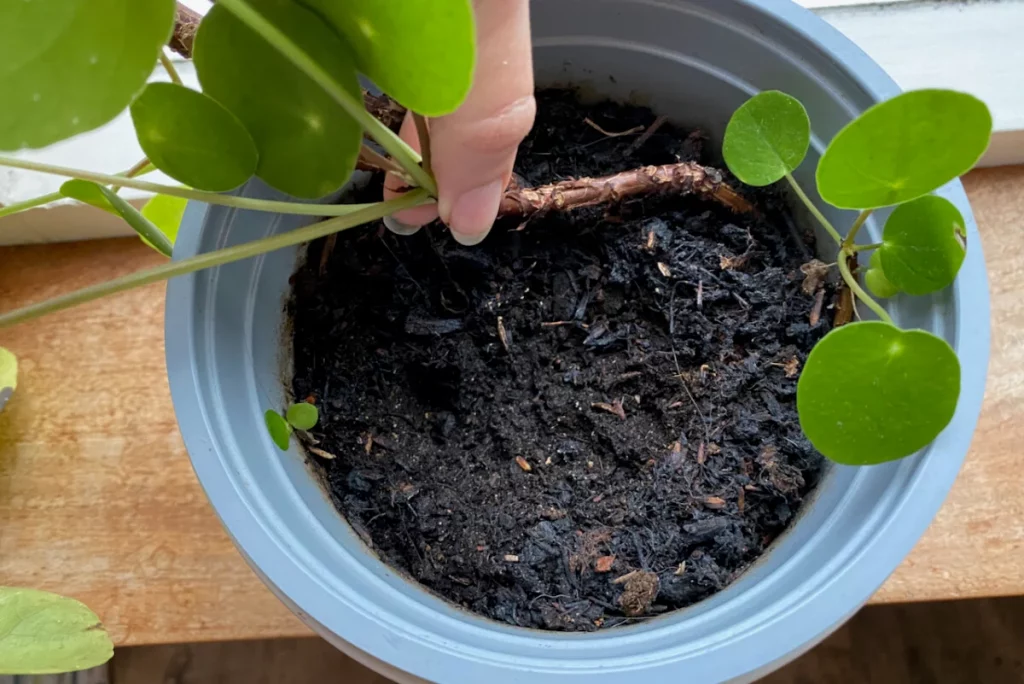
Pilea propagation is one of the best parts — it produces pups (baby plants) that can be separated and grown on.
Propagating pups (the easiest way)
- Look for a pup with a few leaves of its own
- Gently remove soil around the base to find where it connects
- Use clean scissors/knife to cut it away with a little root attached
- Pot it into a small container with lightly moist compost
- Keep it in bright, indirect light and don’t overwater
Can you root pups in water?
Yes, but compost is often less hassle long-term. Water rooting can work, but pups sometimes struggle with the transition back to soil.
If you want a full propagation walkthrough for multiple plant types, you can also read Propagate Houseplants Indoors.
Common Chinese Money Plant Problems and Fixes
Yellow leaves
Most common causes:
Overwatering
Low light + too much water
Old leaves naturally ageing (a few at the bottom is normal)
Fix: Let compost dry more between watering, check drainage, and move it to brighter indirect light.
Brown spots
Often caused by direct sun scorch or inconsistent watering.
Fix: Move out of harsh sun and keep watering more consistent.
Leggy growth (long stems, wide gaps)
This is almost always low light.
Fix: Move closer to the window, rotate weekly, and prune/propagate if it’s gotten very stretched.
Leaves curling inward
Often linked to dry air, underwatering, or sudden temperature swings.
A pebble humidity tray for houseplants can help take the edge off dry indoor heating (especially in winter).
Fix: Check soil moisture first, then move the plant away from radiators or cold drafts.
Pests (rare, but possible)
Check for spider mites or mealybugs if leaves look speckled or sticky. Early wiping and isolation stops most infestations quickly.According to Royal Horticultural Society advice on houseplant watering, allowing compost to dry slightly between waterings helps prevent root problems that are common in indoor pots.
FAQs About Chinese Money Plant Care
Why is my Chinese money plant leaning?
It’s reaching for light. Move it closer to a bright window and rotate the pot a quarter turn weekly so it grows evenly.
How do I make my Pilea look fuller?
Give it brighter indirect light, rotate it weekly, and avoid overwatering. A slightly snug pot and gentle feeding in spring/summer also helps.
How often should I water Pilea peperomioides?
Water when the top 2–3cm of compost is dry. In winter it usually needs less than people think.
Should I mist my Chinese money plant?
Misting isn’t essential. If your home is very dry, grouping plants or using a pebble tray tends to help more than occasional misting.
Can I cut the top off if it’s too tall?
Yes. You can cut the top and re-root it (or propagate pups). The base can also regrow with better light and regular turning.
Final Thoughts on Chinese Money Plant Care
Chinese money plants stay happiest when their routine is simple and consistent: bright indirect light, a pot that drains properly, and watering only when the top layer dries out. If your plant is leaning or getting leggy, fix the light first — it’s the fastest way to improve shape and leaf spacing.
Once you’ve got the basics right, Pilea is one of the most rewarding houseplants to propagate. A healthy plant will keep producing pups, and you can build a fuller indoor display without buying more plants every time.
Related Articles
MAKE HOUSEPLANT CARE FEEL MORE ORGANISED
Keep Your Indoor Plants Healthy With Less Guesswork
If you enjoy the tidy look of Chinese money plants, a simple maintenance routine makes everything easier — from watering to cleaning leaves and spotting problems early. Get your indoor plant care basics in place so your plants stay healthier, grow more evenly, and look better all year round.