
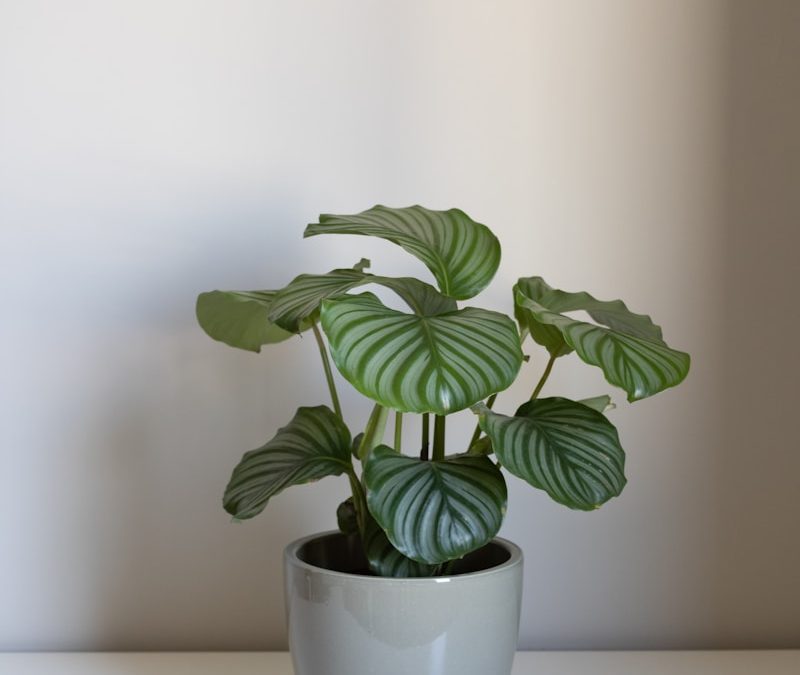
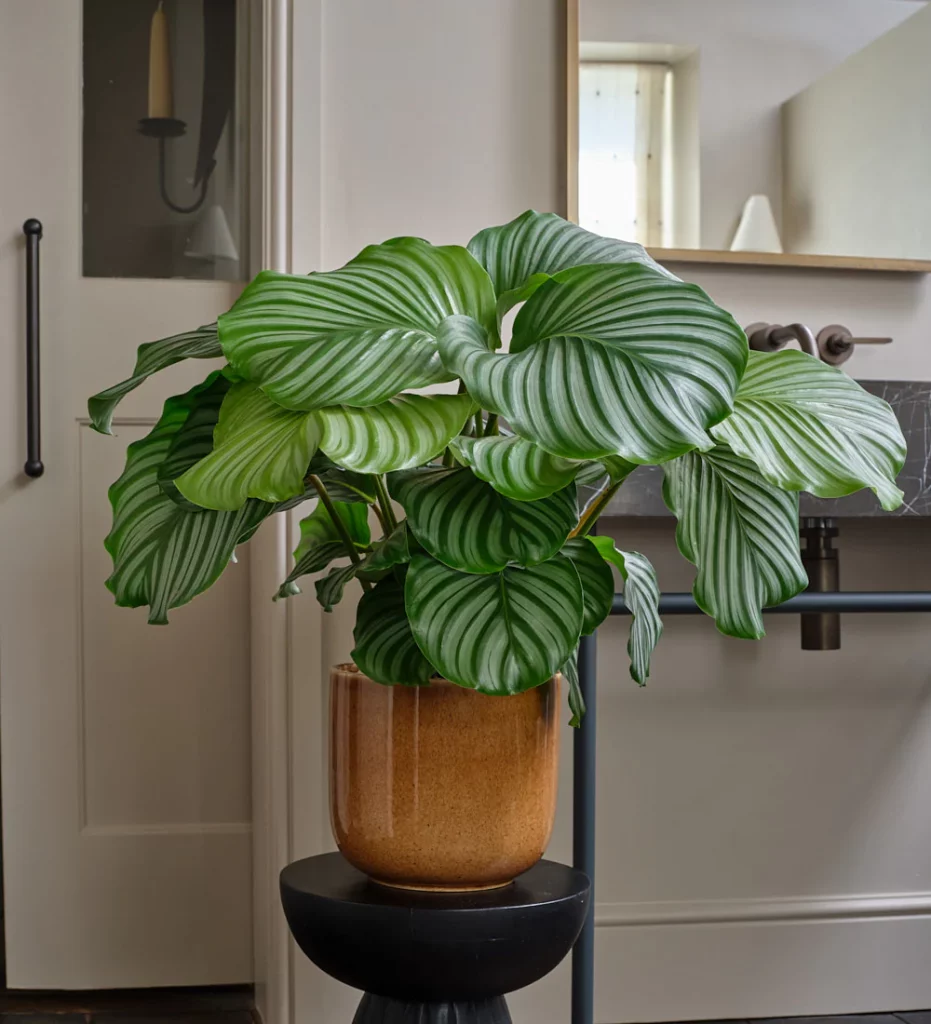
Those wide, striped leaves are the whole reason you bought a Calathea orbifolia — but they can quickly turn crispy, curl up, or fade if conditions aren’t quite right. With the right calathea orbifolia care, you can keep it lush, bold and (mostly) drama-free.
In this refresh, you’ll learn the indoor routine that actually works: light, watering, humidity, soil, feeding, and quick fixes for the most common problems. For a reliable baseline routine you can apply to other houseplants too, you can read Perfect Watering Schedule for Indoor Plants | Easy Care Routine.
Contents
- 0.1 Calathea Orbifolia Care Basics Indoors
- 0.2 Best Light for Calathea Orbifolia
- 0.3 How to Water Calathea Orbifolia Without Causing Problems
- 0.4 Humidity and Temperature for Happier Leaves
- 0.5 Best Soil and Pot Setup for Calathea Orbifolia
- 0.6 Feeding Calathea Orbifolia
- 0.7 Common Calathea Orbifolia Problems and Fixes
- 0.8 FAQs About Calathea Orbifolia Care
- 0.9 Final Thoughts on Calathea Orbifolia Care
- 0.10 Related Articles
- 1 Give Your Houseplants a Fresh Start
Calathea Orbifolia Care Basics Indoors
Calathea orbifolia is a tropical understory plant. Indoors, that translates to:
Bright, indirect light (not hot sun)
Even moisture (not constantly wet, not bone dry)
Higher humidity than the average heated UK room
Gentle feeding in the growing season
Good drainage so roots don’t sit cold and soggy
If you meet those basics, orbifolia is usually manageable. If one of them is off (especially humidity + watering), you’ll see brown edges, curling leaves, or slow growth.
Best Light for Calathea Orbifolia
Orbifolia likes light, but not direct sun. Think “bright room, out of the sunbeam.”
Best spots:
Near an east-facing window (morning light is gentle)
A little back from a south/west window (filtered by a sheer curtain)
A bright bathroom (if you’ve got a window and decent warmth)
Too much sun looks like:
Faded patches or scorched brown areas
Leaves looking washed out rather than deep green
Too little light looks like:
Slow growth
Smaller new leaves
Less crisp striping
If you need extra light in winter, keep it soft and consistent rather than intense and close.
How to Water Calathea Orbifolia Without Causing Problems
Most orbifolia issues come from watering habits rather than “bad luck”.
A simple rule that works
Water when the top 2–3cm of compost feels just dry, but the pot still has a little weight to it. You’re aiming for even moisture, not swampy compost.
In many UK homes, that often works out as:
Spring/summer: roughly every 5–10 days
Autumn/winter: every 10–18 days
(But always check the soil first — heating, pot size and light change everything.)
How to water properly
Water slowly until a little drains from the bottom.
Let it drain fully.
Empty any outer pot or saucer after 10–15 minutes.
Water quality matters
Calatheas can react to minerals in hard tap water (brown tips, spotting). If your water is very hard, try using filtered water occasionally.
If your orbifolia has been fussy with tap water, a large water filter jug for houseplants can be an easy way to soften things without overcomplicating your routine.
Humidity and Temperature for Happier Leaves
Orbifolia is one of those plants that looks incredible when humidity is decent — and miserable when it’s dry.
What humidity it likes
It’s happiest in moderate to higher humidity, especially in winter heating. Signs your air is too dry include:
Crispy brown edges
Leaves curling inward
New leaves opening with damage already present
Easy ways to boost humidity
Group plants together (they create a little shared microclimate).
Keep it away from radiators and strong drafts.
Use a pebble tray under the pot (small help, but it can take the edge off).
If you’re struggling with crisp edges, improving humidity is often the quickest upgrade you can make in calathea orbifolia care.
For a noticeable difference in a dry room, a small cool-mist humidifier for houseplants is the most reliable fix.
Best Soil and Pot Setup for Calathea Orbifolia
Orbifolia likes moisture, but it still needs oxygen around the roots.
Soil mix (simple version)
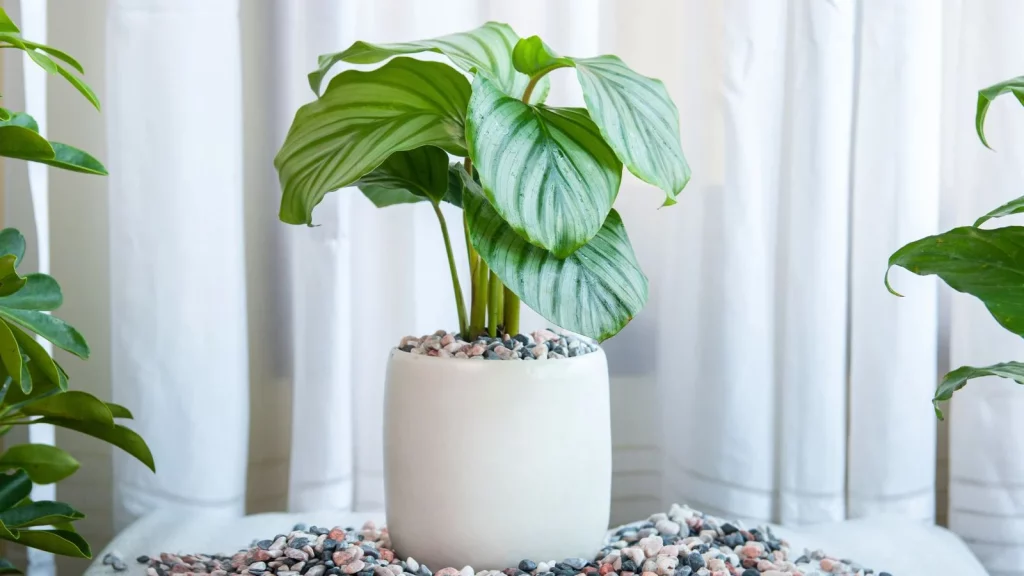
Use a good peat-free houseplant compost, then improve it slightly so it drains while staying lightly moist. A practical approach is:
70–80% peat-free houseplant compost
20–30% perlite or fine bark
This stops the compost from compacting and staying wet for too long.
Pot choice
Always use a pot with drainage holes.
Don’t oversize the pot “just in case” — big pots stay damp longer indoors.
If you use a decorative cachepot, keep the plant in a nursery pot inside and never leave water sitting at the bottom.
If your plant feels unstable, go wider rather than much deeper — orbifolia often does well in a slightly wider pot with steady moisture.
Feeding Calathea Orbifolia
Orbifolia isn’t a heavy feeder, but it appreciates light support in the growing season.
Feed every 3–4 weeks in spring and summer with a gentle houseplant feed (diluted).
Skip feeding in winter when growth slows.
If leaf tips brown or you see salt build-up on the compost surface, reduce feeding first.
A lot of calathea “mystery issues” are simply a stressed plant being pushed too hard with feed while light is low.
Common Calathea Orbifolia Problems and Fixes
Brown edges and crispy tips
Most common causes:
Low humidity
Hard water / mineral build-up
Irregular watering
Too much fertiliser
Fix:
Improve humidity (even small changes help)
Water more consistently
Ease off feeding
Trim edges neatly following the leaf shape (it looks more natural)
Leaves curling
Curling is often the plant conserving moisture.
Fix:
Check soil moisture (too dry is common)
Move away from heat blasts or drafts
Improve humidity and keep conditions steady
Yellowing leaves
A few old leaves yellowing at the base can be normal. Widespread yellowing often points to:
Overwatering / poor drainage
Compost staying cold and wet
Low light + too much water
Fix:
Let the compost dry slightly more between waterings
Check drainage and empty saucers/cachepots
Move to brighter indirect light
Pests (spider mites, thrips)
Dry air makes pests more likely. Check:
undersides of leaves
along leaf stems
new growth
If you spot pests early, wiping leaves and isolating the plant usually helps before it becomes a bigger issue.
According to University of Minnesota Extension advice on watering houseplants, indoor plants usually suffer more from being watered too often than too little, especially in lower light months.
FAQs About Calathea Orbifolia Care
Why are my orbifolia leaves turning brown at the edges?
This is usually low humidity or mineral build-up from hard water. Improve humidity, water more consistently, and consider filtered water if your tap water is very hard.
Can calathea orbifolia handle low light?
It can survive in lower light, but growth slows and leaves may become smaller. Bright, indirect light is best for strong striping and healthier new leaves.
Should I mist calathea orbifolia?
Occasional misting can help briefly, but it’s not a reliable long-term fix in dry homes. Grouping plants or using a small humidifier tends to work better.
How often should I repot it?
Usually every 1–2 years, or when roots are circling tightly and the plant dries out too fast. Repot in spring if possible, and only go up one pot size.
Is calathea orbifolia safe for pets?
Calatheas are generally considered pet-friendly compared to many houseplants. Still, chewing any plant can cause mild tummy upset, so it’s best to discourage nibbling.
Final Thoughts on Calathea Orbifolia Care
Calathea orbifolia looks like a “statement plant”, but it’s much easier once you stop treating it like a cactus or a peace lily. Keep it in bright, indirect light, water when the top layer dries slightly, and prioritise humidity in winter — those three habits solve most problems.
If your plant is struggling, don’t change everything at once. Adjust one thing (usually watering or humidity), give it a couple of weeks, and you’ll normally see new growth improve first.
Once your routine is set, calathea orbifolia care becomes straightforward — steady moisture, soft light, and better humidity.
Related Articles
KEEP YOUR PLANT POTS CLEAN AND PROBLEM FREE
Give Your Houseplants a Fresh Start
Calatheas are quick to show stress when old compost, leftover salts, or dirty pots start causing root issues. A clean pot and a tidy repotting routine can make watering more predictable and help sensitive plants like orbifolia settle faster. If you’re refreshing your plant collection, start with the basics and keep your containers properly sanitised.