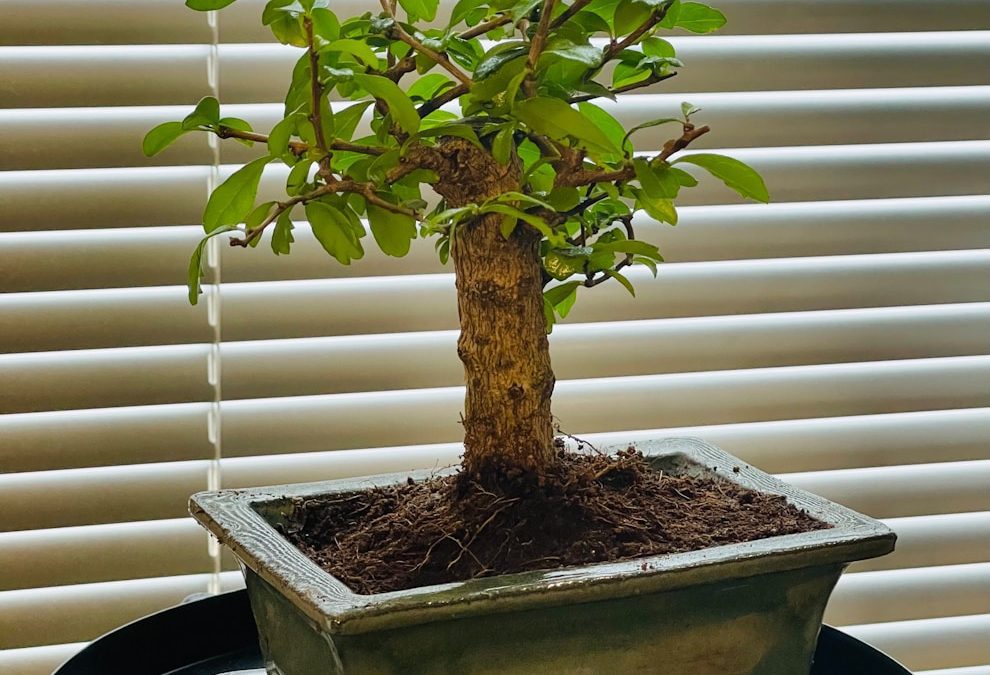
Bonsai trees look calm and effortless on a shelf, but keeping them alive is very different from watering a typical houseplant once a week. With the right bonsai tree care – light, watering, pruning and repotting – they can stay healthy for years instead of slowly drying out or dropping leaves.
In this article, you’ll learn how to care for bonsai indoors, what to watch for through the seasons, and how to avoid the most common mistakes beginners make. If you’re building a wider plant collection at the same time, you might also like Low-Maintenance Indoor Plants.
Contents
- 0.1 Understanding Indoor Bonsai Basics
- 0.2 Light Requirements for Indoor Bonsai
- 0.3 Watering Bonsai Trees Indoors
- 0.4 Soil and Pots for Bonsai
- 0.5 Pruning and Shaping Indoor Bonsai
- 0.6 Feeding and Repotting Bonsai Trees
- 0.7 Common Indoor Bonsai Problems
- 0.8 FAQs About Bonsai Tree Care Indoors
- 0.9 Final Thoughts on Bonsai Tree Care
- 0.10 Related Articles
- 1 Perfect Your Indoor Watering Routine
Understanding Indoor Bonsai Basics
“Bonsai” is more about technique than a specific plant. Many species can be grown as bonsai – ficus, Chinese elm, juniper, maple, jade and more. Indoors, you’ll most often see tropical bonsai like ficus and jade, as classic outdoor species (pine, maple, juniper) usually prefer to live outside.
Good indoor bonsai tree care focuses on:
Enough light for compact growth
Careful watering (never constantly soggy, never bone dry for long)
Free-draining soil in a shallow pot
Regular pruning and occasional wiring
Repotting every few years to refresh soil and manage roots
Light Requirements for Indoor Bonsai
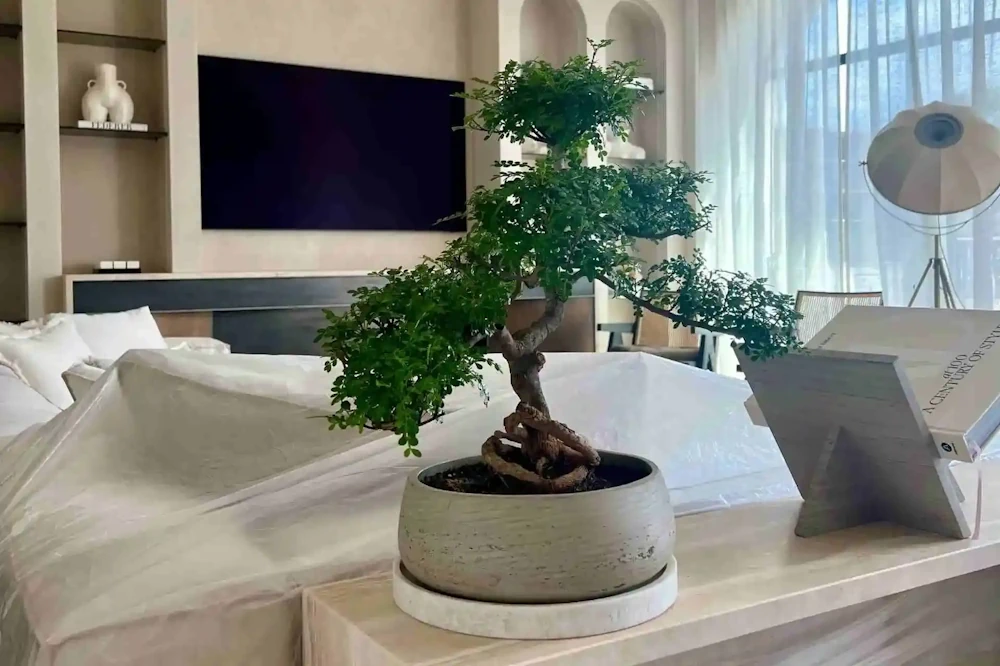
Most indoor bonsai need more light than a typical foliage houseplant.
Place your tree in bright, indirect light – a south- or west-facing windowsill often works best.
Avoid harsh midday sun burning through glass, especially in summer; move the tree slightly back if leaves scorch.
Rotate the pot every week or two so growth stays balanced and doesn’t lean strongly in one direction.
If your room is gloomy or you only have a north-facing window, a small grow light really helps. An adjustable LED grow light for bonsai and small plants can keep foliage compact and prevent weak, leggy growth.
Watering Bonsai Trees Indoors
Watering is where most bonsai owners struggle. Shallow pots dry out quickly, but fine roots hate sitting in waterlogged soil.
How Often to Water
There’s no strict weekly schedule – you water when the soil needs it:
Check the top 1–2cm of soil with your finger.
For most indoor bonsai, water when this feels just dry to the touch, not completely dust-dry.
In bright, warm rooms you may water every few days; in cooler seasons it may stretch to once a week or more.
A small watering can with a fine, narrow spout for bonsai lets you water gently around the soil surface without washing soil away or splashing leaves.
How to Water Properly
Water slowly until water starts to trickle from the drainage holes.
Let the pot drain fully – don’t leave it sitting in deep water.
If the soil has become very dry and water runs straight off, soak the pot in a shallow bowl of water for 10–15 minutes, then drain well.
Signs of Watering Problems
Underwatering
Dry, crisp leaves or needles
Soil separating from the edges of the pot
Branch tips dying back
Overwatering
Yellowing leaves that feel soft
Mushy roots or sour smell from the soil
Moss staying constantly soaked and slimy
Soil and Pots for Bonsai
Bonsai soil is quite different to standard houseplant compost.
Bonsai Soil
Designed to be free-draining, with coarse particles that let air reach the roots.
Typically a blend of components like akadama, pumice, lava rock and a small amount of organic matter.
Feels gritty and chunky rather than soft and fine.
If you’re not ready to mix your own, a ready-made bonsai soil mix for indoor trees is the easiest way to give roots the drainage they need.
Bonsai Pots
Bonsai grow in shallow pots to control root growth and keep the scale of the tree in proportion.
Pots must have drainage holes – usually with mesh over them to keep soil in place.
Choose a pot just slightly wider than the current root spread.
Heavier ceramic or unglazed clay pots are useful for top-heavy trees so they don’t tip over.
A shallow bonsai training pot with drainage holes and mesh is handy when you’re still shaping a young tree and expect to repot again in a year or two.
Pruning and Shaping Indoor Bonsai
Pruning is what keeps a bonsai tree compact and in proportion.
Maintenance Pruning
Throughout the growing season:
Trim back new shoots once they have produced a few leaves, cutting just above a leaf or bud that points in the direction you want growth to continue.
Remove dead, crossing or very weak twigs.
Keep the overall outline balanced from all sides.
Structural Pruning and Wiring
Occasionally you’ll want to make bigger changes:
Structural pruning reshapes the main branches and can be done in stages rather than all at once.
Wiring can gently bend branches into new positions using bonsai wire.
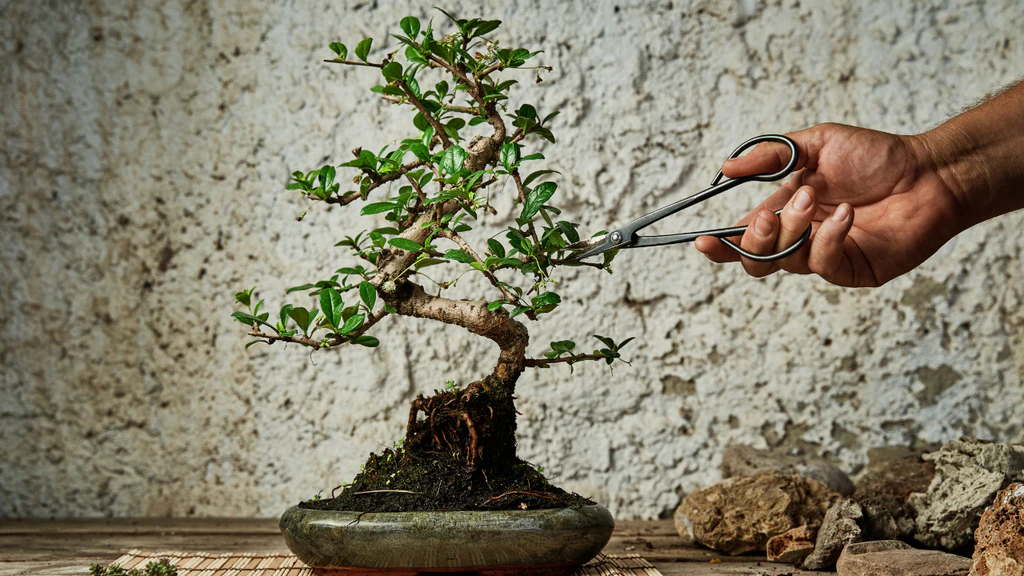
Because heavy pruning and wiring can stress a tree if done badly, many beginners follow detailed guidance from specialist bonsai societies and botanic gardens on correct pruning and wiring techniques.
Always use clean, sharp tools. A pair of precision bonsai pruning shears makes it easier to make neat cuts close to branches without crushing the wood.
Feeding and Repotting Bonsai Trees
Feeding
Because bonsai soil holds fewer nutrients, trees need regular but gentle feeding in the growing season.
Use a balanced bonsai fertiliser from spring to early autumn.
Apply at the recommended dilution every 2–4 weeks.
Avoid feeding in winter when growth slows, or just after heavy root pruning.
Repotting
Indoor bonsai are usually repotted every 2–3 years, depending on species and growth rate. Signs it’s time:
Water runs straight through without soaking in
Roots circling heavily around the pot
Soil breaking down into fine dust and staying wet too long
Basic steps:
- Carefully remove the tree from the pot and tease out the root ball.
- Trim away about a third of the roots, focusing on thick, circling and dead roots.
- Place fresh mesh over the drainage holes.
- Add a mound of new bonsai soil, position the tree, then backfill with more soil, working it around roots with a chopstick.
- Water thoroughly and keep the tree out of harsh sun for a couple of weeks while it recovers.
Common Indoor Bonsai Problems
Dry, Crispy Leaves
Usually underwatering or very hot, dry air.
Fix:
Water more thoroughly (without waterlogging), move slightly away from radiators, and consider using a humidity tray beneath the pot.
Yellowing Leaves
Can be overwatering, poor drainage or a lack of light.
Fix:
Check soil – if it’s heavy and wet, repot into better-draining mix and water less often. Improve light levels and avoid sitting the pot in standing water.
Weak, Leggy Growth
Often caused by low light or infrequent pruning.
Fix:
Move closer to a bright window or add a grow light. Start regular light pruning to encourage branching and a denser canopy.
Moss and Algae Taking Over
A little moss can look attractive, but thick, constantly wet moss and algae indicate the surface never dries.
Fix:
Ease back on watering, carefully peel away excess moss, and ensure the pot can drain and breathe.
FAQs About Bonsai Tree Care Indoors
Are all bonsai suitable for growing indoors?
No. Many traditional bonsai species, like pine and maple, really need outdoor conditions. Indoors, you’re better off with tropical or subtropical species such as ficus, jade and some Chinese elm varieties that tolerate stable indoor temperatures.
How often should I water my indoor bonsai?
It depends on species, pot size, soil and light, but most indoor bonsai need watering when the top 1–2cm of soil feels just dry. In warm, bright rooms this might be every few days; in cooler or darker conditions it will be less frequent.
Do bonsai trees need humidity trays?
They don’t strictly need them, but a shallow pebble tray with water underneath the pot can slightly increase humidity around the tree and catch drips after watering. Just make sure the pot itself isn’t sitting directly in the water.
Can I keep bonsai in very low light?
You can keep some species alive for a while in low light, but they’ll weaken over time. For compact, healthy growth, aim for bright, indirect light or supplement with a small grow light.
How do I know if my bonsai needs repotting?
If roots circle tightly, water doesn’t soak in properly, or the soil has broken down into fine dust, it’s likely time to repot. Most indoor bonsai are repotted every 2–3 years, usually in spring.
Final Thoughts on Bonsai Tree Care
Bonsai trees are more work than a typical houseplant, but the payoff is huge: a living, changing sculpture you shape over time. Good bonsai tree care isn’t about constant fussing – it’s about paying attention to light, water and soil, then making small, regular adjustments.
Start with a reliable indoor species, give it a bright position and a proper bonsai soil mix, and take your time learning how it responds through the seasons. With patience and a steady routine, your bonsai can become one of the most rewarding plants in your indoor garden.
Related Articles
GET WATERING RIGHT FOR SMALL TREES
Perfect Your Indoor Watering Routine
Bonsai are far easier to care for when watering isn’t guesswork. Learn how often to water different indoor plants, what “dry” should actually feel like in the pot, and how to tweak your routine through the seasons so shallow bonsai pots and deeper houseplant containers both stay in the healthy zone.