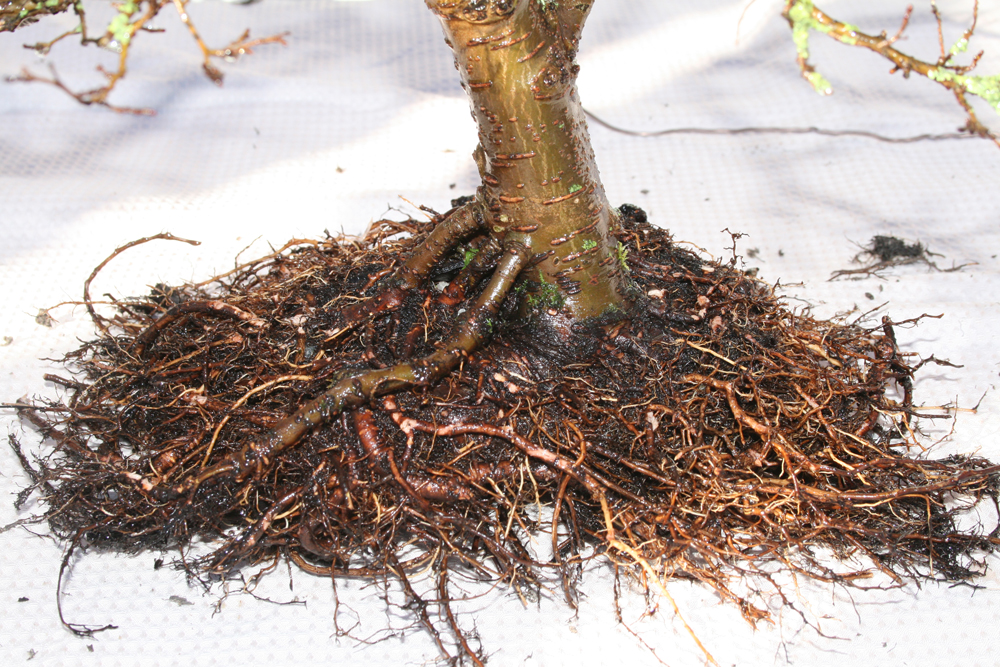
Bonsai can look perfectly healthy on top while quietly becoming root-bound underneath. Done at the right time, bonsai root pruning keeps your tree compact, improves water uptake, and helps you maintain a stable, healthy root system.
If you’re still shaping the canopy and wiring branches, you can also read How to Shape Bonsai Tree.
Quick answer: bonsai root pruning for beginners
Do it in early spring as buds start to swell (most species)
Only prune roots on a healthy tree
Remove the outer “root mat” and keep fine feeder roots
Repot into fresh, free-draining mix and water thoroughly
Keep the tree out of harsh sun/wind for 1–2 weeks
Do this first: Check if the tree is root-bound by sliding it gently from the pot—if roots are circling tightly, it’s time to plan a root prune and repot.
Contents
- 0.1 Bonsai Root Pruning: What It Is and Why It Matters
- 0.2 When to Root Prune a Bonsai Tree
- 0.3 How to Tell If Your Bonsai Is Root-Bound
- 0.4 What You Need Before You Start
- 0.5 How to Do Bonsai Root Pruning Step by Step
- 0.6 Aftercare: The First 2 Weeks After Root Pruning
- 0.7 Common Bonsai Root Pruning Mistakes to Avoid
- 0.8 FAQs About Bonsai Root Pruning
- 0.9 Final Thoughts on Bonsai Root Pruning
- 0.10 Related Articles
- 1 Keep Your Bonsai Healthy Between Repots
Bonsai Root Pruning: What It Is and Why It Matters
Root pruning is simply trimming a bonsai’s roots during repotting so the tree can stay in a small container long-term. In the wild, roots spread. In a bonsai pot, they can’t—so they circle, tangle, and eventually struggle to take up water and nutrients properly.
When roots become crowded, you’ll often notice:
Water runs straight through the pot instead of soaking in
The tree dries out much faster than usual
Growth slows even in the growing season
You see roots pushing up or out of drainage holes
Done correctly, bonsai root pruning:
Encourages fresh feeder roots (the ones that actually drink)
Prevents the tree becoming permanently root-bound
Refreshes tired, compacted compost
Improves stability and long-term health
When to Root Prune a Bonsai Tree
Timing is the difference between a smooth recovery and a stressed tree that sulks for months.
Best time for most bonsai
For many indoor/outdoor bonsai types, the safest window is early spring, when the tree is about to push new growth. The tree recovers faster because it’s naturally entering a growth phase.
Exceptions to know
Tropical indoor bonsai (like ficus) can often be repotted in warmer months when they’re actively growing indoors.
Autumn/winter root pruning is usually a bad idea for most species because recovery is slower and rot risk rises.
How often is normal?
A rough beginner rule:
Smaller pots / fast growers: every 1–2 years
Slower growers / larger training pots: every 2–3 years
Don’t root prune just because “it’s been a year”. Do it when the tree shows signs of being root-bound.
How to Tell If Your Bonsai Is Root-Bound
You don’t need to fully tear it apart to get a good idea.
Signs it’s likely root-bound
Watering becomes difficult (runs through instantly or stays wet too long)
The tree needs watering far more often than it used to
The pot feels packed and heavy with roots
Roots are visible at the surface or through drainage holes
The simple test
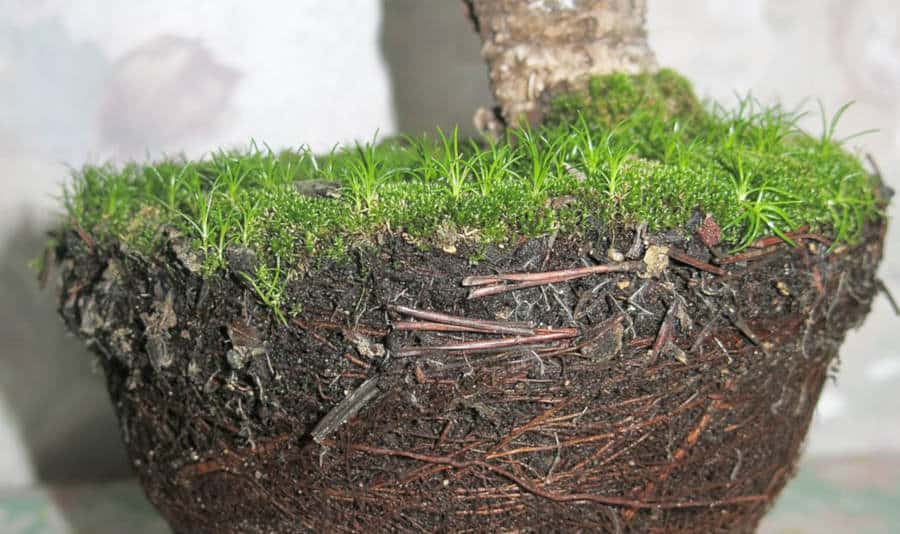
Slide the tree out (supporting the trunk). If you see:
thick roots circling the outside
a dense “root wall” around the pot shape
…it’s time to consider a root prune.
What You Need Before You Start
You don’t need a shed full of tools, but clean cuts and good drainage matter.
A clean surface (tray or newspaper)
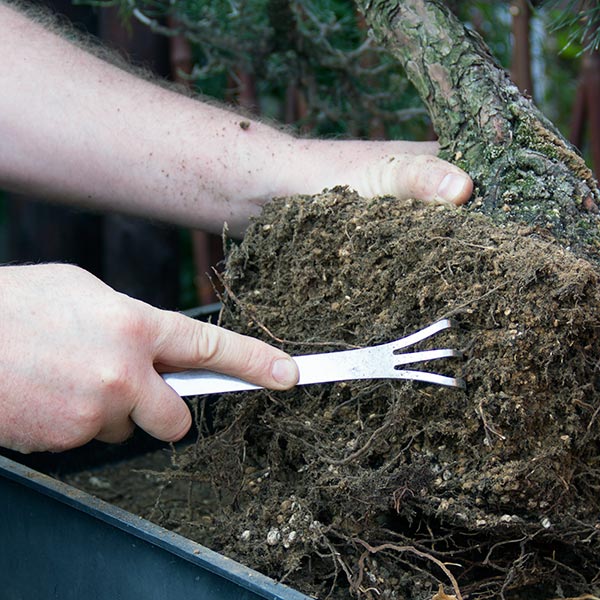
Chopstick or root rake (to tease roots)
Sharp cutters for thicker roots
Fresh bonsai mix and a pot with drainage
Wire (optional) to anchor the tree
A concave bonsai branch cutter makes clean cuts on thicker roots and reduces tearing (especially if you’re trimming chunky roots near the edges).
If your current soil stays soggy, refreshing into a gritty free-draining bonsai soil mix makes aftercare much safer.
How to Do Bonsai Root Pruning Step by Step
1) Water the day before
Slightly moist roots are easier to work with than bone-dry ones. Don’t soak it right before—muddy roots are harder to tease apart.
2) Remove the tree and loosen the outer roots
Gently lift the tree out and start teasing around the edges with a chopstick/root rake. You’re aiming to loosen the outer “root mat” first.
3) Focus on the outer ring and the bottom
Most of the circling happens:
around the outer sides
across the bottom where roots pancake
A common beginner-friendly approach:
reduce the bottom layer of the root ball
thin the outer ring of long circling roots
keep plenty of fine feeder roots closer to the trunk
4) What to cut (and what to keep)
Cut back:
thick circling roots
long roots that wrap the pot
dead, black, mushy roots
Keep:
fine, hair-like feeder roots
evenly spaced roots that radiate outward
healthy firm roots (light coloured inside when cut)
5) How much can you remove?
For a healthy tree, a safe beginner guideline is:
remove up to about 20–30% of the root mass
More than that can be done by experienced growers, but if you’re unsure, stay conservative.
6) Repot and anchor the tree
Add fresh mix, position the tree, and gently work soil into gaps (chopstick helps). If the tree wobbles, it struggles to re-root—anchoring can make a big difference.
7) Water thoroughly
Water until it runs clear through the pot. This settles the mix and removes fine dust.
One trusted reference worth linking: Royal Horticultural Society guidance on repotting and root care explains why repotting with fresh compost and careful root handling supports healthier growth.
Aftercare: The First 2 Weeks After Root Pruning
This is where most beginners go wrong—root pruning is only half the job.
Light
Keep the tree in bright shade (or filtered light) for about 7–14 days. Avoid harsh sun and windy spots while roots recover.
Watering
Fresh mix often drains faster at first. The goal is:
keep it evenly moist, not soaked
don’t let it dry completely while roots are rebuilding
Common mistake: watering “on schedule” instead of checking the soil.
Feeding
Don’t fertilise immediately. Wait 2–4 weeks (or until you see fresh growth) so you don’t burn stressed roots.
Leaves dropping?
A small sulk is normal—especially if you removed a lot of roots. But heavy leaf drop plus soggy soil can mean trouble (too wet, too cold, or not enough airflow).
Common Bonsai Root Pruning Mistakes to Avoid
Root pruning an unhealthy tree (fix health first)
Cutting too much at once (stress spike)
Leaving the tree loose and wobbly in the pot
Using a mix that stays wet for days (rot risk)
Putting it straight back into harsh sun or cold drafts
If your bonsai care is mostly indoors and you want a cleaner routine, you can also read How to Water Bonsai Tree Indoors.
FAQs About Bonsai Root Pruning
How do I know if my bonsai actually needs root pruning?
If roots are circling tightly, watering has become awkward (too fast or too slow), or growth is slowing in season, it’s a strong sign.
Can I root prune a bonsai in winter?
For most trees, it’s risky. Recovery is slower and rot risk increases. Early spring is safer for beginners.
How much root can I prune without killing the tree?
A cautious beginner approach is around 20–30% on a healthy tree, keeping plenty of fine feeder roots.
Should I prune the branches when I prune roots?
Sometimes light pruning is fine, but heavy canopy pruning + heavy root pruning together can be too much stress at once.
Do indoor bonsai like ficus follow the same rules?
Ficus can be more forgiving and may handle root work during warm, active growth periods indoors, but aftercare still matters.
Final Thoughts on Bonsai Root Pruning
Bonsai root pruning sounds intense, but it’s mainly about timing and restraint. Do it when the tree is healthy, keep a good amount of fine feeder roots, and focus on circling roots around the edge and bottom.
Aftercare is the real secret: gentler light, careful watering, and patience before feeding. Once you’ve done it once, it becomes a normal part of keeping a bonsai compact and stable long-term.
Related Articles
MAKE BONSAI CARE FEEL SIMPLER
Keep Your Bonsai Healthy Between Repots
Root pruning works best when the basics are solid year-round—steady watering, good light, and quick checks for early stress signs. If your bonsai is dropping leaves, drying too fast, or looking tired, a simple care routine helps you correct problems before the next repot.