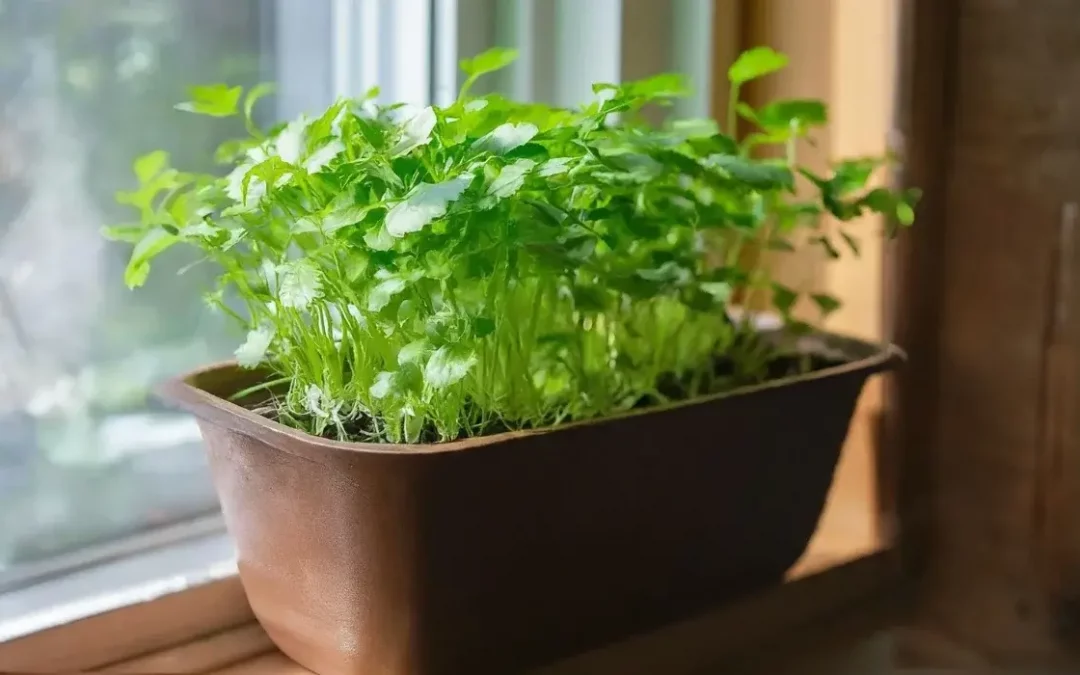
Coriander can grow well indoors, but it is much easier when you treat it like a quick leafy crop instead of a long-term houseplant. It needs a deeper pot, steady moisture, bright light and cooler conditions to stop it bolting too fast.
This guide shows you how to grow coriander indoors from seed, choose the right pot, stop weak leggy growth, water it properly and harvest the leaves while they still taste fresh.
Quick answer: grow coriander indoors
To grow coriander indoors, sow seeds in a deeper pot with drainage holes, keep the compost evenly moist, place it in bright light away from strong heat, and harvest young leaves regularly. For the best results, sow a small new batch every 2–3 weeks instead of trying to keep one plant going for months.
Do this first: Use a deeper pot, keep the compost lightly moist, and place coriander somewhere bright but not hot. If your kitchen windowsill gets too warm, move it slightly back from the glass.
If you want a simple routine so pots don’t swing between bone dry and soaked, Indoor Plant Maintenance Routine is a useful reference for building a weekly check habit.
Coriander indoors: what most people get wrong
The biggest reason coriander fails indoors is heat stress. Warm rooms plus uneven watering often triggers bolting (going tall, then flowering).
Common mistakes:
-
using a shallow pot (taproot hits the bottom fast)
-
keeping it too warm (near radiators, sunny hot glass)
-
letting it dry out, then soaking it
-
sowing once and expecting it to last months
If you want easier crops for the same setup, compare the fastest growing indoor vegetables before choosing what to sow next.
The easy fix is small sowings, decent depth, and steadier moisture.

Best pot and soil to grow coriander indoors
Coriander has a taproot, so depth matters.
Best container style
-
deeper pot (better than a shallow tray)
-
drainage holes
-
wide enough to grow a cluster without overcrowding
Coriander grows best in a deeper container because of its taproot, so check the best pots for indoor vegetables before choosing a shallow tray.
Soil
-
light and airy (not dense or muddy)
-
holds moisture but drains well
If pots stay wet for days, growth slows and mould risk rises. Improve Indoor Plant Drainage is a useful fix-first page if your compost doesn’t dry properly.
How to grow coriander indoors from seed (simple method)
Coriander dislikes root disturbance, so sow directly into its final container where practical. Cover the seed lightly; germination is often around 7–14 days depending on temperature and moisture.
- Fill a deep pot with moist potting mix and level it.
- Sow seeds thinly, then cover lightly.
- Water gently so seeds don’t wash to one corner.
- Keep evenly moist until seedlings appear.
- Thin slightly if crowded so plants don’t compete too hard.
If you are building an indoor herb setup, low-maintenance indoor herb garden ideas can help you choose simple herbs that work well together.
Cilantro/coriander is easiest to keep leafy when you sow small batches regularly — University of Maryland Extension recommends succession sowing every 2–3 weeks for a season-long supply.
Light and temperature (how to stop coriander bolting)
Coriander prefers bright light, but it doesn’t love hot, baking windows.
To keep it leafy:
-
use the brightest spot you have without heat blasting it
-
keep it away from radiators and hot vents
-
harvest regularly
-
keep moisture steady
If your coriander looks tall and thin, that’s usually low light. If it shoots up fast and starts flowering, that’s usually heat stress.
If your coriander grows tall, pale or weak, an indoor plant grow light guide can help you fix the light problem before the seedlings stretch too far.
Watering coriander indoors (simple routine)
Coriander likes consistent moisture, but it hates sitting in water.
A routine that works:
-
water until a little drains out
-
empty the saucer after 10–15 minutes
-
water again when the top 1–2 cm feels just drier (not bone dry)
If your pots stay wet for ages, it’s usually drainage or pot size. If they dry too fast, your room might be warm or the pot too small.
Feeding: do you need fertiliser for coriander indoors?
Most coriander grown as baby leaves doesn’t need much feeding if the compost is fresh. If you’re keeping it longer and growth looks pale, a gentle feed can help.
A low-risk option is a diluted seaweed-based liquid plant feed used occasionally once the plant has true leaves.
If you want to keep feeding simple and avoid overdoing it indoors, Liquid Fertilizer helps you understand what “light feeding” actually looks like.
Harvesting coriander indoors (so it keeps producing)
To keep coriander giving leaves:
-
harvest young leaves often
-
cut outer stems first
-
avoid stripping the plant bare in one go
-
keep sowing small batches so you always have a fresh pot coming on
Coriander is usually best treated as a short-term leafy crop indoors, not a permanent pot plant.
If you want another quick herb that behaves similarly, Grow Parsley Indoors is a useful comparison crop.
Common Coriander Problems Indoors
Why does coriander bolt indoors?
Coriander usually bolts indoors because it is too warm, too dry or stressed. Keep it in bright light without hot glass, avoid radiators, water evenly and sow small batches every 2–3 weeks.
Why is coriander leggy indoors?
Leggy coriander usually means the seedlings are not getting enough useful light. Move the pot closer to a bright window or use a grow light before the stems stretch too far.
Can coriander grow indoors without sunlight?
Coriander can survive in low light for a short time, but it will not grow strong, leafy or flavourful without bright natural light or a suitable grow light.
Why does coriander taste bitter?
Coriander can taste bitter when the leaves are old, the plant is heat-stressed, or it has started bolting. Harvest younger leaves, keep the plant cooler and sow fresh batches regularly.
FAQs About Growing Coriander Indoors
How long does coriander take to grow indoors?
You can often start harvesting in a few weeks, depending on light and temperature.
Should you grow coriander in water first?
It’s better from seed in compost. Coriander doesn’t regrow as well from cut stems compared to herbs like mint.
Does coriander regrow after cutting?
It can regrow if you harvest carefully, but it often slows down. That’s why small regular sowings work best.
Can you grow supermarket coriander indoors?
You can, but supermarket living-herb pots are usually overcrowded and often short-lived. Divide the clump carefully into smaller groups, repot them into a deeper container with drainage, and expect seed-grown coriander to be more reliable for repeat harvests.
What’s the best pot size for indoor coriander?
A deeper pot is more important than a wide one because coriander has a taproot.
Final Thoughts on Growing Coriander Indoors
To grow coriander indoors well, treat it like a quick leafy crop: deep pot, steady watering, and small sowings every couple of weeks. Keep it bright but not hot, harvest young, and you’ll get much better results than trying to keep one pot alive for months.
Related Articles
Keep indoor herbs simple and consistent
Build a Setup That Keeps Herbs Producing
Coriander grows best indoors when you focus on the basics: a deep pot, steady moisture, bright light, and small sowings on repeat. Once that rhythm is in place, you’ll get better flavour and fewer bolting problems.