

Fungus gnats in houseplants are almost always a sign that the compost is staying damp for too long. If you act early, you can break the cycle without throwing the plant away.
Quick answer: fungus gnats in houseplants
- Let the top 2–3cm of compost dry between waterings
- Use yellow sticky traps to catch adult flies and confirm the problem
- Empty saucers and cachepots so pots are not sitting in runoff
- Treat the compost if larvae keep appearing
- Repeat for 2–3 weeks because larvae hatch in waves
Do this first: Put a yellow sticky trap near the compost today. It confirms whether you have fungus gnats and starts reducing the adult flies straight away.

Why Fungus Gnats Keep Coming Back Indoors
Fungus gnats don’t show up because your home is “dirty” — they show up because indoor potting mix can stay damp for long stretches. Adults lay eggs in the top layer of compost, larvae feed in the soil, then more adults emerge and repeat the cycle.
Most repeat infestations happen when one of these stays true:
-
the top layer never properly dries
-
runoff sits in a saucer or decorative pot
-
the pot is too big for the plant (slow drying)
-
the soil is dense or breaking down
If you break the life cycle once, it’s much easier to prevent it happening again.
Fungus Gnats or Fruit Flies? Quick ID Check
This quick check stops you treating the wrong pest. Fungus gnats usually hover around the soil surface and appear when you water or move the pot. Fruit flies are more likely to gather around bins, drains, and fruit bowls.
If you want a fast ID reference for other pests too, you can also read Indoor Plant Pest Guide.
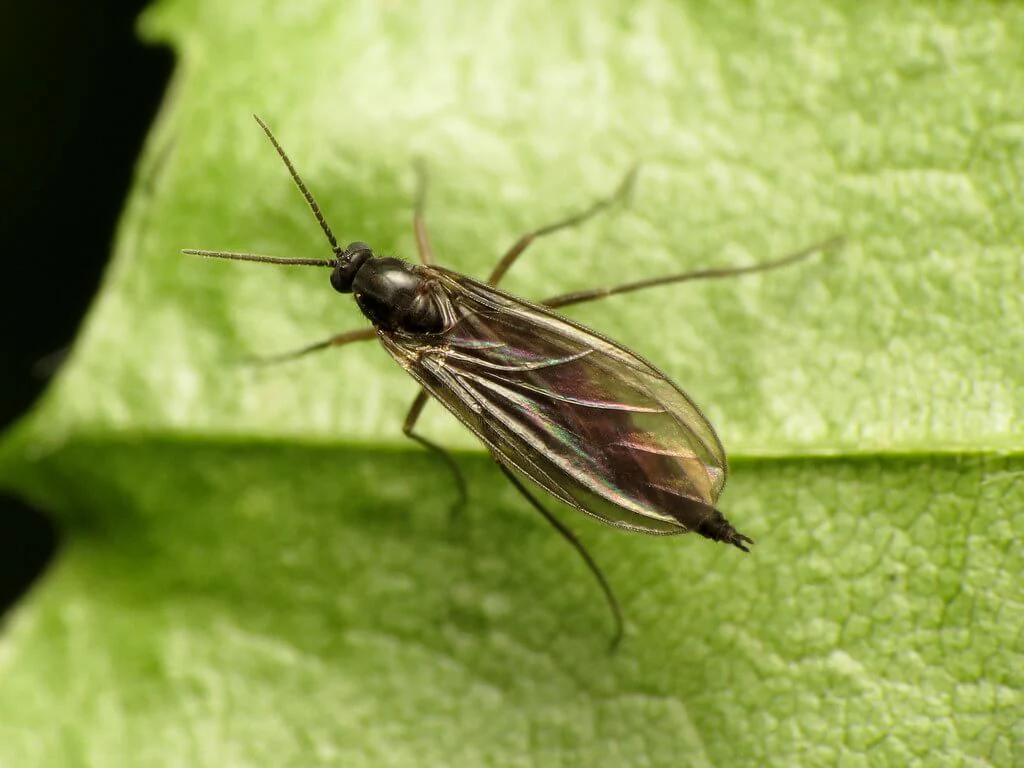
How to Get Rid of Fungus Gnats in Houseplants
You’ll get best results if you target adults and larvae at the same time. If you only trap adults, more larvae hatch. If you only treat larvae, the adults keep laying eggs.
Step 1: Dry the top layer properly
This is the biggest lever. Larvae thrive in damp compost, so drying the top layer makes the pot much less “livable”.
What to do:
-
Let the top 2–3 cm dry before watering again
-
Lift the pot to feel its weight (heavy usually means still wet)
-
Water less often in winter or low light
Fungus gnats often come back when compost stays wet for too long, so fixing indoor plant watering mistakes is usually more important than only catching the adult flies.
If you keep seeing soggy pots, you can also read Improve Indoor Plant Drainage.
Step 2: Catch adult gnats with sticky traps
Sticky traps won’t solve the whole problem alone, but they reduce the egg-laying adults fast and help you monitor progress.
Best practice:
-
Place traps right above the soil, not across the room
-
Replace when covered in dust/gnats
-
Use at least one trap per affected pot
A pack of yellow sticky traps for fungus gnats is a simple way to confirm the pest and cut adult numbers quickly.
Step 3: Treat Larvae in the Compost
Larvae live in the soil, so you need a soil-level treatment to stop the next wave. One of the most beginner-friendly options is BTI, often sold as mosquito bits/dunks.
Simple routine:
-
Soak BTI in water (follow the product instructions)
-
Water the plant using that treated water
-
Repeat weekly for 2–3 weeks
Using BTI mosquito bits for fungus gnats targets larvae in the soil and helps break the breeding cycle.
Fix the Wet Spots That Keep Breeding Fungus Gnats
Even if you treat larvae, fungus gnats return if the pot stays damp in the same places. These quick changes remove the conditions they love.
What to check:
-
Empty saucers 10–15 minutes after watering
-
Don’t let water sit inside decorative cachepots
-
Avoid pots with blocked drainage holes
-
Don’t keep plants tightly packed together (airflow helps drying)
If the compost smells sour, stale or rotten as well as attracting flies, check why indoor plant soil smells bad before leaving the plant in the same mix.
Fix 1: Fungus Gnats in Winter
Fungus gnats often spike in winter because light levels drop and plants drink less, so compost stays damp longer. It can feel like your usual watering routine suddenly “stops working”.
Fast fix:
-
Extend time between waterings
-
Move plants to brighter indirect light
-
Ensure the top layer dries before watering again
-
Keep traps in place to monitor adults
Fix 2: Fungus Gnats After Repotting
It’s common to notice fungus gnats after repotting because fresh compost can be moist and rich in organic matter. The gnats don’t mean you repotted “wrong” — it just means you need to manage moisture while the plant settles.
Fast fix:
-
Don’t water again until the top layer dries
-
Use traps immediately
-
Treat the compost if you see adults within a few days
Fix 3: Fungus Gnats in Seedlings or Propagation Pots
Seedlings and cuttings are more sensitive because larvae can nibble fine roots. The challenge is you can’t let these pots dry as much.
Fast fix:
-
Use traps for adults
-
Water from the bottom where possible (keep the surface drier)
-
Use BTI-treated water consistently
-
Improve airflow around trays/pots
Fix 4: When Fungus Gnats Won’t Go Away
If you’ve tried a quick fix and they keep returning, it’s usually because larvae are still hatching or the pot never dries properly.
Checklist:
-
Are you only trapping adults (without treating larvae)?
-
Is water sitting in a saucer/cachepot?
-
Is the pot oversized for the plant?
-
Is the soil dense and slow to dry?
If the compost stays wet for a week or more, a repot into a lighter mix can make a big difference.A simple indoor plant maintenance routine makes it easier to catch damp compost, standing water and early pest problems before fungus gnats keep coming back.
FAQs About Fungus Gnats
Do fungus gnats actually harm plants?
Adults are mostly annoying, but larvae can stress young plants and seedlings by nibbling fine roots, especially in consistently wet soil.
How long does it take to get rid of fungus gnats?
Usually 2–3 weeks. Eggs and larvae hatch in waves, so consistency matters more than one big treatment.
Are sticky traps enough on their own?
They help a lot, but they won’t kill larvae in the compost. Pair traps with a larvae treatment for best results.
Why do fungus gnats keep coming back?
Because the soil stays damp or there’s standing water somewhere. Fixing moisture and drainage is the long-term solution.
Should I throw the plant away?
Usually no. Treat it unless the soil is waterlogged, smells rotten, and the roots are already rotting.
Final Thoughts on Fungus Gnats in Houseplants
Fungus gnats are beatable once you treat the larvae and remove the damp conditions they rely on. Dry the top layer, trap the adults, and use a soil treatment for a couple of weeks so you catch each hatch cycle.
After that, the long-term win is simple: better drying, better drainage, and no standing water left under pots.
Related Articles
STOP SOIL PESTS BEFORE THEY SPREAD
Make Watering Cleaner, Drier, More Predictable
Fungus gnats are far easier to prevent than to fight. A simple watering setup (good drainage, fewer “wet zones”, and quick checks) keeps compost from staying damp for days — which removes the conditions gnats rely on to breed.