
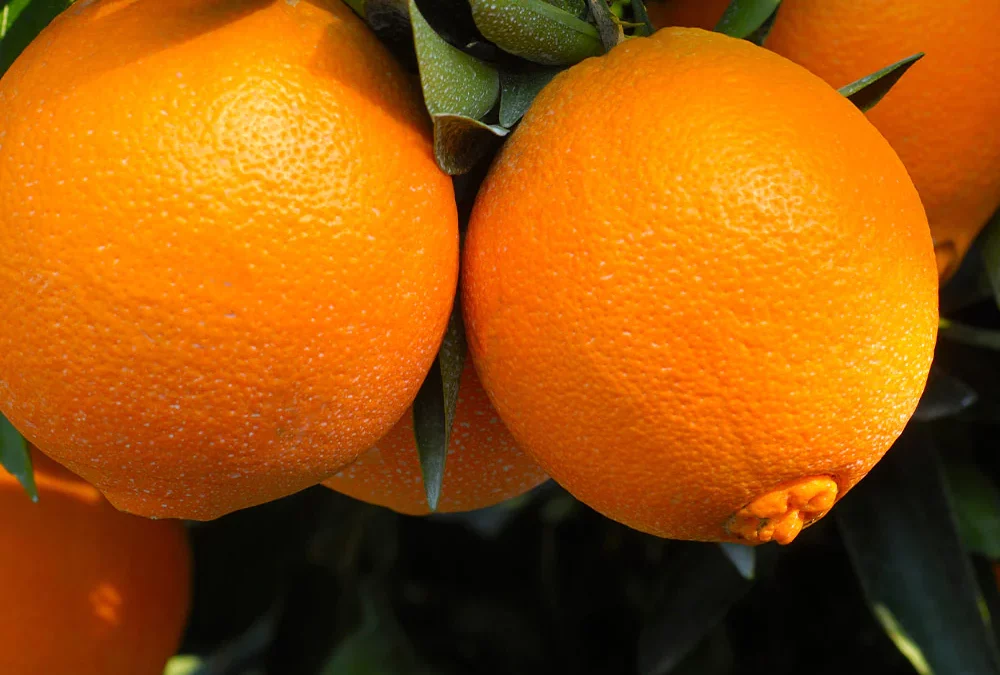
Dwarf orange trees look amazing in a bright kitchen or living room – but they’re also magnets for pests and stress if their care slips even a little. The good news is that most problems can be fixed if you catch them early and give the tree what it needs.
If you’re still getting used to indoor citrus, it can help to read a general guide first, such as Dwarf Lemon Trees: How to Grow and Care Indoors Guide, then come back here for orange-specific pest and care tips.
Contents
- 0.1 Early Warning Signs Something’s Wrong
- 0.2 The Most Common Pests on Dwarf Orange Trees
- 0.3 Everyday Care that Prevents Pests
- 0.4 Safe Pest Control Routine for Indoor Citrus
- 0.5 FAQs About Dwarf Orange Tree Pests and Problems
- 0.6 Related Articles
- 0.7 Final Thoughts on Protecting Dwarf Orange Trees
- 1 Grow a Collection of Happy Dwarf Fruit Trees
Early Warning Signs Something’s Wrong
Catching problems early is the easiest way to save a dwarf orange tree.
Look out for:
Leaves curling or cupping – often water stress, spider mites, or sudden temperature changes.
Sticky residue (honeydew) on leaves, table or floor – usually aphids, scale, or mealybugs.
Yellowing between the veins – can be nutrient deficiency or over-watering.
Leaf drop after moving the tree – a classic sign of shock from changes in light, temperature, or draughts.
Small flies around the compost – fungus gnats enjoying consistently wet soil.
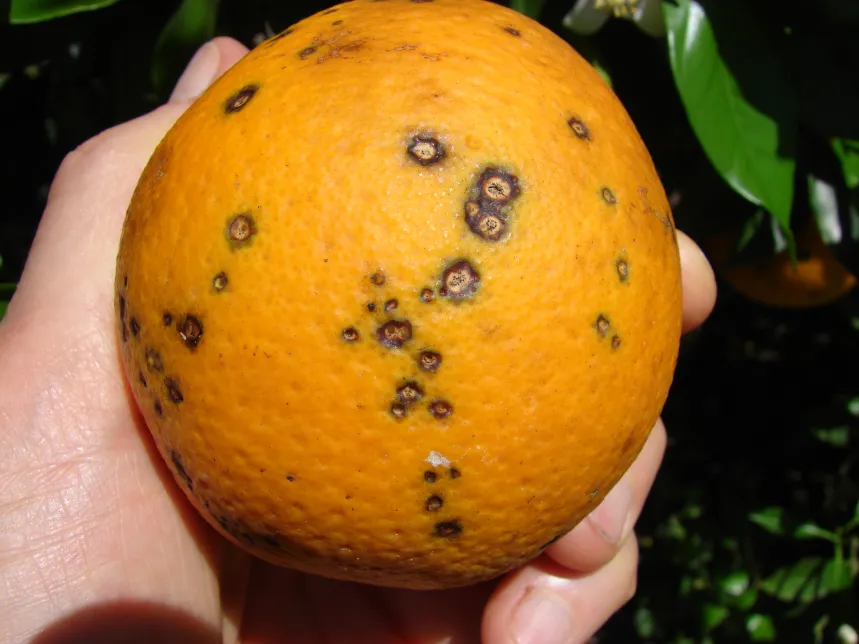
The Most Common Pests on Dwarf Orange Trees
1. Aphids
Tiny green, black, or brown insects that cluster on new growth and flower buds.
Signs
Distorted new leaves that look crumpled.
Sticky honeydew on leaves and pots.
Ants farming them, if the tree is outside in summer.
Control
Rinse affected shoots in the sink or shower with a gentle spray of lukewarm water.
Wipe small colonies off with a damp cloth and a drop of mild, fragrance-free washing-up liquid.
For heavier infestations, use a ready-to-use insecticidal soap or horticultural oil labelled as safe for edible citrus.
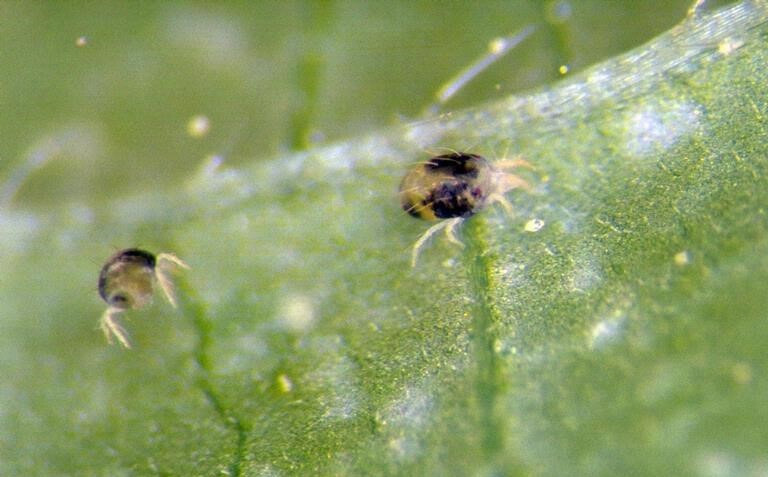
2. Spider Mites
Almost invisible red or yellow mites that thrive in dry, centrally heated rooms.
Signs
Fine webbing between leaves and stems.
Speckled, dusty-looking leaves that eventually turn bronze and fall.
The tree looks dull overall, especially in winter.
Control
Increase humidity: place the pot on a pebble tray with water below the pot base.
Rinse foliage thoroughly in the shower, including the undersides of leaves.
Use a miticide or horticultural oil specifically labelled for spider mites on fruit trees if rinsing isn’t enough.
3. Scale Insects
Scale look like small brown, grey, or white bumps stuck along stems and leaf midribs.
Signs
Sticky honeydew and sooty black mould on leaves.
Bumps that don’t brush off easily.
Weak, slow growth over time.
Control
Gently scrape individual scale off with a fingernail or cotton bud dipped in rubbing alcohol.
For heavier infestations, thoroughly coat stems and the undersides of leaves with horticultural oil, following the label.
Repeat every 7–10 days for a few cycles to catch new hatchlings.
4. Mealybugs
Soft, white insects that hide in leaf joints and root balls.
Signs
White, cotton-wool clumps on stems and in leaf joints.
Sticky honeydew and sooty mould.
Stunted growth and yellowing leaves.
Control
Dab visible mealybugs with a cotton bud dipped in rubbing alcohol.
Check the root ball – heavy infestations sometimes live in the compost.
Use an insecticidal soap or oil labelled for indoor edible plants and repeat as directed.
5. Fungus Gnats
More annoying than deadly, but a sign the compost is staying too wet.
Signs
Tiny black flies hovering whenever the pot is disturbed.
Very wet or compacted compost.
Seedlings or very young trees may weaken if larvae chew roots.
Control
Let the top 3–4 cm of compost dry out between waterings.
Top-dress with a thin layer of horticultural grit.
Use yellow sticky traps to catch adults.
Everyday Care that Prevents Pests
Healthy dwarf orange trees are far less attractive to pests. Focus on these basics:
Light
Aim for at least 6–8 hours of bright, indirect light each day.
A south- or west-facing window is ideal; use a full-spectrum grow light in darker homes or winter.
Watering
Water thoroughly when the top 3–4 cm of compost is dry, then let excess drain away completely.
Never leave the pot sitting in water – citrus hate “wet feet”.
In winter, expect to water much less as growth slows.
Feeding
Use a citrus-specific fertiliser from spring to early autumn, following the label.
Many brands offer a high-nitrogen feed for leafy growth and a higher-potash feed to support blossom and fruit.
Position, Temperature and Airflow
Keep trees away from cold draughts, radiators, or log burners.
Aim for 18–24°C in the day, a little cooler at night.
Give the plant a gentle breeze from an open window (in mild weather) or a low-setting fan to discourage pests and mildew.
Safe Pest Control Routine for Indoor Citrus
If you’ve had repeated issues, build a simple monthly routine:
- Inspect leaves closely – especially new growth and the undersides.
- Shower the tree with lukewarm water to wash off dust and any stray pests.
- Wipe the pot and saucer to remove any sticky residue.
- Refresh the top layer of compost in spring: scrape off 2–3 cm and replace with fresh citrus compost plus a little slow-release fertiliser.
- Rotate the pot a quarter turn each week so growth stays even.
FAQs About Dwarf Orange Tree Pests and Problems
1. Are dwarf orange trees more prone to pests than full-size trees?
They’re not necessarily more prone, but because they’re grown in pots indoors, any pest population is trapped in a small space and can build up quickly. Indoor air is often dry and still, which spider mites and scale love, so regular checks matter more.
2. Can I still eat the fruit after treating the tree?
If you’ve only used water, mild soap, or physically removed pests, the fruit is fine after a rinse. If you use any bottled product, always check the label for edible citrus and follow the stated pre-harvest interval (how long to wait before eating fruit).
3. Is neem oil safe for dwarf orange trees indoors?
Neem-based products can be helpful, but some formulations are stronger than others and may scorch leaves in bright sun. Always test a small area first and never spray in direct sunlight or on very thirsty, stressed plants.
4. My dwarf orange tree dropped lots of leaves after I brought it home – is it dying?
Probably not. Citrus really dislike sudden changes in light, temperature, or humidity. Leaf drop after a move is common. Keep watering steady, avoid fertilising for a few weeks, and give it the brightest spot you can – new growth usually appears once it has settled.
5. How often should I repot a dwarf orange tree?
Every 2–3 years is typical. When roots start circling the bottom of the pot or water runs straight through, move up just one pot size and refresh as much of the compost as you can without breaking too many roots.
Related Articles
Final Thoughts on Protecting Dwarf Orange Trees
Dwarf orange trees are a bit fussier than ordinary houseplants, but they repay the extra attention with glossy foliage, fragrant blossom and bright fruit that makes any room feel sunnier.
Keep the basics right – good light, careful watering, regular feeding and a quick weekly pest check – and most problems never get serious. When you do spot sticky leaves, webbing or odd bumps, act early with gentle methods first, then step up to targeted products only if you need them.
With a little routine and the right tools, a dwarf orange tree can stay healthy, pest-free and productive for years on a windowsill or patio table.
Take Your Indoor Citrus Game Further
Grow a Collection of Happy Dwarf Fruit Trees
If caring for a dwarf orange tree has given you the bug for indoor citrus, it’s worth learning how different species behave side by side. A guide to dwarf fruit trees for indoors walks through which varieties crop reliably in pots, how to mix lemons, oranges and peaches in one space, and what kind of light and pots work best in small homes.