
If you’re short on floor space but big on plant dreams, an indoor vertical plant wall is one of the best ways to cram more greenery into your home. Instead of scattering pots everywhere, you turn a plain wall into a lush, living feature that still feels tidy and intentional.
In this article, you’ll learn how to plan, build and maintain an indoor vertical plant wall, from choosing the right system to picking plants that actually thrive on a wall. For lighting and placement, you might also find Best Lights for Indoor Gardening helpful.
Contents
- 0.1 Planning Your Indoor Vertical Plant Wall
- 0.2 Choosing Plants for an Indoor Vertical Plant Wall
- 0.3 Setting Up Your Indoor Vertical Plant Wall
- 0.4 Watering and Feeding a Vertical Plant Wall
- 0.5 Maintenance and Long-Term Care
- 0.6 FAQs About Indoor Vertical Plant Walls
- 0.7 Final Thoughts on Indoor Vertical Plant Walls
- 0.8 Related Articles
- 1 Indoor Garden Care – Definitive Guide
Planning Your Indoor Vertical Plant Wall
Before buying anything, it’s worth spending a little time planning. A good layout and the right spot will make your wall much easier to look after.
1. Choose the Right Wall
Look for:
Good light: Bright, indirect light is ideal for most indoor plants. South- or east-facing walls just out of direct sun often work well.
Easy access: You’ll need to water, prune and clean, so avoid walls where you’d have to climb over furniture every time.
Suitable surface: Solid masonry or strong stud walls are best for heavier systems.
If your chosen wall is quite dark, you may need to add LED grow lights above or alongside the plants to keep growth strong and prevent leggy stems.
2. Decide on a Vertical Plant Wall System
There are a few main ways to build an indoor vertical plant wall, each with different pros and cons.
Pocket Panels
Fabric or felt panels with multiple pockets are light and easy to install.
Good for small, lightweight plants
Simple to water from the top
Best with a waterproof backing or liner behind them
A wall-mounted vertical planter pocket panel for indoor plants is an easy way to start with herbs or trailing plants on a small section of wall.
Modular Wall Planters
Rigid plastic or ceramic modules clip or screw to the wall.
Look neater and more structured than fabric pockets
Often have built-in drainage channels
Can be rearranged or expanded over time
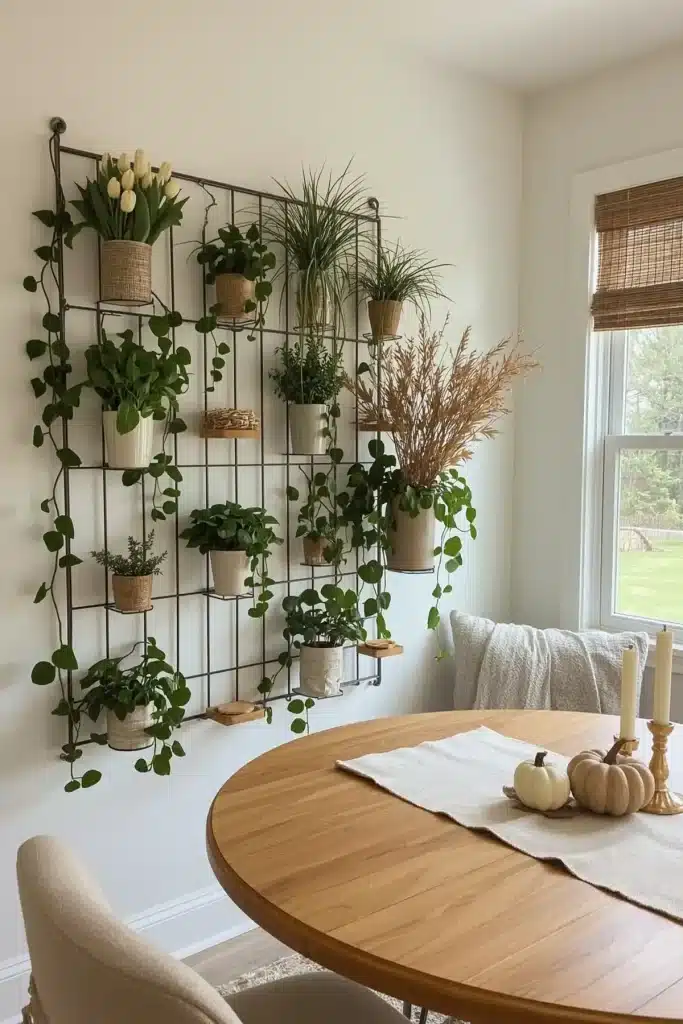
Shelving + Pots
This isn’t a “true” living wall, but staggered shelves with trailing plants give a similar effect with more flexibility.
Easy to swap plants in and out
Works well for renters if you use minimal fixings
Simple to combine with existing decor
Choosing Plants for an Indoor Vertical Plant Wall
Not every plant wants to live on a wall. You need species that cope with slightly faster drying, often shallower root space, and a bit more air movement.
Best Types of Plants
Good candidates include:
Trailing plants: Pothos, philodendron, tradescantia, string of hearts
Compact foliage plants: Peperomia, small ferns, nerve plant (Fittonia)
Herbs (in bright spots): Basil, parsley, mint, thyme
Low, clumping plants: Spider plant babies, dwarf peace lilies, small calatheas
Avoid very heavy, woody plants or anything that quickly outgrows its space. Cacti and succulents can work in modular pockets but need very sharp-draining compost and good light.
According to Royal Horticultural Society guidance on indoor planting and vertical displays, choosing plants suited to your light levels and watering style is the single biggest factor in long-term success.
Setting Up Your Indoor Vertical Plant Wall
Once you’ve chosen a system and plants, it’s time to assemble everything safely.
Step 1: Protect the Wall
Use a waterproof backing (like a plastic sheet or waterproof paint) behind fabric pockets.
Make sure there’s a tray, lip or mat at the bottom to catch drips.
Avoid placing delicate furniture directly under the wall.
A reusable waterproof drip tray for indoor plant walls can catch excess water and protect floors or skirting boards from splashes.
Step 2: Fix the System Securely
Always follow the manufacturer’s fixing instructions.
Use appropriate wall plugs and screws for your wall type.
For rented homes, consider smaller panels or modular units spread across more fixings to share the weight.
Step 3: Prepare the Plants
Water your plants the day before so they’re hydrated but not soaking.
Gently tease roots and remove any circling or dead roots.
Use a light, well-draining houseplant compost – heavy soil is more likely to stay soggy in pockets.
Step 4: Plant and Arrange
Start with larger anchor plants at the bottom or centre.
Add trailing plants near the top so they can cascade down.
Leave space for growth – it’s fine if things look a bit sparse at first.
Watering and Feeding a Vertical Plant Wall
Watering is where an indoor vertical plant wall feels different from standard pots. You’re working with gravity, so a bit of technique helps.
Watering Tips
Water slowly from the top so excess can trickle down without flooding the lowest plants.
Check lower pockets and modules to make sure they’re not staying too wet.
In fabric pockets, water little and often rather than soaking the whole panel.
A narrow-spout indoor watering can makes it easier to reach higher pockets and individual modules without splashing the wall.
Feeding
Use a diluted liquid houseplant fertiliser every 2–4 weeks in spring and summer.
Skip or reduce feeding in autumn and winter when growth naturally slows.
Occasionally water from the top with plain water to flush out any fertiliser build-up.
Maintenance and Long-Term Care
Once your wall is established, you’ll mainly be pruning, cleaning and occasionally swapping plants around.
Pruning and Shaping
Trim trailing stems that get too long or block light from neighbours.
Pinch out leggy growth to encourage bushier plants.
Use clean scissors or snips to avoid spreading disease.
Cleaning Leaves and Panels
Dust leaves regularly so they can photosynthesise properly.
Wipe or gently vacuum fabric pockets and ledges to keep the wall tidy.
Check for mould or algae in damp areas and reduce watering slightly if needed.
Rotating and Replacing Plants
Move plants that are struggling into separate pots to recover elsewhere.
Rotate similar plants in and out of the wall to keep the overall display fresh.
Don’t be afraid to experiment – you’ll quickly learn which species love wall life in your home.
FAQs About Indoor Vertical Plant Walls
Do indoor vertical plant walls damage walls?
They don’t have to. If you protect the wall with a waterproof backing, use drip trays, and avoid constant overwatering, there should be minimal impact. It’s usually water, not the weight, that causes damage in the long run.
Are vertical plant walls hard to water?
They’re a bit different rather than harder. You water more carefully from the top and pay attention to both top and bottom plants. Once you’ve done it a few times, it becomes a normal part of your routine.
Can I grow herbs on an indoor vertical plant wall?
Yes – herbs like basil, mint, parsley and thyme can do well if they get enough light and consistent moisture. Use a good-quality compost, feed lightly and harvest regularly to keep them compact and leafy.
How many plants do I need to start?
You don’t need to fill every pocket or module on day one. Starting with 6–10 plants on a small wall and leaving gaps for new additions or cuttings often works better than overcrowding from the beginning.
Do I need grow lights for a vertical plant wall?
Not always, but if your chosen wall is more than a couple of metres from a bright window, grow lights can make a big difference. They help prevent leggy growth and keep the whole wall evenly lit.
Final Thoughts on Indoor Vertical Plant Walls
An indoor vertical plant wall is one of the most rewarding ways to turn a bare wall into something alive and changing. With the right plants, a sensible watering routine and a bit of regular pruning, you get a big visual impact without sacrificing floor space.
Start small, learn which plants love the setup in your home, and gradually expand as your confidence grows. Over time, your vertical wall can become the standout feature of your indoor garden – and a surprisingly practical way to grow more in less space.
Related Articles
GIVE YOUR WHOLE INDOOR GARDEN A GLOW-UP
Indoor Garden Care – Definitive Guide
Learn how to water, feed, position, and maintain all your houseplants so your new plant stands don’t just look good – they help your plants thrive long term.