To grow indoor cucumbers successfully, you need three things dialled in: strong light, vertical support, and consistent watering. Get those right and you can harvest crisp cucumbers from a bright windowsill, shelf setup, or a small grow-light corner.
Quick answer: grow indoor cucumbers
Choose a compact/“mini” cucumber type if space is tight
Give very bright light (indoors, this is usually the #1 limiter)
Train one main stem up a support to save space
Keep compost evenly moist (not soaked)
Hand-pollinate if needed (some indoor setups won’t get natural pollination)
Do this first: Decide where the plant will live and set up the support before you sow—cucumbers grow fast and hate being messed about once they start climbing.
If you’re unsure what “bright enough” looks like indoors, Best Lights for Indoor Gardening helps you get the light side right from day one.
Contents
- 0.1 Pick the right cucumber for indoors
- 0.2 Light is the make-or-break factor indoors
- 0.3 The best pot size and soil for indoor cucumbers
- 0.4 Train cucumbers vertically (this is how you save space)
- 0.5 Watering indoor cucumbers (steady beats perfect)
- 0.6 Pollination and fruit set indoors
- 0.7 Feeding indoor cucumbers without overdoing it
- 0.8 Quick fixes for common indoor cucumber problems
- 0.9 FAQs About Growing Indoor Cucumbers
- 0.10 Final Thoughts on Growing Indoor Cucumbers
- 0.11 Related Articles
- 1 Build a Simple Indoor Veg Setup That Stays Consistent
Pick the right cucumber for indoors
Indoor success is much easier with varieties that suit containers and tighter spacing.
Look for:
compact / patio / mini cucumbers
plants described as container-friendly
shorter fruit types if you’re growing on a windowsill or shelf
If you grow a full-size sprawling type indoors, it often turns into a vine jungle with lots of leaves and not much fruit.
Light is the make-or-break factor indoors
Cucumbers are hungry for light. When light is borderline, you’ll usually see:
long, weak stems
lots of leaf growth but few flowers
slow fruit set
If you’re using grow lights, Grow Light Placement helps you avoid the most common mistake (lights too far away).
A full-spectrum LED grow light panel can make indoor cucumber growth realistic in darker rooms or winter.
The best pot size and soil for indoor cucumbers
Cucumbers want room for roots, but the pot shouldn’t be so huge that it stays wet for days.
A practical container target:
at least 10–15 litres for one plant (bigger is usually easier to keep stable)
Soil goals:
holds moisture without turning swampy
drains well so roots get air
doesn’t compact into a heavy lump
If you want a simple base to work from, your Indoor Vegetable Garden Soil article pairs well with cucumbers because it covers indoor-friendly structure and drainage.
Train cucumbers vertically (this is how you save space)
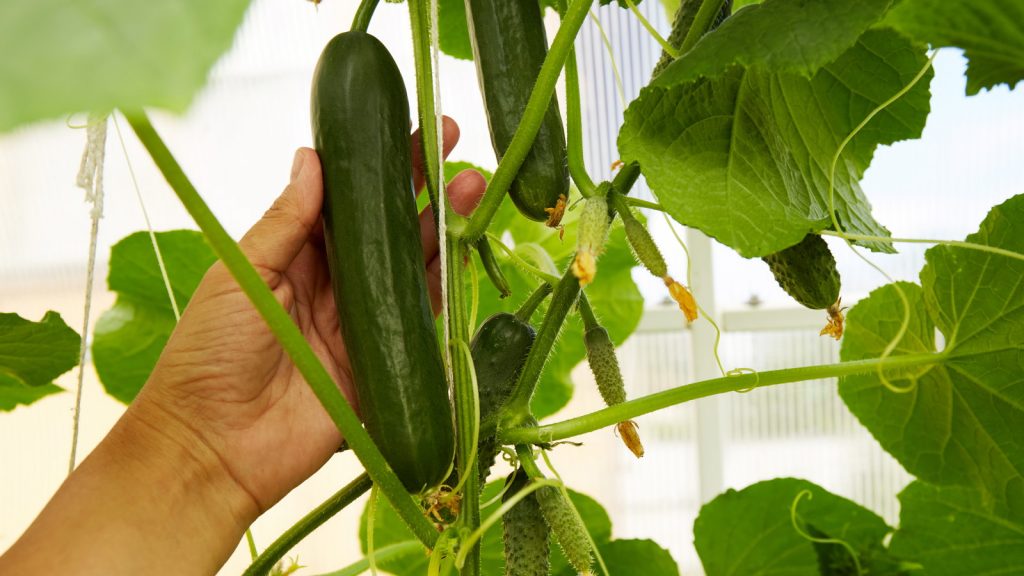
Indoor cucumbers are much easier when you grow them up, not out.
A simple method:
push in a support or place a trellis behind the pot
guide the main stem upward with soft ties
keep the plant to one main leader if space is limited
pinch or shorten side shoots if it becomes too bushy
A vertical plant trellis for potted cucumbers keeps the vine tidy and improves airflow around leaves.
Watering indoor cucumbers (steady beats perfect)
Most indoor cucumber problems come from swingy watering: bone dry → soaked → bone dry.
Aim for:
evenly moist compost
empty saucers after watering
water more often in warm, bright spots
A soil moisture meter can stop “guess watering” (especially in deeper pots). Soil Moisture Meter Guide helps you avoid false wet/dry readings.
Pollination and fruit set indoors
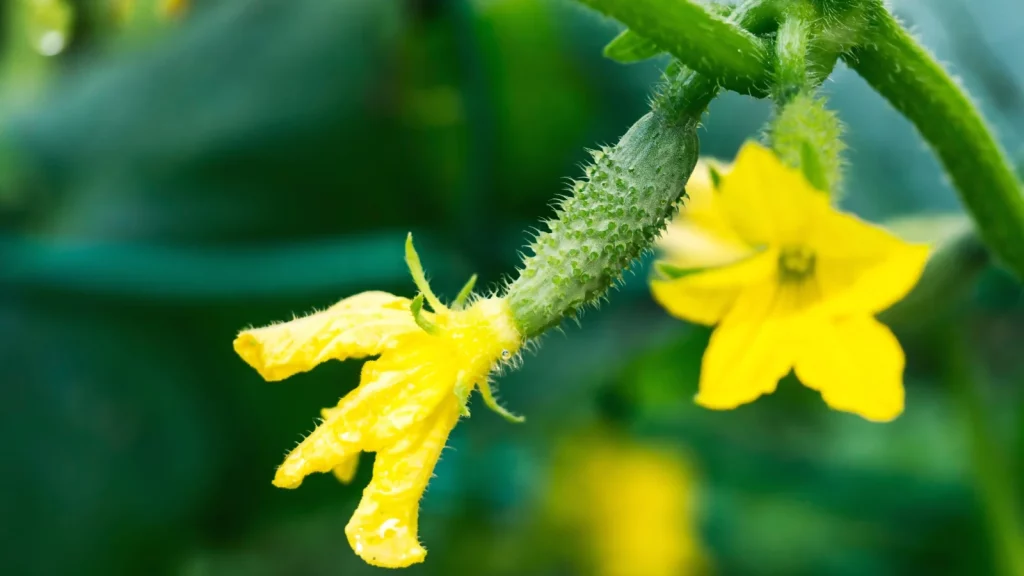
If flowers appear but fruit doesn’t develop (or fruits grow wonky), pollination is often the reason.
A simple indoor approach:
in the morning, gently transfer pollen from a male flower to a female flower
repeat every few days while flowering is active
avoid high heat near radiators (pollen can become less viable)
Because natural pollinators may not be present indoors/under cover, the University of Alaska Fairbanks greenhouse cucumber guidance explains that hand pollination may be needed to transfer pollen from male to female flowers.
Feeding indoor cucumbers without overdoing it
Cucumbers are productive, so they do need feeding once they’re growing strongly—but indoors, overfeeding can cause leaf problems and salt build-up.
Simple feeding rhythm:
start feeding once you see steady new growth and early flowers
use a diluted feed and don’t “double up” for speed
occasionally water with plain water to reduce build-up
If you want feeding to stay simple (and not turn into a guessing game), your Liquid Fertilizer explainer makes the choices clearer.
Quick fixes for common indoor cucumber problems
Leaves look pale and stretched
Usually not enough light (or light too far away). Improve placement and consistency.
Lots of flowers but no cucumbers
Likely pollination. Hand pollinate for a week and see if fruit set improves.
Fruits are bitter or oddly shaped
Often stress: inconsistent watering, heat swings, or poor pollination.
Soil stays wet for ages
Pot too big, mix too dense, or not enough warmth/airflow. If you keep getting sour compost, your Why Indoor Plant Soil Smells Bad checklist helps you diagnose what’s happening in the pot.
FAQs About Growing Indoor Cucumbers
Can cucumbers grow indoors without a greenhouse?
Yes—if they get strong light and enough root space. Indoors, light and support matter more than a “perfect” room.
Do I need to hand pollinate indoor cucumbers?
Sometimes. If you’re indoors or under cover with no pollinators, hand pollination can be the difference between flowers and fruit.
What size pot do I need for indoor cucumbers?
Bigger is usually easier—aim for at least 10–15 litres for one plant so it doesn’t dry out constantly.
Why is my indoor cucumber plant only growing leaves?
Usually low light, too much nitrogen feed, or a plant that’s stressed by watering swings.
Final Thoughts on Growing Indoor Cucumbers
Growing cucumbers indoors is completely doable if you treat it like a small system: strong light, a trellis, steady watering, and help with pollination if your space needs it. Start with a compact type, train it upward early, and you’ll give yourself the best chance of a steady harvest.
Related Articles
Make indoor veg growing less fiddly
Build a Simple Indoor Veg Setup That Stays Consistent
Indoor cucumbers do best when your setup removes guesswork: stable light, a vertical support, and a watering routine you can stick to. A simple system beats “perfect conditions” every time.